Felting needs less equipment than almost any other craft, which is exactly why it is so easy to overspend on. Nothing in a felting shop is expensive on its own, so the damage gets done by volume: forty colours in five-gram bags, a needle in every gauge, a machine for a job your hands did well enough.
This page sorts the shelf into three piles — what to buy first, what to add when a project asks for it, and what to leave alone. It covers tools for needle felting and wet felting, the fibre both run on, and the finished felt goods people arrive looking for.
The starter list: five things
For needle felting, five items get you working, and four of them are cheap:
- Needles — five 38 gauge, three 40 gauge, two 36 gauge. Buy multiples of each, because they are consumables.
- A mat — dense upholstery foam at least 5 cm thick, or a stiff brush mat.
- Core wool — 200 g of undyed coarse wool to fill the inside of everything you make.
- Coloured wool — five or six colours at 20 g each, not thirty colours at 5 g.
- Finger protection — leather or rubber thimbles for the hand holding the work.
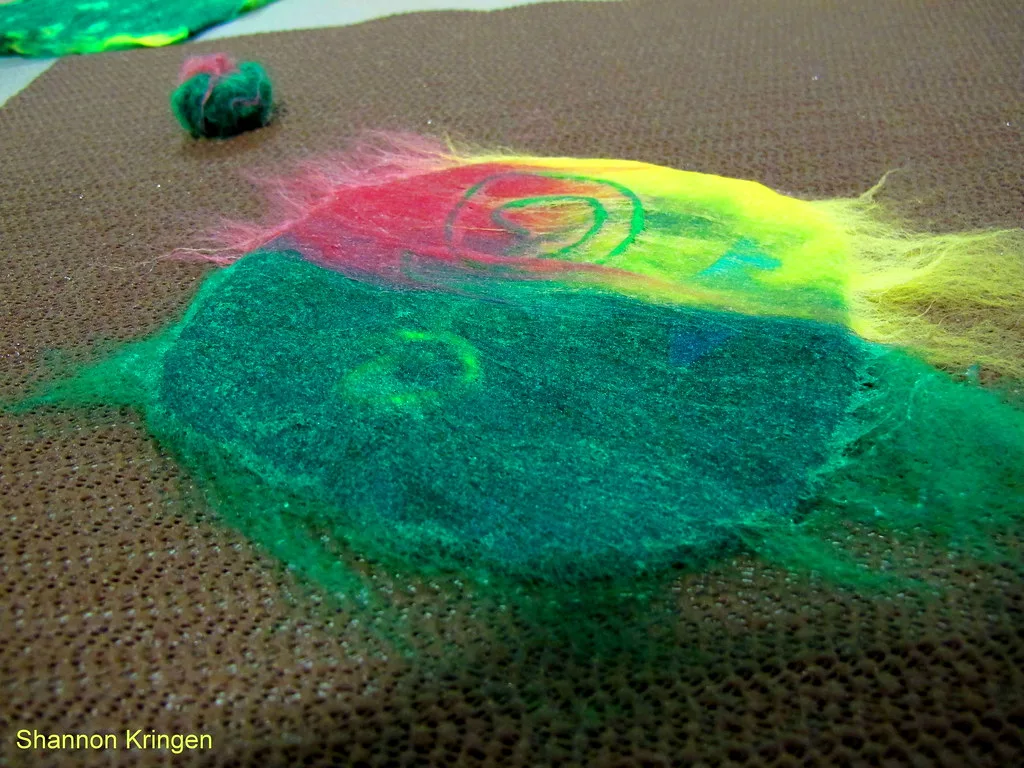
For wet felting the list is shorter still: wool tops, a bar of olive oil soap, bubble wrap, a piece of net or an old sheer curtain, and two towels. Most of that is already in the house, so the only real purchase is fibre.
Everything after this point is an addition rather than a requirement. The best habit when buying supplies is to let the project ask for the tool.
Felting needles
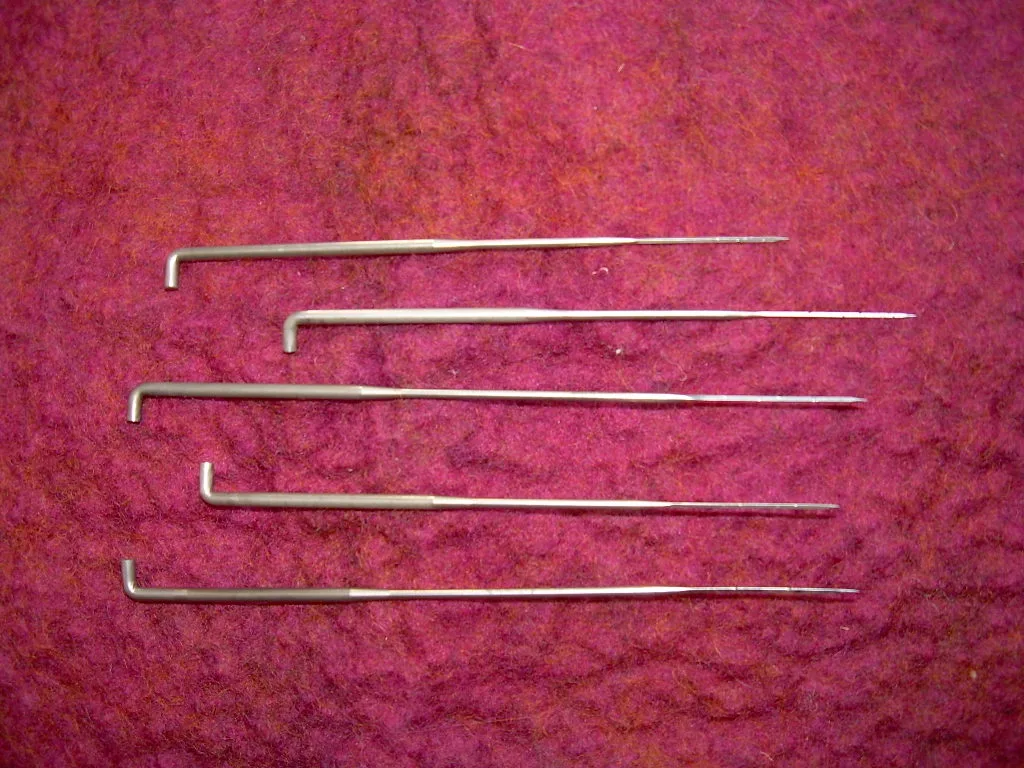
A felting needle is a barbed steel wire with a bend at the top, and the barbs do the work: each pass drags a few fibres across their neighbours until the wool locks. Needle choice comes down to how much fibre you want to move per stroke.
Gauge
The numbering runs backwards — a higher number is a finer needle. Practically, 32 and 36 gauge are coarse and compact loose fibre quickly while leaving visible holes, 38 is the general-purpose workhorse, and 40 finishes a surface without leaving obvious entry marks. Work coarse to fine within a single piece. Our guide to gauges and shapes goes through the whole range, including what star, spiral, crown and reverse needles do differently: reverse barbs face outwards and pull fibre back out of the work, which makes them a texture tool rather than a construction one.
Why they break, and what to do about it
Needles snap, almost always because they were levered sideways rather than pushed straight in and pulled straight out, and almost never because they were cheap. The four habits behind it are in how to stop breaking felting needles. Blunting is the quieter failure: the barbs wear smooth and you push harder for less result. Keep a separate pot for retired needles, since you cannot tell a worn 38 from a sharp one by eye.
Multi-needle tools and machines
A needle felting pen grips three to seven needles at once and covers flat ground several times faster than a single needle. On large panels and backgrounds that is genuinely useful; on a small animal's face it removes exactly the control you need. A felting machine takes that further — it is essentially a sewing machine with no thread and a bank of barbed needles — and it is built for flat work, appliqué and yardage, not sculpture. Both are additions, not starting points.
The same principle runs at scale: the machines that make felt by the metre entangle a web with thousands of needles, then harden and press it to thickness. Worth knowing if you buy sheet felt, because it explains why one grade is dense and another pulls apart.
One small item usually gets bought alongside needles: glass eyes on wire. They change a felted animal more than any other upgrade, and setting eyes is mostly about sinking them so they sit in the face rather than on it.
Wool: the part that matters most
Fibre is where your money should go, and where most beginners buy the wrong thing. Two questions decide it: how the wool was prepared, and which breed it came from.
Preparation: top, roving and batting
Combed top has parallel fibres and a smooth, glossy surface, which makes it the choice for fine wet felting and colour work. Roving is a soft rope with less alignment. Batting is carded, so the fibres lie in every direction, and that jumble is why it felts faster and costs less per gram. Shops use the words loosely, which roving vs top vs batting untangles, with more in wool roving for felting and wool batting for felting.
One trap worth naming early: quilt wadding also gets sold as wool batting, and it is bonded or scrim-backed so that it deliberately will not felt. Wool batting for quilts explains the difference before you order 500 g of the wrong thing.
Breed and micron
Merino, at roughly 18–23 microns, is the finest wool most shops sell. It gives a beautiful surface and drapes well, which makes it right for scarves, nuno felting and fine surface colour — and slow and squashy for sculpture. When merino is and is not the answer is worth reading before you commit; if you are buying for something worn next to skin, wool prickle is a mechanical effect with a measurable threshold rather than an allergy.
Corriedale, around 25–30 microns, sits between merino and carpet wool and is better than either at most felting jobs. It felts quickly, holds a shape and still takes a decent surface. If you buy one coloured wool for needle felting, corriedale is it.
Core wool is cheap, coarse, undyed wool for the inside of a sculpture. Using merino for a core wastes money and time both: you pay a premium for fineness nobody will see, then stab it for twice as long.
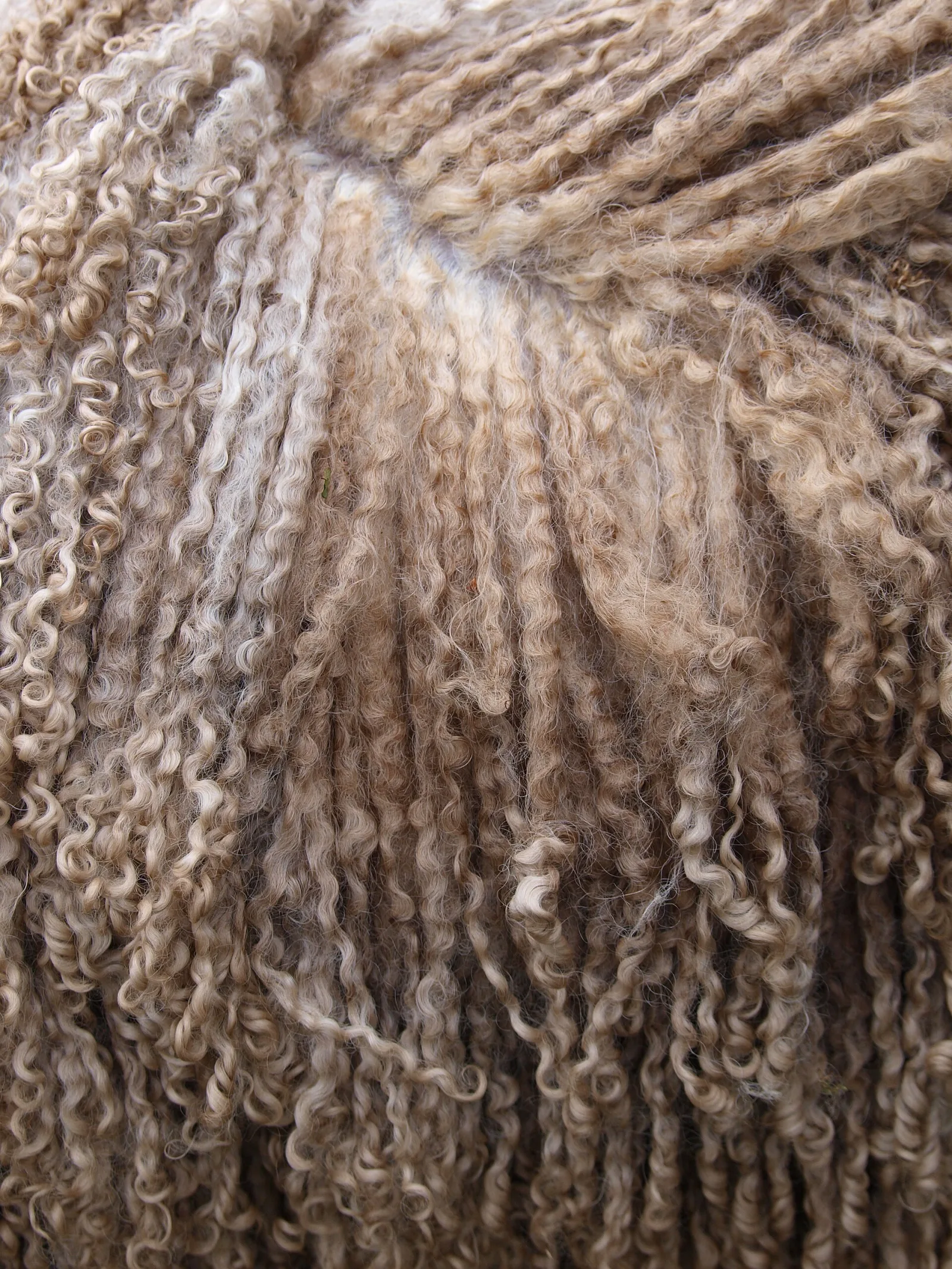
Alpaca has fewer scales than sheep wool, so it felts reluctantly and drapes wonderfully — usually best blended with wool rather than used alone. Wool locks from longwool breeds such as wensleydale and teeswater come as intact curls, and are the standard way to add hair, manes and fleece texture. Prefelt is wool stopped halfway: solid enough to cut into crisp shapes, loose enough to still felt onto something else.
Wool also arrives as yarn and as loose fibre for non-felting uses. If you plan to knit something and shrink it, read how to read a yarn label first, because superwash and synthetic blends will not felt at all. And loose roving is useful well beyond felting — spinning, weaving, doll hair and punch needle all take the same bag of fibre.
Mats and surfaces
The mat has one job: to receive the needle after it leaves the wool. That is why a thin sponge fails — the needle passes through, hits the table, and the tip snaps. Dense upholstery foam at least 5 cm thick works and eventually crumbles; a stiff brush mat lasts far longer and sheds nothing into your work. Several household items do the job too, and felting mat alternatives covers which — including a couple that beat foam.
Wet felting needs almost no tools, but two purchases change the results noticeably.
The first is soap. It does two jobs — lubricating the fibres so they slide, and raising the pH so the scales open — and washing-up liquid only does the first properly. Olive oil soap is the traditional answer for good reason; the soap comparison explains the trade-offs.
The second is a bamboo mat. It is not padding. The ridges grip the wool through the plastic and shear it slightly with every roll, and that shear is what converts a fragile web into fabric. A reed blind does the same thing.
If you are heading towards nuno felting, the fabric becomes a supply in its own right. Wool will only migrate through an open enough weave, and the fabrics that work can be judged by holding a piece up to the light before you commit a project to it.
Preparing and colouring fibre
This is the first category where felters buy real equipment, and it earns its place the moment you start wishing a colour were slightly different.
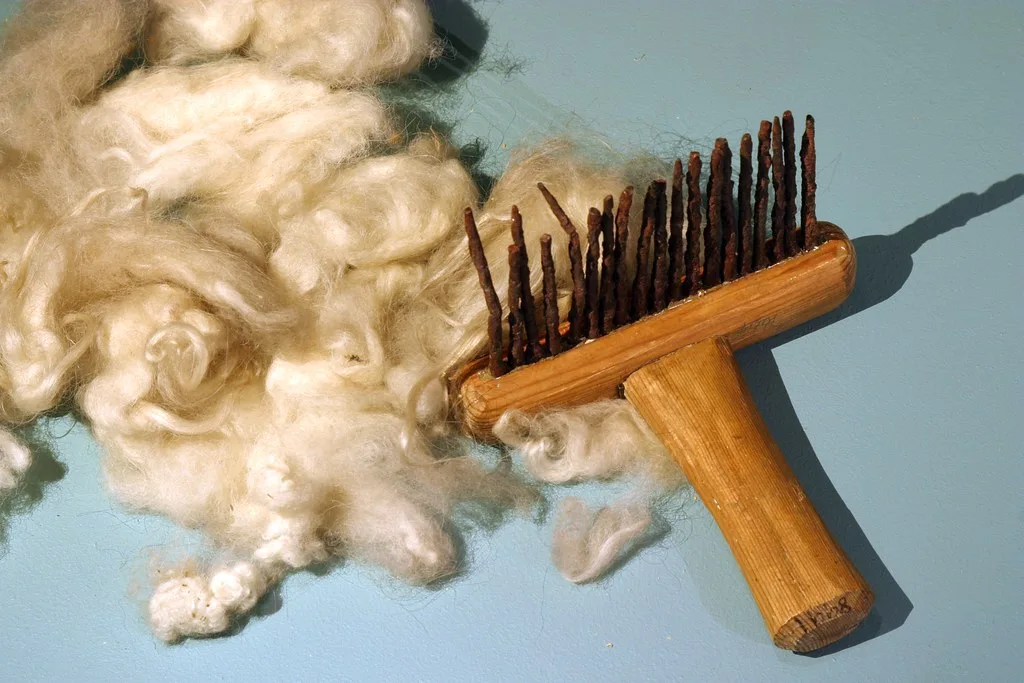
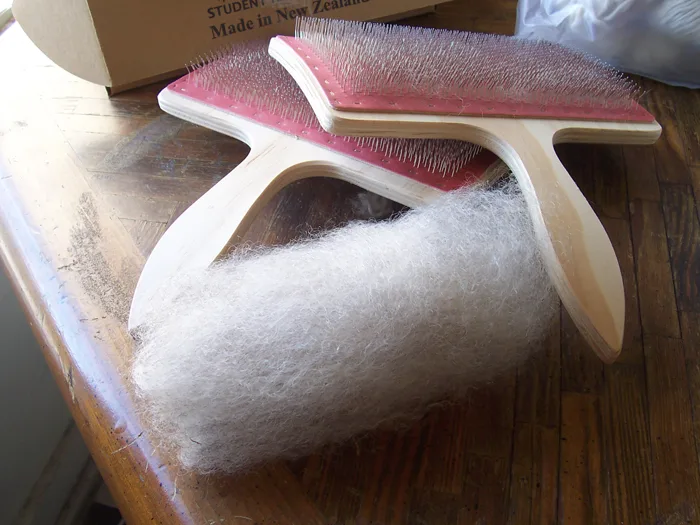
Hand carders are two paddles of carding cloth that mix and open fibre into a batt. Carding wool by hand covers technique and what a good batt looks like; felters get more from carding than spinners do, mostly because custom colour blends matter more to us than perfectly aligned staple. Wool combs do a different job — they remove short fibre and align what remains, which carders cannot do. A blending board lets you paint a gradient fibre by fibre and pull it off as a rolag, and it is one of the few tools here you can reasonably build yourself. If you ever wonder what a mill drum carder is doing at scale, the parts of a carding machine maps hopper to doffer.
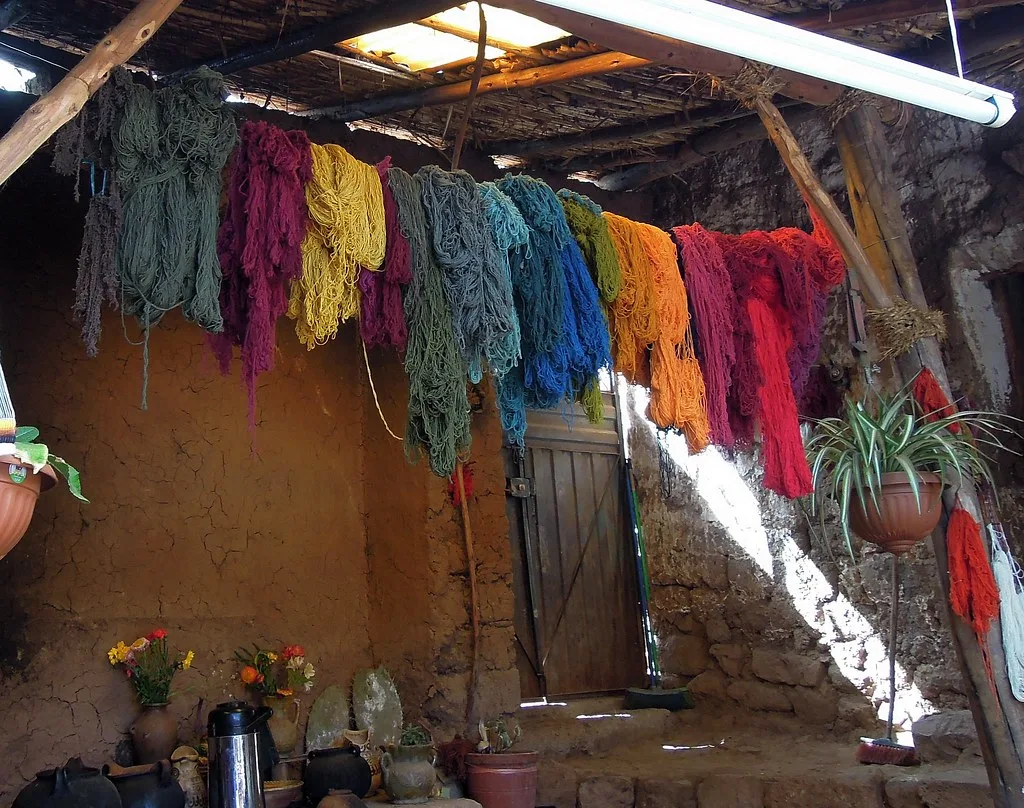
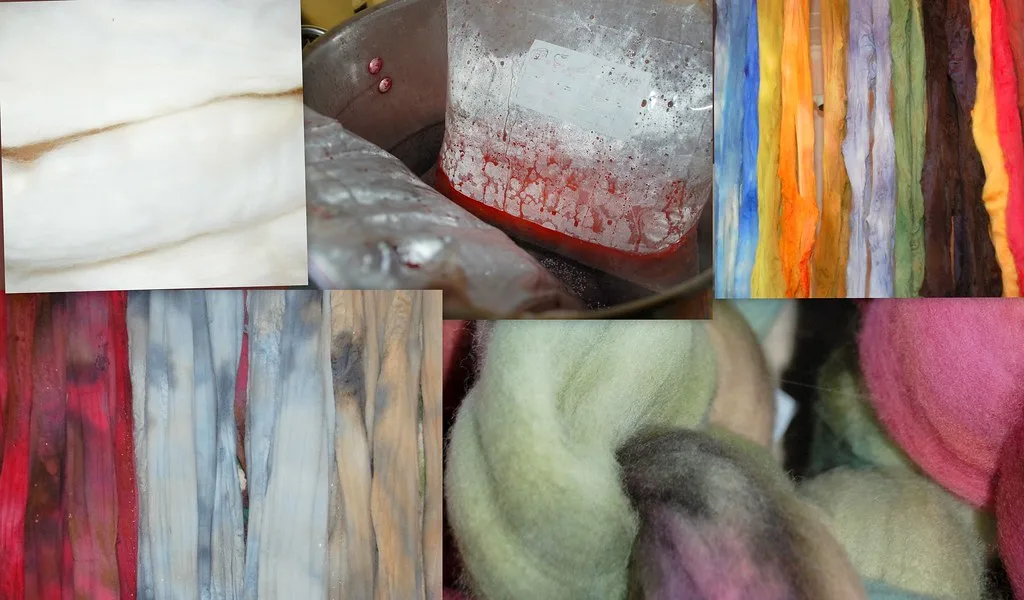
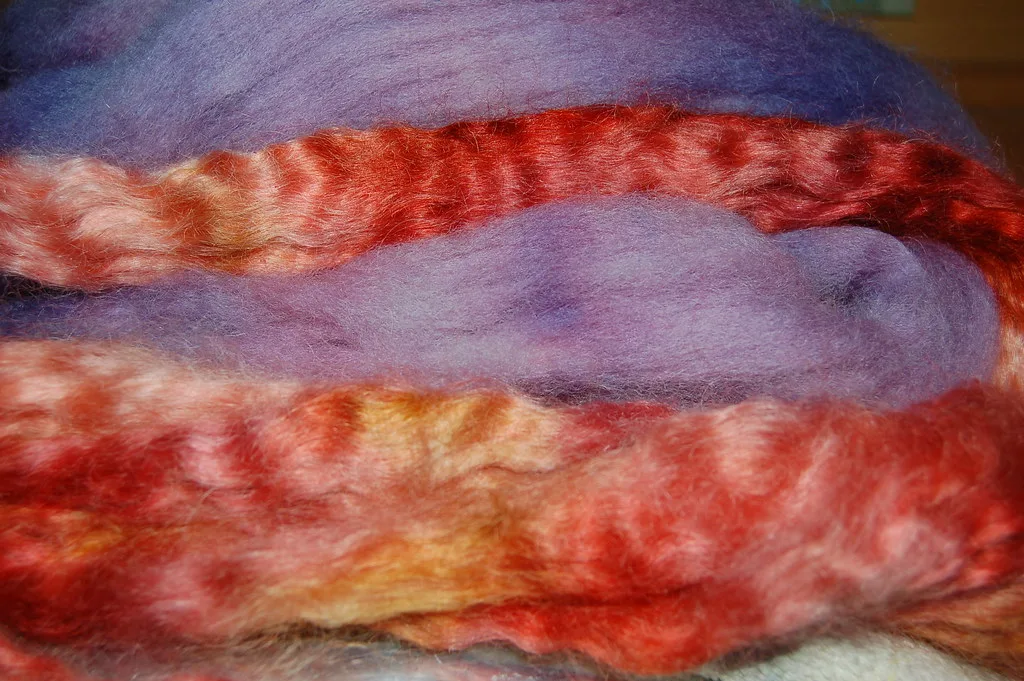
Dyeing is cheaper than buying dyed fibre and gives colours nobody sells. Wool is protein, so it takes acid dyes: dyeing wool roving covers the method and the one thing that ruins a batch, which is agitation. Food colouring is an acid dye in all but name and needs only vinegar and gentle heat, and onion skins give strong golds and rusts without a mordant.
Felt fabric and finished goods
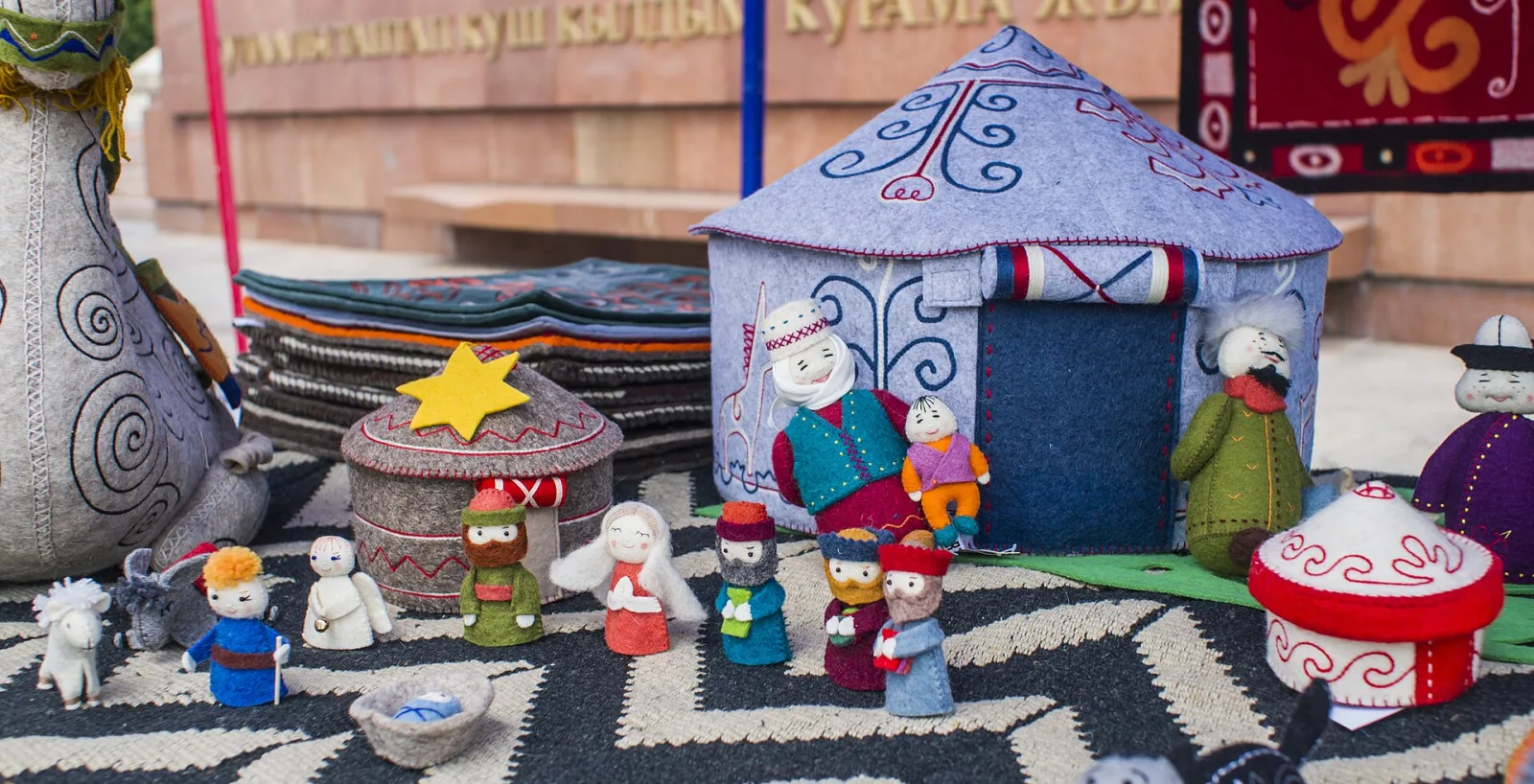
Not everyone buying felting supplies is making felt. Plenty of people want sheet felt to sew with, or a finished felt object that lasts.
Sheet felt comes in grades that look identical on a shelf and behave nothing alike; wool felt fabric sorts pure wool from blends from acrylic craft felt. Once you know the grade, the applications follow: a dense pad under a rug stops it creeping, though a felt rug pad is not the same thing as a non-slip pad; and felt is the easiest fabric an embroidery machine ever meets, with the two failure points in felt machine embroidery being density and hooping. Because felt has no weave and no grain it also cuts beautifully by machine — which machine handles which thickness comes down to blade type and pressure. Stiff felt holds a shape well enough to build bags from, which is why the felt Birkin exists in two quite different forms.
Felt hats are their own supply chain. The hat names distinguish fifteen shapes, brim and crown measurements explain what each does for a face, and hat blanks are felt already shaped into a cone or capeline waiting to be blocked. If you are buying rather than blocking, the brands and what they actually make and how felt takes dye both help, plus hat bands and care equipment. And when a label is vague, the burn test settles wool against polyester in thirty seconds.
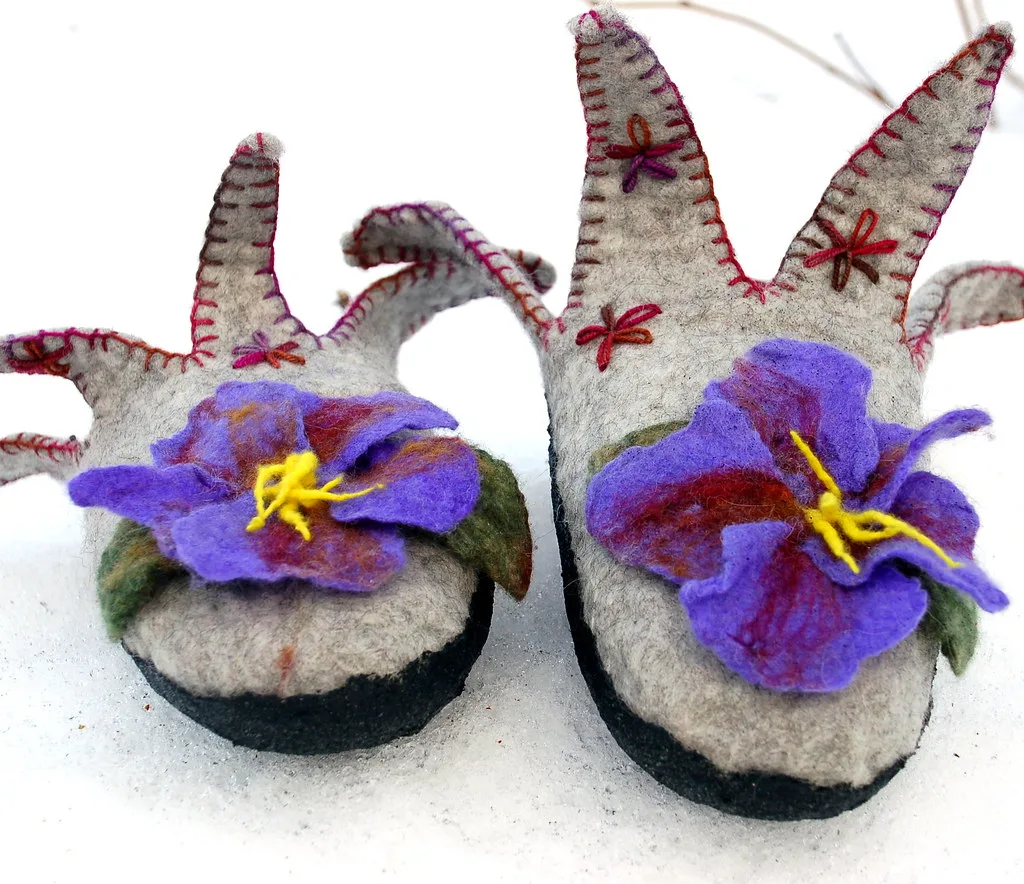
Felt slippers are the other big category. The sole decides everything, so comparing cork, rubber, leather and bare felt matters more than the upper. The same page covers why Nordic slippers built on coarse long-staple wool outlast softer ones, and why most slippers advertised as supportive have soft foam where they need real arch support.
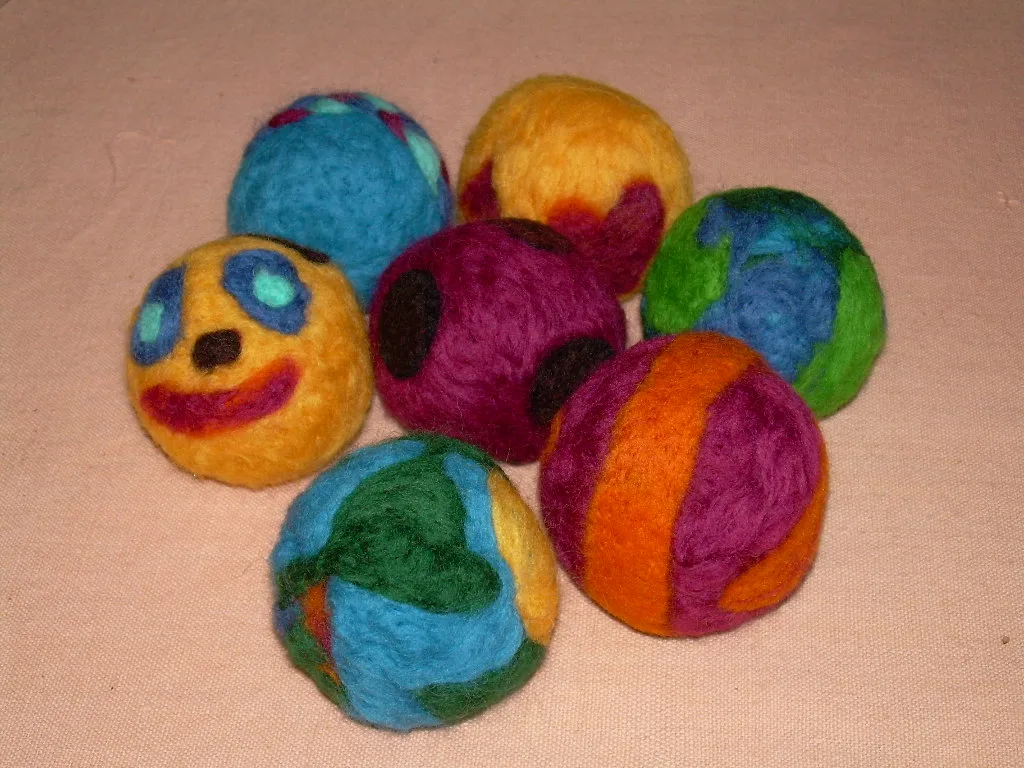
The most useful felt object in the house is probably the cheapest. Three wool dryer balls cut drying time by roughly a fifth, replace fabric softener entirely, and take an afternoon to make from core wool you already own.
Storage and moths
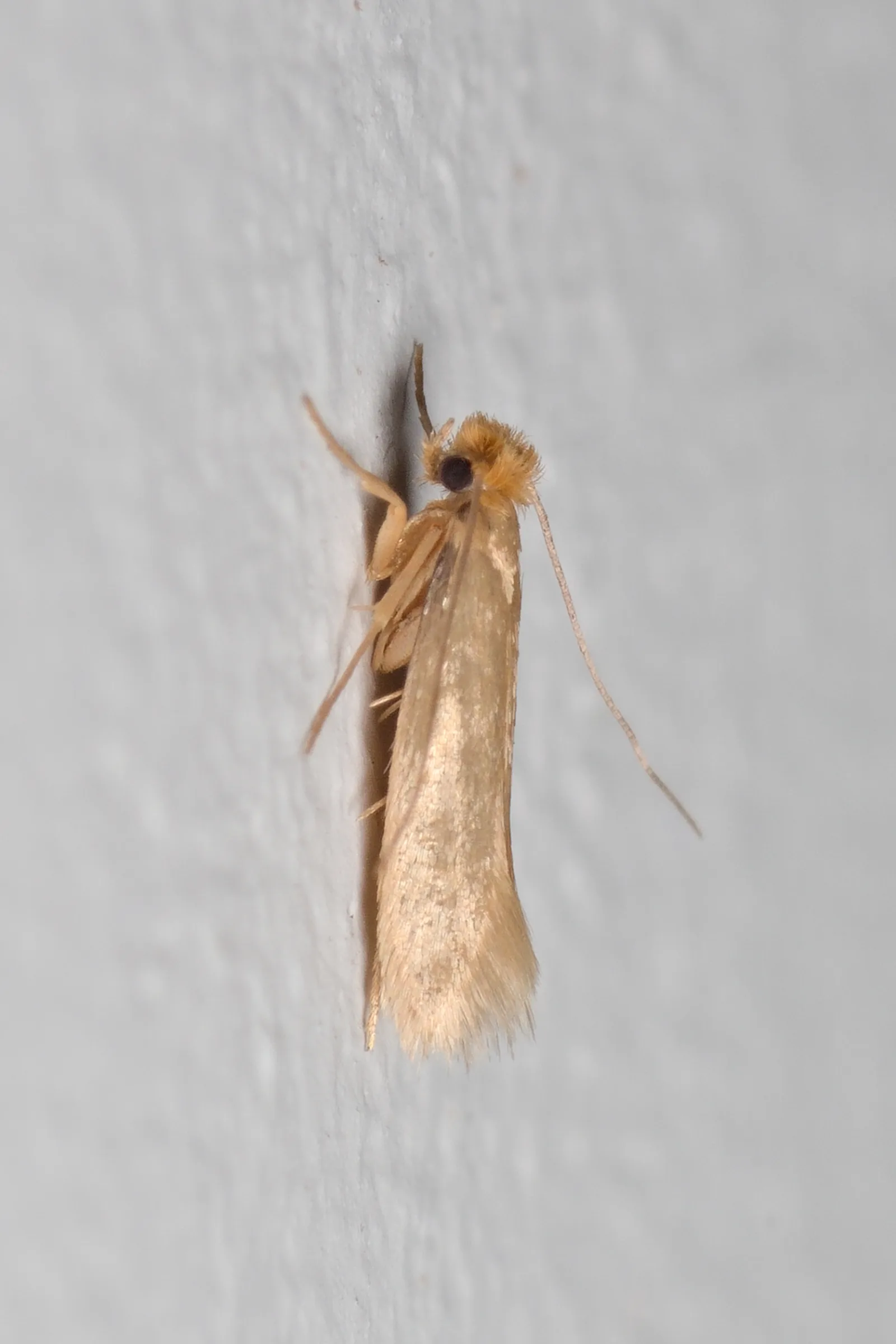
Wool is keratin, and a fibre stash is a buffet. The larvae do the eating, and cedar blocks and lavender sachets deter adults at best — they kill nothing. Heat, cold or a proper barrier is what works, and protecting wool from moths sets out which and for how long. Store fibre in cotton bags in a closed cupboard rather than sealed plastic, which traps moisture against the wool.
Finished felt has its own care rules, and they differ sharply by type: wool felt, craft felt and needle felted sculpture behave nothing alike in water. Read can you wash felt before a piece goes anywhere near a tap.
Mistakes to avoid
Most wasted money in this craft falls into a handful of patterns.
- Fifty colours in five-gram bags. It looks like abundance and gives you too little of anything to finish a project. Six colours at 20 g each is a far more useful order, and you learn which ones you actually reach for.
- Merino for everything. It is the fibre most shops push hardest and the wrong choice for roughly half of what people buy it for. Sculpture wants corriedale over a cheap core; save the merino for surfaces and drape, as the merino guide sets out.
- Buying batting without checking what kind. Quilt wadding is engineered not to felt. The label says wool either way.
- A machine before the hands. A felting machine and a multi-needle pen are production tools. Buying one first means learning to steer a tool before you understand what the wool is doing.
- A thin sponge as a mat. This breaks needles rather than saving money. Either buy proper foam or use one of the household alternatives — and if needles keep snapping regardless, the technique fixes matter more than the brand.
- Trusting a vague fibre label. A blend that will not felt is the single most common reason a first project fails. On sheet felt and hats, a burn test on one loose fibre answers it immediately.
Kits, books and classes
Kits are convenient and you pay for it in wool: a boxed project holds a small amount of fibre and one afternoon of instructions for the price of a much larger bag bought loose. They suit gifts and one-off attempts. If you know you want to keep going, buy the components separately from the beginner supply list.
Books are better value than kits and split into three kinds — technique manuals, project collections and artist monographs. Most people buy the project collection first and later wish they had bought the manual, a pattern the felting books guide describes with recommendations for each type.
Buy fibre from a fibre supplier rather than a general craft shop where you can. The wool is better prepared, better labelled by breed and micron, and far less likely to be a synthetic blend. Once it arrives, the techniques are in needle felting and wet felting.