Best Fabrics for Nuno Felting: What Works, What Fails and Why
4 min read Intermediate
We may earn a commission from links on this page, at no extra cost to you. As an Amazon Associate I earn from qualifying purchases. Learn more.
Silk gauze, chiffon, muslin, scrim — how to judge whether a fabric will let wool through before you commit a project to it.
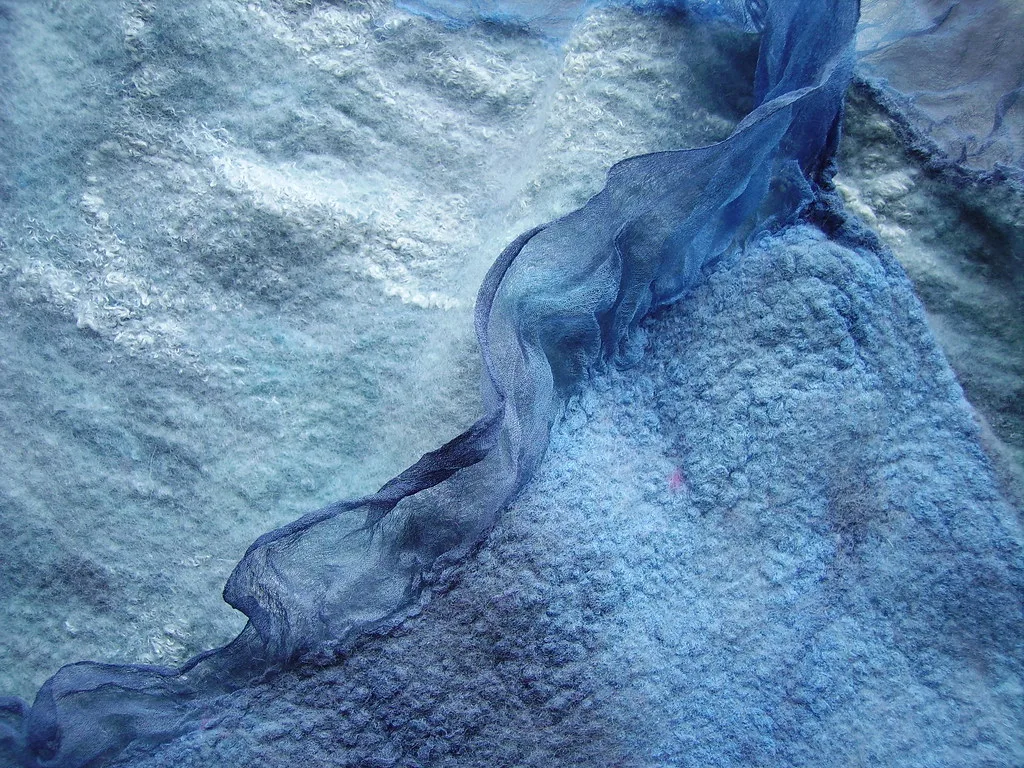
In nuno felting the fabric does half the work, and choosing badly wastes both an afternoon and a piece of silk. The wool has to travel through the gaps between threads and felt on the other side; if the weave is too dense, nothing happens no matter how long you rub.
This guide covers what works, what does not, and how to test anything you are unsure about.
The one rule
Openness of weave matters more than fibre content. A loosely woven synthetic will nuno felt better than a densely woven silk. People assume silk is required because most nuno felting is done on silk, but that is because silk is commonly available in very open weaves — not because of the fibre itself.
The light test
Hold the fabric up to a window. If you can clearly see individual gaps between the threads — not just light passing through, but visible holes — wool can migrate through it.
Then do the pinch test: scrunch a corner. Fabric that springs back stiffly is usually too tightly woven or too heavily finished. Fabric that stays soft and crumpled is generally a good candidate.
Fabrics that work well
Silk gauze
The classic choice, and the easiest to succeed with. Extremely open weave, very light, and it puckers beautifully. Sold in various weights — 3.5 to 5 mm is ideal.
Silk chiffon
Slightly denser than gauze but still very open. Takes dye well, drapes superbly, and gives a lovely surface sheen where the wool does not cover it. A good all-round choice.
Silk habotai (5 mm and lighter)
A plain weave, denser than chiffon, and the point where nuno felting starts to require patience. It works, but expect a longer rubbing stage and use the finest merino you have. Heavier habotai — 8 mm and up — generally will not bond.
Cotton muslin and cheesecloth
Cheap, very open, and excellent for learning. Cotton does not have silk's sheen or drape, but for practising the technique and making samples it is ideal precisely because failure costs nothing.
Cotton or linen scrim
Very open, almost mesh-like. Bonds readily and gives a strongly textured result. Popular for wall pieces and sculptural work rather than clothing.
Silk hankies and throwsters' waste
Not woven fabric at all, but worth mentioning: loose silk fibres laid on the surface of wool bond in the same way and give a lustrous, irregular surface. Often combined with a proper nuno base.
Fabrics that fail
- Tightly woven cotton — quilting cotton, poplin, shirting. The weave is too dense.
- Denim, canvas, twill. Same problem, more so.
- Heavy silks — dupioni, taffeta, satin. Beautiful and completely unsuitable.
- Anything coated or finished — waterproofed, stain-resistant, heavily starched.
- Tight knits. Knitted fabrics stretch rather than let fibre through, and distort unpredictably.
Wash it first — this is not optional
New fabric almost always carries sizing, starch or a finishing treatment applied at the mill. These coat the threads and block migration completely. A fabric that "should" work and inexplicably refuses is nearly always unwashed.
Wash in hot water with a little detergent, rinse thoroughly and dry before use.
Matching wool to fabric
The finer the weave, the finer the wool must be. For silk gauze and chiffon, use 18–19 micron merino. Anything above about 23 micron will struggle to pass through a fine weave regardless of how long you work — see choosing felting wool for the fibre side of this.
Use less wool than instinct suggests. A veil thin enough to read through is correct; anything thicker produces stiff felt with fabric attached rather than true nuno.
Buy a sampler, not a bolt
Fabric behaviour varies between suppliers and even between dye lots. Before committing to a garment, make a single sample piece with strips of four or five different fabrics laid side by side under one wool layout. One session, and you will know exactly how each behaves, how much each puckers and which you want to work with.
Keep the sample and label it. It is the same principle as a shrinkage sample, and just as useful.
Colour: a quiet warning
Wool laid over coloured fabric shifts the colour of both. White wool over red silk reads pink; the fabric shows through wherever the wool is thin, which is everywhere in nuno felting. Test combinations on your sampler rather than assuming the wool colour will dominate — in nuno felting it usually does not.
With fabric chosen, the technique itself is in our nuno felting guide.
Frequently asked questions
What is the best fabric for nuno felting?
Silk gauze and silk chiffon are the most forgiving: open enough for the fibres to migrate through, light enough to drape once felted. Cotton muslin and cheesecloth work nearly as well and cost a fraction as much, which makes them the sensible fabric to practise on before you cut into silk.
Can you nuno felt onto cotton?
Yes, as long as the weave is open. Cotton muslin, cheesecloth and loose scrim all take wool readily. Tightly woven cotton such as quilting cotton or poplin will not let the fibres through, and the wool peels away in a sheet once it dries.
Do I have to wash the fabric before nuno felting?
Always. Mill finishes and sizing sit on the surface and block fibre migration, and a fabric that shrinks later will pucker the finished piece. A hot wash and dry before you lay a single fibre is the cheapest insurance in the whole process.
How do I test whether a fabric will nuno felt?
Hold it up to a window. If light comes clearly through the weave, wool will pass through it too. If it reads as solid cloth, it will not nuno felt no matter how long you rub.