Wool Roving for Needle Felting: Which Fibre to Buy and How Much
7 min read Beginner
We may earn a commission from links on this page, at no extra cost to you. As an Amazon Associate I earn from qualifying purchases. Learn more.
Corriedale for almost everything, cheap carded wool for the inside, merino only where it shows. Which roving suits needle felting, what it costs, and how to work out how much a project actually needs.
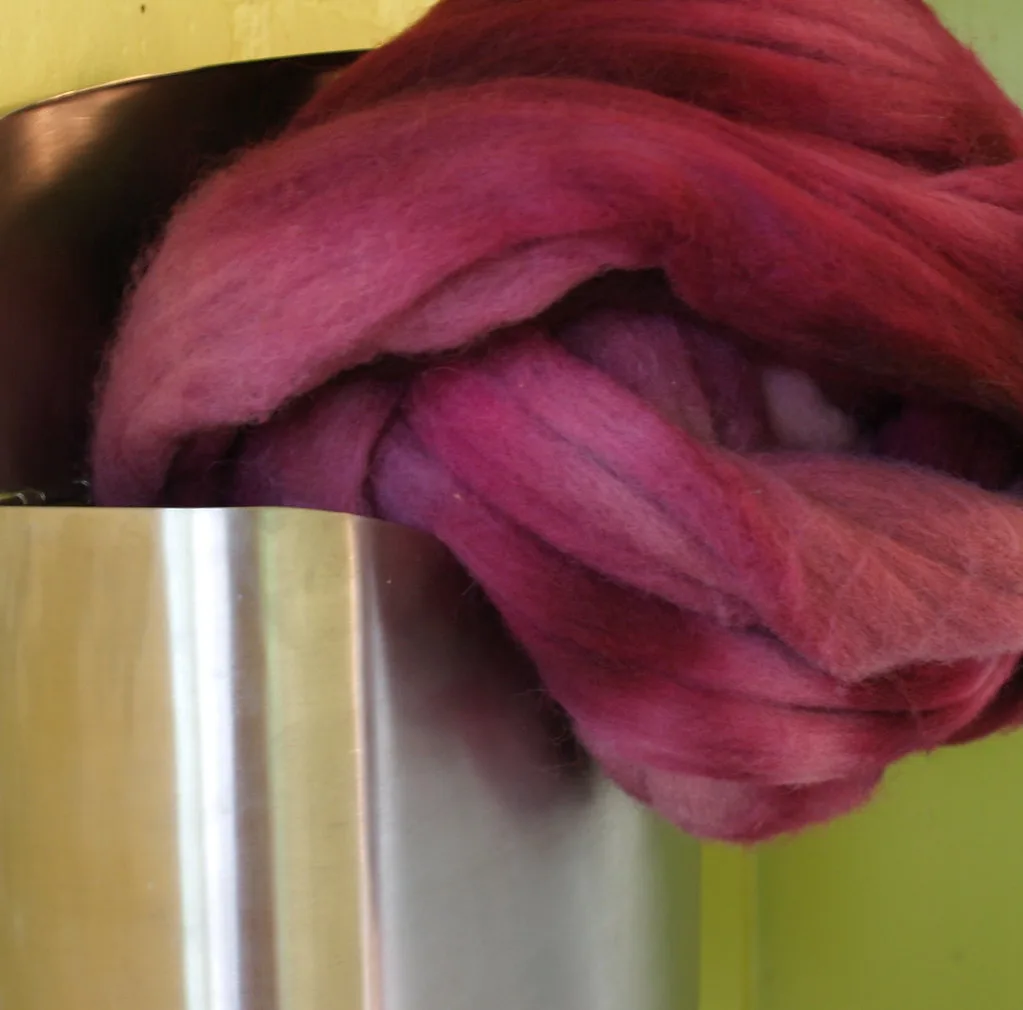
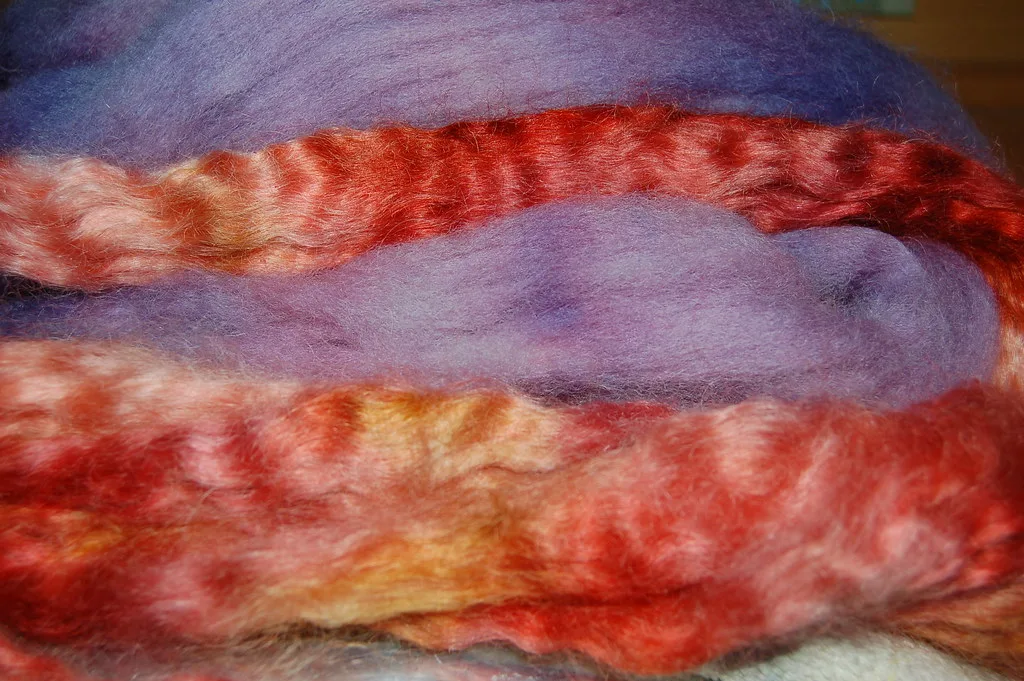
Wool roving is the form almost all felting fibre is sold in: a long, soft, unspun rope of cleaned wool, ready to pull apart with your fingers. If you have bought felting wool at all, you have bought roving, whatever the label said.
What separates a good buy from a bad one is not the word on the label but the breed inside the bag, and the single most useful thing to know is that the fibre a shop pushes hardest — dyed merino, in a wall of colours — is the wrong default for needle felting.
Which roving for needle felting
A barbed needle works by dragging a few fibres downwards past their neighbours until the whole mass locks. What makes that happen quickly is coarseness and crimp: a thicker fibre with more wave in it presents more for the barbs to catch and springs back into its neighbours instead of sliding past them.
Which is why the fine fibres are slow. Merino is the softest thing on the shelf and the most frustrating to sculpt with — it compacts beautifully in the end, but it takes two or three times the stabbing to get there.
- Corriedale, 25 to 31 microns. The default, and what to buy if you buy one thing. Fast under the needle, holds a crisp edge, takes dye well, and cheap enough to use without counting. Staple around 90 to 150 mm.
- Merino, 17 to 23 microns. Soft, brilliant colours, slow to needle. Right for the thin outer skin of a sculpture, for anything worn against skin, and for wet felting, where fineness is an advantage rather than a tax. The full argument is in merino wool for felting.
- Shetland, 23 to 30 microns. Grippy, felts fast, natural colours from white through moorit to near-black. Good for animals where the undyed shade is the point.
- Romney, 32 to 39 microns. Coarse, long-stapled and very fast. Slightly hairy surface, so it suits texture — sheep, bears, anything meant to look like fur rather than skin.
- Core wool, undyed and coarse. Sold by the kilo, structure only, never seen. Covered on its own in core wool.
Micron is the diameter of a single fibre, and it is the number that predicts behaviour. Under about 24 microns you are buying softness and paying in time; over about 30 you are buying speed and paying in handle. Corriedale sits in the middle on purpose. Breed by breed, best wool for felting goes further.
Roving, tops or batts
Three words for three stages of processing: batts are carded into a sheet with the fibres running every way, roving is that sheet drawn into a rope, and tops are combed until every fibre lies parallel. Batts felt fastest because crossed fibres start catching immediately; tops give the smoothest surface.
For most needle felting the distinction matters less than the breed, and shops use the words loosely anyway. Where it does matter — cores, wet felted fabric, nuno, blending — is set out in roving vs top vs batting, and batts have their own page in wool batting for felting.
The one thing that will not felt
Superwash. It is treated to strip or coat the scales on each fibre so it survives a machine wash, and those scales are the entire mechanism felting depends on. Superwash roving is sold widely to spinners and dyers, it looks exactly like everything else on the shelf, and no amount of stabbing will make it hold together.
Read the label, and be suspicious of merino that is unusually cheap. The symptoms, and what else causes the same failure, are in why wool refuses to felt.
How much you actually need
Firmly needle felted wool settles at roughly 0.22 g per cubic centimetre. That one number turns every quantity question into arithmetic: estimate the volume of the finished shape and multiply.
- A 3 cm felt ball. A sphere of radius 1.5 cm is 14 cm³, so about 3 g.
- A 12 cm standing figure. A cone 7 cm tall on a 5 cm base is 46 cm³, and a 3 cm head adds 14 cm³ — 60 cm³ in all, so 13 g, most of it cheap core with a few grams of colour over the top.
- A 7 cm animal. Body, head and limbs come to something like 30 cm³, so 7 g, plus a gram or two of surface colour.
The point of working it out rather than guessing is that volume goes up with the cube of size. Doubling the height of an animal does not double the wool, it multiplies it by eight — which is why a 20 cm piece wants 80 to 120 g and a 10 cm one wants a tenth of that.
Wet felting is a different calculation, because you are laying an area rather than filling a volume. Rough figures: 10 g for a bar of felted soap, 60 g for a dryer ball, 60 to 100 g for a scarf, 80 to 150 g for a bowl or a small bag, 100 to 150 g for a hat.
One warning that catches everyone: wool weighs almost nothing and looks like a great deal more than it is. A 100 g bag of tops is a surprisingly large armful, and 10 g is about a fist of loose fibre.
What it costs
- Undyed carded core wool — sold by the kilo, and by a wide margin the cheapest fibre you will buy. It is also the one you get through fastest, so buy it in bulk.
- Dyed corriedale — sold in 100 g bumps at roughly three times core wool by weight.
- Commercially dyed merino tops — a little more again than dyed corriedale.
- Hand-dyed and small-batch fibre — several times the price of commercial tops. Beautiful, and not for cores.
The economics are stark once you see them written down: a kilo of core wool costs about what 100 g of hand-dyed merino does and lasts ten times as long. Split the budget accordingly — bulk cheap, surface good.
Buying colour
Sample packs of 10 g pieces are excellent value at the start, when you have no idea which shades you will reach for, and poor value afterwards, because the colours you actually use run out first while the rest sit in the drawer for years.
Once you know, buy 100 g of the four or five you use constantly. For everyone that means white and a skin tone; for most it means black, a red and a green as well. Everything else can be mixed — two colours carded together give a third, and the method is in blending wool colours.
Check for vegetable matter before you commit to a supplier: bits of hay and seed left over from the fleece. Cheap roving often carries some, it picks out with tweezers, and on a pale project it is tedious enough to matter.
How to handle it
Never cut roving with scissors. Hold the rope with your hands about 20 cm apart and pull gently — the fibres slip past one another and you get a wispy tapered end that blends invisibly into the next piece. A cut end leaves a blunt line that shows through the surface of finished work and cannot be hidden afterwards.
When you want a fine layer, pull thin veils off the outside of the rope rather than lengths off the end. For wet felting, thin even layers are the whole game; for needle felting they are how you get a smooth skin over a rough core without lumps.
When it does not behave
- It stays fluffy however much you stab it. Superwash, or a fibre far finer than you thought. Test a pinch: real felting wool starts holding together within thirty or forty stabs.
- The surface goes lumpy. A wad laid on instead of a veil. Pull thinner layers and build up.
- The colour looks patchy over a pale core. The core is showing through a skin that is too thin. Another veil, not more stabbing.
- It felts unevenly in slubs. Compressed fibre that has not been teased open. Pull the rope out loosely and let it recover before you use it.
- Dye comes off on your fingers. Unfixed dye. Rinse in cool water with a splash of vinegar until it runs clear, and dry it fully before it goes anywhere near white.
More of what goes wrong, and why, is in needle felting mistakes.
Storing it
Keep roving loosely in breathable bags or open boxes, out of sunlight, and away from moths. Compressed wool in a sealed vacuum bag comes out flat and lifeless and needs teasing back open before it will felt evenly. Cedar or lavender in the box is worth the trouble — moths eat unspun wool a great deal more happily than they eat a jumper, and a bag of merino is exactly what they are looking for.
The leftovers
Ends accumulate faster than you expect, and very little of it is genuinely waste. Small quantities go into felt balls, into colour experiments, or into the core of the next piece — and a drawer of scraps carded together makes a perfectly good heathered core wool that costs nothing, as in carding wool by hand. The wider list of what to do with loose fibre is in wool roving crafts.
If this is the first fibre you have bought, buy 100 g of corriedale in a colour you like and a kilo of core wool, and start with needle felting for beginners. That is under twenty pounds and enough wool for a winter.
Frequently asked questions
What is the best wool roving for needle felting?
Corriedale, at around 27 microns. It is coarse enough to tangle quickly under a barbed needle, fine enough not to feel like doormat, holds detail well and costs a fraction of merino. Buy cheap undyed carded wool for the inside of anything solid and keep the good fibre for the surface that shows.
How much wool roving do I need for a project?
Firmly needle felted wool settles at roughly 0.22 g per cubic centimetre, so work out the rough volume of the finished shape and multiply. A 3 cm felt ball is about 14 cm³, so 3 g. A 12 cm figure is around 60 cm³, so 13 g. Buy at least 100 g of any colour you plan to use as a base.
What is the difference between wool roving and wool tops?
Tops are combed so every fibre lies parallel; roving is carded so the fibres are aligned but still slightly crossed. Most shops label both as roving and either one felts. Crossed fibres tangle faster, so carded preparations compact more quickly under a needle, which is why core wool is always carded.
Can you use wool roving meant for spinning?
Yes, provided it is not superwash. Spinning and felting fibre come off the same machines, and the only preparation that will not work is superwash, which has had its scales stripped or coated precisely so it cannot felt.