Felting Mohair: Can You Felt It, and What Mohair Locks and Yarn Are Good For
8 min read Intermediate
We may earn a commission from links on this page, at no extra cost to you. As an Amazon Associate I earn from qualifying purchases. Learn more.
Mohair felts slowly and loosely on its own, which is exactly why its locks keep their curl on a felted surface. Kid, yearling and adult grades, blending with merino, attaching locks for doll hair and Santa beards, mohair yarn in wet and nuno felting, and washing locks safely.
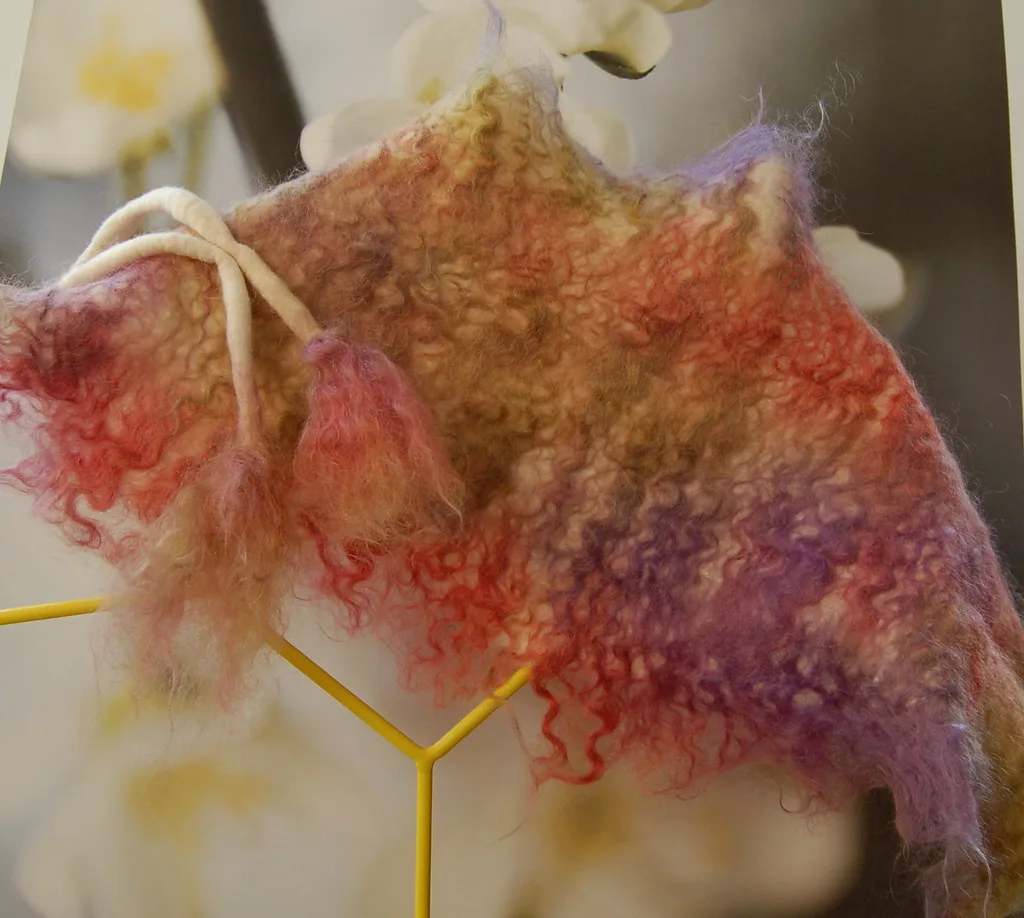
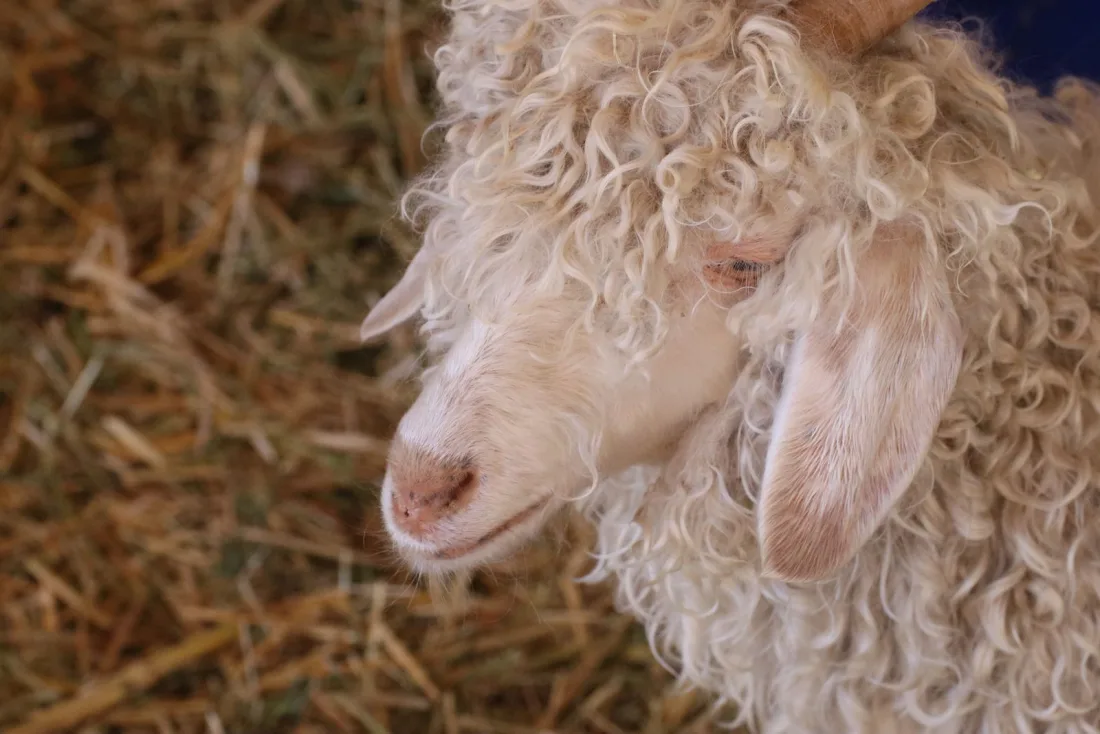
You can felt mohair, but not well on its own. Mohair is a smooth, lustrous fibre from the Angora goat, and the same smoothness that gives it its shine means its fibres grip each other far less than sheep wool does. Felters use that to their advantage: blended with merino, mohair adds sheen and drape; laid on top of a merino base, its locks stay curly and free instead of melting into the felt. That makes it the classic fibre for doll hair, Santa beards and shaggy wet-felted surfaces.
One thing to clear up first. Mohair is goat fibre. The fibre sold as "angora" comes from the Angora rabbit, a different animal and a very different fibre: much finer, fluffier and shorter. Both breeds are named after Ankara in Turkey. This page is about the goat.
What is mohair, and what is the difference between kid and adult?
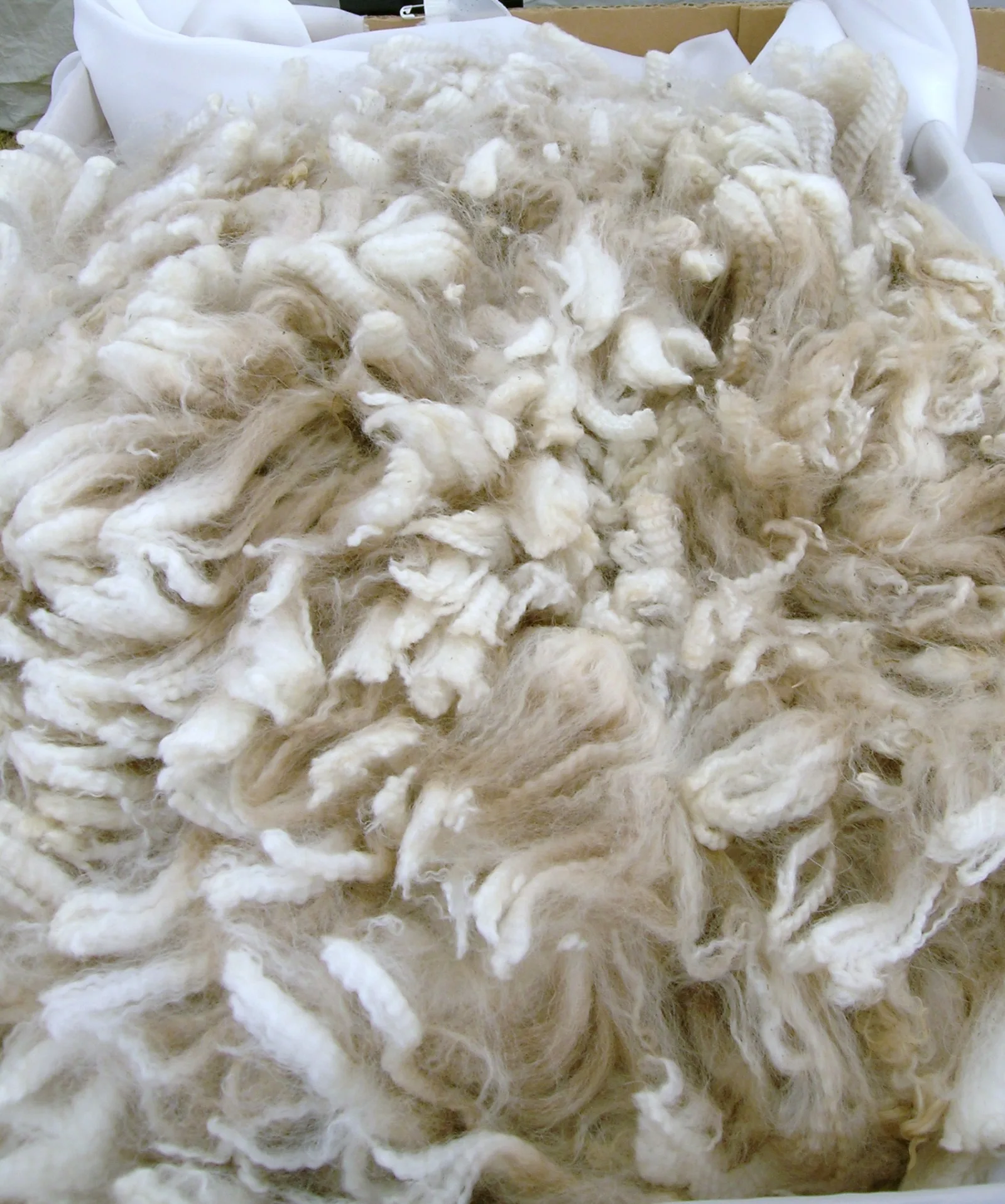
Mohair is the coat of the Angora goat, shorn twice a year. The fibre grows about 1 in (2.5 cm) a month, so a six-month clip gives locks around 4 to 6 in (10 to 15 cm) long, each a lustrous ringlet or wave. The goat's age matters more than anything else, because the fibre thickens as it grows older.
| Grade | From | Typical diameter | Feel and best felting use |
|---|---|---|---|
| Kid | The first two clips, up to about a year old | About 24 to 28 microns | Soft, fine, tight curls. The best doll hair and the only grade that felts at all usefully alone. |
| Yearling | The third and fourth clips | About 28 to 32 microns | Bouncy, defined ringlets. Santa beards, animal manes, surface locks. |
| Adult | Older goats | About 32 microns and up | Coarse, very shiny, wavy rather than curled. Wild hair, wigs, rug and wall-hanging texture. |
For comparison, felting merino is usually 18 to 23 microns. So even kid mohair is no finer than a medium wool, and the reason it felts poorly is the surface of the fibre, not its thickness.
Why does mohair felt so poorly on its own?
Felting depends on scales. Every wool fibre is covered in tiny overlapping scales that let it slide one way and catch the other, so agitation ratchets the fibres together; why won't my wool felt explains the mechanism. Mohair's scales are thin, lie flat and have smooth edges, and there are fewer of them along each fibre. They reflect light, which is the lustre, and they barely catch.
In practice, a batt of pure mohair wet felted the usual way:
- takes far longer than wool to hold together, if it does at all;
- makes a thin, hairy, loose felt that sheds and can be pulled apart;
- shrinks little, so it is hard to full into a firm fabric.
Kid mohair, being finer, gets furthest. Adult mohair mostly slides past itself. That reluctance is the useful part: a mohair curl laid on felting wool keeps its shape while the wool around it shrinks and locks it in place.
How much merino should you blend with mohair?
Blend for whatever you want the mohair to add, and let the merino do the felting. These are working guidelines rather than fixed rules; make a small sample with your own fibres.
| Mohair in the blend | What to expect |
|---|---|
| 10 to 25% | Felts almost like merino, with added sheen and a soft halo. A good place to start. |
| 30 to 50% | Slower to felt and needs longer fulling. Lustrous, drapey, a little hairy. Good for scarves and wraps. |
| Over 50% | Hard to make firm. Better used as a surface layer over wool than mixed through. |
Mix the fibres properly with hand carders or on a blending board (see carding wool by hand); streaks of unmixed mohair are weak spots. Or skip blending and put the mohair only in the top layer, where it shows, with all-merino layers beneath. Alpaca felting follows the same logic for another slow-felting fibre, and best wool for felting covers the base wools.
How do you use mohair locks for doll hair, beards and fur?
Anchor only the cut end of each lock, and let the curl hang free. On a needle felted piece:
- Separate the locks into small bundles, a pencil-width or less. Thin bundles look like hair; thick ones look like a wig.
- Lay the cut end against the felt, pointing the way the hair will fall, and needle it in with a 36 or 38 gauge needle. See felting needles explained for gauges.
- Cover the anchor with a wisp of wool roving and needle through both. Mohair is slippery and pulls out of bare felt; the wool gives the barbs something to grab.
- Work in rows from the bottom up, so each row hides the anchors of the row below.
- Tug each bundle gently before moving on. Anything that slides needs more needling.
For a doll, start at the nape and finish at the crown or parting; how to make felt dolls covers the head. For a Santa beard, start under the chin with the longest locks and work up to the moustache with shorter ones, as in the needle felted Santa. For animal coats, the same row method gives poodles, sheep and goats; needle felting fur compares it with other ways of making fur.
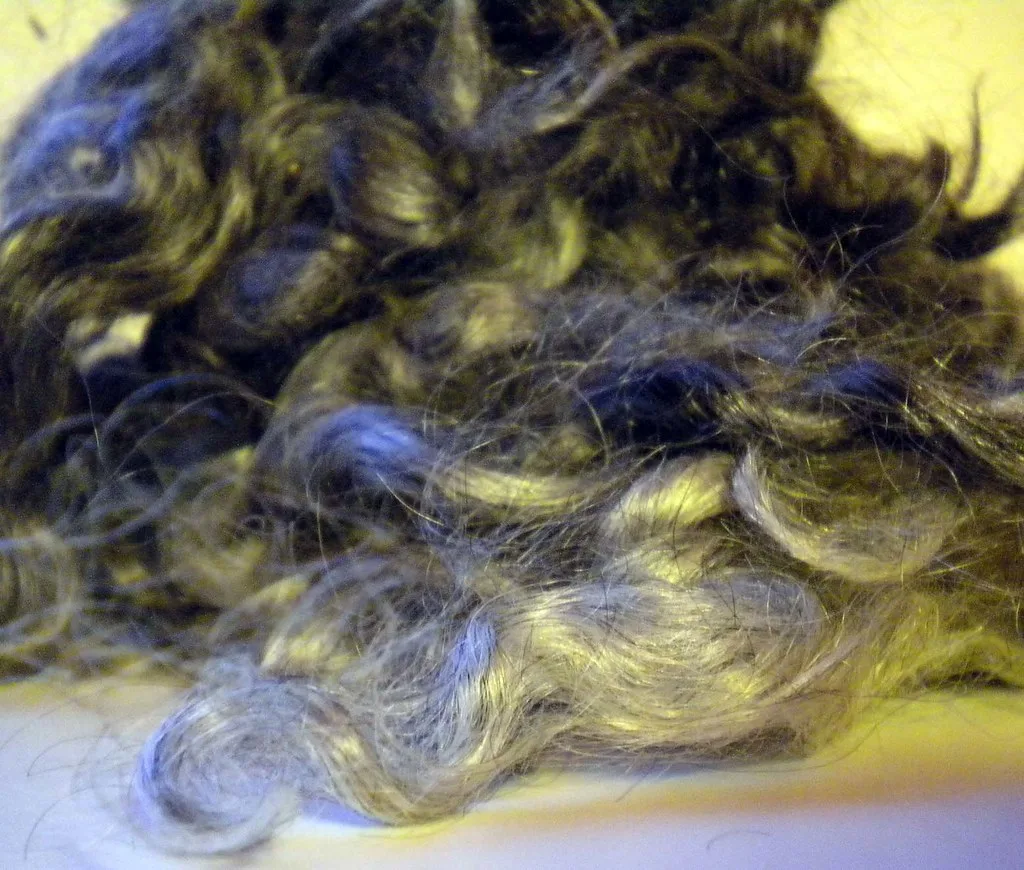
Do not brush mohair locks after attaching them unless you want a fluffy halo instead of ringlets. To tidy a curl, twist it round a finger while damp and let it dry. Wool locks from Wensleydale or Teeswater do the same job with a softer shine, if you want to compare.
How do you wet felt mohair locks onto a surface?
The locks need a felting wool to hold them; they will not hold themselves. There are two common ways to lay them out:
- Locks first. Lay the locks curl side down on the mat, then build two or three thin crossed layers of merino over them. As the wool felts, its fibres migrate through the locks and bind them, and when you turn the piece over the curls are on the outside.
- Locks on top. Lay the merino base, then the locks on it, and cover just the base of each lock with a fine wisp of merino. This is easier to control when you want locks in particular places.
Wet with warm soapy water, press flat under net or bubble wrap, and rub gently until the merino holds before rolling. Rough handling at the start frizzes the free ends. The merino shrinks and the mohair hardly does, so the locks end up bunched a little closer together than you laid them.
Can you use mohair yarn in wet felting and nuno felting?
Yes, as surface decoration. Lay the yarn on the top layer of wool in lines, loops or squiggles, and cover it here and there with fine wisps of wool so it is caught in place. A brushed mohair yarn attaches better than a smooth one, because its fuzzy halo tangles into the wool beneath. In nuno felting, lay it on the silk or on the wool next to it; nuno felting for beginners explains the layout.
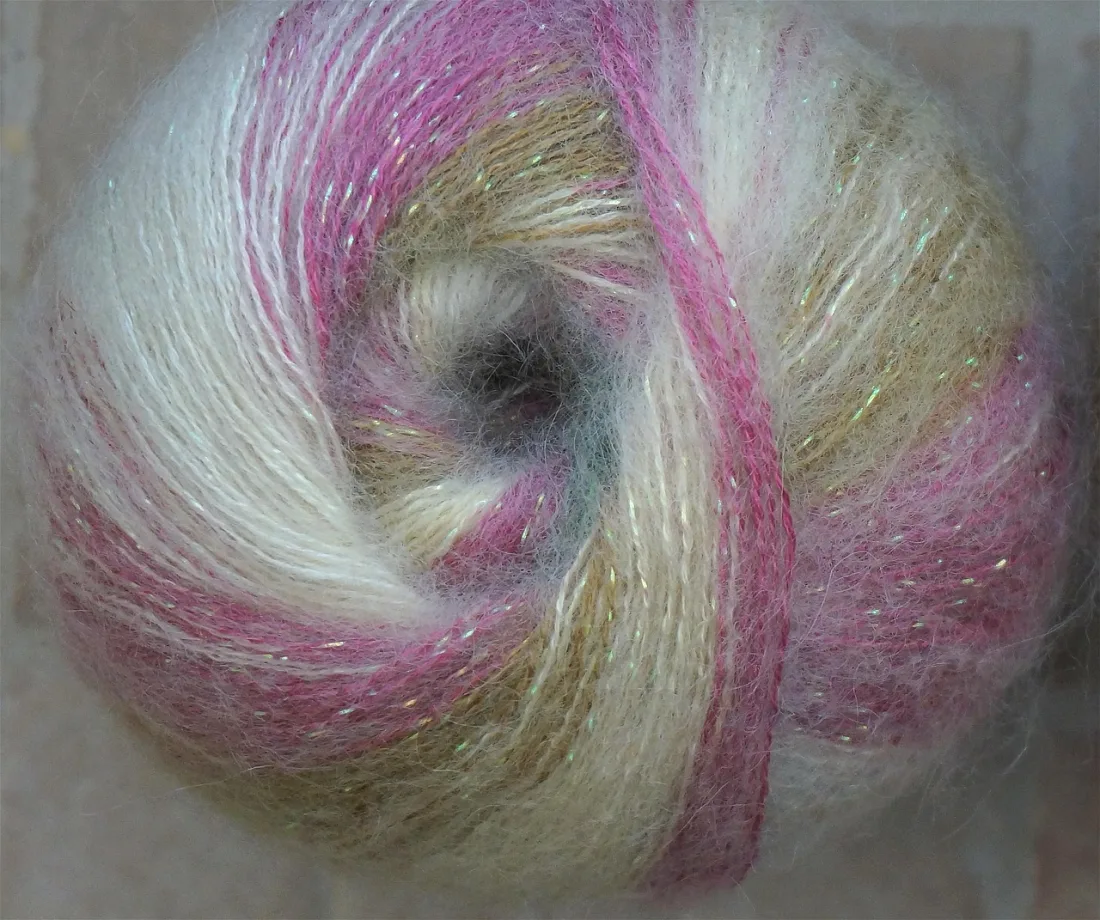
Read the yarn label first. Many brushed mohair yarns are spun around a fine nylon or silk core. The halo will felt in, but the core will not shrink, so a long straight line of it can ripple as the felt shrinks around it. Short lengths and curving lines hide this best.
What happens when you knit mohair yarn and full it?
It mats and fulls, often readily, which can look like a contradiction of everything above. It is not. Loose mohair in a wet felting layout has to find and grip its neighbours with its smooth scales. In a knitted fabric the fibres are already packed together in the yarn, and the long, fine halo hairs that stand out from a brushed mohair yarn tangle across the stitches as soon as they are rubbed in hot water. That is why knitting guides list mohair among the yarns that felt well, while felters laying out loose fibre find it slow.
In hot water with agitation, the halo mats together, the stitches blur and the piece shrinks, getting fuzzier and denser rather than thick and firm. A yarn blended with wool fulls further than a pure mohair one, and a nylon core or binder limits shrinkage.
Mohair is often held together with a wool yarn in felted knitting, which gives a firm fulled fabric with a soft, hairy surface. Whatever you use, knit and full a swatch first and measure it, as described in felting in knitting. Superwash yarns of any fibre will not full.
How do you wash mohair locks without felting them?
Raw mohair carries less grease than most sheep fleece, so it cleans easily, but its curls are easy to spoil.
- Keep the locks in order. Lay them in a mesh laundry bag, or between two layers of tulle, so they cannot tangle.
- Soak, do not stir. Lower them into hot water with wool wash and leave them for 20 to 30 minutes.
- Rinse at the same temperature. A jump from hot to cold water is one of the triggers for felting.
- Press the water out in a towel. Do not wring.
- Dry flat, out of direct sun, and open any clumped tips with your fingers once they are dry.
The same gentle approach suits a finished piece with mohair on its surface: hand wash, no rubbing on the curly side, dry flat. Washing finished felt in general is covered in can you wash felt.
Frequently asked questions
Can you felt mohair on its own?
Only slowly and loosely. Mohair fibres have thin, flat scales with smooth edges, so they grip each other far less than sheep wool does. Kid mohair will make a soft, hairy felt with a lot of work; adult mohair barely holds together. For a firm felt, blend it with merino or keep it as a surface layer on a wool base.
Is mohair the same as angora?
No. Mohair comes from the Angora goat. The fibre sold as "angora" comes from the Angora rabbit. Both breeds are named after Ankara in Turkey, which is the source of the confusion, but rabbit angora is much finer, softer and fluffier, while mohair is longer, smoother and lustrous.
How do you attach mohair locks to a needle felted doll?
Needle felt only the cut end into the head, a few locks at a time, working in rows from the nape upward so each row covers the anchors of the row below. Lay a thin wisp of wool roving over the cut ends and needle through it: mohair is slippery, and the wool gives the barbs something to lock into.
Will mohair yarn felt in the washing machine?
Usually, yes. In a knitted fabric the long halo hairs tangle quickly, so the stitches blur and the fabric mats and shrinks, sometimes faster than you expect. How far it goes depends on the blend: many brushed mohair yarns have a nylon core, which does not shrink and limits how far the fabric can full. Knit and full a swatch before committing a whole project.
How do you wash mohair locks without felting them?
Soak them in hot water with wool wash, without stirring or squeezing, then rinse in water of the same temperature. Keep the locks in a mesh bag or between layers of tulle so they stay in order, press the water out gently, and dry them flat. Do not brush them, which turns ringlets into frizz.
Topics
Image credits
- Wet-felted merino and mohair scarf in red, gold and purple, with curly mohair locks standing out from the felt surface — ingermaaike2 (BY)
- Close-up of an Angora goat lying on straw, its head framed by long, curly cream mohair — Ryan Lansdown (Pexels License)
- A pile of dyed dark silver mohair locks with glossy, wavy curls — Goldfish Love Fibers (BY SA)
- Ball of fluffy brushed mohair yarn in pink, white and gold with a fine sparkle thread — leoleobobeo (Pixabay Content License)