Dyeing Wool with Onion Skins: The Natural Dye That Needs No Mordant
4 min read Intermediate
We may earn a commission from links on this page, at no extra cost to you. As an Amazon Associate I earn from qualifying purchases. Learn more.
Onion skins give strong golds, ambers and rusts from something you throw away, and unusually among natural dyes they work without a mordant.
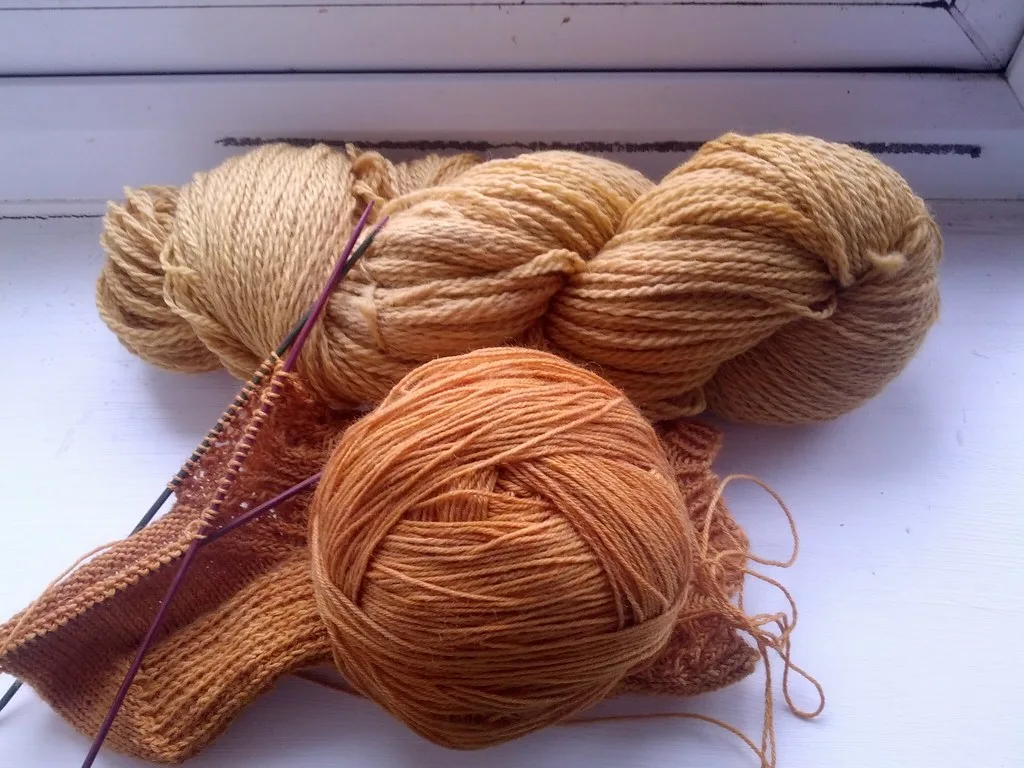
Most natural dyeing involves a mordant — a metallic salt that fixes the colour to the fibre — which adds a step, a chemical and a wait. Onion skins do not need one. They are rich enough in natural tannins to bond to wool by themselves, which makes them the easiest natural dye there is and the right one to start with.
What you get
- Brown onion skins — clear golden yellow at low concentration, deep amber and rust at high. Strong, warm, and remarkably lightfast for a kitchen dye.
- Red onion skins — greens, olives and khakis. Never red, never pink. This confounds everyone the first time and is one of the more pleasing surprises in dyeing.
Both give a range rather than a single shade, and the depth depends almost entirely on how many skins you use.
Collecting the skins
You need roughly the same dry weight of skins as of wool — 100 g of skins for 100 g of fibre. Dry onion skin weighs almost nothing, so that is a startling quantity of onions.
Keep a paper bag in a cupboard and add the papery outer layers as you cook. Greengrocers and market stalls will often hand over the loose skins at the bottom of the crate if you ask. Store them dry and airy — skins in a sealed plastic bag go mouldy.
What you need
- Onion skins, ideally equal in weight to your wool
- Wool roving, yarn or fleece — not superwash if you intend to felt it later
- A large pan. This one is genuinely food-safe, so an ordinary pan is fine
- A sieve or a muslin bag
- Optional: alum for a mordant, a rusty nail or iron water for modifying
Method
- Soak the wool in cool water for at least 30 minutes. Dry fibre takes dye in blotches.
- Simmer the skins in plenty of water for 45 minutes to an hour. The liquid goes deep orange-brown.
- Strain the skins out. Leave them in and they print themselves onto the wool as darker patches — occasionally lovely, usually not what you wanted.
- Lower the wool in gently. Do not stir.
- Heat slowly to just below simmer, about 85 °C, and hold for 45 minutes to an hour.
- Let it cool in the pot. Longer soaking gives deeper colour, and overnight is fine.
- Rinse in water at the same temperature until it runs clear, then dry flat out of direct sun.
The same rule as all wool dyeing applies throughout: no stirring, no temperature shock, no squeezing while hot. Those three things are felting techniques, and they will turn loose roving into a mat. See dyeing wool roving.
Changing the colour
Onion skin dye responds strongly to modifiers, which is where it gets interesting.
- Alum mordant beforehand — brighter, clearer yellows.
- Iron afterwards — drop the dyed wool briefly into water with a rusty nail or a splash of iron water. Golds shift to olive and deep bronze in seconds. Do not overdo it; iron makes wool brittle.
- Copper — pushes colours towards green.
- A pinch of soda — deepens towards red-brown.
Split a dye bath into two or three jars and modify each differently. One pot of skins can produce a whole graded palette, which is the best possible starting point for blending wool colours.
Exhausting the bath
The first batch takes the strongest colour. Put a second batch of wool into the same bath and it comes out a paler, softer version — and a third paler still. A single pot of skins gives three graded shades that go together perfectly, which no bought dye can do as easily.
Bundle dyeing
An alternative worth trying: wrap wool or a silk scarf around a handful of skins, tie it into a tight bundle, and steam it for an hour. The skins print directly onto the fibre in patches and lines. Unpredictable, and it produces marks nothing else does.
Fastness, honestly
Onion skin is at the good end of natural dyes for washfastness and adequate for light. Expect a dyed piece in a sunny window to soften over a few years rather than fade in a season. For anything that must hold its colour for decades, acid dyes are the reliable choice.
Where to use it
These are earthy, autumnal colours that suit exactly the things felters make: pumpkins, mushrooms, animal coats, landscape work. Onion skins are the easiest way in, but they are one dyestuff among many — madder, weld, walnut and indigo each behave differently on wool, and the full range is in natural dyes for wool. Undyed core wool dyed in a big pot of onion skins costs nothing and gives a whole project's worth of warm neutrals.
Frequently asked questions
Do onion skins need a mordant?
No, which makes them unusual. Onion skins are high in natural tannins that bind to wool on their own. A alum mordant will brighten and slightly shift the colour, but it is optional rather than required.
How many onion skins do you need to dye wool?
Roughly equal weight of dry skins to wool for a strong colour — 100 g of skins for 100 g of wool. That is a lot of onions, so most people collect skins in a paper bag over several months.
What colour do red onion skins give?
Not red. Red onion skins give greens, olives and khakis on wool, while brown onion skins give gold, amber and rust. It surprises everyone the first time.
Is onion skin dye light fast on wool?
Reasonably, better than most kitchen dyes and not as good as commercial acid dyes. Expect a gradual softening over years in a sunny room rather than a rapid fade.