Wool Combs: Choosing, Using and Making Your Own
4 min read Intermediate
We may earn a commission from links on this page, at no extra cost to you. As an Amazon Associate I earn from qualifying purchases. Learn more.
Combs remove short fibre and align the rest, which carders cannot do. What the pitch and tine count mean, which size to buy, and how to make a usable pair for very little.
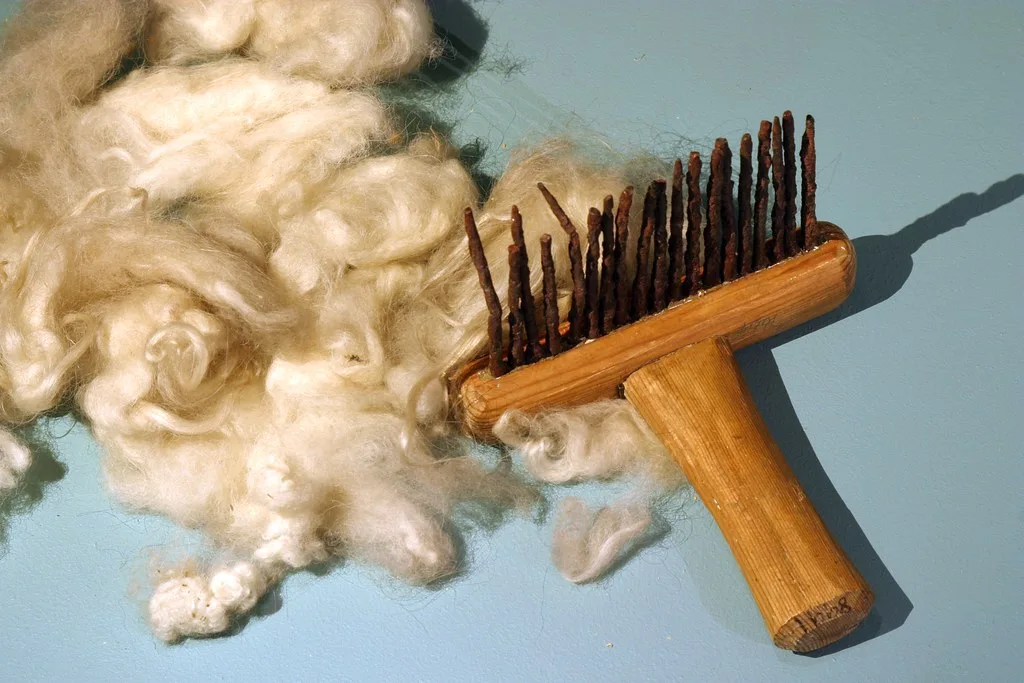
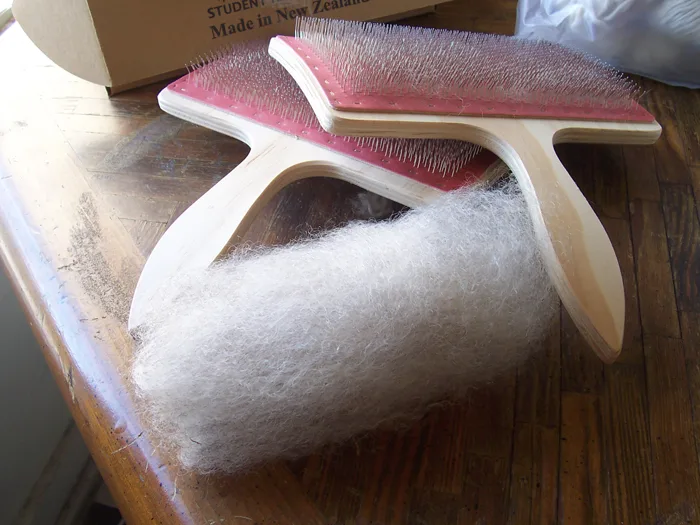
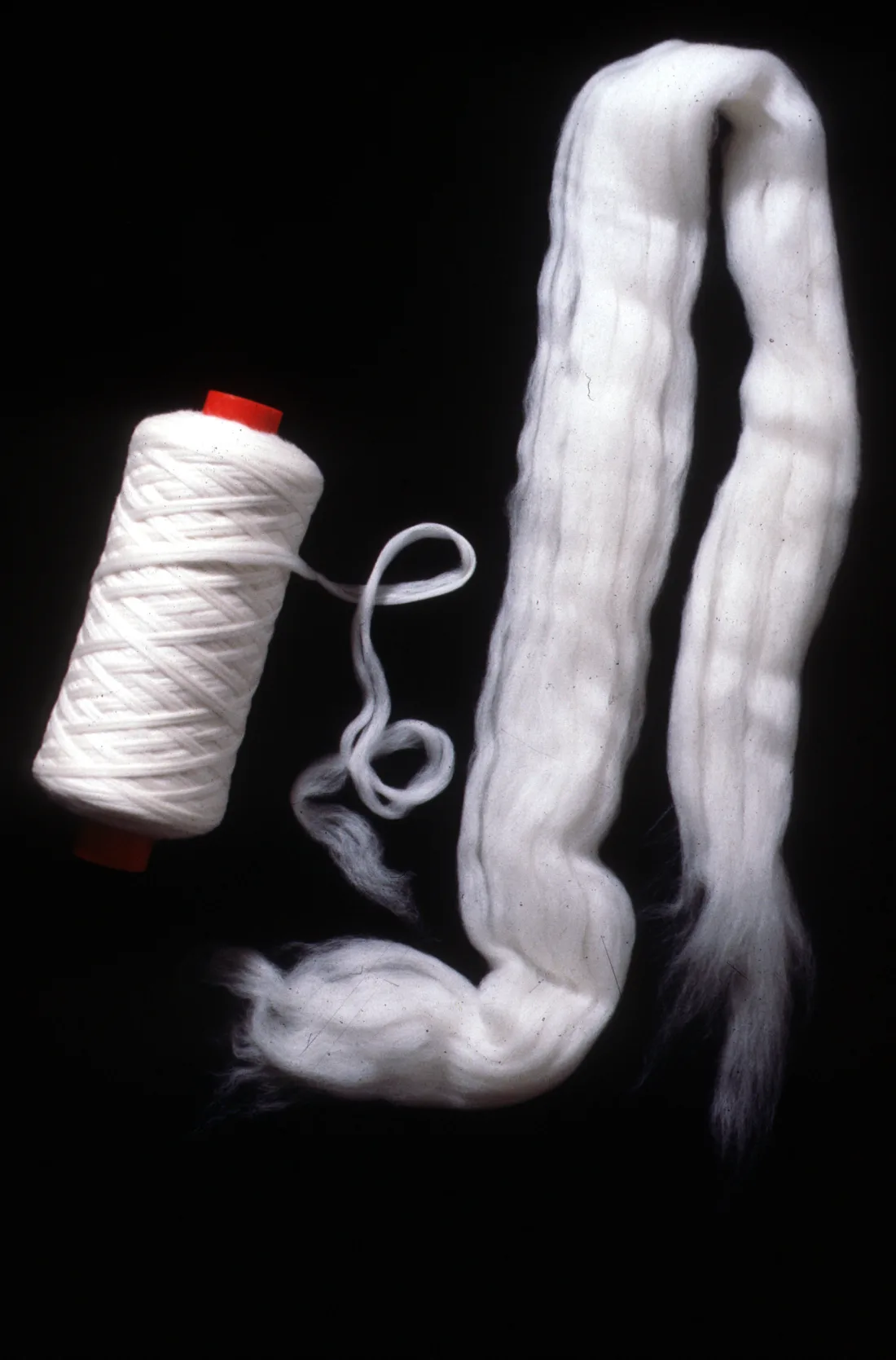
Combing is the step that separates good fibre from all the fibre. A comb holds a lock by one end, pulls the long fibres through a set of steel tines, and leaves the short bits, the second cuts, the neps and the hay behind on the tines. What comes off is called top, and it is the smoothest preparation there is.
Carding cannot do this. Carding mixes everything you put in, faults included. That is the whole distinction, and it decides which tool you want.
Combs versus carders, properly
| Combs | Carders | |
|---|---|---|
| Fibre direction | Parallel | Random |
| Output | Top | Batt or rolag |
| Short fibre | Removed | Kept |
| Waste | 10–30% | Almost none |
| Best for | Smooth surfaces, worsted yarn, longwool | Blending colour, cores, fast felting |
For felting specifically: carded fibre felts faster because the crossed fibres tangle sooner, which is why wool batting is the better core material. Combed top gives the smoother finished surface. Most work wants both, and carding wool by hand covers the other half.
Reading the specification
Comb listings are written in a shorthand that is not explained anywhere on the page.
- Rows (pitch). Single, double, four or five rows of tines. Fewer rows for long coarse locks, more rows for short fine wool.
- Tine length. Long tines hold more; short tines are easier to control and safer.
- Mini combs. Small, light, four or five rows, held in one hand. The usual choice for fine wool and for anyone who is not processing whole fleeces.
- English combs. Large, long-tined, traditionally used with one comb clamped to a bench. Serious kit for longwool in quantity.
- Viking combs. Two rows of long tines set in a wide head, worked as a pair. Fast on coarse and medium fleece, popular with people processing their own sheep.
Names to expect when shopping: Valkyrie for extra fine and superfine minis, Indigo Hound for English combs, Louet, Majacraft and Ashford for mid-range pairs. Second-hand combs hold their value and are worth watching for — steel tines do not wear out.
Which to buy
- Merino and other fine wool — five-row mini combs, short tines.
- Corriedale, shetland, romney — two or four rows, medium tines. See corriedale wool.
- Wensleydale, teeswater, other longwool — single or double row, long tines. These are the fleeces where combing pays off most, and where the curls survive: wool locks.
- Doll hair and locks — one small comb is enough; you are tidying, not processing.
How to comb wool
- Wash first. Combing greasy fleece is possible but the lanolin gums the tines. Wash in hot water and detergent, without agitating, or you will felt it in the sink.
- Load the stationary comb. Hold the lock by its cut end and lash the tip onto the tines, working from the outside in. Fill perhaps half the tine depth — an overloaded comb will not pass.
- Comb across. Pass the second comb through the fibre at right angles, starting at the very tips and taking only a little each time. Work gradually deeper. Forcing a full-depth pass tears the staple.
- Transfer and repeat. The fibre moves from one comb to the other. Two or three transfers is usually enough; more just wastes fibre.
- Pull off the top. Draw the fibre off in a steady stream, through a diz — a small holed disc — if you want an even ribbon. Stop pulling when resistance rises: that is the short fibre refusing to come, which is exactly what you wanted left behind.
What stays on the tines is called noil. It is not rubbish — it is ideal core stuffing and it needle felts beautifully, so put it in the core wool bag.
Making your own combs
A workable pair costs a couple of hours and very little money.
- Nail combs. A hardwood block, a drilled row of holes at 8–10 mm spacing, and stainless or galvanised nails set in epoxy with the heads cut off and the ends rounded. One row of 12 cm nails handles longwool well.
- Slicker brushes. Two large dog slickers, back to back. Genuinely useful for small quantities, locks and doll hair, and they cost almost nothing.
- What to avoid. Soft nails bend and then catch; unrounded points draw blood. Wool combs are the sharpest tool in the craft and homemade ones are the sharpest of those — a leather glove on the holding hand is not optional.
Homemade combs will handle coarse and long fleece perfectly. They will not do fine merino, because the spacing needed is too tight to drill accurately.
Is it worth it for a felter?
If you buy dyed tops, no — someone has already combed them. If you have access to raw fleece, combs turn a five-pound bag of wool into materials worth many times that, and they are the only way to get clean, aligned fibre out of a mucky one. Pair them with a blending board for colour work, and you can prepare anything the craft needs without a machine.
Frequently asked questions
What is the difference between wool combs and carders?
Carders open and mix fibre, leaving it lying in every direction — that gives a batt. Combs pull the fibre straight and throw out anything short, leaving parallel fibre — that gives top. Carded wool is airy and felts fast; combed wool is smooth and drapes.
Do I need wool combs for felting?
Not for ordinary felting, no — bought tops are already combed. Combs matter if you buy raw fleece, if you want to remove second cuts and vegetable matter, or if you spin. For felting alone, hand carders are the better first purchase.
How many rows of tines do I need?
One or two rows for long, coarse fleece such as wensleydale or teeswater. Four or five rows for fine, short wool like merino. More rows hold more fibre but need more force, and a fine fleece falls straight through a single-row comb.
Can you make your own wool combs?
Yes. Stainless nails set in a hardwood block, or a pair of dog slicker brushes for very small quantities. Homemade combs will not match a set of Valkyrie minis for fine wool, but they handle longwool perfectly well for a fraction of the price.
Topics
Image credits
- Wool combs with long steel tines — arnybo (BY SA)
- Combed wool drawn off as a smooth sliver — division, CSIRO (BY 3.0)