Wool Dryer Balls: How to Make Them and Whether They Work
5 min read Beginner
We may earn a commission from links on this page, at no extra cost to you. As an Amazon Associate I earn from qualifying purchases. Learn more.
Three balls of felted wool in a tumble dryer cut drying time by roughly a fifth and replace fabric softener entirely. Making them takes an afternoon.
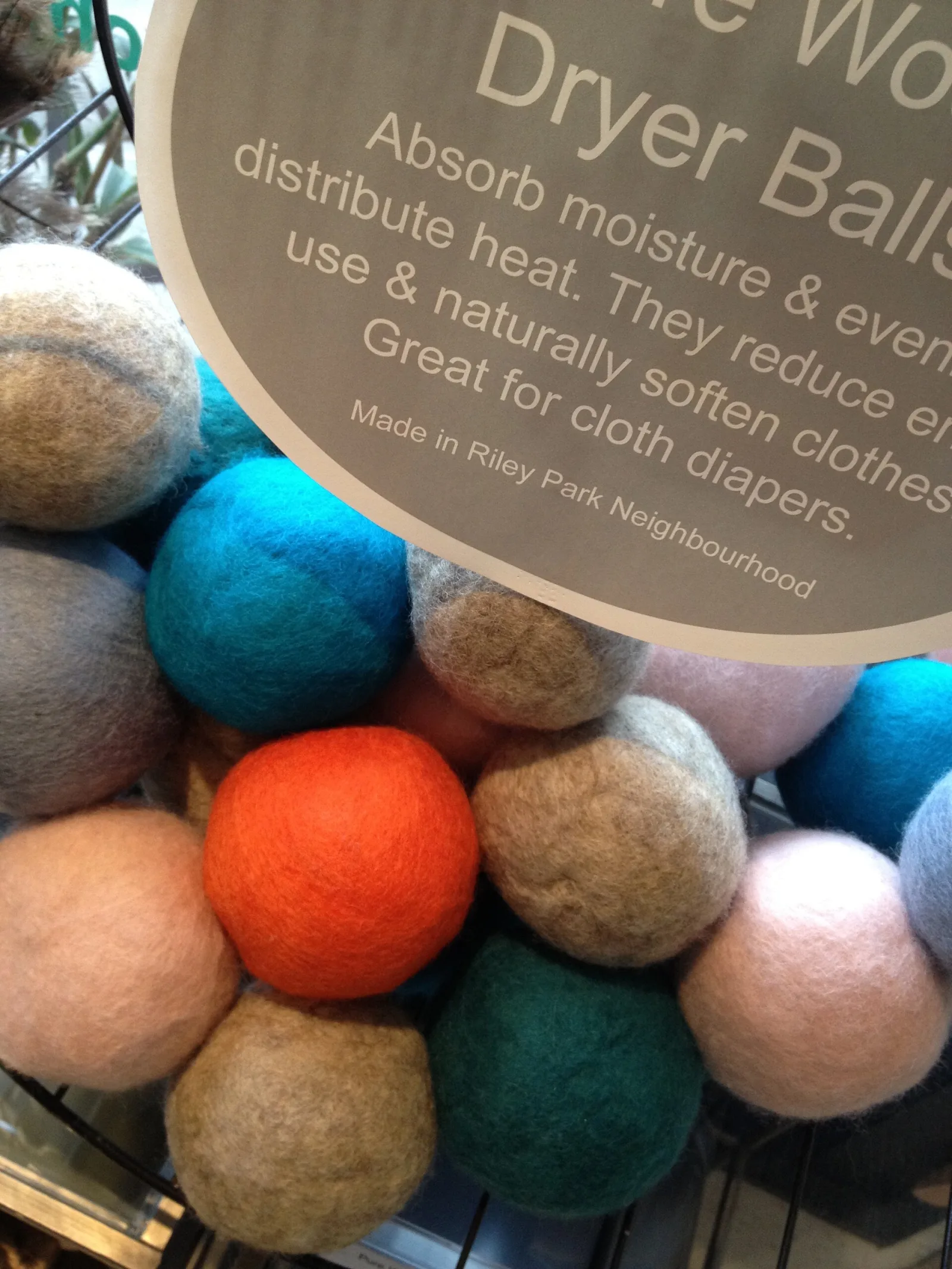
A wool dryer ball is a hard felted ball of wool, about the size of a tennis ball, that you throw in the tumble dryer. Six of them replace fabric softener, cut drying time and last for years. They are also the most useful thing a beginner can make, because the technique is exactly making felt balls at a larger scale.
How they work
Two mechanisms, both mechanical.
- Separation. Wet laundry clumps into a mass that warm air cannot get through. The balls bounce between the layers and keep them apart, so drying is faster and more even.
- Softening by beating. They pummel the fabric as it tumbles, breaking up the stiffness that makes air-dried laundry feel like cardboard. This is what fabric softener does chemically.
Wool is the right material because it is heavy enough to move laundry, soft enough not to damage it, and absorbs a little moisture rather than adding heat.
Making them
What you need
- Undyed core wool or wool roving — about 60 g per ball, so 400 g makes six
- A pair of old tights or a leg cut from them
- String or elastic bands
- A washing machine and a tumble dryer
Use untreated wool. Superwash will simply come apart in the machine. Cheap coarse core wool is ideal — nobody sees it and coarse wool felts hardest.
Method
- Wind a tight ball. Start by wrapping wool around two fingers a dozen times, slide it off, then wind around that in every direction, keeping the tension high. Build to about 8 cm — larger than a tennis ball, because it will shrink.
- Tuck the end in with a crochet hook or your fingers so it cannot unravel.
- Bag them. Push each ball into the toe of the tights and tie a knot behind it, then add the next. You end up with a string of separated balls.
- Wash hot. 60 °C, longest cycle, a little detergent, and a couple of towels or jeans for abrasion.
- Tumble dry hot in the tights.
- Check. Cut one free — it should be hard, with no visible strands and no give under thumb pressure. If it is soft, put it back and repeat the whole cycle.
- Repeat if needed. Two cycles is normal, three is not unusual.
A hand-rolled version works too — hot soapy water and fifteen minutes of rolling per ball — but at this size the machine does a harder, more even job for no effort.
Using them
- Three balls for a small load, six for a normal one, nine for bulky bedding.
- Leave them in the drum permanently. There is no reason to take them out.
- They can go in with everything, including towels, bedding and delicates.
- Expect roughly 10 to 25% less drying time. Bulky loads benefit most.
Honest limitations
- They are not silent. Six wool balls in a metal drum make a noise. It is a dull thudding rather than a rattle, but it is not nothing.
- They do not remove pet hair. They agitate it loose so more reaches the lint filter, which helps a little. Nothing more.
- They shed slightly for the first few loads. Wool fluff on dark clothes, briefly.
- Static can get worse if you over-dry, particularly with synthetics.
Dryer balls vs dryer sheets
Both go in the dryer and both claim to soften laundry, by completely different means. A dryer sheet is non-woven fabric coated with softener and fragrance; heat melts the coating and the tumbling transfers it onto your clothes as a thin waxy film. That film makes fibres lie flat and is mildly conductive, which is why static disappears. A dryer ball adds nothing: it separates the load and beats the fabric.
The film is the whole comparison. It is why sheets work, and why they are wrong for several common loads:
- Towels lose absorbency. A towel dried with sheets for a year pushes water around instead of soaking it up.
- Sportswear stops wicking, because technical fabrics move moisture along fibres and a waxy coating blocks that. Microfibre cloths stop cleaning for the same reason.
- Cloth diapers turn water-repellent, which is a serious problem.
- Flame-resistant children's sleepwear: most manufacturers advise against softeners on it.
- The lint filter slowly clogs with sheet residue, which cuts airflow if the mesh is never scrubbed.
| Wool dryer balls | Dryer sheets | |
|---|---|---|
| Softening | Fluffier, natural, does not build up | Softer straight away |
| Static | Reduced, worse if over-dried | Eliminated |
| Drying time | 10–25% shorter | No change |
| Scent | Light, only with essential oils | Strong and lasting |
| Sensitive skin | Adds nothing if unscented | Leaves fragrance and softener |
| Lifespan | Around 1,000 loads, then compost | One load |
| Noise | A dull thud | Silent |
Use balls for towels, bedding, sportswear, diapers, microfibre and bulky loads such as comforters and coats, where the separation matters most. Sheets only make sense for synthetic-heavy loads in a dry climate where static is severe, or where strong lasting fragrance is the point. Using both together partly defeats the balls: they cannot soften mechanically through a coat of softener.
Static
Over-drying is the cause. Take the load out while very slightly damp and the problem disappears. If it persists, push a large safety pin into each ball — the metal discharges static build-up, and it is a genuinely effective trick.
Scent
Essential oils on dryer balls work, with caveats about quantity, timing and flammability that are worth reading before you start: see wool dryer balls and essential oils.
Maintenance
They need almost none. If they start looking grubby, run them through a hot wash on their own — it cleans and refelts them at the same time. If one begins to unravel, wind a fresh layer of wool over it and run it through the felting cycle again.
Expect around 1,000 loads. They will look progressively fuzzier and work identically.
Making them as a gift
A set of six in graded natural colours, in a paper bag or a small box with instructions, is a good present — useful, handmade, and it costs the price of half a kilo of core wool. Dyed wool works but colours can transfer slightly on the first few loads, so felt a plain core and wrap a coloured surface layer over it, then run an extra cycle.
Frequently asked questions
Do wool dryer balls actually work?
Yes, modestly. They separate the load so warm air circulates, which cuts drying time by around 10 to 25% depending on the load. They also soften fabric mechanically and remove the need for dryer sheets.
How many wool dryer balls do you need?
Three for a small load, six for a normal one, and up to nine for a large or bulky load. Too few makes almost no difference, which is why people who try two conclude they do not work.
How long do wool dryer balls last?
Around 1,000 loads, or two to three years of regular use. They gradually shed a little fibre and go slightly fuzzy; when one starts to unravel it can be refelted or replaced.
Are wool dryer balls better than dryer sheets?
For towels, sportswear and anything that needs to absorb or breathe, clearly yes: dryer sheets coat fibres in a film that reduces absorbency. For maximum static control and strong scent, sheets still win.
Do wool dryer balls cause static?
They reduce it in most loads but can increase it if you over-dry, especially with synthetics. Taking the load out slightly damp solves it. A safety pin pushed into one ball also helps by discharging static.
Topics
Image credits
- Wool dryer balls, hard felted balls used in a tumble dryer — Christine Rondeau (BY 2.0)