Felt Machine Embroidery: Designs, Stabilisers and Settings
4 min read
Felt is the easiest fabric an embroidery machine will ever meet — no fraying, no grain, and it is its own stabiliser. Almost. The two places it goes wrong are density and hooping.
Felt is a machine embroiderer's fabric: it does not fray, so appliqué needs no turned edges; it has no grain, so nothing has to be aligned; and it is thick enough to support stitches that would pucker cotton. The mistakes people make with it are all versions of treating it like a woven.
Which felt to use
- Wool-blend felt (35–70% wool), 1–1.5 mm — the standard for embroidery. Dense, stable, takes stitches cleanly, and it is what most in-the-hoop patterns are designed around.
- 100% wool felt, 1–2 mm — the best-looking, softest and most expensive. Slightly more give, so stabilise properly.
- Acrylic craft felt — cheap and fine for children's projects, but the surface pills where the needle works and it melts under an iron.
- Thick felt (3 mm+) — for coasters and structural pieces. Check your machine's clearance before hooping it; some feet will not lift far enough.
What the blends mean and where to buy them is covered in wool felt fabric.
Stabiliser
Felt is stable in the sense that it does not unravel, and unstable in the sense that it stretches under stitch tension. Those are different things.
- Light outline or redwork design — one layer of tear-away.
- Appliqué — one layer of medium tear-away, or cut-away if the piece will be handled.
- Dense fill, lettering, or anything over 8,000 stitches — medium cut-away. It stays in and keeps the shape for the life of the item.
- In-the-hoop ornaments — follow the design's instructions exactly; most call for a wash-away or for no stabiliser at all, because the felt itself is the structure.
- Never use fusible stabiliser on wool felt without testing. The heat needed to fuse it can shrink and glaze the surface.
Hooping, and hoop burn
A hoop ring crushes the pile of wool felt permanently. There is no steaming it out.
- Hoop the stabiliser alone, drum tight.
- Spray the stabiliser lightly with temporary adhesive — not the felt.
- Smooth the felt onto it, keeping it flat rather than stretched.
- Add a basting box in the design software if your machine supports it; it holds the felt for the whole run.
This "floating" method is worth using even on blends, because it also lets you embroider pieces smaller than the hoop.
Machine settings
- Needle: 75/11 sharp for 1 mm felt, 80/12 for 2–3 mm. Change it every two or three projects — felt dulls needles faster than cotton.
- Speed: drop to 600–700 spm. Faster deflects the needle in dense felt and throws off registration.
- Thread: 40wt rayon or polyester. Polyester for anything washable.
- Bobbin: standard 60wt bobbin fill. On reversible pieces, match the bobbin to the top thread.
- Density: reduce fill density by 10–15 per cent from the cotton default. Felt is thick, and standard density buries the design in its own stitches.
- Underlay: keep it minimal. A single zigzag underlay is usually enough; edge-walk plus fill underlay on felt makes a hard, board-like patch.
Design types that suit felt
- Appliqué designs — the natural fit. Placement line, tack-down, then satin edge, with no need to turn or seal the raw edge.
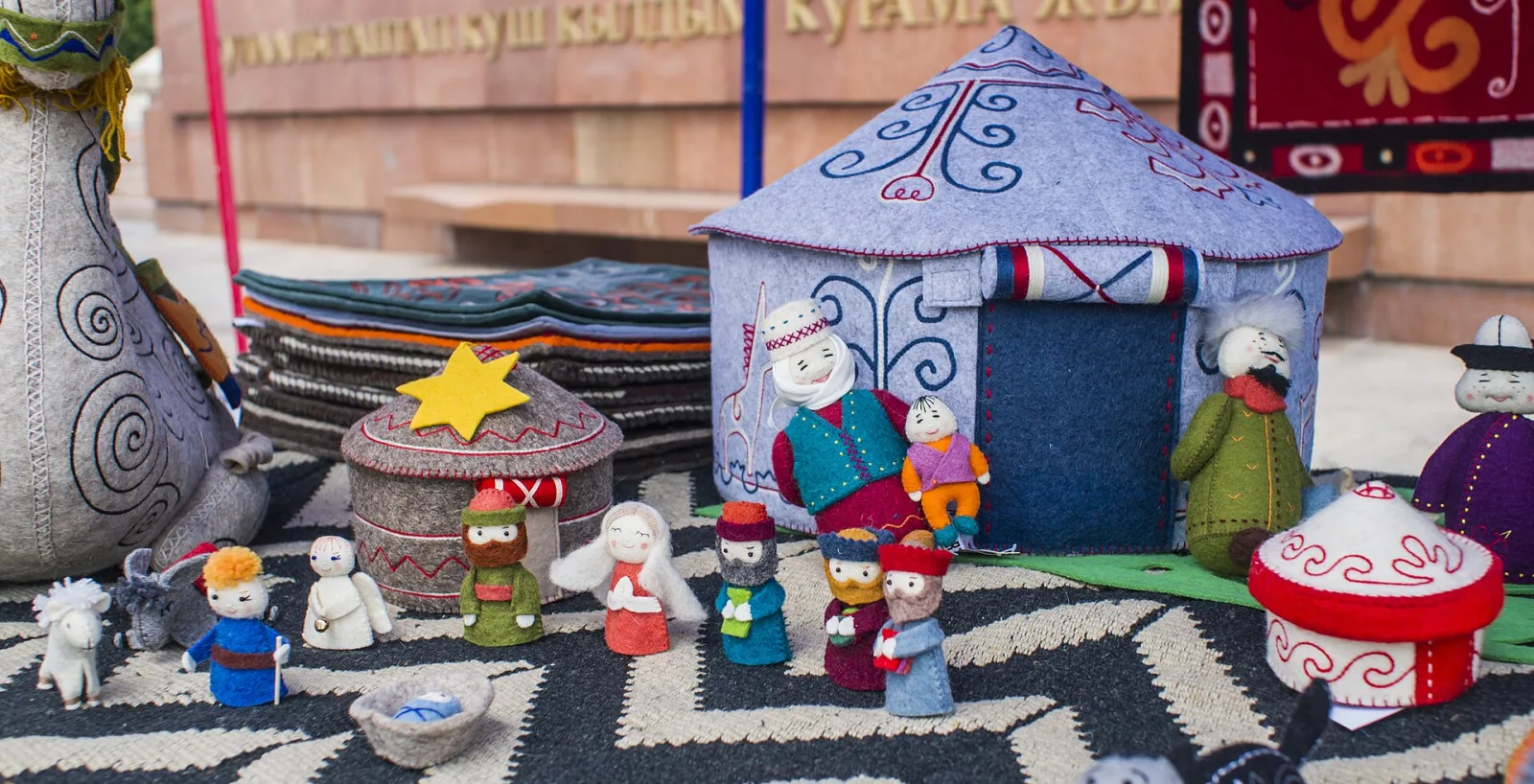
- In-the-hoop (ITH) — ornaments, coasters, finger puppets, bookmarks, key fobs, patches. The design stitches the whole item including its outline; you cut round the finished edge and it is done.
- Redwork and outline — light, quick, and it lets the felt's colour do the work.
- Freestanding lace on wash-away — not felt at all, but often combined with felt backing pieces.
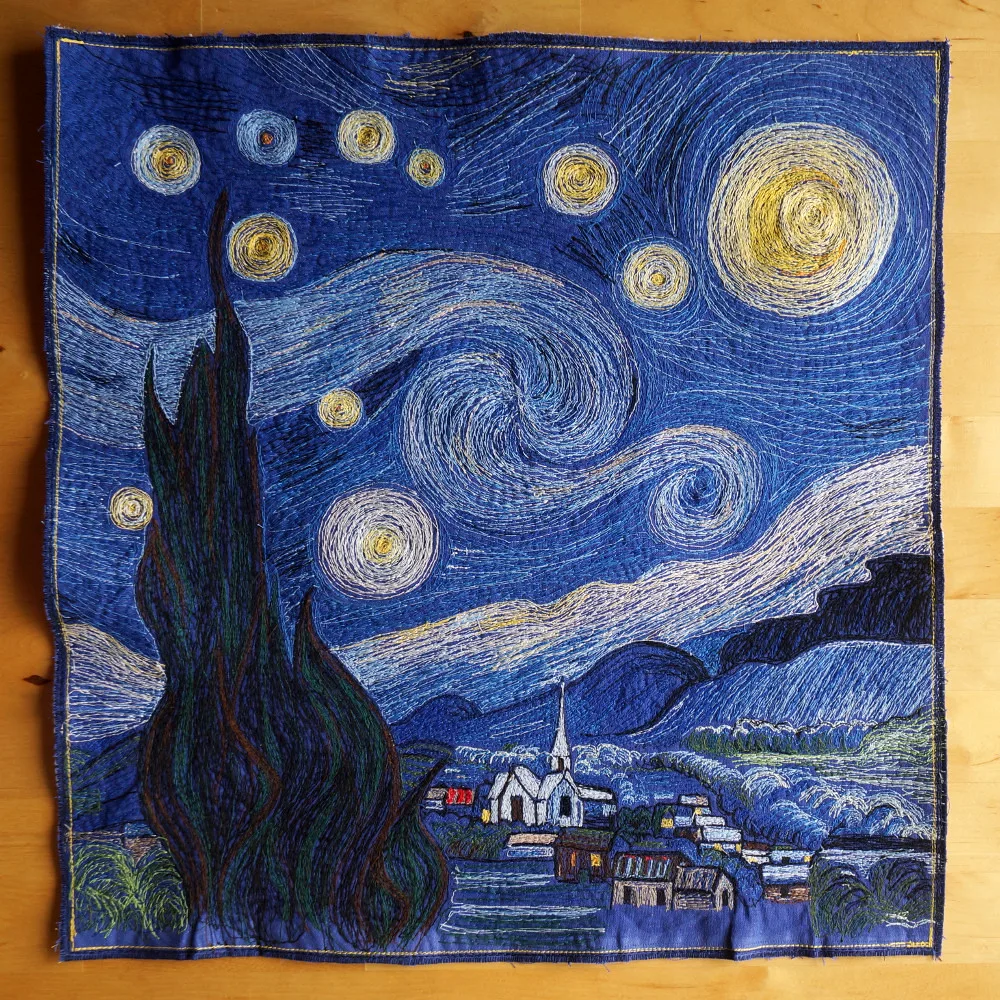
- Motif fills and quilting stitches — open, textural fills read beautifully on felt where dense fills do not.
Fixing the four common problems
- Design distorted or pulled in — insufficient stabiliser, or the felt was stretched when floated. Float relaxed, not taut.
- Stitches sinking into the surface — density too high, or no underlay at all. Add a light zigzag underlay to lift the stitches.
- Fuzz pulling through the stitching — a ballpoint needle, or acrylic felt. Switch to a sharp and to wool blend.
- Puckering around a fill — too dense and too fast. Reduce both.
Finishing
Trim close to the stitch line with sharp appliqué scissors or a small rotary cutter — felt cuts cleanly and needs no sealing. Press from the back, under a pressing cloth, with steam and a warm iron only; wool felt scorches and glazes at cotton temperatures.
For cutting the appliqué shapes accurately in the first place, see felt cutting machines. For hand-stitched work on the same material, felt appliqué and sewing beads on felt cover the equivalent techniques without a machine.
Frequently asked questions
Do you need stabiliser to embroider on felt?
Yes, despite felt being stable. Use a medium cut-away behind wool-blend felt for dense designs, or a tear-away for light ones. Felt does not fray but it does stretch and distort under stitch pull, and stabiliser is what prevents that.
What designs work best on felt?
Appliqué designs, redwork and outline designs, and in-the-hoop projects such as ornaments, coasters and finger puppets. Very dense fill designs sink into the pile and lose definition, so keep fill density lower than you would on cotton.
What needle should I use on felt?
A 75/11 sharp embroidery needle for craft felt, and an 80/12 for 2 to 3 mm wool felt. A ballpoint needle pushes fibres aside instead of piercing, which leaves visible holes.
Can you hoop felt directly?
You can, but hoop burn is permanent on wool felt — the ring compresses the pile and it does not recover. Float the felt on hooped stabiliser with temporary spray adhesive instead.