Wet Felting Materials: What Felts, What Does Not, and Why
6 min read Beginner
Wet felting needs four things and forgives almost no substitutions in the first one. Which fibres actually mat, which quietly refuse, and what the water, soap and surface are really doing.
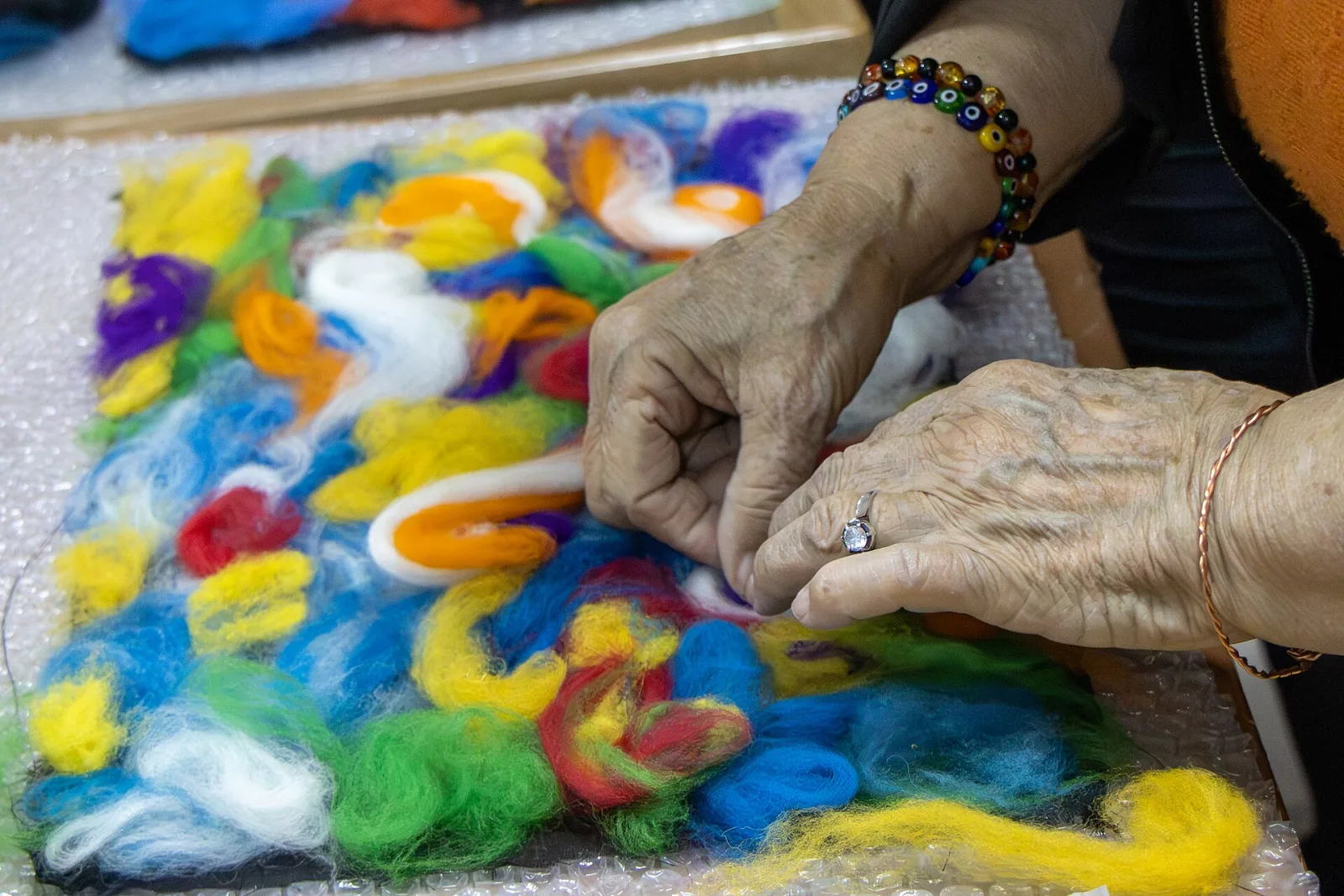
Wet felting has a very short materials list and one absolutely unforgiving item on it. Get the wool right and the process works with soap from the bathroom and a sheet of bubble wrap from a parcel. Get the wool wrong and no technique, no temperature and no amount of rubbing will save the afternoon.
So it is worth going through the list properly, in the order that decides whether anything happens at all — materials first, then the supplies that only make the job easier.
1. Wool that can actually felt
Felting works because wool fibres are covered in overlapping scales that point one way. Wet, warm and slippery, agitation ratchets those scales past each other and they cannot go back. Everything else on this list exists to make that ratcheting easier.
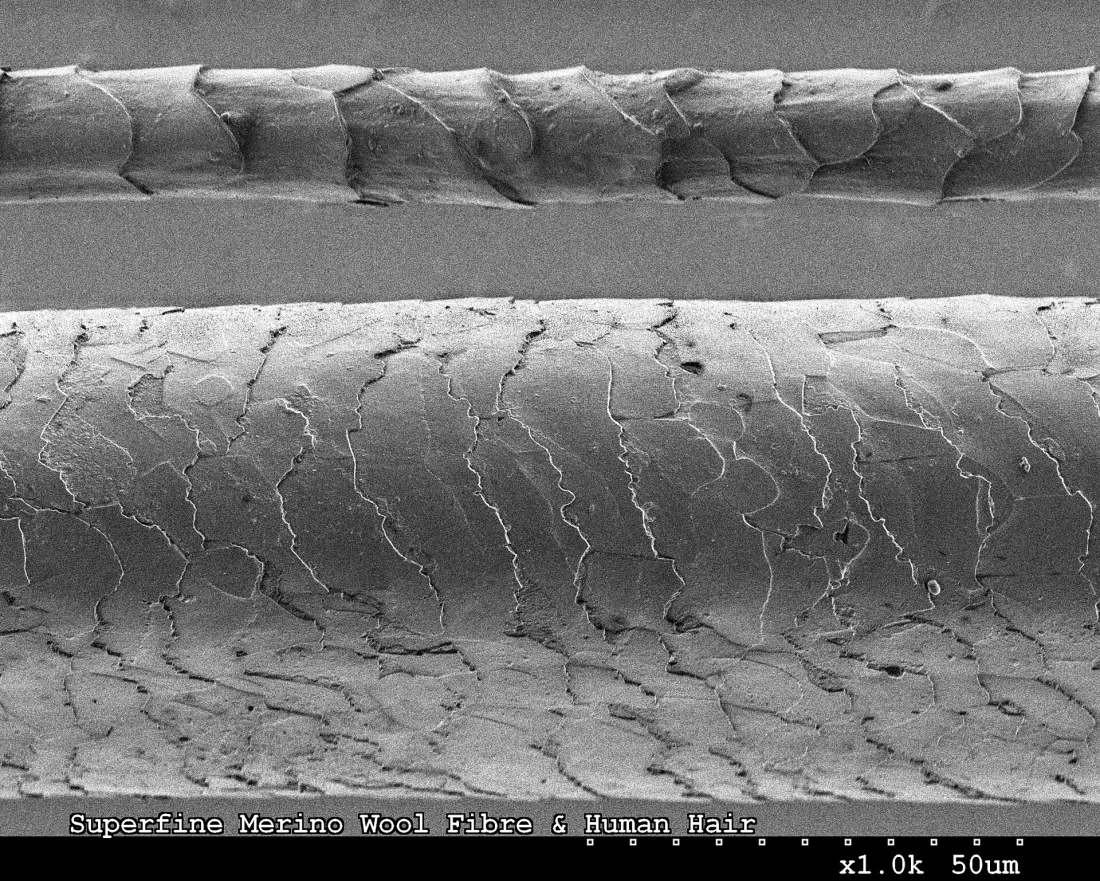
Which means the one fatal purchase is superwash wool. It has been treated — scales stripped by chlorine, or sealed under a polymer — specifically so it can go in a washing machine without matting. It is excellent yarn and it will never felt. If your wool refuses to move after twenty minutes of honest work, check the label before you check your technique; why won't my wool felt goes through the rest of the causes.
Which breeds, and how fast
- Merino. Fine, soft, felts fast and shrinks a lot. The default for scarves and anything worn against skin. Slightly unforgiving because it passes through "ready" quickly — see merino wool for felting.
- Corriedale. Medium, felts steadily, holds a crisp edge. The easiest wool to learn on, and the one most classes hand out — corriedale wool covers why.
- Coarse breeds and carpet wools. Slow to start, extremely hard-wearing once felted. Right for rugs, bags and anything that will take abuse.
- Blends with silk, alpaca or bamboo. These felt only as well as the wool content lets them. Around a quarter non-wool is pleasant; half and it becomes unreliable. alpaca felting covers the most common of them.
Which form to buy
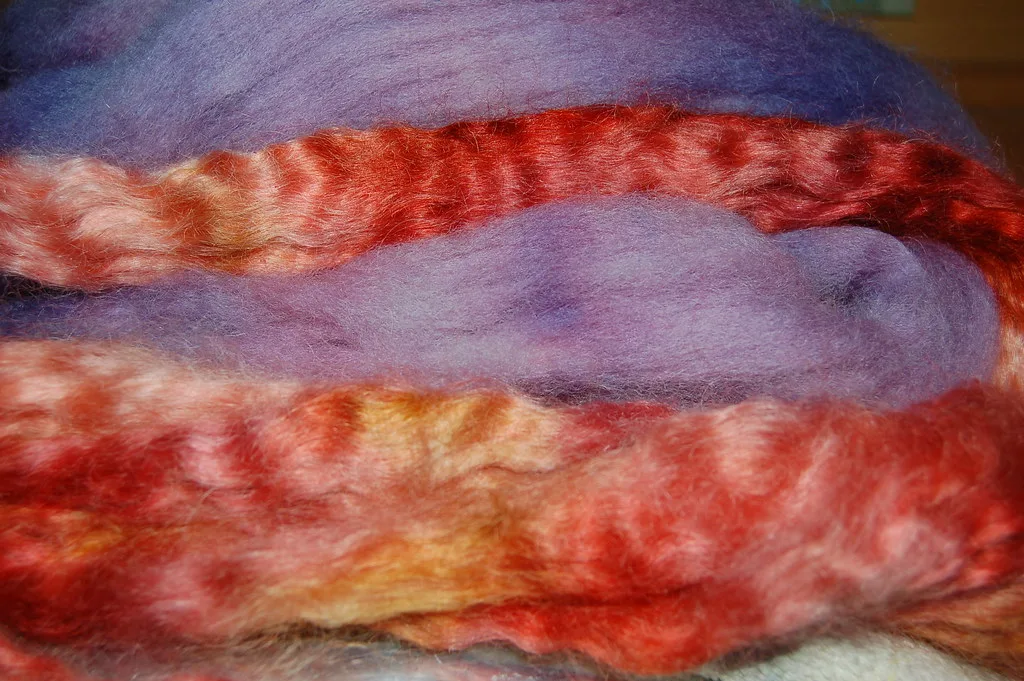
The same wool comes combed into tops, carded into batts, or loose as locks, and the form changes how you lay it out more than what it becomes. Tops give you parallel fibre you pull off in fine veils, which is what you want for flat, even work. Batts are airier and quicker for bulk. Locks are texture, laid on the surface at the end. The distinctions are set out in roving vs top vs batting and wool locks.
2. Water, and its temperature
Warm, not hot. Warm water opens the scales and softens the fibre, and the shock between warm and cool is one of the things that speeds felting along. Boiling water does nothing extra except make the work unpleasant to touch and thicken the surface before the inside has caught up.
You need less of it than people expect. The wool should be thoroughly wetted and pressed flat, with no standing water on the work — a puddle just floats the fibres apart and stops them rubbing against each other.
3. Soap
Soap does two jobs. It makes the fibres slippery so they can slide past one another, and it raises the pH slightly, which makes the scales stand more open.
What it is not there for is foam. A thick lather actually cushions the fibres apart, and every bubble has to be rinsed out at the end. An olive oil soap rubbed straight onto the wet surface, or a weak solution in a bottle, is the whole requirement — best soap for felting compares the options, including the washing-up liquid that everyone tries first and mostly regrets.
4. A surface with texture
Rubbing wool on a smooth table moves the wool. Rubbing it on something textured moves the fibres against each other, which is the point. Three standard answers:
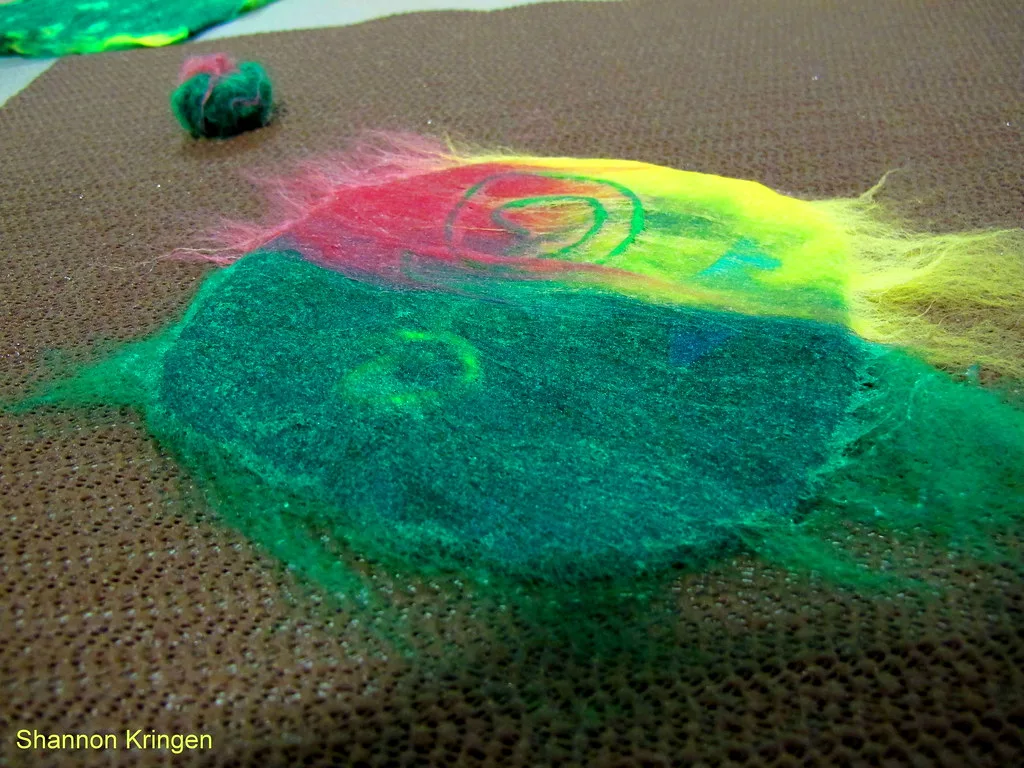
- Bubble wrap. Free, effective, bubble side up. The universal starting surface.
- A bamboo mat. Rolls the work as well as texturing it, which is how most scarves are made — bamboo mat for felting covers choosing one.
- Netting or sheer curtain. Laid over the top, so you can rub without dragging the layout out of place before it holds together.
Resists, for anything hollow
A resist is a flat barrier laid inside the wool so the two sides cannot felt to each other — it is how a bag, a bowl or a seamless hat is made from one piece. Bubble wrap works; so does thin foam, or a sheet cut from a plastic folder. It needs to be slightly larger than the finished piece, because the wool shrinks around it. resist felting covers the method.
Materials that go into the felt but do not felt
Several things can be trapped inside or on the surface of wool as it mats, which is where most of the visual interest in wet felting comes from.
- Silk fabric and fibres. Will not felt, but wool migrates through an open weave and grips it. That is nuno felting, and the weave matters enormously — best fabrics for nuno felting is specific about which ones work.
- Prefelt. Partly felted sheet, cut to shape and laid on as a clean-edged design. See prefelt wool.
- Yarn, plant fibres, scraps. Held mechanically if they are fine enough for wool to grow around them. Anything thick and smooth will fall off once dry.
What you do not need to buy
A rolling pin is a broom handle. A felting board is bubble wrap. A palm sander speeds up flat work considerably and is entirely optional. Warm water and a piece of soap will make a scarf; the rest of the catalogue makes it faster or bigger.
The two purchases genuinely worth making early are enough wool of one colour to finish what you started, and a second breed to compare against the first. Everything else can wait until a specific job asks for it.
The water itself
Hard water is the one variable nobody mentions. In a hard-water area soap curdles into a scum that sits on the fibre instead of lubricating it, and the work feels sticky rather than slippery. A pinch of soda crystals in the warm water fixes it, and is also the traditional reason felters reach for olive oil soap rather than a modern detergent bar.
Rinsing matters at the other end. Soap left in the felt attracts dirt and stiffens the hand of the fabric as it dries, so rinse until the water runs clear and then once more. A final rinse with a splash of vinegar neutralises what is left and brings the softness back.
Quantities
Wool shrinks by roughly a third in area, more for merino, less for coarse breeds — so lay out bigger than you want, always. As a rough guide, a light scarf takes around 1 ½ to 2 oz of tops, a small bowl about 2 oz, and a bag rather more than you think because both faces are being built at once.
Buy the main colour in one lot. Dye batches differ slightly and a join made from two lots shows up in the finished surface, where you can do nothing about it.
Where to start
Corriedale tops, a bar of olive oil soap, bubble wrap, and warm water — then wet felting for beginners for the handling and how to wet felt a scarf for a first piece that is flat, forgiving and useful at the end.
If you already needle felt, most of this transfers directly and the wool you own is almost certainly suitable — can you wet felt after needle felting covers combining the two on one piece.
Frequently asked questions
What materials do you need for wet felting?
Wool that has not been treated to stop it shrinking, warm water, a slippery soap, and a textured surface to work on. Everything else — resists, mats, rolling pins, sanders — makes the job faster or bigger, not possible.
Can you wet felt any wool?
Any wool except superwash, which has had its scales stripped or coated precisely so it cannot mat. Breed changes how fast and how firmly it felts, but all untreated wool will felt eventually. Most "my wool will not felt" problems are superwash.
What soap is best for wet felting?
An olive oil soap or plain bar soap. You want slip and a mildly alkaline solution, not lather — detergents and heavily foaming liquid soaps get in the way and have to be rinsed out at length.
Can you wet felt with cotton or acrylic?
Not on their own. Neither has scales, so there is nothing to lock. They can be trapped inside wool — that is what nuno felting does with silk and cotton gauze — but they will never felt by themselves.
Topics
Image credits
- Shelves of dyed wool fibre in a felt maker's workshop — Dosseman (BY SA 4.0)
- A merino wool fibre beside a human hair under magnification — division, CSIRO (BY 3.0)