Core Wool: What It Is, Which to Buy and What Substitutes for It
4 min read Beginner
We may earn a commission from links on this page, at no extra cost to you. As an Amazon Associate I earn from qualifying purchases. Learn more.
The cheap coarse wool that fills the inside of every needle felted sculpture. Why using merino for a core wastes both money and time, and what to buy instead.
Every needle felted sculpture is two materials pretending to be one. Inside is core wool — coarse, undyed, bought by the kilo. Outside is a thin skin of the good stuff, in the colour you want people to see.
Beginners usually discover this after their first project, when they realise they have spent the price of a meal turning dyed merino into something nobody will ever see the inside of.
What core wool is
There is no technical definition and no standard. "Core wool" is a marketing term for wool that is:
- Coarse — usually 30 microns and up, from breeds like romney, corriedale, herdwick or unnamed mill blends.
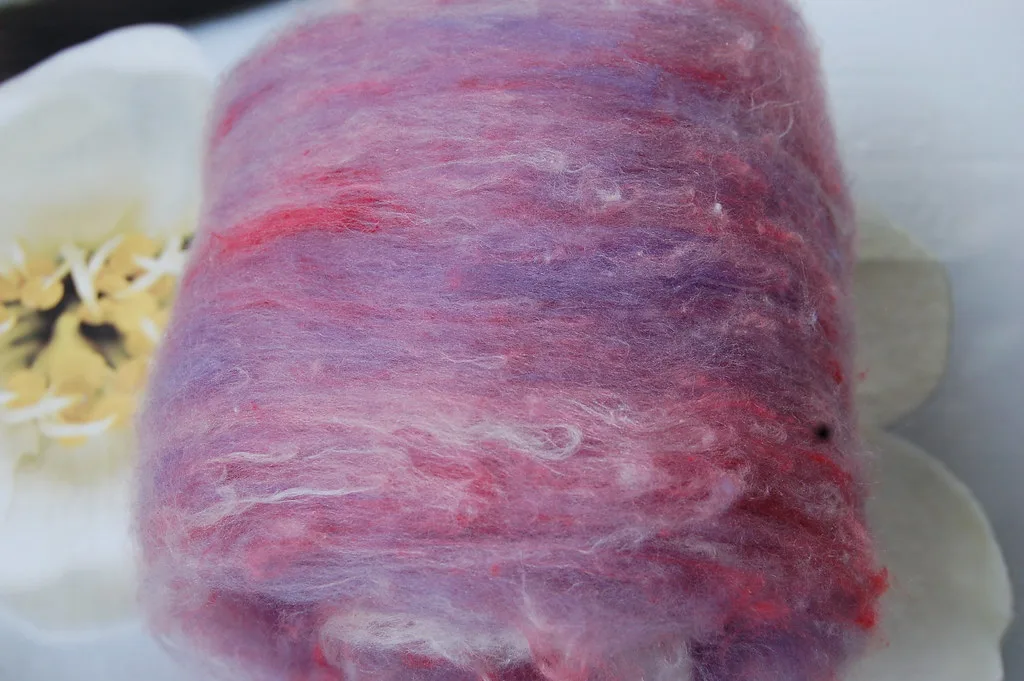
- Carded, not combed — supplied as batting or a thick soft roving with fibres running in all directions.
- Undyed — cream, grey or oatmeal, because dyeing it would be a waste.
- Cheap — sold in 500 g and 1 kg bags rather than 50 g braids.
Why coarse and carded is genuinely better
This is not only about money. Core wool compacts faster than merino tops, for two reasons.
First, fibre direction. In carded wool the fibres already cross each other, so the needle barbs have something to catch on the very first stroke. In combed tops everything lies parallel and the first few minutes achieve almost nothing. The same argument is set out in wool batting for felting.
Second, stiffness. Coarse fibres resist compression, so a core built from them stays firm and springy. Fine merino compacts into something dense and slightly dead, which then takes longer to needle through when you add the surface layer.
A firm core is also what makes fine surface work possible — you need something solid to needle against when you are shaping a face or adding eyes.
Core wool batting versus core roving
- Batting comes as a soft sheet. Tear off a piece, roll it tightly, needle. Best for large volumes and for wrapping over a wire armature.
- Core roving comes as a thick rope. Easier to wind into small shapes and to control in thin limbs. Slightly more expensive per gram.
- Corespun is something else entirely — a yarn with a fibre wrapped around a thread core. Not what you want here, despite the name.
Buy batting if you can only buy one. It tears into whatever shape you need.
Cheap substitutes that actually work
- Noil from combing. The short fibre left on your wool combs is perfect core material and it is free.
- Wool stuffing or toy filling, provided it is pure wool and not bonded.
- Raw fleece you washed yourself. The cheapest wool in existence if you know a sheep farmer. Wash it, tease it, use it.
- Old wool jumpers. Cut up a felted jumper and pull it apart — see felted sweater projects.
- Dryer lint and cotton wool. No. Lint is mostly synthetic and cotton does not felt; both leave a core that never firms up.
Core wool needle felting, in practice
- Start bigger than the finished size. Core wool loses a third to a half of its volume. A shape that looks right when loose will be too small when firm.
- Roll, do not scrunch. Wind the batting tightly like a bandage. A rolled core needles evenly; a scrunched one has hard lumps and soft voids.
- Use a coarse needle first. 36 gauge, or a multi-needle pen for anything large, then move to 38 as it firms.
- Firm it fully before adding colour. A core that still gives under thumb pressure will keep shrinking under the surface layer and pull it into wrinkles.
- Keep the surface layer thin. Two or three fine veils of coloured wool cover cream core completely. One thick layer wastes fibre and blurs the shape.
When white core shows through
Dark surface colours over cream core are the classic problem — black, navy and deep red all go patchy grey. Two fixes: use grey core under dark colours, or lay down an intermediate layer of a mid-tone before the final one. Both are cheaper than three extra layers of expensive black merino.
How much to buy
Assume core is 80% of every project by weight. If you are making small animals regularly, 1 kg lasts most of a year and costs roughly what 100 g of dyed merino does. Store it loose or lightly rolled — vacuum-packed core comes out pre-compressed and needs teasing apart before it behaves. Which wools to buy for the outside is covered in best wool for felting.
Frequently asked questions
What is core wool for needle felting?
Cheap, coarse, usually undyed wool used to build the inside of a sculpture. It is never seen in the finished piece — a thin layer of good coloured wool goes over it — so the only qualities that matter are that it felts fast and costs little.
Can I use merino as core wool?
You can, but it is a poor choice twice over. Merino is the most expensive fibre in the craft and it compacts slowly into a dense core, because the fine fibres in combed tops all lie the same way. Coarse carded batting does the job faster for a tenth of the price.
What can I use instead of core wool?
Carded wool batting, undyed fleece you have washed yourself, noils left over from combing, wool stuffing sold for toys, or fibre pulled from an old felted jumper. Anything coarse, unbonded and 100% wool works.
How much core wool do I need?
A small animal of about 8 cm uses 15–25 g; a large sculpture can take 200 g or more. Core is 80–90% of the wool in any piece, so buy it by the kilo rather than in 50 gram bags.