Types of Felt Hats: Names, Shapes and the American Styles
5 min read
We may earn a commission from links on this page, at no extra cost to you. As an Amazon Associate I earn from qualifying purchases. Learn more.
Fifteen felt hat names, what distinguishes each one, and which of them turn up as crossword answers — because half the questions about hat names come from a grid.
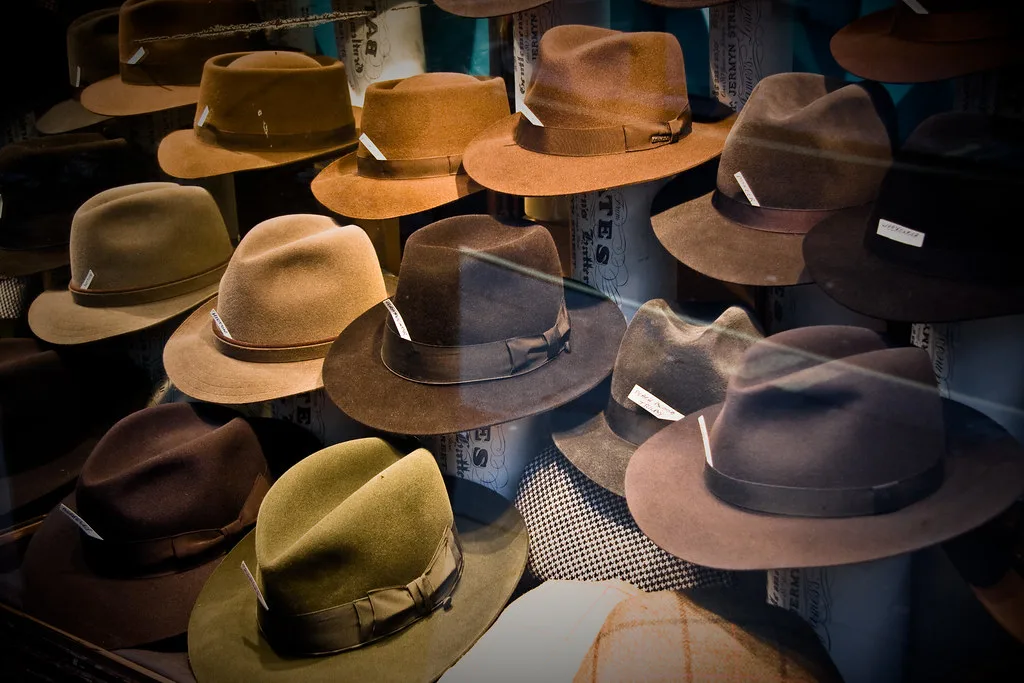
Hat names describe the crown crease and the brim, and nothing else. Two hats in the same felt from the same maker are given different names purely on the basis of how they have been blocked and creased.
Soft felt hats
- Fedora — teardrop or centre crease, side dents, brim 6–8 cm snapped down at the front. Named after an 1882 play.
- Trilby — narrow brim, snapped down at the front and sharply upturned at the back, traditionally worn level or tipped slightly forward. Named after Trilby, the 1894 novel by George du Maurier and its 1895 London stage adaptation.
- Pork pie — flat crown top with a circular crease running round the rim of it, brim turned up all round.
- Diamond crown — a four-sided crease forming a diamond seen from above; common in mid-century American hats.
- Gambler — low oval crown, wide flat brim.
- Slouch — wide soft brim left uncurled, most familiar from military use.
Stiffened felt hats
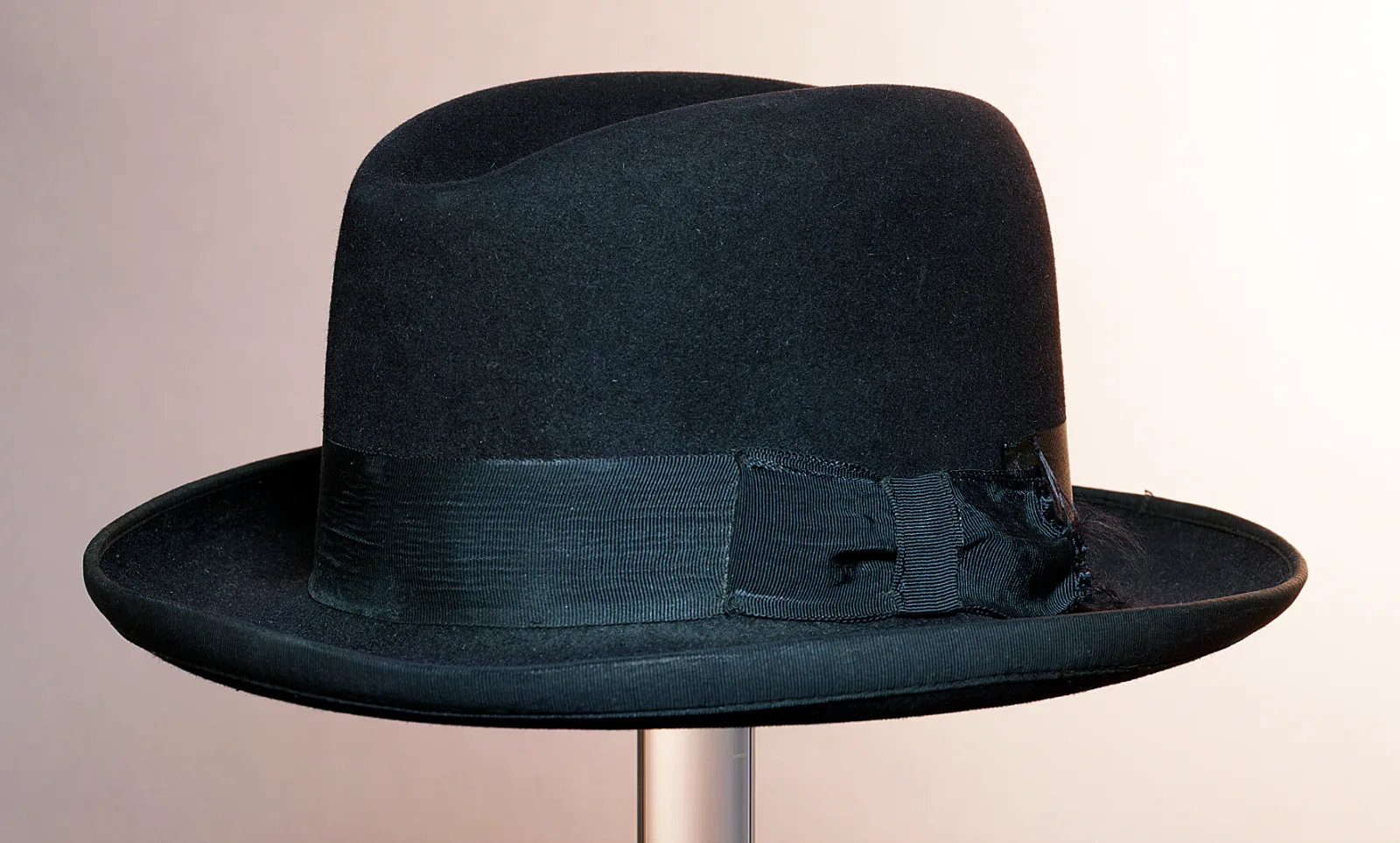
- Homburg — single lengthways crown dent, no side dents, stiff brim curled evenly all round with a bound edge.
- Bowler (British) / derby (American) — hard domed crown, short tightly curled brim. Designed in 1849 as protective headgear for gamekeepers. Fit, care and how it differs from a fedora are on felt bowler hats.
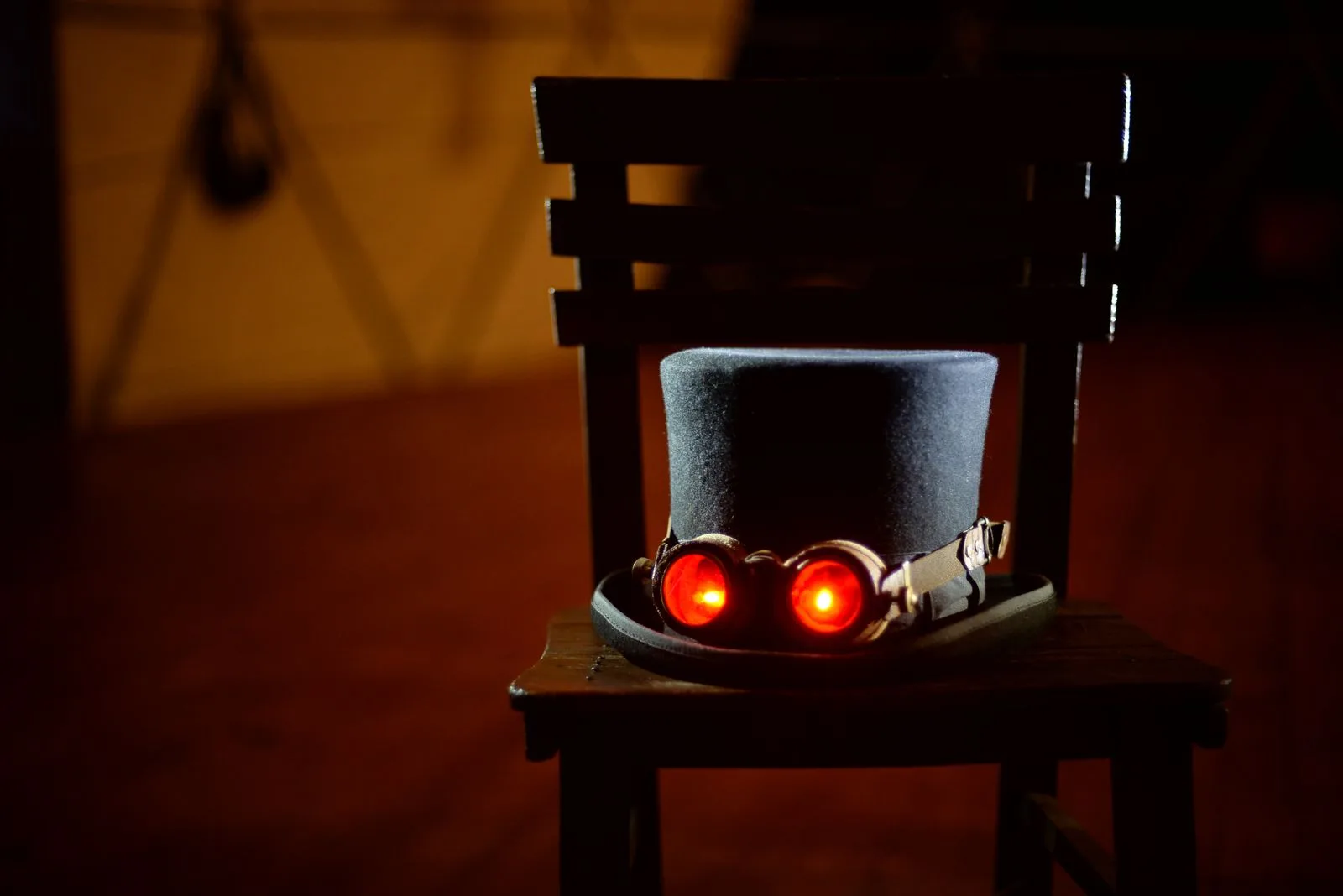
- Top hat — tall flat-topped cylinder, first beaver felt, then silk plush; today mostly wool or fur felt.
- Capotain — the tall conical "pilgrim" hat, effectively historical dress now.
What is a stiff rounded felt hat called?
A bowler, or derby in American usage: a crown stiffened into a smooth, hard dome with no crease, and a short brim of about 1½–2 in (4–5 cm) curled up at the sides. A homburg is stiff too, but has a single front-to-back dent and a wider brim curled evenly all round; a cloche is rounded but soft, close-fitting and brimless or nearly so. A soft hat with the bowler's outline, one that gives when you press the top, is a soft derby or round-crown fedora.
The American styles
Several shapes are specifically American in origin, and "felt hat american" usually means one of these:
- Western / cowboy hat — the Stetson "Boss of the Plains" of 1865 was a plain 10 cm-brimmed, round-crowned fur felt hat that owners creased themselves. Everything from the cattleman to the Gus crease descends from it.
- Cattleman crease — a tall crown with one centre dent and two narrow side dents. The standard working crease.
- Open Road — a lower-crowned, 7 cm-brimmed western, worn by several US presidents. Halfway between a fedora and a cowboy hat.
- Pork pie — American in its modern jazz-associated form, though the name is older.
The phrase also gets used for provenance rather than shape: hats blocked in the United States from American-milled fur felt bodies, which is a small industry that still exists in Pennsylvania and Texas.
Felt hat crown shapes and their names
Most felt hats leave the factory as the same rounded crown and are given their name by how that crown is creased. These are the crease names you will see in shops and hatters' listings. They are trade terms rather than fixed standards, so one maker's teardrop can be a little deeper than another's.
| Crown | What it looks like | Hats that use it |
|---|---|---|
| Teardrop | Two front pinches running into a top crease that is narrow at the front and round at the back, like a teardrop from above | Most fedoras today; trilbies; wide-brim "rancher" hats |
| Centre dent | One straight crease front to back, with a pinch either side at the front | Classic fedoras and trilbies |
| Pinch front | The front of the crown squeezed into a V or teardrop, with the top creased or left plain | Fedoras, women's western hats |
| Diamond | Four-sided diamond from above | Fedoras |
| C-crown | Crease running round the top in a C, open at the back, with deep side pinches | Casual fedoras |
| Gutter | One dent front to back and nothing else: no pinches, no side dents | Homburg |
| Telescope | Flat top with a ring-shaped groove just inside its edge | Pork pie |
| Cattleman | Centre dent, two side dents | Cowboy hats |
| Flat top | Low crown, flat on top, plain or with a shallow round dent | Gambler, bolero |
| Open crown | Tall, rounded and uncreased, left for the owner or a hatter to shape | Western hats bought to be creased; hat blanks |
| Round crown (dome) | Smooth, rounded top with no crease | Bowler and derby when stiff; soft derby when not |
| Flat-topped cylinder | Tall straight sides and a flat top | Top hat |
A soft felt crown can be re-creased with steam, which is how a fedora becomes a different fedora, or an open crown becomes a cattleman. A stiffened crown, the bowler's or the homburg's, is set on the block with stiffener and heat and is not meant to be reshaped at home.
Brim widths that go with each style
The crown names the hat, but the brim width settles the arguments between near neighbours, the trilby and the fedora above all. Typical widths:
| Hat | Usual brim | Set |
|---|---|---|
| Fedora | 2⅜–3 in (6–8 cm) | Snapped down at the front |
| Trilby | 1½–2 in (4–5 cm) | Down at the front, up at the back |
| Pork pie | 1½–2 in (4–5 cm) | Usually up all round |
| Bowler / derby | 1½–2 in (4–5 cm) | Curled up at the sides |
| Homburg | 2–2½ in (5–6.5 cm) | Curled evenly all round, bound edge |
| Gambler | 3–4 in (7.5–10 cm) | Flat |
| Western, cattleman | About 4 in (10 cm) | Curled up at the sides |
For the crossword solvers
Felt hats are crossword staples because the names are short and unusual. By length:
- 4 — TILE (dated slang for a hat), TOPI
- 5 — DERBY, BERET, TOQUE
- 6 — FEDORA, TRILBY, BOWLER, CLOCHE
- 7 — HOMBURG, STETSON, CAPOTAIN (8)
- 8 — SOMBRERO
If the clue reads "felt hat" with no further hint, FEDORA and TRILBY are the two to try first. If it specifies "stiff", go to BOWLER or HOMBURG. Beret and cloche are felt but usually clued as women's hats.
Women's felt hats
- Cloche — close-fitting bell shape, brimless or with a tiny downturned brim. The 1920s hat.
- Beret — soft flat round crown, no brim, usually wool felt.
- Breton — brim turned up evenly all round, framing the face.
- Picture hat — very wide flat brim, low crown.
One felt hat that never appears in a hat shop is the wool sauna hat, which is built for insulation rather than looks.
The beret is the outlier in the list: flat-crowned, bandless and the only one most people also own a knitted version of, which is why it behaves so unexpectedly in felt — wool felt berets covers the difference.
All of them start life as the same blank. Felt hat blanks explains the cones, capelines and hoods a milliner blocks into any of the shapes above, and felt hats for men covers fit and sizing in detail. For the cloche, the wide brim and the women's fedora, see felt hats for women.
Frequently asked questions
What is the American felt hat called?
The style most associated with America is the western hat, popularised as the Stetson "Boss of the Plains" from 1865. The Open Road, the cattleman crease and the pork pie are also American, and American-made hat bodies from firms like Winchester are still produced in Pennsylvania.
What is a felt hat in a crossword?
The usual answers are FEDORA (6), TRILBY (6), HOMBURG (7), BOWLER (6), DERBY (5), STETSON (7), BERET (5) and, for the general term, FELT itself. For four letters, try TILE, an old slang word for a hat.
What is the difference between a derby and a bowler?
None in shape. Bowler is the British name and derby the American one for the same hard, round-crowned felt hat with a short curled brim.
Which felt hat is the most formal?
The homburg, with its stiff, evenly curled brim and single crown dent. Below it come the fedora and then the trilby, which is the least formal of the three.
What are the names of felt hat crown shapes?
The common ones are the teardrop, centre dent, pinch front, diamond and C-crown on fedoras; the gutter crown on a homburg; the telescope on a pork pie; the cattleman on cowboy hats; the flat top on a gambler; the round dome on a bowler; and the open crown, which is left uncreased for the owner to shape.