Angelina Fibers: What They Are and How to Use Them in Felting
5 min read Intermediate
We may earn a commission from links on this page, at no extra cost to you. As an Amazon Associate I earn from qualifying purchases. Learn more.
Angelina is a fine, glittering polyester fibre, and the heat-bondable kind fuses into sheets under an iron. Which type to buy, how to fuse it, and how to keep it from shedding out of wet and needle felted work.
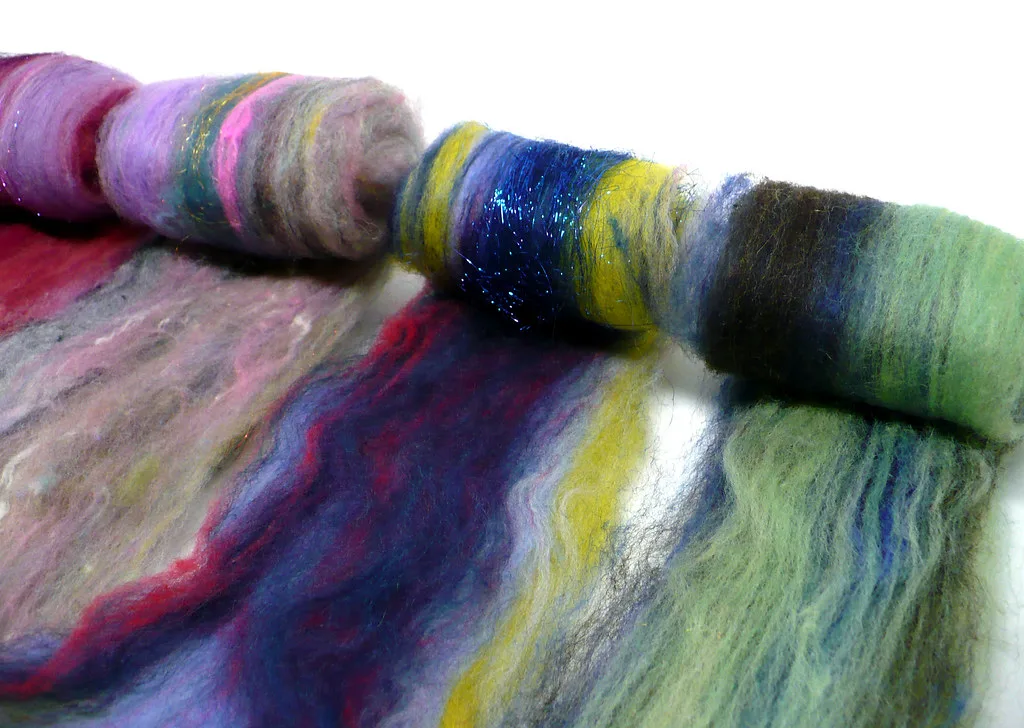
Angelina is a very fine, shiny polyester fibre that catches light from every angle. A pinch carded into wool gives felt a glint that dyed wool cannot, and the heat-bondable kind fuses under a warm iron into a thin, iridescent sheet that cuts like paper.
What it is
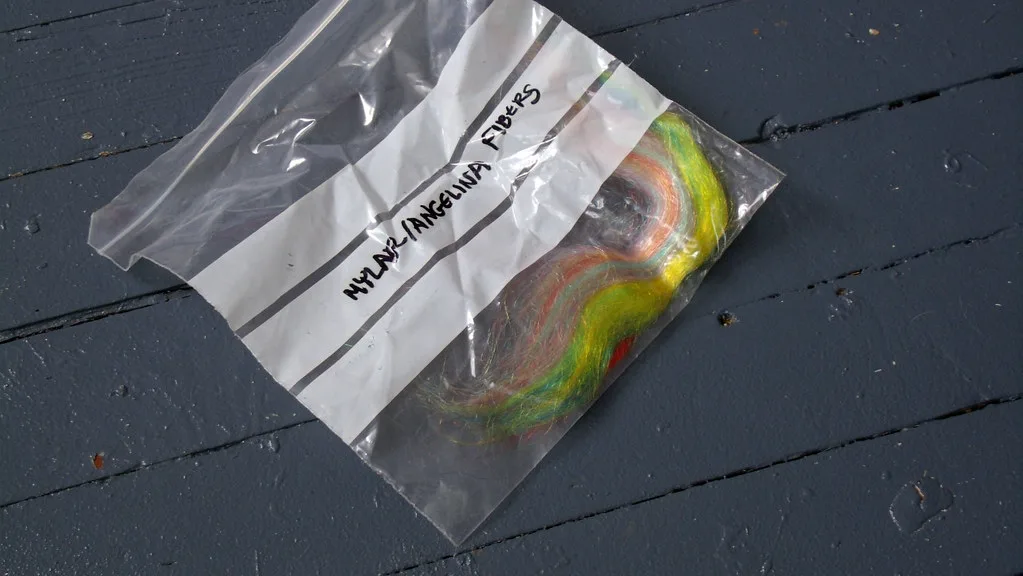
Angelina is a brand: the fibre is made by a US company and the name is a trademark, but crafters use it the way people say "Kleenex", for fine sparkle fibre in general. The fibres themselves are polyester, finer than most felting wool, straight and slippery, so they slide and drift rather than crimp and lock the way wool does.
Two properties matter for felting:
- It has no scales, so it cannot felt to wool or to itself by rubbing. Wool fibres have to wrap round it.
- The heat-bondable kind fuses only to itself. Under heat it softens and the fibres weld together, but it will not stick to wool, fabric or paper. That is what makes fused sheets possible, and why a fused piece has to be held on by stitching or by wool.
Which type to buy
| Type | Fuses with heat? | Looks | Best for |
|---|---|---|---|
| Heat bondable, iridescent or crystalline | Yes | Clear with a colour shimmer that changes with the angle | Fused sheets, wings, surface sparkle on pale wool |
| Heat bondable, coloured | Yes | Coloured glitter | Fused sheets, sparkle that matches the wool |
| Metallic | Usually not | Gold, silver and copper like tinsel | Blending into batts, loose surface accents |
| Holographic | Check the label | Rainbow sparkle points | Small accents; strong, so use sparingly |
If you want to fuse sheets, it must say heat bondable or heat fusible. For sparkle blended into wool, either kind works. Packs are small, often about ⅓ oz (10 g), and that is plenty for a season of projects.
Blending it into wool
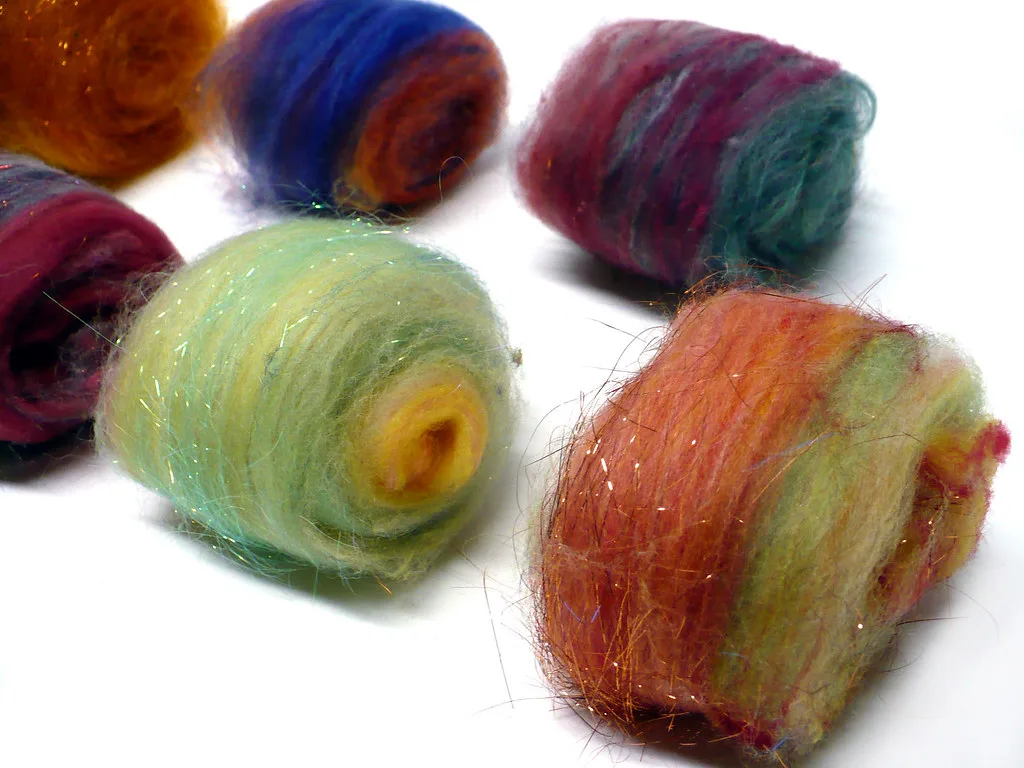
Angelina does not felt, so it stays only where wool holds it. That makes blending it through the wool before layout the most reliable way to use it: every strand of sparkle ends up surrounded by wool fibres that can grip it.
- About 2% by weight: a small pinch to a handful of wool. Much more than that starts to look like tinsel, and the surface sheds.
- Card it in with hand carders or a blending board, two or three passes, so the sparkle is spread through the batt rather than lying in streaks.
- Without carders, tease the Angelina into a cobweb-thin layer, lay it on a length of wool top and draft the two together several times by pulling them apart and laying them back on each other.
Angelina in wet felting
Laid loose on top of a wet felting layout, Angelina simply floats off in the first minute of rubbing. Three ways to keep it:
- Blend it into the top layer. The most reliable: the blended wool felts and carries the sparkle with it.
- Sandwich it. Lay wisps of Angelina on the top layer, then cover them with a veil of fine merino so thin you can read through it. The veil felts down through the sparkle into the layer below and locks it in, and the Angelina shows through. This gives the brightest result.
- Use it under nuno fabric. In nuno felting, wisps laid between the wool and a sheer silk are trapped as the wool migrates through the fabric. Silk chiffon over iridescent Angelina is a striking combination.
Rub through the net for the first five minutes without lifting it, and expect a few strands to escape anyway. Hot tap water and soap do it no harm, since tap water is well below the temperature at which heat-bondable Angelina softens. Avoid boiling water or a hot tumble dryer when fulling a piece with heat-bondable Angelina near the surface.
Angelina in needle felting
The needle pushes wool round the sparkle rather than felting the sparkle itself, so the same rule applies: Angelina must be mixed with wool or covered by it.
- Blend a pinch into the surface wool before the final layer goes on. This is how frost on a snowman, a sheen on a fish or a glint in a fairy's wings is usually done.
- For a single sparkling patch, lay the Angelina down and needle a few wisps of wool across it in a lattice. Leave enough gaps for the light to get through.
- Finish with a fine needle and shallow stabs. A coarse needle at the end drags sparkle back to the surface in loops.
Making a fused sheet
Heat-bondable Angelina turns into a light, crisp, glittering sheet that can be cut into wings, stars, leaves and petals.
- Fold a sheet of baking parchment in half. Tease a thin, even layer of Angelina onto one half; thinner gives a lacy sheet, more gives a solid one. Snippets of coloured Angelina or fine thread can be laid in at this stage.
- Fold the parchment over and press with a dry iron on the silk setting for two or three seconds, with light pressure. No steam.
- Peel back the parchment and check. If loose fibres remain, cover and press again for a second or two. Retailers quote bonding temperatures of roughly 180 to 225 °F, which is why the silk setting is the place to start.
- Stop as soon as it holds. Longer, hotter pressing shifts the colour, which can be a deliberate effect, and too much scorches it.
Cut the sheet with scissors or paper punches. It will not fuse to wool, so attach it by stitching, by needling wool over its edges, or by trapping its base inside a felted piece. Insect wings are a natural use: a pair of fused Angelina wings, with the base needled into the body, gives a needle felted bee wings that shimmer. Fused stars and snowflakes also make quick sparkle for felt ornaments.
Pieces with Angelina in them hand wash happily in cool water. Press them only with a pressing cloth and a cool iron, because a hot iron fuses heat-bondable strands at the surface and changes their colour.
Frequently asked questions
What are Angelina fibers made of?
Polyester. Angelina is a very fine, shiny synthetic fibre made by a US company, and the name is a trademark that crafters now use for the whole family of fine sparkle fibres. It contains no wool and does not felt on its own.
What is the difference between heat bondable and regular Angelina?
Heat bondable Angelina softens and fuses to itself under a warm iron, so loose fibre can be turned into a thin, glittering sheet. Non-bondable types, which include most metallic ones, never fuse and are only used loose, blended into wool or laid on a surface.
What temperature fuses Angelina?
Retailers quote roughly 180 to 225 °F, which most irons reach on the silk setting. Because iron dials vary, test a pinch between baking parchment first. Too much heat or too long under the iron changes the colour and can scorch it.
Will Angelina survive wet felting?
Yes. Hot tap water is well below its bonding temperature, and polyester is not harmed by soap or rubbing; just avoid boiling water and a hot dryer. The risk is mechanical: Angelina does not felt, so any fibre that is not trapped under or among wool fibres rubs out and floats away.
How much Angelina should I blend into wool?
Very little. About 2% by weight, roughly one small pinch to a handful of wool, gives a clear glint; much more than that starts to look like tinsel and sheds. It is sold in small packs because a few grams go a long way.
Topics
Image credits
- Rolled carded wool batts in purple, blue, yellow and green with glittering Angelina sparkle running through them — marajane creations (BY)
- A small plastic bag of loose multicoloured Angelina sparkle fibre labelled mylar and Angelina fibers — lemonhalf (BY SA)
- Small rolled wool batts in orange, blue, teal, red and green, with fine glittering strands carded through them — marajane creations (BY)