Carding Wool by Hand: Carders, Batts and Blending for Felting
4 min read Intermediate
We may earn a commission from links on this page, at no extra cost to you. As an Amazon Associate I earn from qualifying purchases. Learn more.
How to card wool with hand carders, what a good batt looks like, and why felters get more out of carding than spinners do — custom colour blends, mostly.
Carding is the step that turns a handful of washed fleece into something you can actually felt. It is also, for most felters, the only practical way to make a colour blend that does not exist in any shop.
What carders are
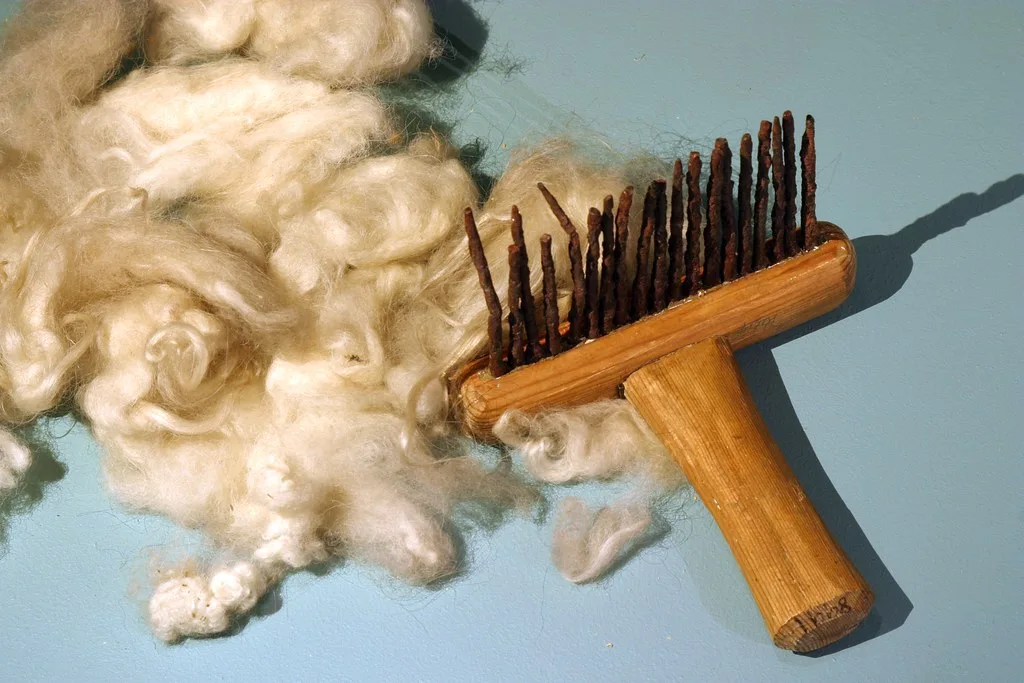
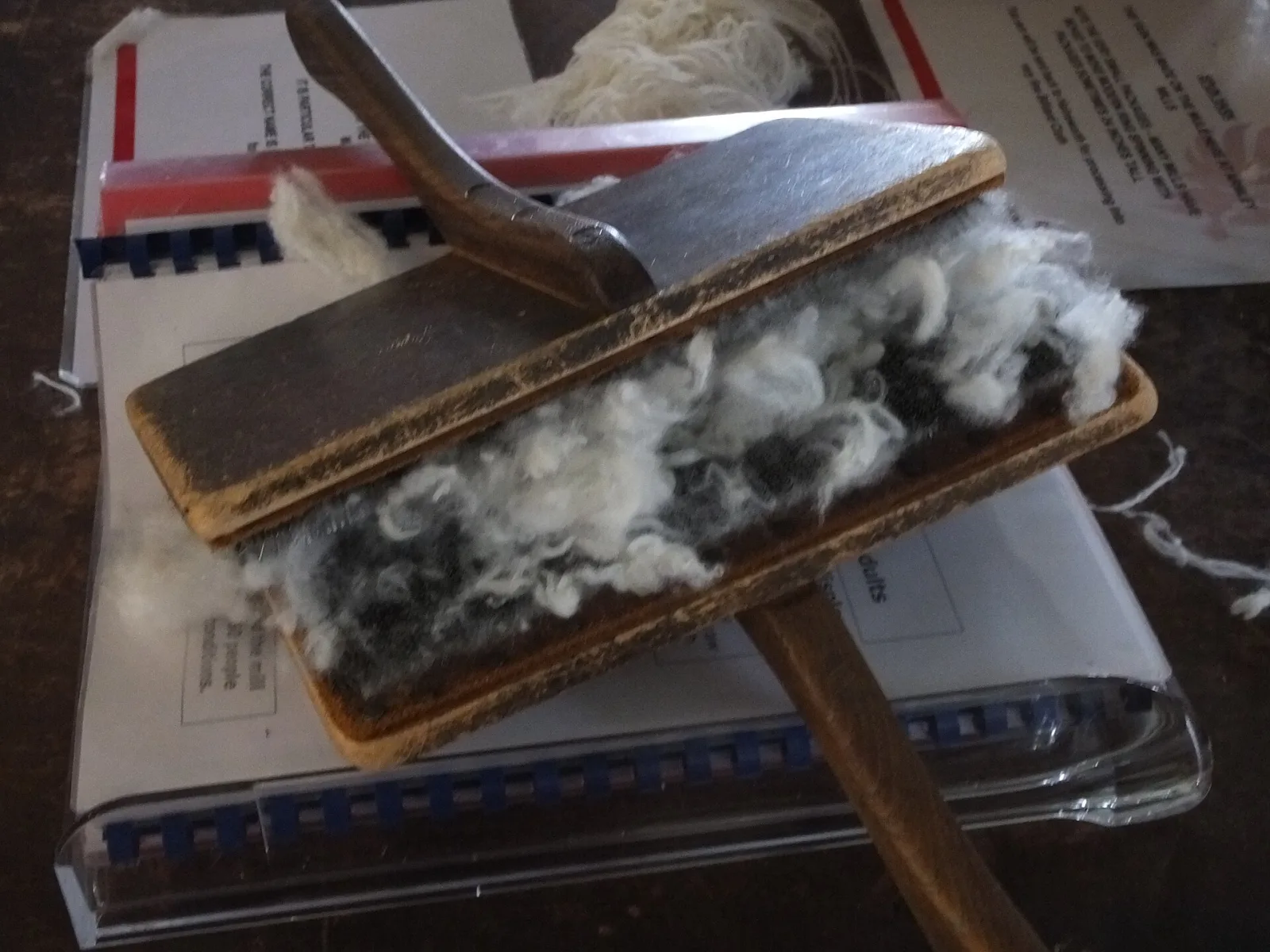
A pair of hand carders is two flat or curved paddles covered in fine bent wire teeth set into a rubber or leather backing. You load wool onto one and pull the other across it; the teeth catch the fibres, tease apart the tangles and lay everything roughly in one direction.
- Teeth per inch (TPI) is the number that matters. 72 TPI is the general-purpose choice and handles most felting wool. 108 TPI is for fine merino and short fibre; coarse carders around 54 TPI are for long, strong fleece.
- Curved backs hold more wool and need less wrist effort. Flat backs give finer control for blending small amounts.
- Dog slicker brushes are a genuine budget substitute for small colour blends, and a poor one for processing whole fleeces.
Carding, step by step
- Load lightly. Hold one carder in your left hand, teeth up, and lay a thin, even layer of wool across the teeth — about half the amount that feels right. Overloading is the single most common mistake and it makes everything harder.
- Draw across. Rest the second carder on top at the near edge and pull it across the first with light pressure. Do not press. Let the teeth do the work.
- Repeat. Three or four passes. Fibre transfers gradually to the top carder; that is expected.
- Transfer. Turn one carder round and use the edge of its teeth to lift the fibre off the other, then re-card.
- Check. Hold the wool to the light. When there are no visible clumps and the layer is even, it is done. Two or three cycles is normal; ten means the wool was overloaded.
- Remove. Peel the fibre off as a flat sheet — a batt — or roll it off the teeth from one edge into a soft cylinder, a rolag.
Batt or rolag
Spinners want rolags. Felters almost always want batts: flat sheets with the fibres crossing in every direction, which is exactly the arrangement that felts fastest under a needle. Peel the whole layer off in one piece and set it aside flat.
What comes off a pair of hand carders is a small batt, perhaps 10 × 15 cm and a few grams. Several of them layered at right angles make a workable sheet for wet felting. The commercial equivalents are covered in wool batting for felting.
Blending colours — the real reason to card
This is where hand carding earns its place for anyone who does not process raw fleece. Lay two or three colours on the carder in thin alternating layers and card them together. Each pass mixes them further:
- One or two passes — streaky, heathered, with both colours clearly visible. Excellent for animal coats and landscapes.
- Three or four — a soft tweed.
- Five or more — a single new solid colour.
Weigh the components if you want to repeat a blend later; "some grey and a bit of rust" is unrepeatable. The colour theory side of this is in blending wool colours.
It is also the best use for the pile of leftover ends every felter accumulates. A bag of scraps carded together becomes a perfectly good heathered core wool.
Carding raw fleece
Wash first. Carding greasy fleece coats the teeth in lanolin and grit, which is unpleasant to clean and hard on the wires. Wash in very hot water with a little detergent, no agitation whatsoever — agitation at this stage felts the fleece and ends the project — then rinse and dry completely.
Pick the locks open by hand and remove vegetable matter before carding rather than after. Carding drives hay fragments deeper in rather than out.
Looking after carders
Never card wet wool: it rusts the teeth and drags. Clean the teeth with a stiff brush or the edge of the other carder. Store them teeth-to-teeth or in a bag — bent wires do not straighten, and a carder with a patch of flattened teeth leaves a streak in every batt it makes.
When a drum carder is worth it
If you are processing whole fleeces, or blending in batches of 50 g and up, a drum carder does in two minutes what hand carders do in twenty. Below that, it is a large, expensive machine that will sit on a shelf. Hand carders cost a fraction as much and are the right tool for the amounts most felting projects use.
Frequently asked questions
What does carding wool do?
It opens tangled locks and lays the fibres roughly parallel, removing dirt and short bits along the way. The result is an airy sheet or roll that felts evenly instead of forming hard lumps.
Can you card wool with dog brushes?
Yes, for small quantities. Slicker brushes have finer, softer pins than proper carders so they hold less wool and bend under load, but for blending a few grams of colour they work perfectly well and cost a fraction as much.
Do I need to card wool before felting?
Not if you bought tops, roving or batts — those are already carded. You need it for raw washed fleece, for reviving compressed wool, and for blending your own colours.
What is the difference between carding and combing?
Carding jumbles the fibres into an airy batt and keeps the short ones. Combing removes short fibres and aligns everything perfectly into tops. Carded wool felts faster; combed tops give a smoother surface.
Topics
Image credits
- A pair of hand carders with wire teeth, used to card wool by hand — Photograph by Clem Rutter, Rochester, Kent. (www.clemrutter.net). (BY SA 3.0)