Roving vs Top vs Batting: What the Names Actually Mean
6 min read Beginner
We may earn a commission from links on this page, at no extra cost to you. As an Amazon Associate I earn from qualifying purchases. Learn more.
Three words for wool that has been prepared three different ways, used almost interchangeably by shops. What each really is, and which felts faster.
Buy wool from three different shops and you will get three products with the same name and completely different behaviour. The words describe processing stages, and the industry uses them loosely.
The processing chain
All wool starts as a fleece: greasy, tangled, full of hay. It then goes through some or all of the following.
- Scouring. Washing out lanolin and dirt.
- Carding. Passing the wool between rollers covered in fine wire teeth, which opens the locks and lays the fibres into a light sheet. That sheet is a batt. Fibres run in every direction.
- Drawing. Pulling the carded sheet into a continuous rope. That rope is roving. Fibres are loosely aligned but still crossed.
- Combing. Pulling the fibre through steel tines, which aligns everything perfectly and discards fibres that are too short. The result is top, usually sold as a braid or a "sliver".
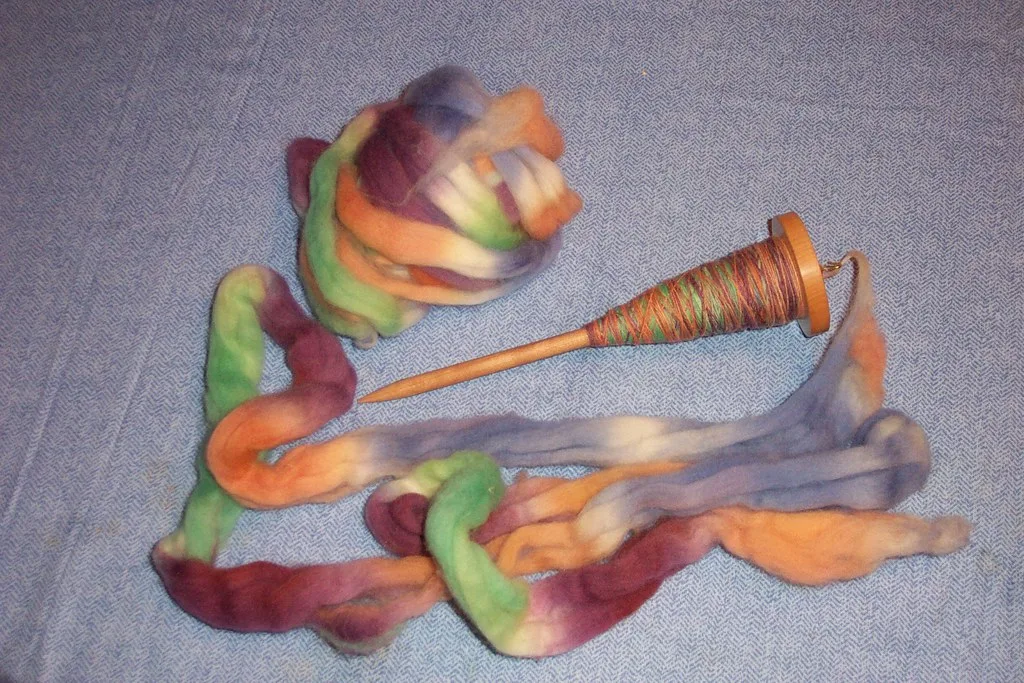
So the sequence is batt → roving → top, each step tidier and more expensive than the last.
Side by side
| Batting | Roving | Combed top | |
|---|---|---|---|
| Fibre direction | Random | Loosely aligned | Parallel |
| Short fibre | Present | Present | Removed |
| Form | Sheet | Rope | Braid or sliver |
| Air content | High | Medium | Low |
| Speed of felting | Fastest | Fast | Slowest |
| Surface finish | Fuzzy | Slightly fuzzy | Smooth |
| Cost per gram | Lowest | Low | Highest |
What combing throws away, and why it costs more
The step that separates top from roving is not tidying, it is removal. Combing pulls the fibre through steel tines that hold the long fibres and let the short ones fall out. What falls out is called noil, and on a typical fleece it is 10 to 20% of the weight.
So a braid of combed top is the long-fibre fraction of a larger quantity of wool, and you are paying for the part that was discarded as well as the part you took home. That is most of the price difference. The rest is a slower machine.
Two consequences follow, and both matter more than the price does.
- Top drafts evenly. Every fibre is roughly the same length and all of them point the same way, so a length pulls out at a constant thickness. That is what makes it right for thin veils over a surface, and for the crossed layers of a wet felted sheet.
- Roving contains its own short fibre. Those short ends stick out sideways from the rope, which is exactly what a barb wants to catch. Nothing has been removed, so nothing is missing to tangle.
The noil itself is sold cheaply and makes excellent core material, since short crossed fibre is the fastest thing there is to compact.
Why crossed fibres felt faster
Felting is tangling. A felting needle drags fibres downwards past their neighbours, and a wet felter's palms push them past each other sideways. Either way, fibres that already lie across one another start catching immediately, whereas parallel fibres have to be disturbed out of alignment first.
The practical difference is significant — a carded core compacts roughly a third faster than the same weight of tops. That is why dedicated core wool is always carded, and why the extra money for combed top is wasted on anything hidden inside a sculpture.
What to use where
- Cores and bulk — batting. Tear it, roll it, needle it. See wool batting for felting.
- Small shapes and limbs — roving. It winds neatly and controls better than a sheet.
- Surfaces and colour — top. Thin veils pull off cleanly and lay down without fuzz.
- Wet felted fabric — top, laid in crossing layers. The smoothness is the point.
- Nuno felting — fine merino top only. Short fibres do not migrate through silk.
- Blending colour — top on a blending board, or batts if you have a carder.
The naming problem, and how to see through it
Almost everything sold online as "wool roving" is combed top. The word stuck because customers search for it, and North American shops in particular use "roving" for any rope of prepared fibre regardless of how it was made. British and Australian sellers are somewhat more precise, and spinning suppliers are precise everywhere, because their customers care.
The practical rule: if it arrives as a smooth shiny braid in a single dyed colour, it is top, whatever the listing said. If it arrives lofty, slightly uneven and duller, it is genuinely carded. Neither is wrong to buy — but knowing which you have explains why one bag felts in half the time of another that cost more.
How to tell what you actually bought
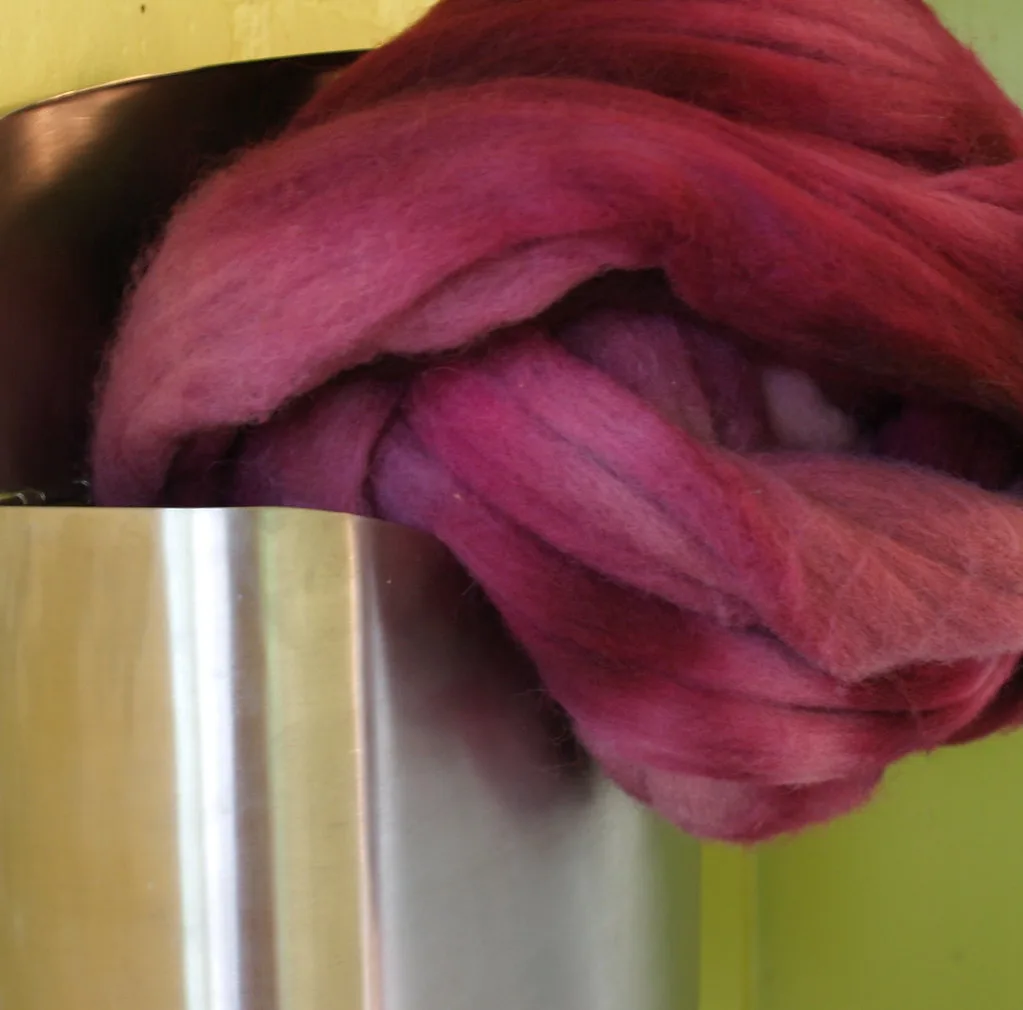
- Top is shiny, dense, cool to the touch and slightly slippery. Pull a length and it drafts out smoothly.
- Roving is duller and lofty. It drafts unevenly, in slubs.
- Batt is obvious — it is a sheet, and it peels into thinner sheets through its thickness.
One more test: hold a length to the light. Top is even; carded preparations show visible thick and thin patches, and often flecks of second cuts.
The words you will also see
- Sliver — a general term for any rope of prepared fibre. Usually means top.
- Pencil roving — roving drawn very thin. Convenient for fine lines in wool painting.
- Rolag — a small tube of carded fibre rolled off hand carders or a blending board.
- Noil — the short fibre discarded during combing. Good core material.
- Prefelt — a different thing altogether: fibre already partly felted into a sheet. See prefelt wool.
Preparation and colour
The three forms behave differently once you start mixing shades, which is the other place the choice shows.
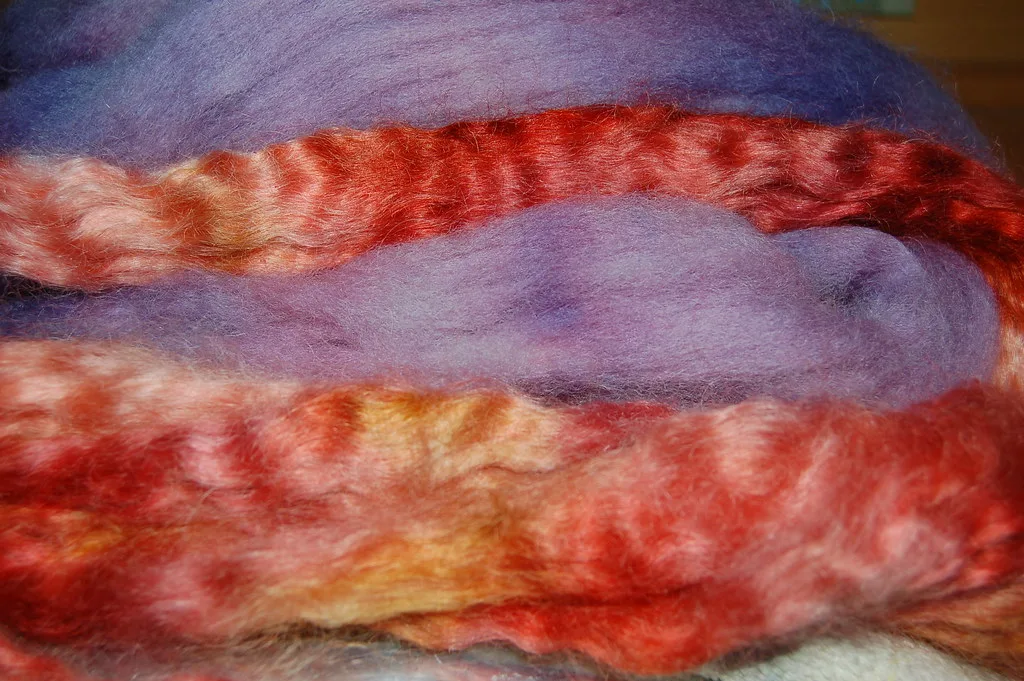
- Top blends into clean streaks and gradients. Lay two colours side by side, draft them together a few times, and you get a controlled transition — the basis of wool painting and of any smooth colour change on a surface.
- Batting blends into heather. Carding two colours together mixes them at the fibre level, so from a distance you see a third colour and up close you see both. It is the only way to get a genuinely muddled, natural-looking shade.
- Roving sits between the two and is awkward at both, which is why serious colour work is usually done on a blending board with top, or on carders with batting. Both methods are in blending wool colours and carding wool by hand.
Storing each of them
All three suffer from compression, but not equally. Batting is the most fragile — squash a sheet flat and the loft that made it felt quickly is gone until you tease it open again. Top is the most robust, because parallel fibres have less loft to lose in the first place. Roving sits in between and comes back with a gentle pull.
None of them should live in a vacuum bag. Breathable storage, out of sunlight, with cedar or lavender against moths, which prefer unspun wool to anything else in the house.
What to buy first
A kilo of undyed carded batting for cores, and 50–100 g braids of coloured top for surfaces. That combination covers nearly everything, costs far less than working entirely in dyed top, and gives better results than either alone. Which breed to buy is a separate question — start with corriedale.
Frequently asked questions
What is the difference between roving and top?
Top is combed, so every fibre lies parallel and the short ones have been removed. Roving is carded and then drawn into a rope, so the fibres are only loosely aligned and nothing has been thrown away. Top is smoother; roving is airier and felts faster.
Is wool batting the same as roving?
No. Batting is a flat carded sheet; roving is that same carded fibre drawn out into a continuous rope. Same preparation, different shape — batting is easier to tear into large pieces, roving easier to wind into small ones.
Which is best for needle felting?
Batting or roving for building the shape, because the crossed fibres tangle sooner. Combed top for the final surface, because parallel fibres lay down smooth. Most sculptures use both.
Why do shops call everything roving?
Because customers do. Most fibre sold online as "wool roving" is actually combed top, particularly if it is merino and dyed in a single shade. If the braid is smooth, shiny and slippery, it is top whatever the label says.