Homburg Hat: The Gutter Crown, the Bound Brim, and When to Wear One
9 min read
We may earn a commission from links on this page, at no extra cost to you. As an Amazon Associate I earn from qualifying purchases. Learn more.
A homburg is a stiff felt hat with a single dent down the crown, no front pinch, and a brim curled up all around and bound with ribbon. Where it came from, from Bad Homburg to Eisenhower, how it compares with a fedora and a bowler, why it is traditionally fur felt, and how to look after the bound edge.
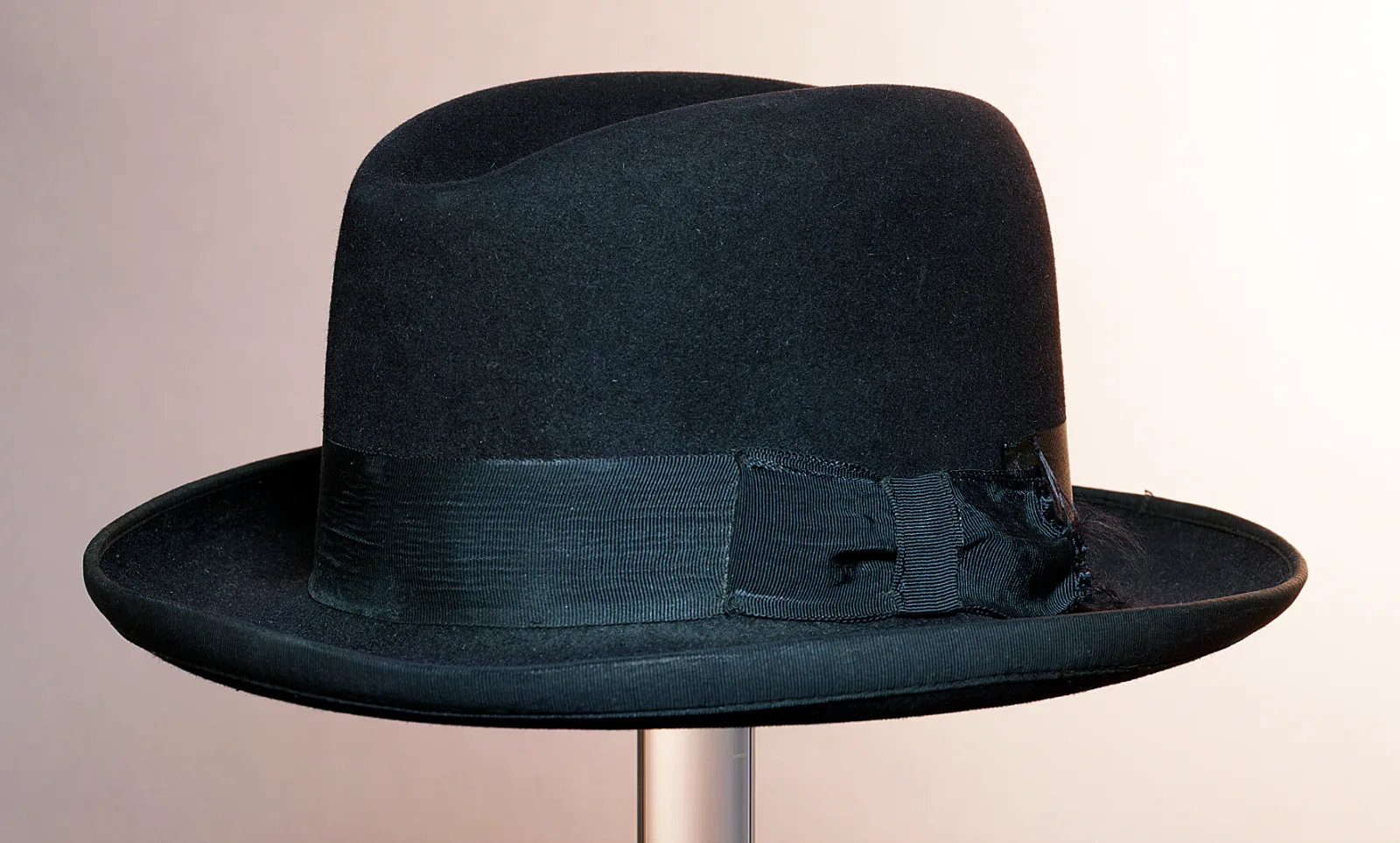
A homburg is a stiff felt hat with a single long dent down the middle of the crown, no pinches at the front, and a brim curled up on every side into a tight roll. Run a finger around the edge of that brim and you feel a ribbon, not felt: a strip of grosgrain stitched on by hand or machine. The binding and the unpinched crown are what separate a homburg from every fedora it is sold next to.
Short of the top hat, it is also the most formal felt hat a man can wear. When the top hat stopped being everyday wear, the homburg became the hat for diplomats, bankers and heads of state, and it kept that standing until hats in general fell out of daily use in the 1960s.
What is a homburg hat?
A felt hat with five fixed features:
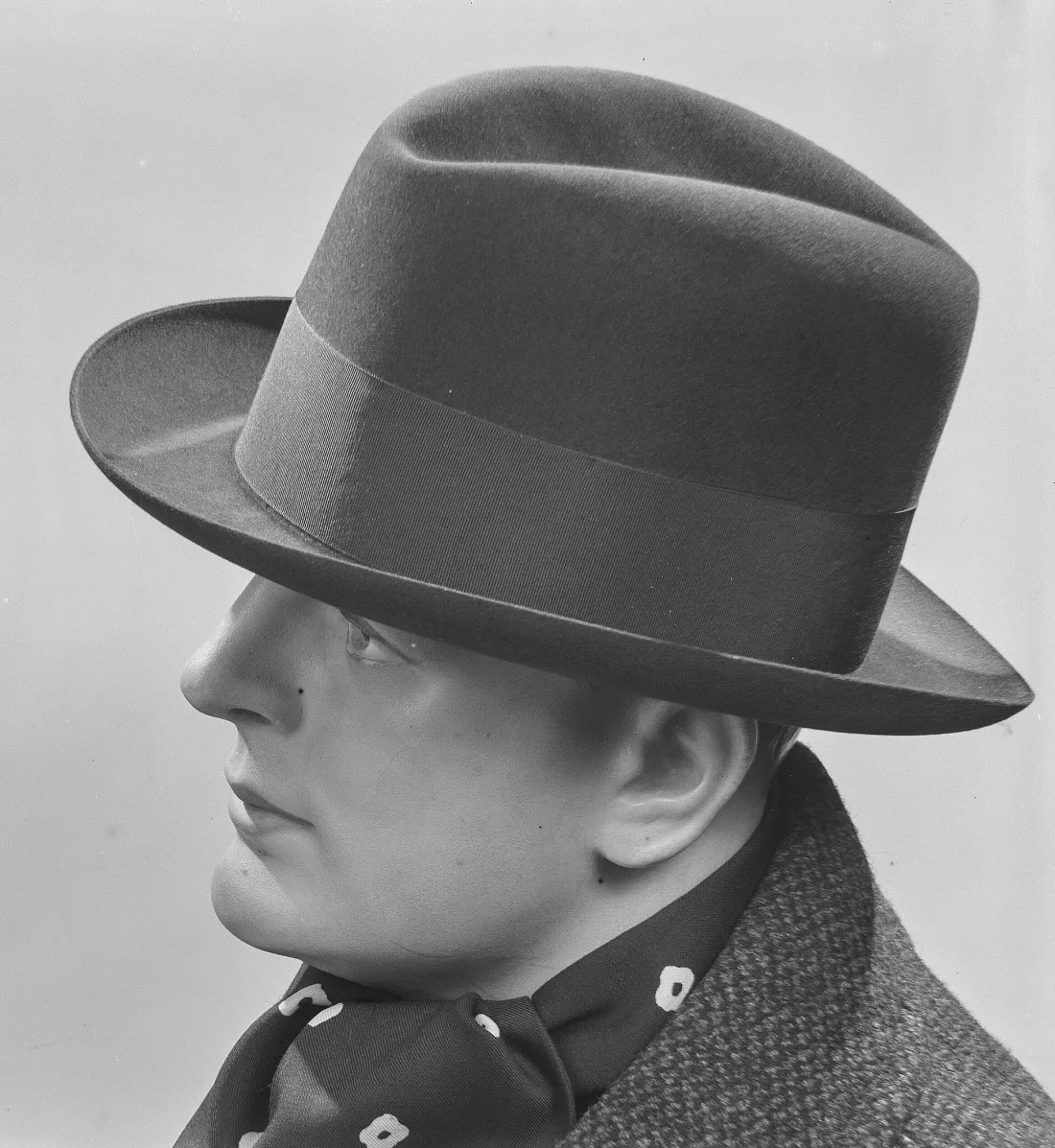
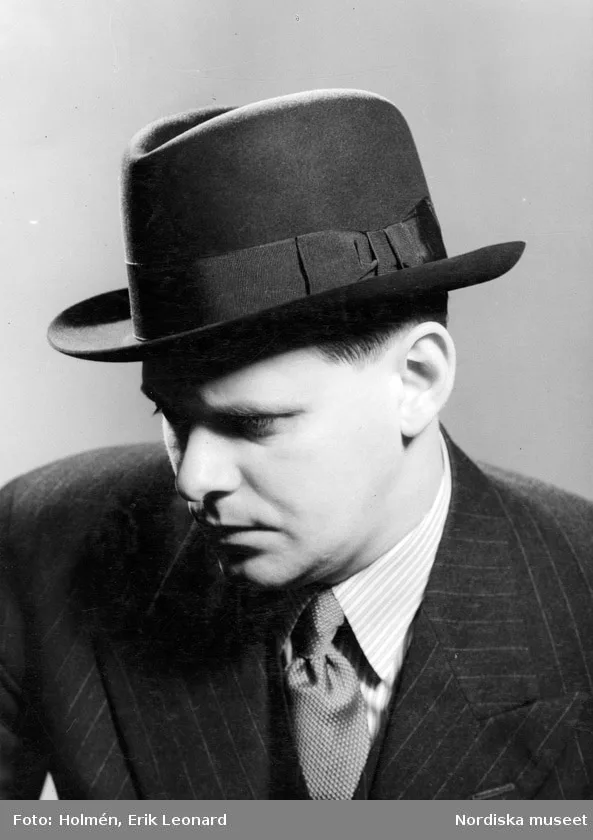
- A gutter crown. One dent runs from the front of the crown to the back, like a gutter along a roof. There are no side dents and no pinches at the front.
- Stiff felt. The felt is firm enough that the crown keeps its shape when the hat is lifted, though not hard like a bowler. A homburg is shaped once, on the block, and is not meant to be re-creased by the wearer.
- A curled brim. About 2–2½ in (5–6.5 cm) wide, turned up all around in an even roll, sometimes described as a "pencil curl". It does not snap down at the front.
- A bound edge. Ribbon, usually grosgrain in the same color as the band, folded over the brim edge and stitched.
- A wide grosgrain band. Often 1½–2 in (4–5 cm) deep, with a flat bow on the left side.
Traditional colors are black, charcoal and gray, with dark navy and brown as later variations. The crown is usually about 5–5½ in (13–14 cm) tall at the dent, a little taller and more upright than most fedoras. Nineteenth-century homburgs were cut slightly larger in proportion than the 20th-century hats most people picture.
Where did the homburg come from?
The name is a place: Bad Homburg vor der Höhe, a spa town in Hesse, just north of Frankfurt. By the usual account, hunters in the region wore a felt hat of this shape, and the spa brought wealthy visitors from all over Europe.
One of them was Albert Edward, Prince of Wales, later Edward VII. He took the waters at Homburg on several visits and is credited with bringing a hat of the local style back to Britain and making it fashionable as a less formal alternative to the silk top hat. Sources disagree on the date: the 1880s and the 1890s are both given, and one widely repeated account names a local hat factory as the maker of the prince's first one. The detail is uncertain; the outline is not. By the end of the century the homburg was an accepted hat for a gentleman in town, and the prince's patronage is the reason.
Its high point came in the middle of the 20th century, with two figures in particular:
- Anthony Eden. The British foreign secretary, later prime minister, wore a black homburg so consistently in the 1930s that, by the usual account, tailors and hatters around Savile Row called it the "Anthony Eden".
- Dwight D. Eisenhower. At his first inauguration in January 1953, Eisenhower wore a black homburg instead of the silk top hat that was then expected at the ceremony. Newspapers treated it as a deliberate break with tradition, and it was widely reported. He wore a homburg again at his second inauguration in 1957.
Winston Churchill, often photographed in one, and a long line of mid-century diplomats helped fix the homburg as the hat of statesmen. In Italy the same shape is called a lobbia. Some Orthodox rabbis still wear a black homburg today, one of the few places the hat survives as everyday dress.
Homburg vs fedora vs bowler: which is which?
All three are felt, all three were worn in town by the same men in the same decades, and shop listings mix them up. The table sets the details side by side.
| Homburg | Fedora | Bowler (derby) | |
|---|---|---|---|
| Crown | Single dent front to back (gutter crown) | Center crease plus two front pinches | Hard rounded dome, no dent |
| Stiffness | Stiff, holds its shape | Soft, shaped by hand | Hard, shellac-stiffened |
| Brim | 2–2½ in (5–6.5 cm), curled up all around | 2⅜–3 in (6–8 cm), flat, snapped down at the front | 1½–2 in (4–5 cm), curled at the sides |
| Brim edge | Ribbon-bound | Usually raw (cut felt) | Usually ribbon-bound |
| Band | Wide grosgrain | Any width | Narrow ribbon |
| Formality | Formal | Smart to casual | Smart day wear |
| Can the wearer reshape it? | Only lightly | Yes | Barely |
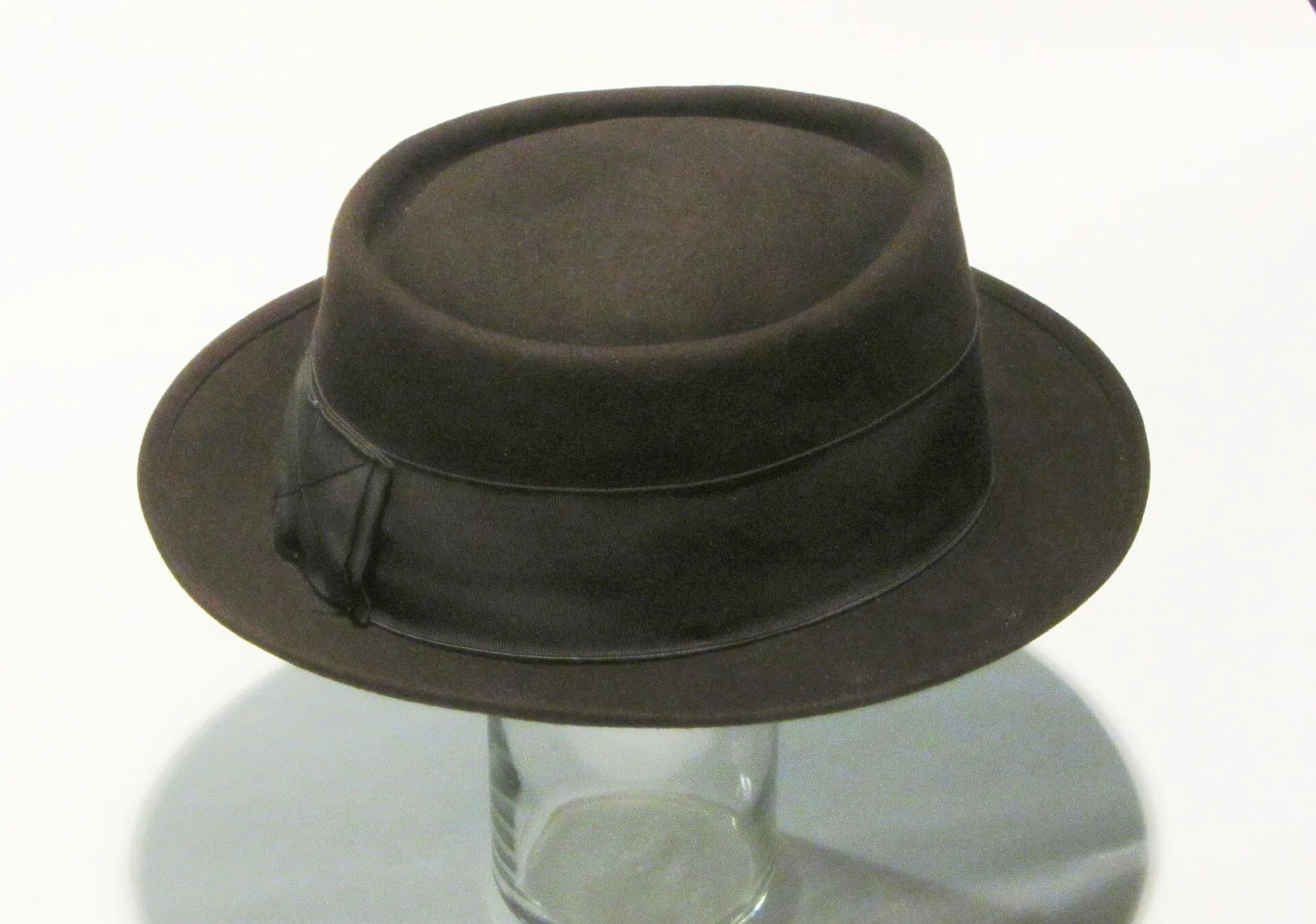
A few hybrids blur the line. A fedora with a bound edge and no front pinches is sometimes sold as a "homburg-style" hat, and a homburg whose crown has been pinched at the front is no longer a homburg, whatever the label says. The bowler has its own page at felt bowler hat, and the soft-crowned styles, including the narrow-brimmed felt trilby and the flat-topped felt pork pie hat, are the casual end of the same family. The only felt hat more formal than a homburg is the felt top hat.
When do you wear a homburg, and with what?
Think of a homburg as the hat that goes with a tie. It belongs with:
- A dark suit in navy, charcoal or black, with a white or pale blue shirt.
- A long overcoat, such as a chesterfield, a dark wool topcoat or a camel coat. The homburg's upright crown balances a long coat in a way a low hat does not.
- Evening and formal day events where a top hat would be too much: funerals, memorial services, winter weddings, the opera, a formal dinner.
It looks wrong with jeans, sneakers, a puffer jacket or an open collar. If the outfit would work with a baseball cap, it will not work with a homburg; choose a fedora or a pork pie instead.
Color follows the clothes. Black is the most formal and the traditional choice for evening and mourning. Charcoal and mid-gray are the daytime colors and the easiest to wear with a gray or navy suit. Brown and navy homburgs exist but are rarer, and look best in the country or with tweed overcoats. Wear it level, with the brim parallel to the ground; a homburg tipped back or to the side loses the formality that is the point of it. The undertones that suit each skin and hair color are in felt hat colors.
Why are homburgs made of fur felt?
Because of the curl. A homburg brim is rolled up in a tight, even curl and has to stay rolled for years without flattening or waving. Fur felt, made from rabbit or hare fur (and at the top end, beaver), has finer fibers that pack together into a denser, smoother, thinner sheet than wool. Stiffened and pressed, it holds a curl crisply and keeps a smooth surface that the ribbon binding sits against cleanly.
Wool felt homburgs exist, and most inexpensive ones sold online are wool. They work as occasional or costume hats, with some limits:
- The brim curl is usually looser and can open up over a season, especially after rain.
- Wool felt is thicker, so the binding sits on a bulkier edge and the brim looks heavier.
- The surface is matte and slightly fuzzy rather than the smooth, faintly lustrous finish a homburg traditionally has.
For a hat you will wear at formal events for many years, fur felt is the traditional and practical choice. The fiber, grades and the differences between beaver, hare and rabbit are covered in beaver felt hats. If a listing does not say what the felt is, the felt hat burn test on a single fiber from under the sweatband will tell wool and fur from a synthetic blend. The firms that still block homburgs, including some London hatters with long records of making them, are listed in felt hat brands.
How should a homburg fit?
Like any stiff hat: accurately from the start, because it will not shape itself to your head. Measure around the head level across the middle of the forehead and just above the ears, and convert with the size chart in felt bowler hat. A homburg should sit level, about 1 in (2.5 cm) above the eyebrows, and stay on when you nod. Between sizes, take the larger and add foam sizing tape behind the sweatband.
The upright crown suits most faces, but proportion matters more than with a soft hat. On a large head or a broad build, a homburg with a narrow brim looks perched; choose a brim at the wider end of the range. On a slight build, a very tall crown and wide band can overwhelm the face.
How do you look after a homburg?
Everyday brushing, stains and the sweatband are covered in how to clean a felt hat. The homburg's own weak points are the curled brim and the ribbon binding, and both need different handling from a soft fedora.
The bound edge
- Brush along it, not across it. Use a soft hat brush, moving around the brim in the direction of the binding, so the bristles do not catch the ribbon's edge or the stitching.
- Keep it dry. Grosgrain shrinks slightly and can pucker when it gets wet and dries, pulling the brim edge with it. In rain, blot the edge with a dry cloth straight away and let the hat dry at room temperature on a stand.
- No steam on the brim. Steam softens the stiffener that sets the curl and can loosen the binding. If the crown dent needs lifting, steam the crown only, for a few seconds, and keep the brim out of the jet.
- Loose or frayed binding. A few loose stitches can be caught with a fine needle and matching thread. A binding that has worn through at the front, where the hat is lifted, is replaced by a hatter, together with the band if needed. It is a routine repair on a good fur felt hat.
Handling and storage
- Lift it by the brim, front and back. Pinching the crown at the front, the habit everyone has from fedoras, slowly creases a homburg where it is not meant to be creased.
- Rest it on its crown or on a hat stand, never flat on the brim. The weight of the hat pressing on the curl flattens it over time.
- Store it in a round hat box out of season, with a little acid-free tissue in the crown to support the dent, and the box kept somewhere cool and dry. A box large enough that the brim curl does not touch the sides is the aim.
- Watch for moths. Fur and wool felt are both food for clothes moths. Brush the hat before storing it, and check it once or twice during a long season in the box.
A homburg that has been stored flat and has lost its curl, or one with a crown dent that has wandered off center, can usually be reblocked by a hatter. It is worth doing on a fur felt hat, which may last decades.
Frequently asked questions
What is the difference between a homburg and a fedora?
A homburg has one dent running down the middle of the crown and no pinches at the front, a stiff brim curled up all the way around, and a ribbon binding on the brim edge. A fedora has a center crease plus two front pinches and a softer, flatter brim, usually snapped down at the front. The homburg is the more formal of the two.
Why is it called a homburg?
After Bad Homburg, a spa town near Frankfurt in Germany, where, by the usual account, the style was worn as hunting headgear. The future Edward VII visited the town and is credited with bringing the hat back to Britain and making it fashionable in the late 19th century.
Did Eisenhower wear a homburg at his inauguration?
Yes. At his first inauguration in 1953 Dwight Eisenhower wore a black homburg instead of the traditional silk top hat, which caused comment at the time. The Senate's inaugural records list a homburg for his second inauguration in 1957 as well.
Is a homburg hat formal?
Yes. Short of the top hat, it is the most formal felt hat a man can wear. It suits a dark suit and a heavy overcoat, and looks out of place with casual clothes such as jeans or a puffer jacket.
Can you steam a homburg?
Briefly, to lift a dent in the crown. Keep steam away from the curled brim and its ribbon binding: the curl is set with stiffener and heat, and the binding can pucker or come unstitched if it gets wet. A flattened brim curl is a job for a hatter.
Topics
Image credits
- A black felt homburg on a museum stand, with a single dent down the crown, a wide grosgrain band with a bow, and an upturned brim with a ribbon-bound edge — Museum Rotterdam (BY SA 3.0)
- Black and white 1933 photograph of a mannequin head in profile wearing a gray felt homburg with a curled brim, bound edge and wide band — Erik Holmén / Nordiska museet (BY 4.0)
- Black and white portrait of a man in a pinstriped suit and tie looking down, wearing a dark homburg with a center dent and a curled brim — Holmén, Erik (BY 4.0)