Is Merino Wool Itchy? Micron Counts, Prickle and Felted Wool
3 min read Beginner
We may earn a commission from links on this page, at no extra cost to you. As an Amazon Associate I earn from qualifying purchases. Learn more.
Wool prickle is a mechanical effect with a measurable threshold, not an allergy. Where merino sits on that scale, and why felting changes how it feels.
Someone tries on a hand felted scarf, says "wool makes me itch", and that is usually the end of the conversation. It is worth reopening, because the itch has a specific and fairly well-understood cause, and it is one you can design around when choosing fibre.
Prickle is mechanical
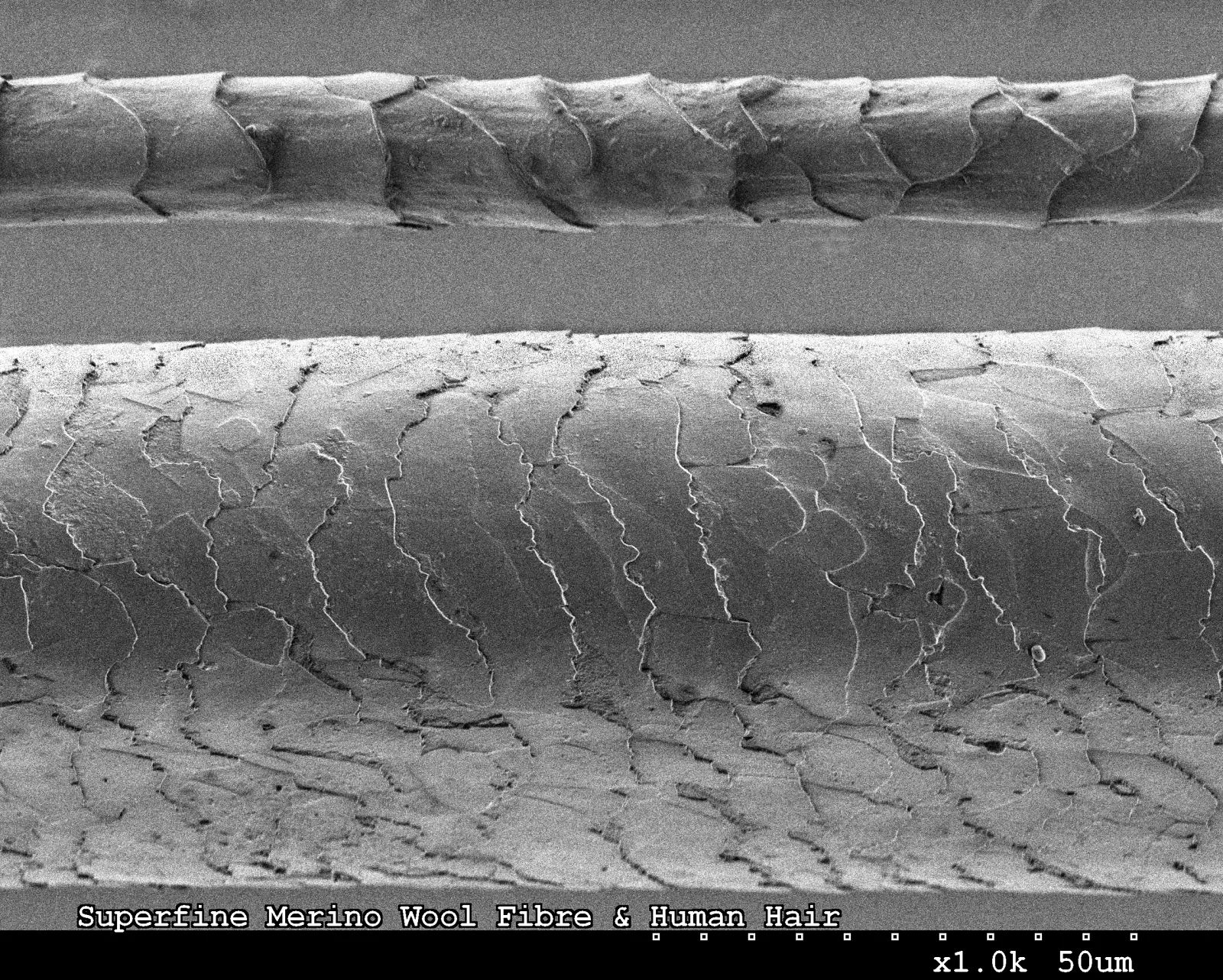
Every fibre in a piece of wool cloth has an end, and some of those ends stick out and press against the skin. Whether you feel them depends on how stiff they are, and stiffness rises sharply with diameter.
Above roughly 30 micron, fibre ends resist bending enough to depress the nerve endings just under the skin surface, which registers as prickle. Below that, they bend out of the way and you feel nothing. The threshold is not exact and varies with skin sensitivity, but it is real and measurable.
This is why the itch has nothing to do with wool being wool. A 40 micron nylon monofilament prickles too.
Where the breeds sit
- Merino — 17 to 23 micron. Well below the threshold.
- Corriedale — 27 to 31 micron. On the line. Fine next to a sleeve, noticeable on a neck.
- Shetland — around 30 micron. Similar.
- Romney, Herdwick, most carpet wools — 32 to 40 micron. Prickly and completely fine for sculpture, bags and rugs.
The felting consequences of this scale run in the opposite direction: coarse wool felts fastest, fine wool feels best. See the best wool for felting for the trade-off, and merino wool for felting for where fine fibre earns its price.
What felting does to prickle
Felting compacts fibre and lays loose ends down into the surface. A firmly felted merino scarf usually feels smoother than the same fibre knitted at a loose gauge, because fewer ends are standing free.
What felting does add is firmness. Felt has no drape at first and can feel stiff against the neck even when it is not prickly at all — a different sensation people often report as itch. Fulling further, then working the finished piece by hand until it softens, fixes most of it.
Two techniques buy real softness: keeping the wool layers thin, and nuno felting onto silk so the fabric carries the structure and the wool only has to look good.
When it is not the wool
- Dye and processing residue. Poorly rinsed dye and finishing agents cause genuine contact irritation. A cool soak in wool wash before the first wear removes a surprising amount of it.
- Soap left in the felt. Hand felted work that has not been rinsed properly stays slightly alkaline and irritates skin. Rinse until the water runs clear, then once more.
- Overheating. Wool at the wrong warmth for the room feels itchy long before it feels hot.
- Genuine wool allergy. It exists, and it presents as a rash rather than a passing tickle. If skin reddens and stays red, that is not prickle.
Choosing fibre for things people wear
For anything touching the neck, wrists or a child's skin, use merino at 19 to 21 micron and keep it thin. For hats and mittens, where a layer often sits between wool and skin, Corriedale is comfortable and far more hard-wearing.
For bags, bowls, rugs, slipper soles and sculpture, use the coarsest wool you can get. It felts faster, holds its shape better, wears longer and nobody will ever have it against their neck.
The quick test
Hold the fibre against the inside of your wrist or the side of your neck for thirty seconds — not your palm, which is far less sensitive than either. If it prickles there, it will prickle in a scarf, and no amount of felting will change that.
Frequently asked questions
Is merino wool itchy?
For most people, no. Merino is typically 17 to 23 micron, well under the roughly 30 micron threshold at which fibre ends are stiff enough to trigger the prickle response. A minority with sensitive skin still notice it.
Is itching from wool an allergy?
Very rarely. True wool allergy exists but is uncommon; nearly all wool discomfort is mechanical prickle from stiff fibre ends pressing on the skin, or a reaction to dye or processing residue rather than to the wool itself.
Does felted wool feel itchier than knitted wool?
It feels firmer, not prickier. Felting compacts the fibres and reduces the number of loose ends standing up, so well-felted merino is often less prickly than the same wool knitted loosely.
Which wools are the itchiest?
Coarse breeds like Romney, Herdwick and most carpet wools, generally 32 micron and up. They are excellent for felting sculptures and rugs and a poor choice for anything worn next to the skin.