Industrial Felt Machines: Needle Looms, Calenders and Felt Belts
4 min read
Everything sold as felt by the metre came off one of three machines. A needle loom entangles the web, a hardening plate shrinks it, and a calender presses it to thickness.
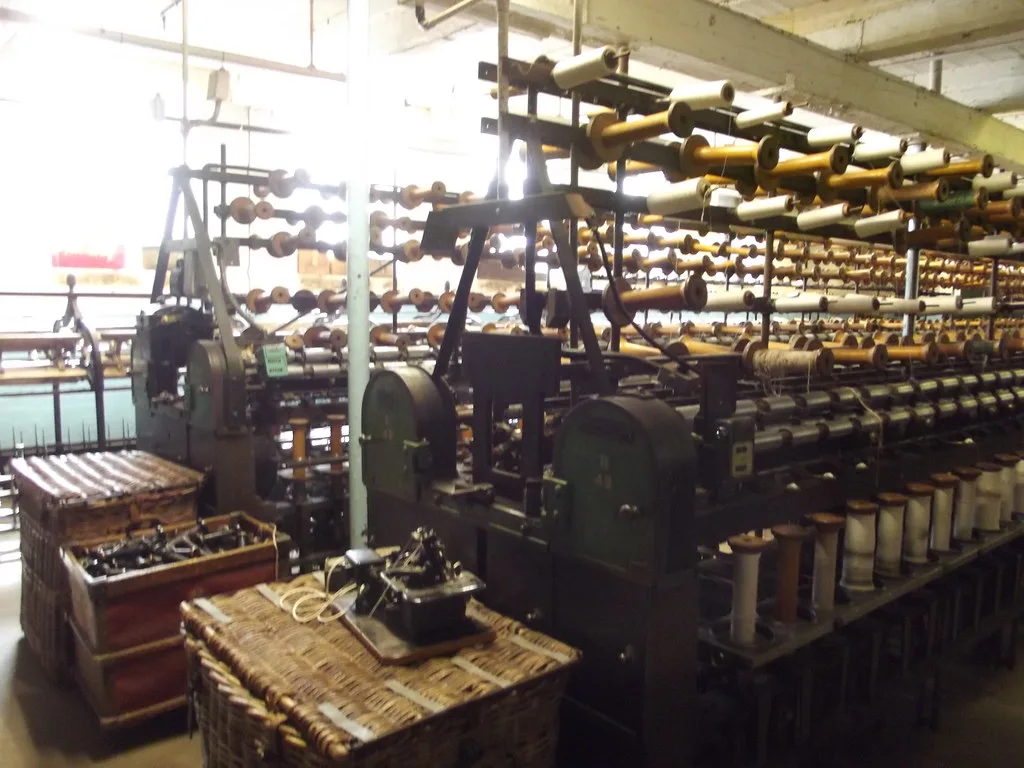
Industrial felt is one of the oldest manufactured textiles and one of the least changed. The machines below are larger and faster than they were in 1900, but they do the same four jobs: open the fibre, lay it into a web, entangle it, and press it to size.
1. Opening and carding
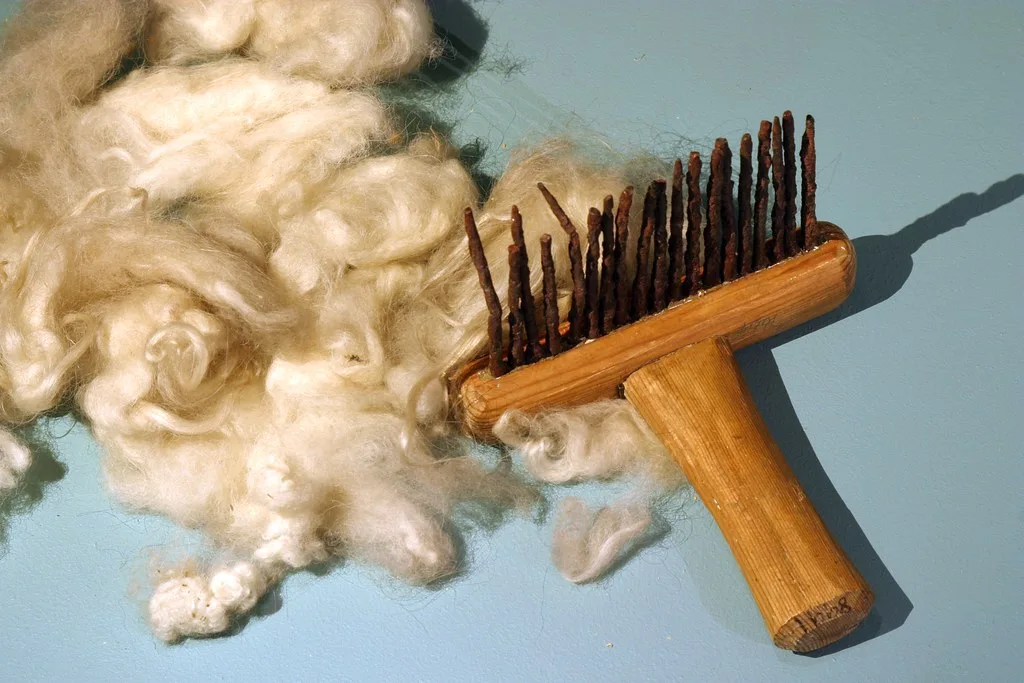
Bales of fibre are broken up, blended and cleaned, then fed to a carding machine that combs it into a thin, aligned web a few grams per square metre. The web is far too light to be felt on its own.
A cross-lapper then folds that web back and forth across a moving belt, building a batt of many layers at alternating angles. This is what gives felt equal strength in every direction, and it is the industrial version of the crossed layers a hand felter lays by hand — see wet felting for beginners for the same principle at kitchen-table scale. The parts of the carding machine itself are listed in carding machine parts.
2. Entangling: the two routes
The needle loom (needlepunch)
A board carrying thousands of barbed needles reciprocates vertically through the batt, typically 500 to 2,000 strokes a minute, while the batt advances beneath it. Each barb drags fibre down through the thickness, locking the layers together.
- Works with any fibre — wool, polyester, polypropylene, aramid, recycled blends.
- Density is set by punch density (punches per square centimetre) and needle penetration depth.
- Produces everything from car interior liners to rug underlay to craft felt.
- The needles are the same barbed design as a hand felting needle, in industrial quantity.
The hardening and fulling machines
True wool felt is not needled. The batt goes through:
- Hardening — a heated, vibrating plate presses the wet batt in a circular motion, causing the initial shrinkage that holds it together.
- Fulling — heavy rollers or hammers work the felt in hot, usually alkaline liquor. The wool scales ratchet against each other and the sheet shrinks by 30–50 per cent in area while gaining density.
- Washing and neutralising to remove the fulling agents.
This is the same process as fulling a knitted item in a washing machine, industrialised and controlled — see felting in knitting and wool shrinkage when felting.
3. The calender
A calender is a stack of heavy rollers — steel, or steel against a filled cotton or paper roll — that the felt passes through under pressure, usually with heat.
- Sets thickness to a tolerance a knife-cut sheet can be sold to, often ±0.2 mm.
- Sets density, which for technical felt is the specification that matters: SAE F-1 to F-13 grades in the US, DIN 61200 in Europe.
- Smooths the surface, closing the open face left by needling.
- Can emboss if one roller is engraved.
Nip pressure, roller temperature and line speed are the three variables. Too much of any of them glazes the surface and makes the felt brittle.
4. Drying, cutting and finishing
Wet felt goes through a stenter or drum dryer, then to slitting and cutting — rotary blades for rolls, guillotines for sheets, and CNC knife tables for shaped parts. Felt destined for polishing or sealing may also be resin-impregnated, flame-retardant treated or dyed at this stage.
Felt belts
"Felt belt" covers two different things, and they get confused constantly.
Papermaking press felts
The critical one. In a paper machine, the wet sheet is carried through the press section on an endless felt belt that absorbs water from it. These are:
- Woven as a continuous seamless loop, then needled with a fibre batt on the sheet side
- Engineered for permeability, compressibility and water handling rather than for surface finish
- Enormous — many metres wide and tens of metres round
- Consumable: they wear out and are replaced on a schedule
Making them is a specialist industry of its own, and it is where most of the world's technical needling capacity actually goes.
Conveying and pressing belts
Plain felt loops used to convey hot or delicate goods, to pad a press platen, or as a wiping surface in printing and glass handling. Wool felt survives temperatures that rubber does not, does not mark polished surfaces, and absorbs oil — which is why it turns up in machinery long after other materials would have replaced it.
Why any of this matters to a felt maker
Because the sheet you buy carries the fingerprint of the machine that made it. Needled felt has a visible punch pattern on one face and pulls apart in layers. Pressed wool felt has no pattern, tears with a fibrous edge and is denser at the same thickness. Calendered felt has one smooth, slightly shiny face.
Knowing which you have tells you whether it will hold a stitch, cut cleanly on a cutting machine, or survive being a rug pad. The buying side of it is in wool felt fabric.
Frequently asked questions
What is a felt calender machine?
A pair or stack of heavy rollers, usually heated, that felt is passed through under pressure to compress it to an exact thickness and give it a smooth, dense surface. Calendering sets the final density, and it is what makes technical felt consistent enough for gaskets and seals.
What is a felt belt?
An endless loop of felt used as a conveying and pressing surface in industry — most importantly in papermaking, where press felts carry the wet sheet through the press section and absorb water from it. They are woven and needled as continuous loops with no seam.
How is industrial felt actually made?
Fibre is opened and carded into a web, the web is cross-lapped into a batt, and the batt is entangled — by barbed needles in a needle loom for needlefelt, or by heat, moisture and pressure in a hardening and fulling machine for true wool felt. It is then dried, calendered and cut.
What is the difference between needlefelt and pressed wool felt?
Needlefelt is mechanically entangled with barbed needles and can use any fibre, including polyester. Pressed wool felt is shrunk by heat, moisture, alkali and pressure, and only works because wool scales interlock. Pressed felt is denser and stronger; needlefelt is cheaper and faster.