Best Soap for Felting: What Works, What Does Not, and Why
4 min read Beginner
We may earn a commission from links on this page, at no extra cost to you. As an Amazon Associate I earn from qualifying purchases. Learn more.
Soap does two jobs in wet felting — it lubricates and it raises the pH so the scales open. Which soaps do both, and why washing-up liquid is a compromise.
Wet felting has three ingredients: wool, water and soap. The wool gets all the attention and the soap gets almost none, which is odd, because it is doing two entirely different chemical jobs at once.
What the soap is actually for
Lubrication. Wool fibres felt by ratcheting past one another in the direction their scales permit. To do that they need to slide, and dry or merely wet wool grips too much. Soap makes the fibres slippery so they can move.
Alkalinity. Wool's scales lie flatter in acid conditions and lift in alkaline ones. A soap at pH 8–10 makes them stand proud of the fibre, so they catch on their neighbours far more readily. This is why plain water felts wool eventually and soapy water felts it quickly.
A soap that only does the first job — a heavily moisturised, pH-neutral, "gentle" one — will make everything slippery and slow the felting down. That is the trap.
What to use
Olive oil soap
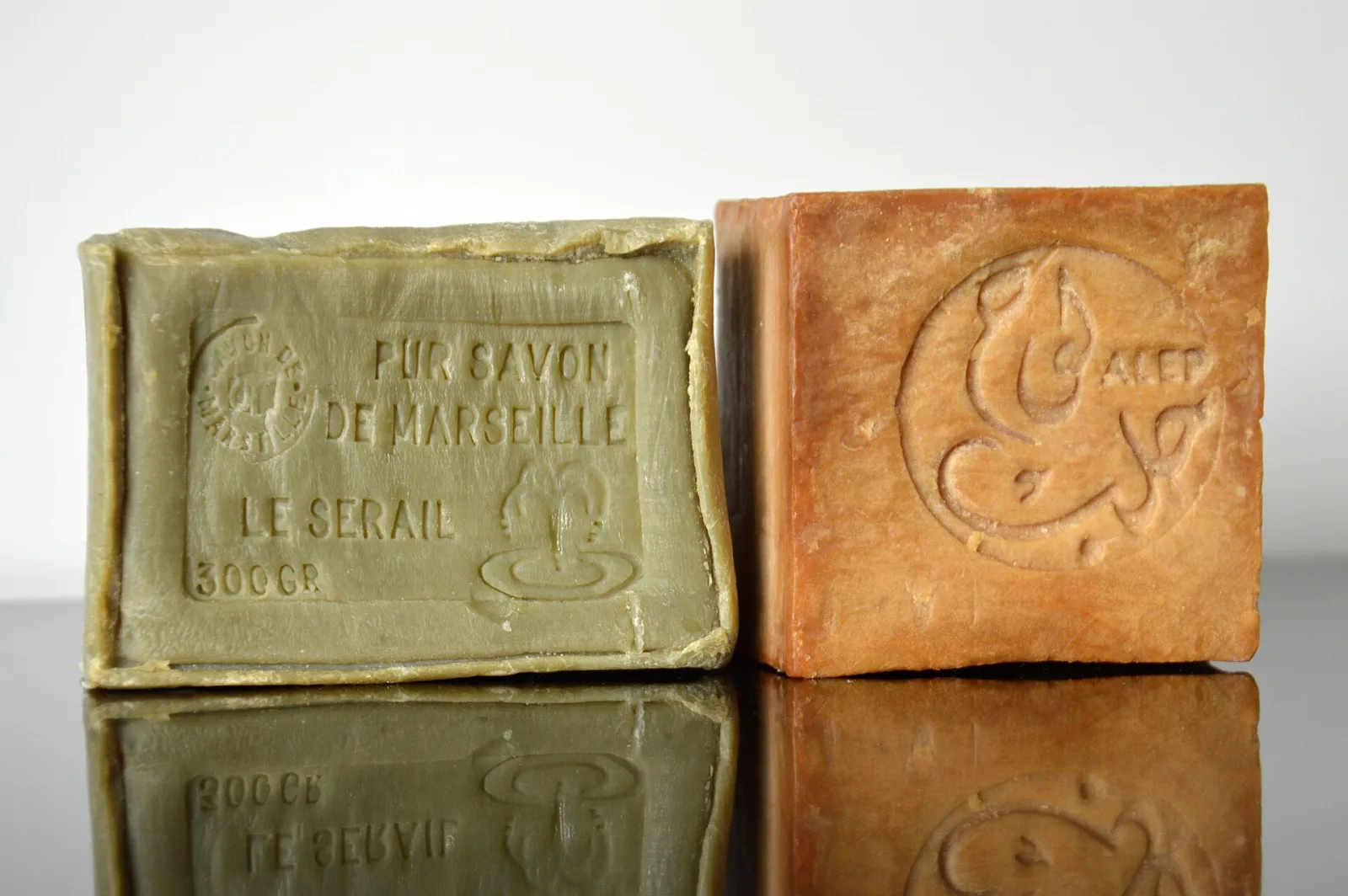
The traditional choice, and still the best. Green olive oil soap — the Aleppo and Marseille styles, and their many imitations — is made by saponifying olive oil with an alkali and nothing else. Slippery, alkaline, unscented, no additives, and gentle on hands that are going to be in hot water for two hours.
Buy it as a block and either rub the wet work directly with the bar or grate some into hot water.
Plain soap bars
Any hard, unscented, additive-free soap works: household soap, laundry bars, cheap olive or coconut bars. Avoid anything sold as moisturising, creamy, glycerine-rich or "for sensitive skin" — those contain fats and humectants that stay on the fibre and slow it down.
Washing-up liquid
The default in most kitchens and perfectly usable. It is a synthetic detergent rather than a true soap, which means more foam and less slip, and it is more drying on skin. Roughly a teaspoon per litre of hot water; more foam is not better and makes it hard to feel what the wool is doing.
Felting solutions and olive oil soap liquids
Sold ready-made by fibre suppliers. They are mostly diluted olive oil soap at a sensible pH. Convenient, correct, and priced accordingly.
What not to use
- Shampoo and conditioner. Formulated to make fibres smooth and slippery and to lie flat — the exact opposite of what you want.
- Wool wash (Eucalan, Soak and similar). Designed specifically to clean wool without felting it. It will work against you.
- Fabric softener. Same problem, worse.
- Heavily scented or coloured soaps. The dye can transfer onto pale wool.
- Biological detergents. Protease enzymes digest protein, and wool is protein.
If your wool is refusing to felt and the soap is not the issue, work through why won't my wool felt — superwash treatment is the more common cause.
How much, and how to apply it
- Wet out first, soap second. Sprinkle hot water over the dry layout until it is soaked through, pressing rather than rubbing, then add soap. Soaping dry wool makes foam sit on the surface while the middle stays dry.
- Use less than you think. The wool should feel slippery, not foamy. Thick suds hide the surface and make it impossible to feel when the fibres start to bind.
- Rub the bar directly on the netting or on your hands for spot control, rather than pouring more solution on.
- Add more as you go. Soap gets carried away with the water; long sessions need topping up.
- Rinse properly at the end. Residual alkali left in the felt makes it stiff and attracts dirt. Rinse until the water runs clear, then a final rinse with a splash of vinegar to bring the pH back down and close the scales.
The vinegar rinse
Half a cup of white vinegar in the final rinse neutralises the soap, restores wool's slightly acidic natural state and leaves the felt softer. It also stops the felting process, which matters if you have hit the density you want. Rinse the vinegar out afterwards.
Felted soap is a different thing
Searching for felting soap turns up a great many results for the felt soap bar, which is a different object entirely — a bar of soap wrapped in wool and felted around it, so the wool acts as a flannel that shrinks with the soap. That is a project, not a supply. It is covered in how to make felted soap, and the reasons people like them in felted soap benefits.
The short answer
Soap is one of four things the process needs, and the only one people agonise over; the other three are in wet felting materials.
Olive oil soap in a block, hot water, and a vinegar rinse at the end. If you have none, washing-up liquid will get you through your first project perfectly well.
Frequently asked questions
What soap is best for wet felting?
A plain, alkaline, olive oil based soap — traditional green olive oil soap or an unscented pure soap bar. It is slippery, mildly alkaline so the wool scales open, and it contains no moisturisers or detergents that interfere with felting.
Can you use washing-up liquid for felting?
Yes, and most people do. It works because it is slippery and mildly alkaline, but it is a detergent rather than a soap, so it foams more than it lubricates and it is harsher on your hands. Use about a teaspoon per litre of hot water.
Why does soap help wool felt?
Two reasons. It lubricates the fibres so they can slide past each other in the direction their scales allow, and its alkalinity makes those scales lift away from the fibre shaft so they catch more aggressively. Water alone does neither well.
Should the water be hot or cold?
Hot — as hot as your hands will bear, around 50°C. Heat opens the scales further and speeds everything up. A cold rinse at the end causes a shock that tightens the felt slightly, which is why the traditional method alternates the two.