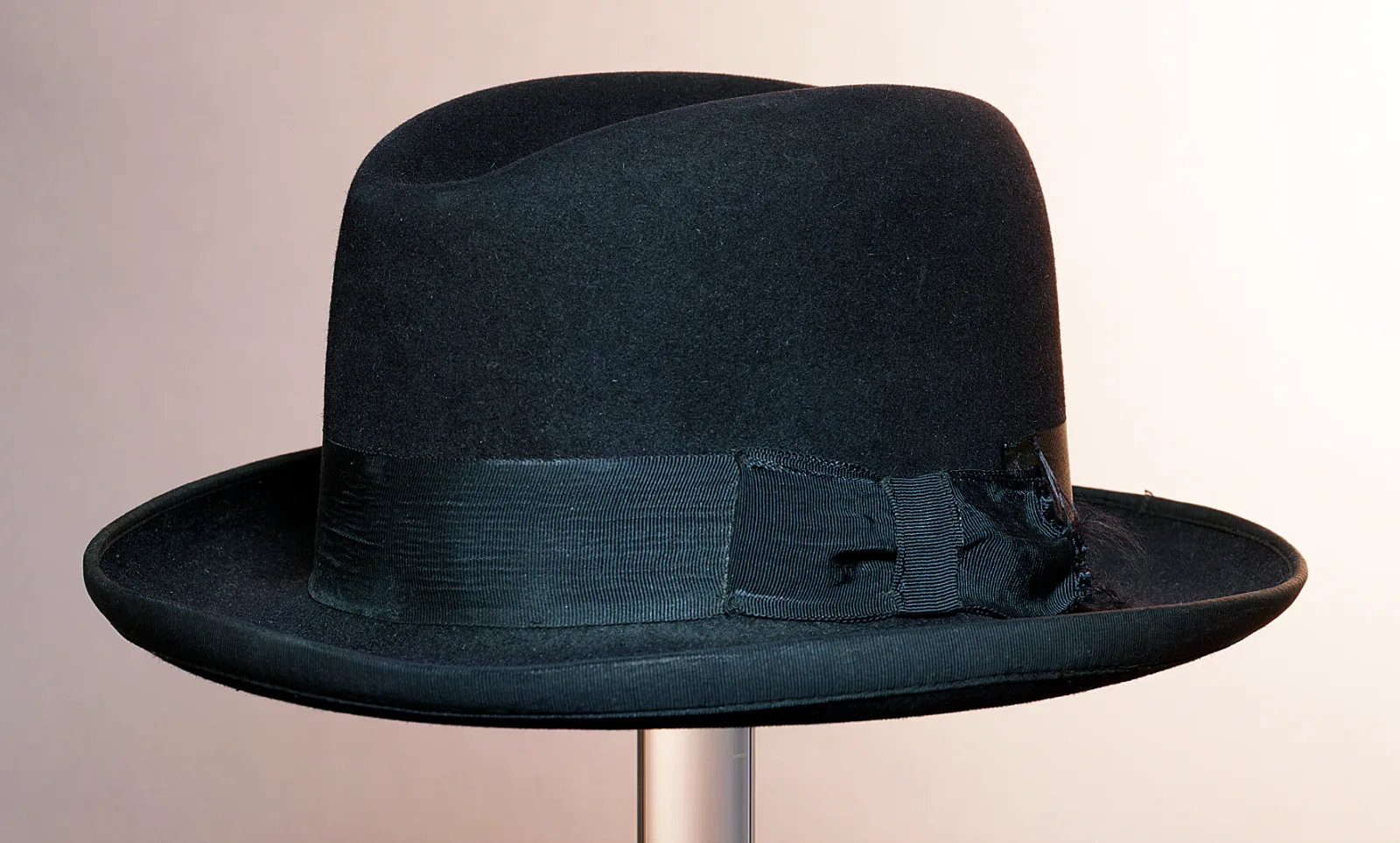
Felt Gambler Hat: The Flat Crown, the Flat Brim, and the Riverboat Story
11 min read
We may earn a commission from links on this page, at no extra cost to you. As an Amazon Associate I earn from qualifying purchases. Learn more.
A felt gambler hat has a low, flat-topped crown and a wide brim that stays level. How it differs from a cowboy hat, a bolero and a pork pie, how much of the riverboat history holds up, wool against fur felt, and how to keep a wide flat brim from drooping.
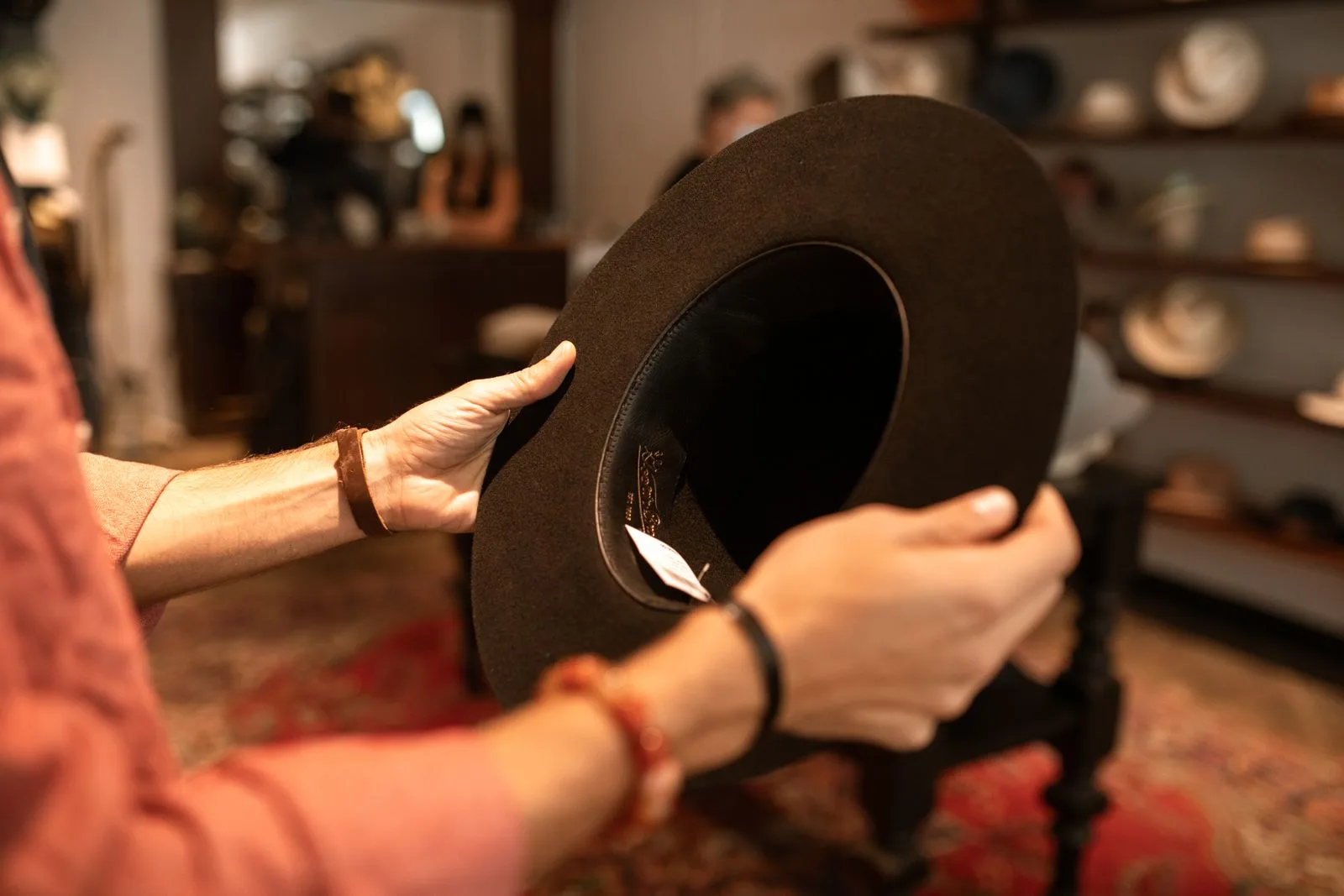
Western hat makers list the gambler alongside the cattleman and the Gus, but unlike them it has no crease at all: a low, flat-topped drum on a brim of 3–4 in (7.5–10 cm) that stays level instead of curling up at the sides. Seen side-on, the whole hat is a set of horizontal lines, which is why it reads as dressier than a working cowboy hat even when it comes from the same maker.
The level brim is also the part that needs looking after, since felt left resting or hanging the wrong way will droop or wave. And the name comes with a riverboat story that is better known than it is documented.
What does a gambler hat look like?
Look at three things: the crown, the brim and the edge of the brim.
- The crown is low and flat-topped. Seen from above it is round or a slight oval, and the top is either left completely flat or pressed into a shallow round dent, sometimes called a telescope crown. There is no front pinch and no crease running front to back. Some makers add a gentle dent in the top, and that still counts as a gambler as long as the crown stays low and unpinched.
- The brim is wide and level. Most felt gamblers have a brim of about 3–4 in (7.5–10 cm), and a few go wider. It is not rolled up at the sides the way a western brim is.
- The edge often has a small roll. On many gamblers the last ¼–½ in (6–12 mm) of the brim curls slightly upward, or is bound with ribbon so it looks finished and stays stiff. Sellers call this a riverboat edge or a gambler edge. A brim that is dead flat right to the edge is still a gambler; it simply leans toward the Spanish flat-brim look.
A plain ribbon band, a narrow leather band or a band of silver conchos goes around the base of the crown.
How is a gambler different from a cowboy hat, a bolero and a pork pie?
All four have a crown and a brim and can be made from the same felt. What separates them is where the crown is pinched and how the brim is turned.
| Gambler | Cowboy (cattleman) | Bolero / Spanish flat brim | Pork pie | |
|---|---|---|---|---|
| Crown height | Low | Tall, about 4⅝ in (11.7 cm) on a standard cattleman | Low to medium, with straight vertical sides | Very low |
| Crown top | Flat, or a shallow round dent | Center crease with two side dents | Dead flat, sharp corner where top meets side | Flat, with a round groove just inside the edge |
| Brim width | About 3–4 in (7.5–10 cm) | About 3½–4½ in (9–11.5 cm) | Wide, often 3½ in (9 cm) or more | Narrow, about 1½–2 in (4–5 cm) |
| Brim shape | Flat, often with a slight roll at the edge | Curled up at the sides, dipped front and back | Stiff and flat right to the edge | Turned up all around, or snapped down at the front |
| Reads as | Western dress, old-time riverboat, costume | Ranch and rodeo | Spanish riding, flamenco, Argentine gaucho | Jazz and mid-century city wear |
The pork pie is the one most often confused with a gambler on a shop page, because both have a flat-topped crown. The difference is scale: a pork pie crown is lower still, and its narrow brim makes it a town hat, while a gambler's wide brim makes it a sun hat. The full pork pie story is in felt pork pie hat. The cowboy crowns and brim curls are covered in felt cowboy hats, and the rest of the names are in types of felt hats.
The bolero is the hardest to tell apart. In Spain the hat is the sombrero cordobés, named after Córdoba, and shops in the US often sell similar hats as bolero or gaucho hats, sometimes with a chin cord. Its crown walls go straight up and meet the flat top at a crisp angle, and the brim is stiff enough to stay perfectly flat. A gambler is softer in both places.

Were gambler hats really worn by riverboat gamblers?
Professional gamblers certainly worked the Mississippi. From around the 1830s until the Civil War, steamboats carrying cotton, passengers and money between St. Louis, Memphis and New Orleans also carried card players who made a living off them, and some of those men wrote about it later. George Devol's memoir Forty Years a Gambler on the Mississippi, published in 1887, is the best known. The image of the riverboat gambler as a well-dressed man in a long coat, a fancy vest and a broad-brimmed hat comes out of that world.

The link between those men and this particular hat is much weaker. Hat sellers usually say the gamblers copied the wide-brimmed hats of Southern planters so they would pass as rich men worth playing against. That is plausible, but no one has produced the period evidence for it, and the period engravings and photographs that are usually reproduced show gamblers in the ordinary hats of their day, tall hats and derbies among them. On the western frontier after the war the same was true: card players in saloons from Kansas to Arizona appear in photographs wearing whatever a man of some means wore, which often meant a derby, a story told on the felt bowler hat page.
What fixed the flat-crowned, flat-brimmed hat to the word "gambler" seems to be the 20th century. Western films and television of the 1940s and 1950s needed a quick way to show that a character dealt cards for a living, and a black hat with a low flat crown and a level brim, worn with a frock coat and a string tie, became that shorthand. Western hat makers then used the name for the shape. So the safest way to put it is this: the riverboat gamblers were real, the hat is a real western style, and the story joining them is a tradition rather than a proven fact.
How wide a brim can wool felt hold?
Brim width decides this more than budget does. A 3 in (7.5 cm) brim in wool felt holds its line well enough for costume and occasional wear. Once the brim reaches 4 in (10 cm), wool starts to work against you: it is heavier for the same stiffness, so the outer edge of a wide brim has more weight hanging off it, and a damp day or a few months on a hook will start to tip the front down.
- Wool felt suits a first gambler, a costume or steampunk hat, and anything worn a few times a year. Choose one described as stiffened or firm, and avoid "crushable" or "packable" versions if you want the brim to stay level.
- Fur felt, made from rabbit, hare or beaver, is lighter, denser and sheds rain, so a wide flat brim keeps its shape for years. It costs several times as much. If you will wear the hat every week, or in weather, this is where the money is worth spending. The fur grades are explained on beaver felt hats.
Some cheap gamblers are not wool at all but a polyester or wool-blend felt with a heavy stiffener. They hold a flat brim at first, but the stiffener cracks if the brim is bent, and steam does not reset them the way it resets wool. If a listing is vague about the fiber, the felt hat burn test on a fiber from under the sweatband settles it.
How do you keep a wide flat brim flat?
Felt has a memory, and on a flat brim that memory works for you or against you. Steam softens the fibers and whatever shape they are held in while they dry is the shape they keep. Every brim problem on a gambler, whether a front that droops, a side that has cupped up or a wave along the edge, comes from the felt drying in the wrong position, usually because it was hung on a peg or stored resting on something.
To flatten a brim that has started to droop or wave:
- Steam the brim only. Use a kettle or a handheld garment steamer, holding the felt 4–6 in (10–15 cm) from the steam and moving it continuously. Stop when the brim feels warm and slightly damp, not wet. Keep steam away from the crown if it has a dent you want to keep.
- Lay it flat. Set the hat on a clean table so the brim lies on the surface. If the crown stops the brim from touching, stand the crown in a ring, such as a roll of tape or an upturned bowl just wider than the crown, so that the brim, not the crown, takes the weight.
- Smooth and weight it. Press the brim flat with your palms, working outward from the crown. Put a clean cotton cloth over it and a few large books or a flat board on top, spread evenly so the weight does not dent the felt.
- Leave it until it is dry. That is several hours at room temperature. Lifting it while it is still damp lets it creep back.
Do not iron the brim yourself. Hatters press brims with a heated iron and a brim board, but a household iron on wool felt can leave a shine or scorch, and on synthetic felt it can melt the surface. If you want the small upward roll at the edge back, steam just the outer ½ in (12 mm) and curl it gently up between finger and thumb as you work around, then leave it to dry without weight on it.
Storage stops most of the trouble before it starts. A gambler is one of the few hats that is safe resting on its brim, because the whole brim touches the shelf and is supported evenly. Resting it upside down on its crown, the usual advice for a western hat, leaves a wide flat brim hanging in the air at both sides, and over weeks that can bend it. Keep it on a flat shelf, in a box wide enough that the brim does not touch the sides, or on a hat rack that supports the crown from inside. Avoid hanging it by the brim on a peg. Day-to-day cleaning, rain and the sweatband are covered in how to clean a felt hat.
How snug should a gambler hat be?
Snug enough that it stays on without being pushed down. That matters more on a gambler than on most hats, because a wide flat brim catches the wind like a sail. A brim that flips up at the front or lifts off the head in a breeze is usually a sign that the hat is half a size too big, not a fault in the hat.
Size it from a measured head circumference with the conversion table on the felt bowler hat page, not from a letter size. If you are between sizes, take the larger and close the gap with foam sizing tape behind the sweatband.
For riding, outdoor events or anywhere windy, a stampede string, a cord that runs from the inside of the crown under the chin or behind the head, is the traditional answer. Many gamblers come with small eyelets for one already.
Proportion matters as well. The brim should be no narrower than the widest part of your face seen from the front. A broad face or broad shoulders take a 4 in (10 cm) brim comfortably, and a slight frame looks better under 3–3½ in (7.5–9 cm), where the hat does not overwhelm it.
Who wears a gambler hat now?
Three groups, and they buy slightly different hats.
- Western wear. In western dress the gambler sits between a working cowboy hat and a town hat. It is worn with a suit or a jacket to events where a cattleman would look too much like work clothes: dances, weddings, church. Black, silverbelly and dark brown fur felt dominate, usually with a simple ribbon or leather band. Western makers sell gambler crowns alongside their cattleman and Gus crowns, often in the same felt grades.
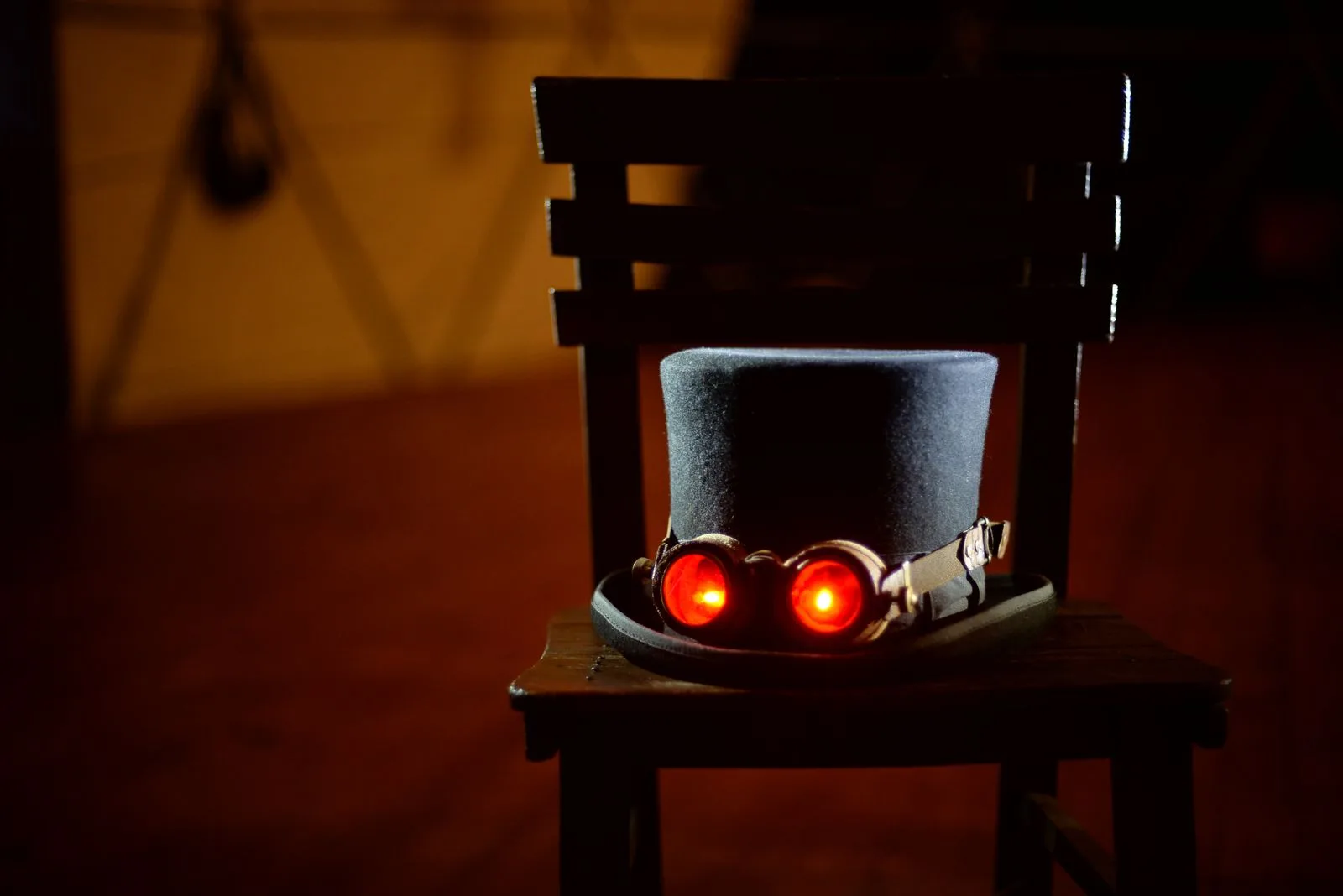
- Steampunk. A gambler is a natural steampunk hat because of the 19th-century riverboat association, and it takes decoration well: a band of leather with buckles, a pair of goggles around the crown, a feather or a few brass gears fixed to the band. Wool felt is fine here, and a brown or gray hat looks more Victorian than a black one. If you are trimming one, sew or pin things to the band rather than gluing them to the felt; ideas are in felt hat accessories.
- Costume. A riverboat gambler, a frontier card sharp, a Mississippi steamboat captain or a character from a stage western all start with a black gambler. Costume versions are usually lightweight wool or wool-blend felt with a bound edge. For a one-night costume that is fine. For a stage run, buy a stiffer felt so the brim survives being handled every night.
Women wear gamblers too, often in a slightly smaller crown with a narrower 3 in (7.5 cm) brim; felt hats for women covers proportion for smaller heads. If the gambler feels like too much hat, the felt trilby and the formal homburg hat are the town hats at the other end of the scale, with creased crowns and much narrower brims.
Frequently asked questions
What is a gambler hat?
A western-style felt or straw hat with a low, round or oval crown that is flat on top, either left plain or with a shallow round dent, and a wide brim of about 3 to 4 in (7.5 to 10 cm) worn flat. Many have a slight upward roll at the very edge of the brim, which is often called a riverboat or gambler edge.
What is the difference between a gambler hat and a cowboy hat?
The crown and the brim. A cowboy hat has a taller crown pinched into a crease, such as the cattleman, and a brim curled up at the sides. A gambler has a lower crown that is flat on top with no front pinch, and a brim that stays nearly flat all the way around.
Did riverboat gamblers really wear gambler hats?
The name says so, but the evidence is thin. Gamblers worked the Mississippi steamboats from the 1830s onward, yet the period pictures that survive show the ordinary hats of the time. The flat-crowned hat as a gambler's trademark owes a lot to later western films and television, so treat the story as tradition rather than proven history.
How do you flatten a felt gambler hat brim?
Steam the brim lightly until it feels warm and slightly damp, lay it on a flat table with the crown hanging over the edge or sitting in a ring, smooth it with your palms, and leave it under a clean cloth and a flat weight until it is fully dry. Then store it so the brim lies flat and nothing presses on it.
Is a gambler hat the same as a bolero?
No, though they look alike. The hat sold as a bolero, or the Spanish cordobés, has straight-sided crown walls, a dead-flat top and a stiff brim that is flat right to the edge. A gambler is the western cousin, usually with a softer, more rounded crown and a slight roll at the brim edge.
Topics
Image credits
- Two hands holding a dark brown felt hat upside down in a hat shop, showing its wide flat brim and the sweatband inside the crown — RDNE Stock project (Pexels License)
- Black and white photo of a woman in a shiny jacket wearing a very wide, perfectly flat-brimmed hat with a low flat-topped crown — David Kouakou (Pexels License)
- The white paddlewheel riverboat Creole Queen cruising on a dark river under heavy storm clouds — Hannibal Photography (Pexels License)