Best Felt and Wool Slippers: Soles, Arch Support and Nordic Makes
6 min read
A felt slipper is only as good as the wool it is made of and the sole it is joined to. How to tell boiled wool from needled felt, which soles last, which footbeds actually hold an arch, and why Nordic slippers feel so different.
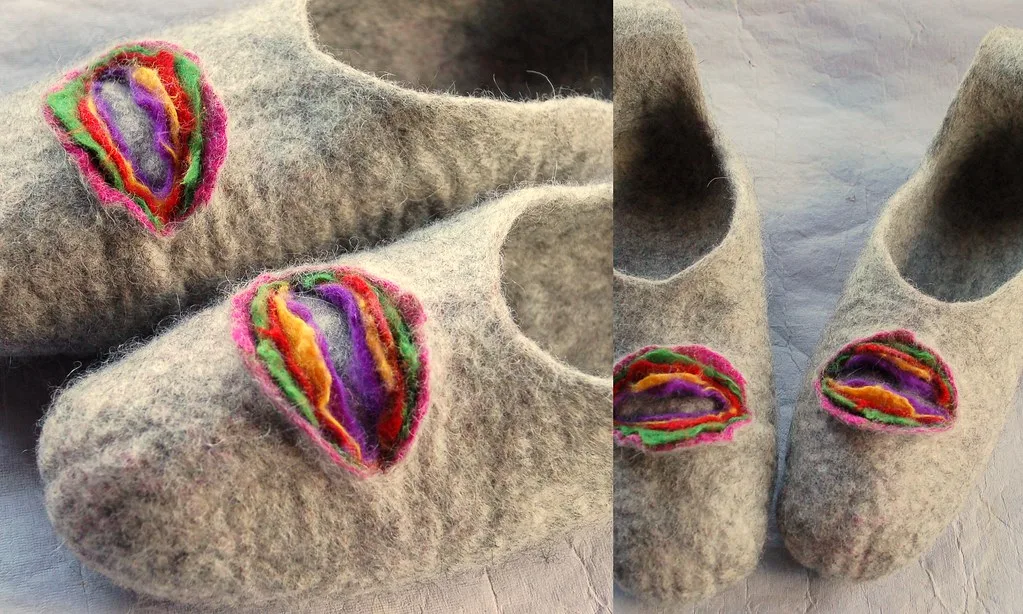
Two things separate a slipper you wear for five years from one you replace next winter: what the felt is made of, and what is underneath it. Colour, lining and toggles are styling.
The felt itself
- Boiled wool: knitted wool fulled until it is dense and stops fraying. Slightly elastic, so it moulds to the foot. The standard for European slippers.
- Wet felted: the densest of the four, made in one seamless piece over a resist. Usual for handmade slippers and for Finnish felt boots.
- Needled (dry) felt: fibre punched into a sheet by machine. Cheap and uniform, and it compresses flat under the heel faster than either of the above.
- Wool-blend felt: anything with polyester in it. It resists compression better and breathes considerably worse.
Thickness matters as much as method: 4–6 mm is a slipper, 2 mm is a sock with ambitions.
Fine wool or coarse wool
Softness and wear pull in opposite directions. Fine merino (17–22 micron) is lovely against bare skin and packs down under a heel within months, so the slipper goes thin at the ball of the foot. Coarser, long-stapled wool (Corriedale, Romney, Gotland, Icelandic) stays springy for years and prickles a little at the ankle. The best construction uses both: a coarse felt body with a merino or sheepskin lining. A listing that says only "100% merino slipper" is promising comfort, not longevity. The fibre comparison is in best wool for felting, and what micron count really predicts about itch is in is merino wool itchy.
Soles, in the order that matters
- Rubber, stitched or vulcanised. Grip on stairs, survives a walk to the mailbox, and hides the fact that felt alone is slippery on wood. Look for stitched rather than glued.
- Cork-latex footbed. The Birkenstock approach, covered below. Firm, moulds to the foot, and the only common construction that genuinely supports an arch.
- Leather. Quiet, thin and comfortable indoors; useless on wet tile and wears through faster than rubber.
- Bare felt with latex dots. Light and packable. The dots wear off within a season and the slipper is slippery again.
- Bare felt. Traditional, warm, and a genuine fall risk on stairs. Fine on carpet.
Stitched is the word to look for whatever the material. A sewn sole can be replaced by a cobbler; a glued one ends the slipper. Adding a sole to a pair you made or already own is covered in slipper soles.
Arch support: what actually holds a foot
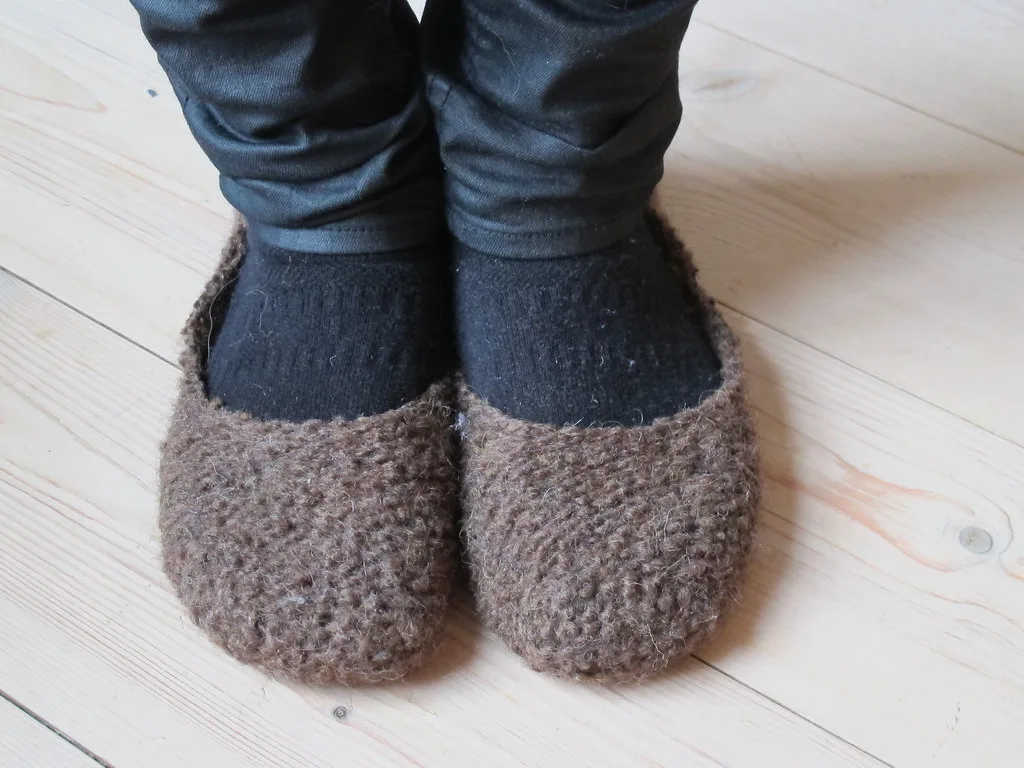
Softness and support are opposites. Foam that compresses flat under your weight is not holding anything up; it just feels pleasant for the first ten seconds. Three constructions genuinely work:
- Cork-latex footbed. Contoured, with a raised arch, a toe bar and a deep heel cup. It moulds to your foot over one to two weeks and holds that shape for years.
- Moulded EVA or PU footbed. A shaped foam unit, not a flat sheet, with a defined arch. Lighter and softer than cork, and it flattens after a year or two of daily wear. Most wool slippers sold as "supportive" use this.
- Removable insole plus your own orthotic. The most reliable option if you already have prescribed orthotics. The slipper only has to provide depth, a firm base and a heel that holds; buy half a size up to make room.
What does not support anything: memory foam, a thick felt insole, sheepskin lining (insulation, not structure), and backless mules. Without a heel counter the foot slides forward and the toes grip to keep the slipper on, which is what aggravates plantar fasciitis in the first place.
Three tests in the store
- Press the arch with your thumb. If it flattens easily, it will flatten under a foot.
- Squeeze the heel cup. A supportive slipper has a stiffened counter that does not collapse between finger and thumb.
- Twist the slipper. It should resist. One you can wring like a cloth has no midfoot structure.
The break-in week
A cork footbed feels wrong at first. It is firm, the arch presses into a foot not used to being held, and people send them back thinking the size is off. Wear them an hour a day for three or four days, build to half a day by the end of the week, and by week two the cork has taken an impression of your foot. If the arch still hurts sharply after two weeks, the profile is wrong for your foot rather than unbroken-in. None of this replaces a podiatrist for persistent heel pain: a slipper can stop making a problem worse, and it is not the treatment.
Scandinavian and Nordic slippers
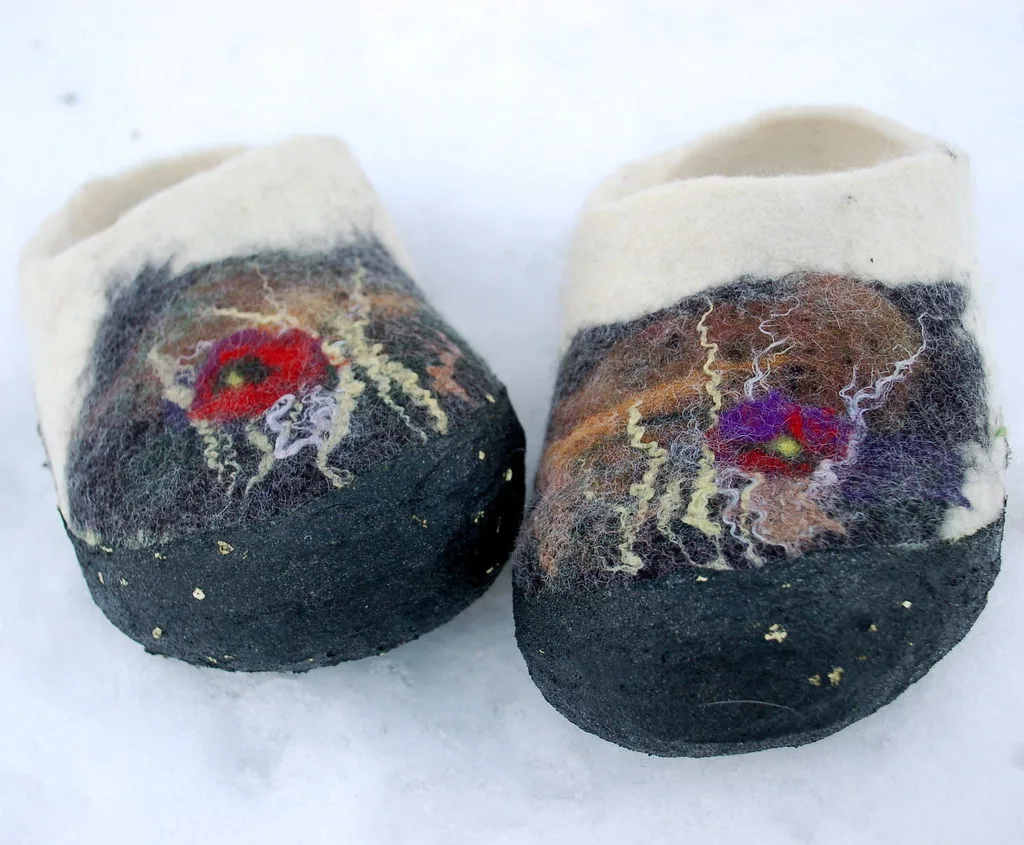
Nordic slippers exist for one climate problem: cold floors in a house that is otherwise warm. That explains why they feel firmer and heavier than a fleece-lined slipper from a department store. They use the coarse native breeds described above, the uppers are boiled or wet felted, and the sole is sewn on.
- Denmark: clean modern shapes, boiled wool, leather soles, often a leather heel counter. Sold as house shoes rather than slippers.
- Norway: heavier, often with a rubber outsole; Selbu star motifs turn up on knitted-then-fulled versions.
- Finland: the huopatossut tradition of thick wet-felted slippers and boots, some still made on wooden lasts. The warmest of the group.
- Iceland: Icelandic fleece has a dual coat, giving a felt that is both hard-wearing and warm, usually left in natural greys and browns.
They cost several times what a synthetic pair does, and against a cheap pair replaced every winter they pay for themselves in about four years. They are sock slippers: the coarse wool is meant to be worn over socks, not bare feet.
Sizing
Most wool slippers are made in Europe and sized in EU numbers, and half sizes are rare.
| EU | US women | US men | UK |
|---|---|---|---|
| 37 | 6.5 | 5 | 4 |
| 39 | 8.5 | 6.5 | 6 |
| 42 | 10.5 | 9 | 8 |
| 45 | — | 11.5 | 10.5 |
- Between sizes, go down rather than up. Boiled wool gives about half a size and then stops; wet felted barely moves.
- Buy snug in the heel. Slippers loosen at the heel first, and a loose heel makes you shuffle.
- If you wear them over thick socks, as Nordic slippers are meant to be worn, size for the socks.
Before you buy online
- Material line: "100% wool" or "boiled wool", not "wool blend" or bare "felt". Department-store "felt" is almost always polyester, and the burn test works on slippers as well as hats.
- Sole material, stated. If it is not stated, it is glued felt or thin EVA.
- Footbed material if support matters: cork, latex or moulded EVA. "Cushioned insole" describes foam.
- Weight per pair if listed. Around 300 g and up is a substantial slipper.
- Washability. Cork and leather soles cannot be washed at all; most wool uppers are hand wash only.
Care
- Air them daily rather than washing them; wool freshens itself better than any other fibre.
- Brush off mud once it has dried.
- When they do need a wash: cool water, wool detergent, no rubbing, no wringing. Roll in a towel, reshape and dry flat away from radiators and direct sun.
- Never machine wash. Heat plus agitation is exactly how wool is felted in the first place (see felting in knitting), and a slipper that goes through it comes out a size smaller for good.
- Store them sealed over summer with cedar. Moths go for worn wool first; see protecting wool from moths.
Or make a pair
Wet felted slippers are made in one seamless piece over a resist drawn about 40% larger than the finished foot, then shrunk to fit. A pair uses 100–150 g of coarse wool and an afternoon, and you can build in the depth for an orthotic from the start. The method is in felted slippers; the needle and hook routes are in knitted felted slippers and crochet felted slippers, and the shrinkage figures behind all three are in how much wool shrinks when felted.
Frequently asked questions
What sole is best on felt slippers?
Rubber for stairs and hard floors, because bare felt is genuinely slippery on wood and tile. Cork-latex for support. Leather for a soft, quiet sole indoors only. Bare felt with latex dots is the compromise most makers ship.
Do wool slippers give arch support?
The wool does not; the footbed underneath it does. A cork-latex or moulded EVA footbed with a raised arch supports the foot. A flat sheet of memory foam under wool does not, however soft it feels.
What are Scandinavian wool slippers made of?
Usually boiled or wet felted wool from coarse northern breeds such as Gotland, Spelsau and Icelandic, with a stitched leather or rubber sole. The wool is chosen for wear rather than softness, so they are firmer against the skin than merino and meant to be worn with socks.
Do felt slippers stretch?
Boiled wool stretches about half a size over the first month as the felt compresses and moulds to the foot, then stops. Wet felted slippers barely move. Buy snug rather than roomy.
How long do felt slippers last?
A year to eighteen months of daily wear before the sole under the ball of the foot thins. A pair with a stitched, replaceable sole lasts far longer; a glued rubber sole ends the slipper when it wears through.