Felt Hats for Men: Shapes, Fit and What to Buy First
6 min read
We may earn a commission from links on this page, at no extra cost to you. As an Amazon Associate I earn from qualifying purchases. Learn more.
A fedora, a trilby and a homburg are three different hats, and the difference is measurable in centimetres of brim. What each shape does for a face, and how to size one properly.
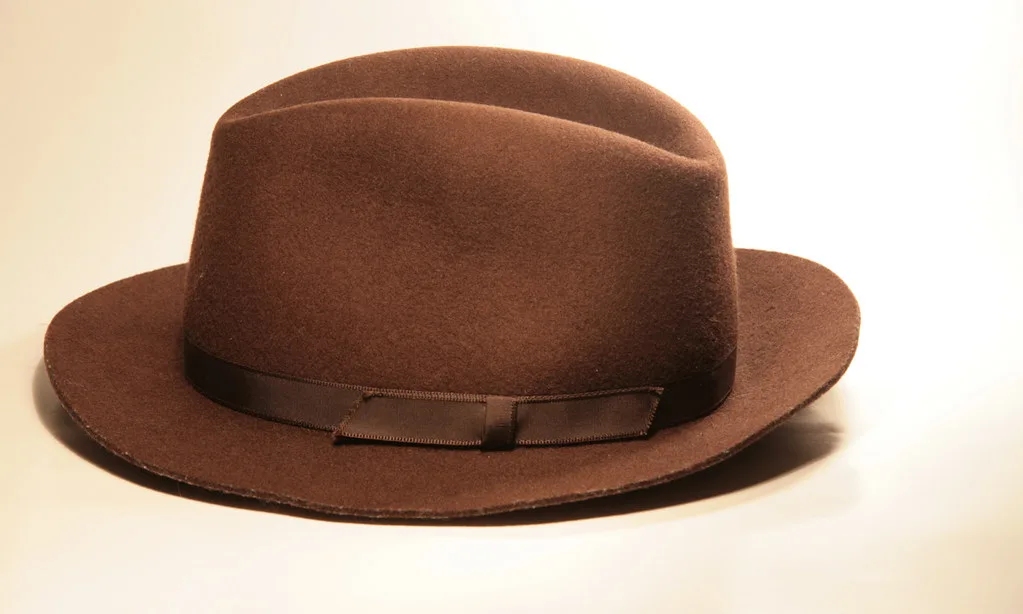
Almost every men's felt hat sold is one of six shapes, and they differ from each other in ways you can measure. Once you know which numbers matter, the choice stops being a matter of nerve and becomes a matter of proportion.
The six shapes
- Fedora — brim 6–8 cm, centre-dent or teardrop crown crease, brim snapped down at the front. The default. Works with everything from a peacoat to a suit.
- Trilby — brim 3.5–5 cm, sharply upturned at the back, crown shorter. Sits higher and reads younger; unforgiving on a large head.
- Homburg — stiff curled brim all the way round, single centre dent, no front snap. The formal option, and the one that looks wrong with casual clothes.
- Pork pie — flat top with a circular crease, brim 4–5 cm turned up all round. Distinctive; suits narrow faces.
- Western — brim 9–10 cm with a pronounced side curl, tall crown. Heavily regional in how it is read.
- Bowler — hard, domed, short curled brim. Effectively costume outside a few specific settings.
Matching the hat to the head
Two rules do most of the work:
- Brim width tracks shoulder width. A brim noticeably narrower than your face makes the head look larger. Broad shoulders carry a 7–8 cm brim easily; a slight frame is better at 5–6 cm.
- Crown height tracks face length. A long face is shortened by a lower crown and a wider brim. A round face gains length from a taller crown, around 11–12 cm.
If you wear glasses, the brim should clear the frames when the hat is seated properly. A hat that rests on your glasses is a size too small or a brim angled too steeply.
What makes a wool felt fedora a fedora?
Three features together: a crown pinched in at the front, a crease running along the top of the crown, and a soft brim of about 2 to 3 in (5 to 8 cm) that can be "snapped" down at the front and left up at the back. Take away the pinch and you have something closer to a homburg; narrow the brim below 2 in and turn it up behind, and it becomes a trilby.
The crease on top comes in several forms, and shops name hats by them:
- Teardrop. The front pinches run into a crease that is narrow at the front and rounded at the back, like a teardrop seen from above. The most common fedora crown today.
- Centre dent. One straight crease from front to back with a pinch either side at the front. The older, plainer version, and the easiest to recreate after a hat has been squashed.
- C-crown. The crease runs round the top in a C shape, open at the back, with deep side pinches. Looks a little more casual and sits slightly lower.
- Diamond. Four pinches forming a diamond seen from above. A sharper, more formal look.
The snap brim is the part that makes a fedora adjustable to the wearer: brim down at the front shades the eyes and looks more serious, brim up all round looks more relaxed. A brim with a bound edge, ribbon folded over the rim, is stiffer and keeps its line on a soft wool hat. A raw, cut edge is cleaner and is usual on good fur felt, which is dense enough to hold a crisp edge without help.
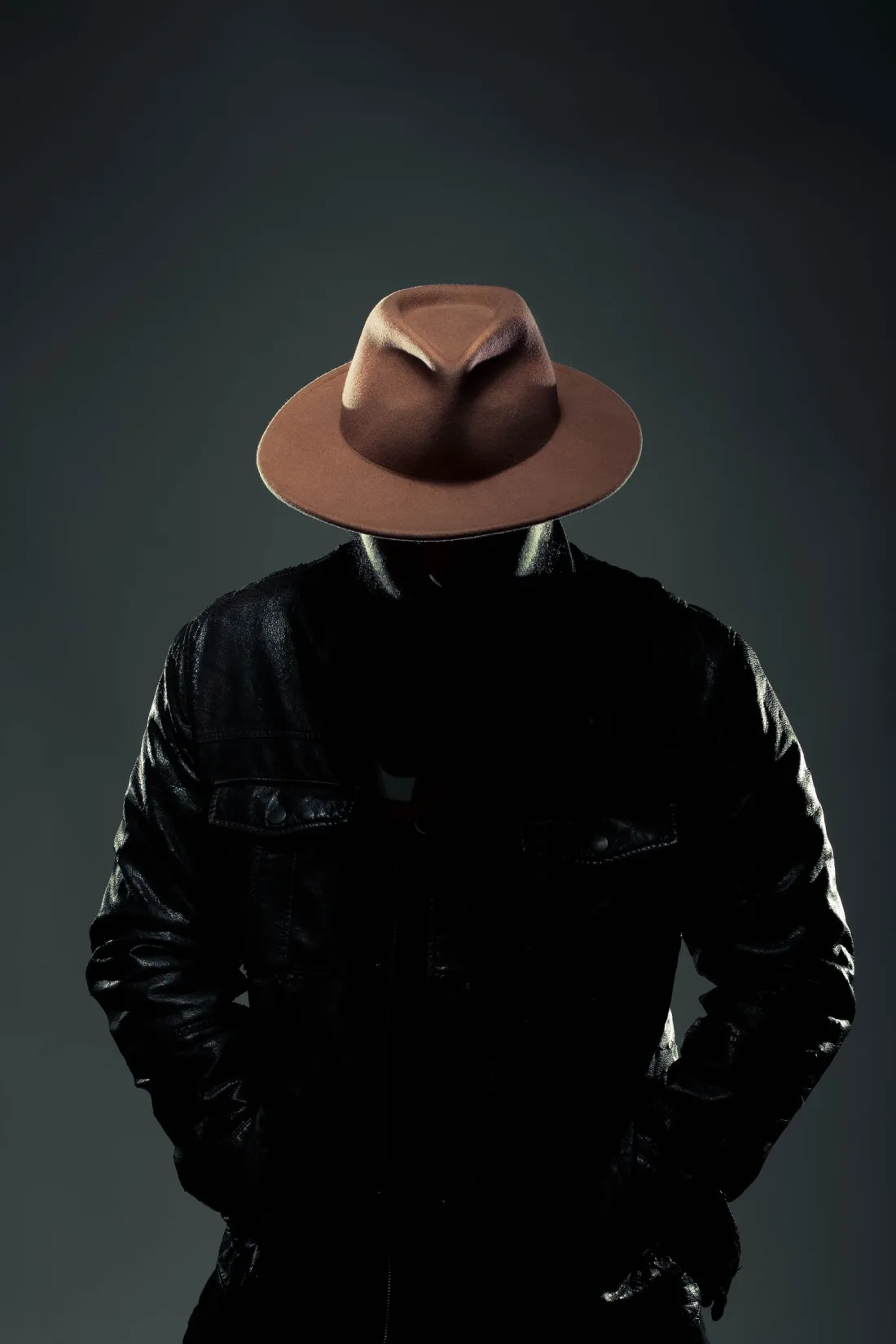
How wide should a fedora brim be for your build?
Scale the brim to your shoulders and height. Most men fall in the 2⅜ to 2¾ in (6 to 7 cm) range, which is why that width is the one most shops stock.
| Build | Fedora brim | Notes |
|---|---|---|
| Slight or short | 2–2⅜ in (5–6 cm) | Keeps the hat in proportion; anything narrower starts to read as a trilby |
| Average | 2⅜–2¾ in (6–7 cm) | The standard fedora; works with an overcoat or a jacket |
| Broad or tall | 2¾–3⅛ in (7–8 cm) | A narrower brim makes a big frame look as if the hat is too small |
Above about 3 in (7.5 cm) you are into wide-brim territory, where the felt matters as much as the build.
Is a wool fedora or a fur felt fedora better for a man?
A wool felt fedora is the better first hat and the better hat for occasional wear; fur felt is better if you will wear it most days for years. The general differences between the two felts are set out under "Wool felt or fur felt" below. For the fedora specifically, three things follow:
- Brim width. A wool brim over about 2¾ in (7 cm) tends to droop at the front after a season of handling and damp. If you want a wide brim, it is the strongest argument for fur felt.
- The pinch. The front pinches are where you hold the hat, and on wool they soften and flatten first. A few seconds of steam and a firm pinch with finger and thumb resets them; the steaming method is in how to clean a felt hat.
- Crushable wool. Some wool fedoras are made unstiffened so they can be rolled into a bag and shaken back out. They travel well but never have the crisp crease of a stiffened or fur felt hat.
The women's version of the same hat, with its smaller size range, is covered in felt hats for women, and the wider-brimmed western relatives in felt cowboy hats.
Sizing
Measure around the head roughly 1 cm above the ears, level across the forehead, with the tape snug but not tight. Common conversions:
- 55 cm — UK 6¾, US 6⅞, S
- 57 cm — UK 7, US 7⅛, M
- 59 cm — UK 7¼, US 7⅜, L
- 61 cm — UK 7½, US 7⅝, XL
Between sizes, take the larger and use a sizing tape inside the sweatband. A tight hat leaves a mark on your forehead and gives you a headache after an hour; a loose one blows off.
Wool felt or fur felt
- Price. Fur felt starts at several times the cost of wool felt and climbs steeply from there; wool felt is where a first hat sensibly sits.
- Weight. Fur felt is noticeably lighter for the same stiffness, which is what you feel after an hour.
- Rain. Fur felt beads and sheds water. Untreated wool wets through and dries misshapen.
- Crease memory. Wool softens over a season or two; fur felt holds a crease for years and can be reblocked.
- Best for. Wool for occasional wear and for finding out whether you actually wear hats; fur felt for daily wear and long ownership.
The grading system you will see on fur felt — the X marks — is not standardised between makers, so 10X from one firm is not comparable with 10X from another. Judge weight and hand feel instead.
Colour
Charcoal, dark brown and black cover most wardrobes; see felt hat colours for what each shade actually does next to a coat, and why black is the hardest of them to wear well.
Care
- Handle by the brim, front and back — pinching the crown wears through the crease within a year.
- Store upside down on the crown, or on a hat block, never resting on the brim.
- Brush anticlockwise with a soft hat brush after wear.
- Wet hat: reshape by hand and dry away from heat. A radiator shrinks and hardens felt permanently.
Full method in how to clean a felt hat. If you would rather build one than buy one, felt hat blanks covers the cones and capelines the trade starts from, and wet felting a hat covers making the felt itself from loose wool.
Frequently asked questions
What is the most versatile felt hat for a man?
A wool felt fedora with a brim of about 6 to 7 cm in charcoal, brown or dark green. It suits a coat, it suits a jacket, and it is neither so wide that it reads as costume nor so narrow that it reads as a trilby.
How do I know my hat size?
Run a tape measure around your head about a centimetre above the ears and across the middle of the forehead. That circumference in centimetres or inches is your size — 57 cm is a UK 7, and most makers publish their own conversion table.
What is the difference between a fedora and a trilby?
Brim width and angle. A fedora has a wider brim, usually 6 cm or more, worn fairly flat. A trilby has a narrow brim, often 4 cm, sharply turned up at the back. The trilby also sits higher on the head.
Is fur felt worth the extra money?
If you wear a hat daily, yes. Rabbit or beaver fur felt is lighter, denser, sheds rain and holds a crease for years. A wool hat costs a fifth as much and is the right place to find out whether you actually wear hats.
Is a wool felt fedora a good hat?
Yes, for occasional wear and as a first fedora. Choose a stiffened wool felt with a brim of 2⅜ to 2¾ in (6 to 7 cm), which holds its line better than a wider wool brim. Expect the front pinch to soften over a season or two; a few seconds of steam puts it back.