Wool Locks: Curly Fibre for Hair, Coats and Texture
4 min read Intermediate
We may earn a commission from links on this page, at no extra cost to you. As an Amazon Associate I earn from qualifying purchases. Learn more.
Wensleydale, teeswater and other longwool curls are sold as intact locks rather than tops. How to attach them, wash them and use them without losing the curl.
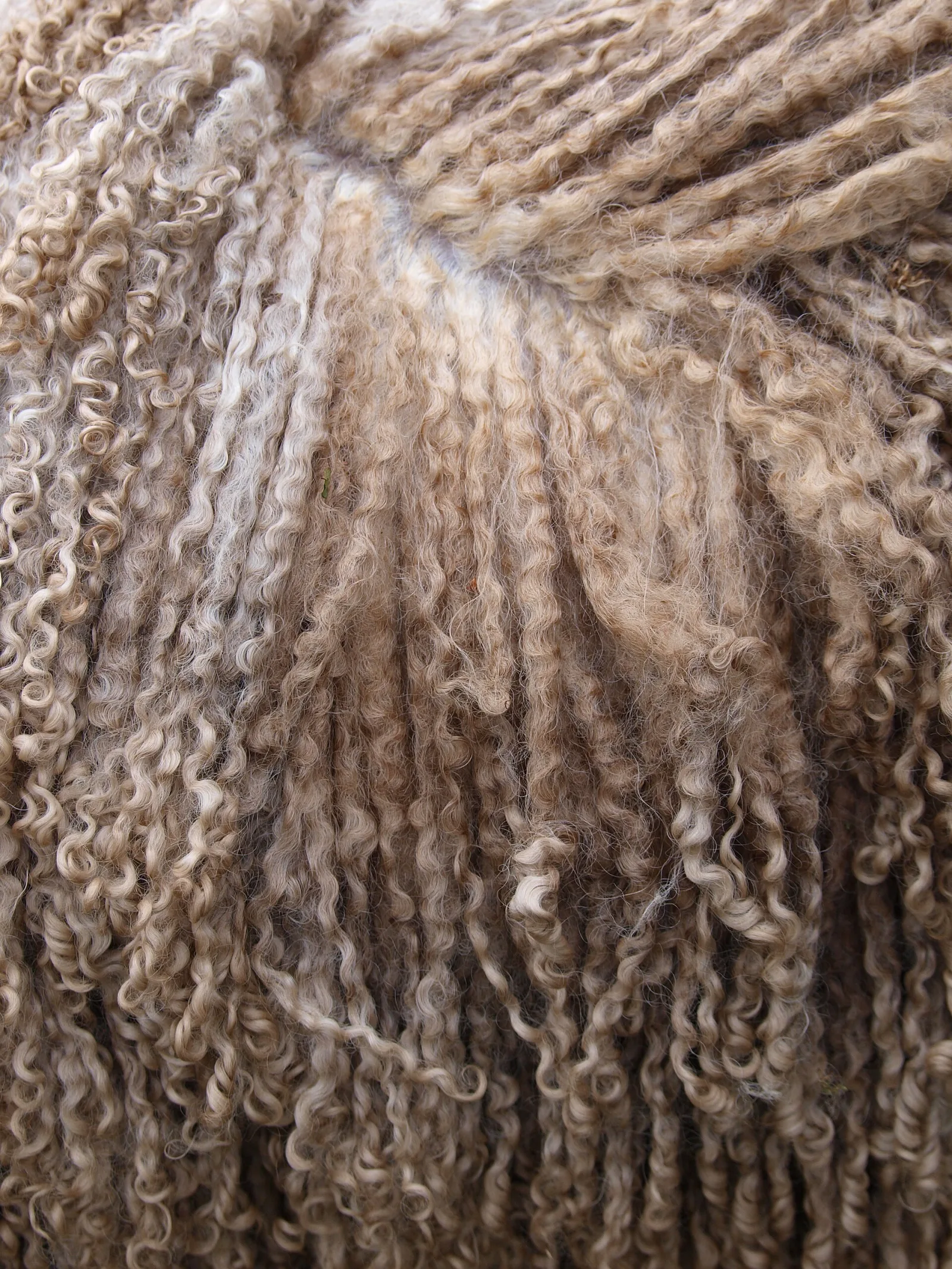
Most felting fibre is sold with all its structure removed — carding and combing exist to destroy the lock and produce an even, anonymous supply of fibre. Locks are the opposite: the fleece is washed carefully, kept in individual staples, and sold with the ringlet exactly as it grew.
That structure is the whole product. You are buying curl, tip and lustre, and everything about handling locks is about not destroying them.
The breeds worth knowing
- Wensleydale. Long, glossy, well-defined ringlets, 15–30 cm. The classic doll hair and the classic sheep coat. Takes dye brilliantly.
- Teeswater. Very similar, slightly finer and often more open. Sold interchangeably with wensleydale by most suppliers.
- Leicester longwool and Cotswold. Chunkier curls, heavier lustre, coarse.
- Gotland. Silver and grey, wavy rather than ringletted. Excellent for wolves, donkeys and anything meant to look weathered.
- Masham and mohair. Crinkled and fluffy rather than curled — better for texture than for hair.
- Brazilian wool locks. A trade name for coarse dyed curls, sold cheaply in bright colours. Fine for toys, not for realism.
Buying locks
Locks are sold by weight, and 20 grams goes a surprisingly long way — perhaps a whole sheep's coat or two dolls' worth of hair. Look for:
- Washed and picked. Cheap locks are often still full of vegetable matter and lanolin.
- Cut end intact. You need a clean cut end to needle into. Locks that have been pulled apart at both ends are hard to attach.
- Dyed or natural. Dyed locks are usually dyed as locks, so the colour varies along the curl, which looks better than flat colour.
Felting locks onto a sculpture
- Work bottom to top. Start at the lowest row on the body and work upwards, so each new row of locks covers the needled ends of the row below.
- Needle the cut end only. Hold the lock by its curl, lay the cut end flat against the surface, and stab it in with a 38 gauge needle. Three or four strokes hold it.
- Keep the needle away from the curl. One careless pass through a ringlet flattens it permanently.
- Overlap generously. Sparse locks look like a bald animal wearing a wig. It is better to run out of body than out of coverage.
- Trim at the end, not as you go, and trim with the piece upright so you can see the silhouette.
For a sheep the locks go on last, over a finished cream body — the sequence is in needle felted sheep. For long-coated dogs the same technique gives fur that no amount of needling can imitate; see needle felting fur.
Locks as doll hair
Two methods, depending on how the head is made:
- Needled directly into a wool head, in rows from the nape upwards, with a parting made by attaching two rows facing away from each other.
- Sewn to a cap. Locks stitched onto a circle of thin felt, which is then glued or sewn to the head. Slower, but the hair can be brushed and styled without pulling out.
Curly crepe wool and curly yarn sold for doll hair are the synthetic equivalents — cheaper, more uniform, and obviously not wool up close. See how to make felt dolls for the rest of the construction.
Washing and dyeing locks
The rule is heat without movement. Wool felts from agitation and from sudden temperature change, not from hot water alone.
- Lay the locks in a mesh bag or a sieve, all facing the same way.
- Submerge in hot water with a squirt of washing-up liquid. Leave 20 minutes. Do not stir.
- Lift out, drain, and rinse in water at the same temperature.
- Squeeze gently — never wring — and lay flat on a towel, straightening each lock with your fingers.
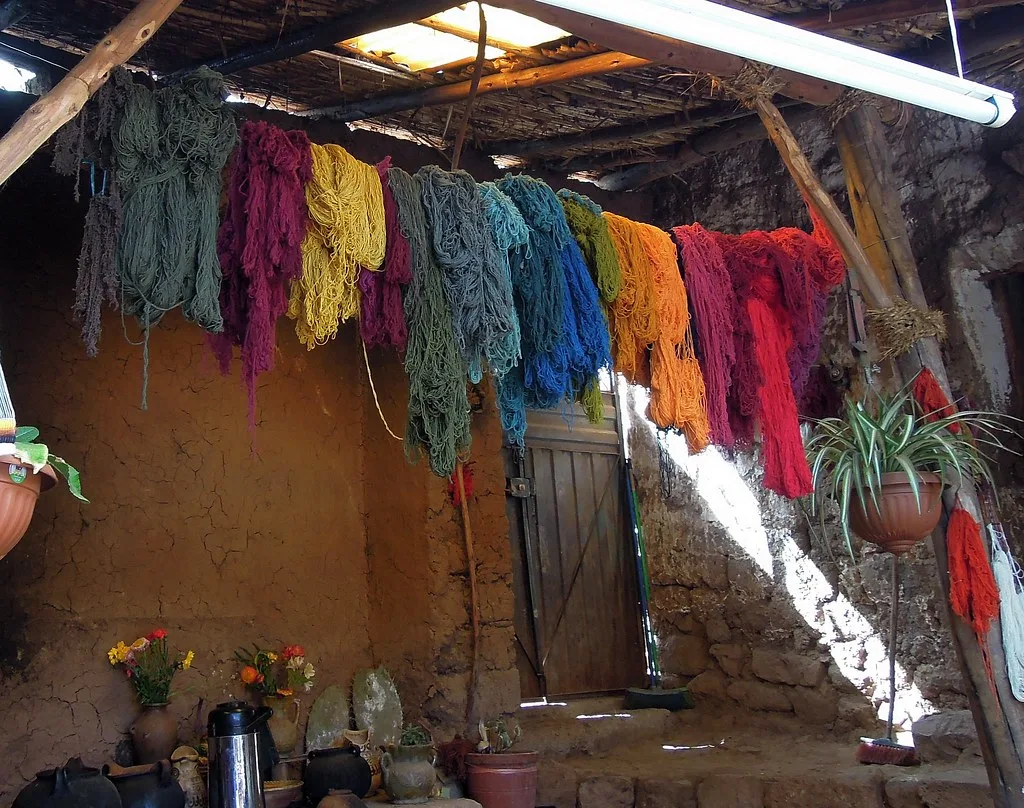
Acid dyes work the same way: heat, no stirring, and let the pot cool before removing them. The method is in dyeing wool roving, and natural dyes such as onion skins give particularly good results on lustre longwool.
Other uses
- Wet felted surfaces. Lay locks on top of the wool before felting and they bond in by their cut ends, leaving the curls loose on the surface — the standard way of making shaggy rugs and textured wall pieces.
- Blending board texture. Sprinkled onto a blending board for tweedy rolags.
- Nests, moss and undergrowth in dioramas and wool paintings.
- Dreadlocks and hair extensions — a separate use covered in wool roving dreads.
Frequently asked questions
What are wool locks?
Individual staples of fleece kept whole, with the curl and the tip intact, rather than carded or combed into tops. They come from longwool breeds — wensleydale, teeswater, leicester, gotland — whose fleece grows in ringlets up to 30 cm long.
How do you attach wool locks to a felted animal?
Lay the cut end of the lock against the surface and needle only that end in, working in rows from the bottom upwards so each row hides the attachment of the one above. Never needle the curled part or you will felt the curl flat.
Can you wash wool locks without losing the curl?
Yes. Soak in hot water with a little detergent, never agitating, then rinse in water of the same temperature and lay flat to dry. Movement and temperature shock are what felt the locks together; heat alone does not.
What is the best wool for doll hair?
Wensleydale and teeswater give long, glossy, well-defined ringlets and are the traditional choice. Gotland gives a silver-grey wave. For straight hair, combed longwool top or mohair works better than locks.
Topics
Image credits
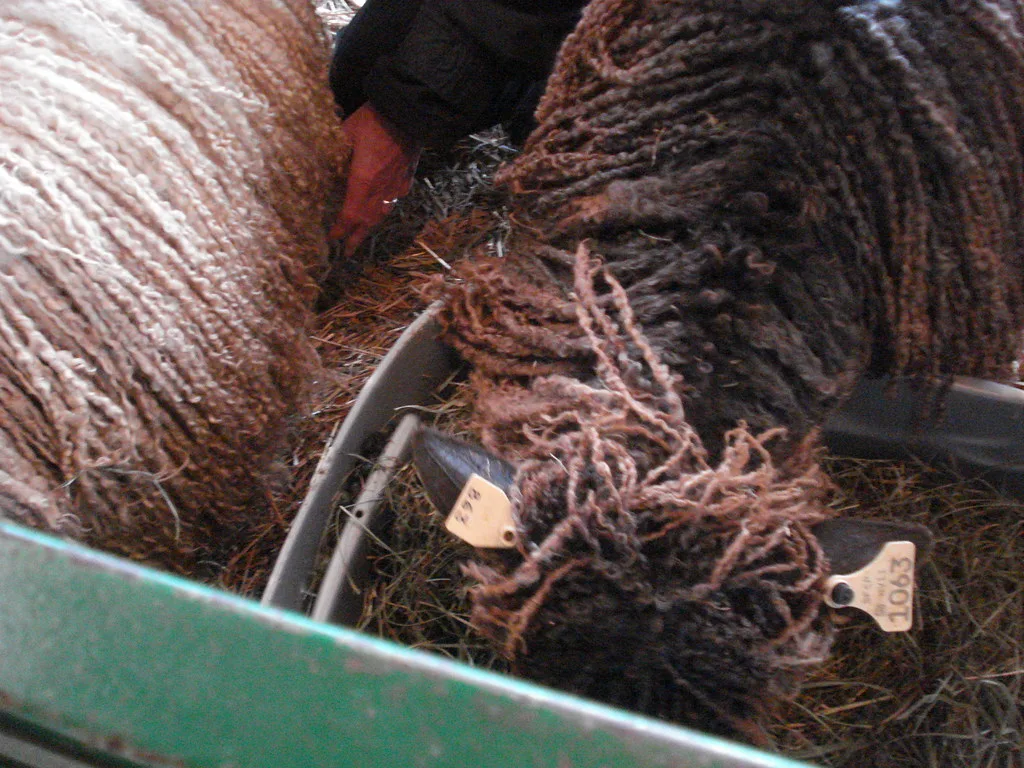
- Long white wensleydale locks with the ringlets intact — Photographed by User:Bullenwächter (BY SA 3.0)
- Curly wool locks — YoAmes (BY SA)