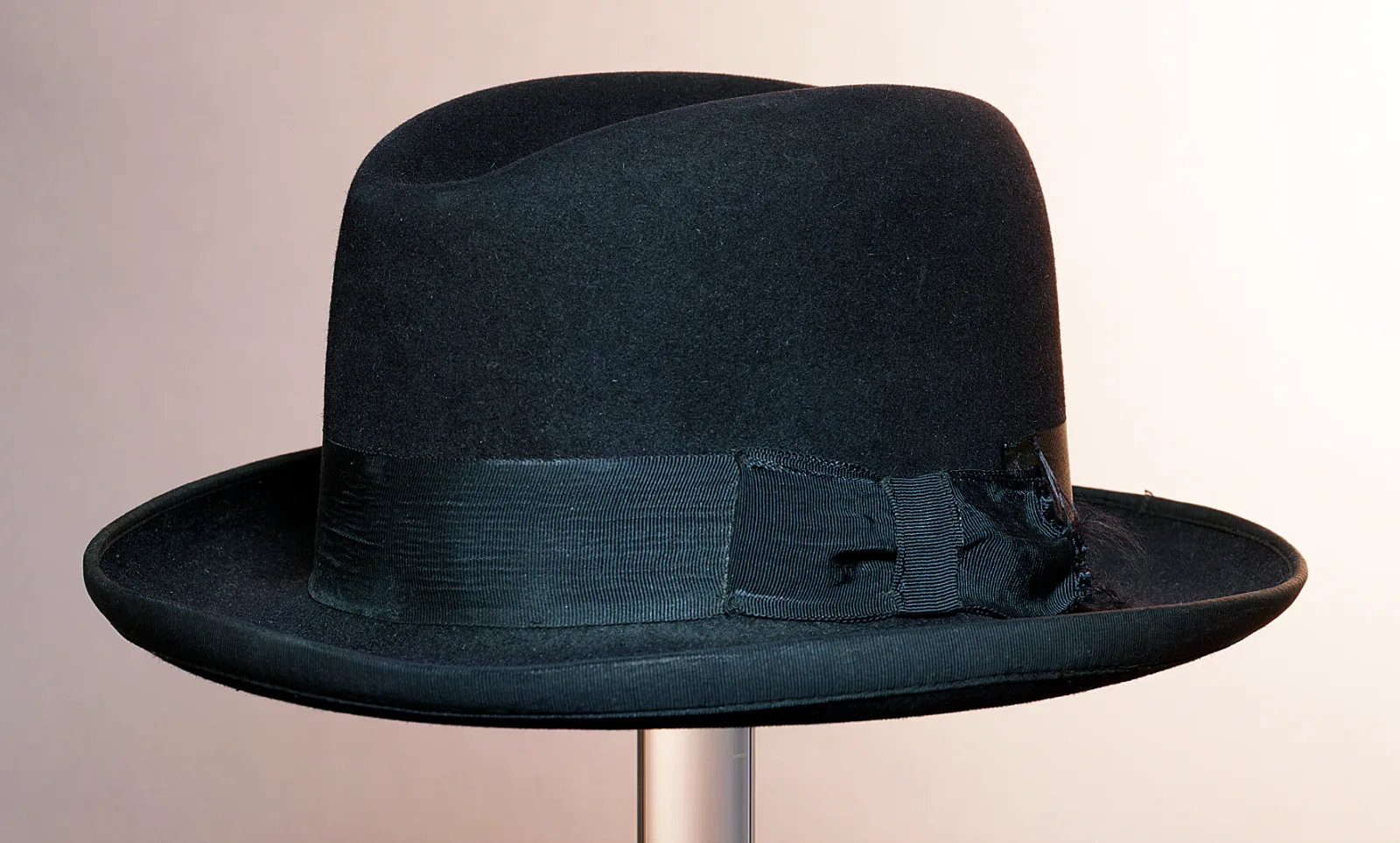
Beaver Felt Hats: What Beaver Felt Is, Where It Comes From, and How to Tell It from Wool
10 min read
We may earn a commission from links on this page, at no extra cost to you. As an Amazon Associate I earn from qualifying purchases. Learn more.
Beaver felt is made from the dense underfur of the beaver, whose barbed hairs lock together better than any other hat fiber. The fur trade that nearly wiped out two species, mercury and the mad hatter, where the pelts come from now, what X marks and blends mean, and how to tell beaver from wool.
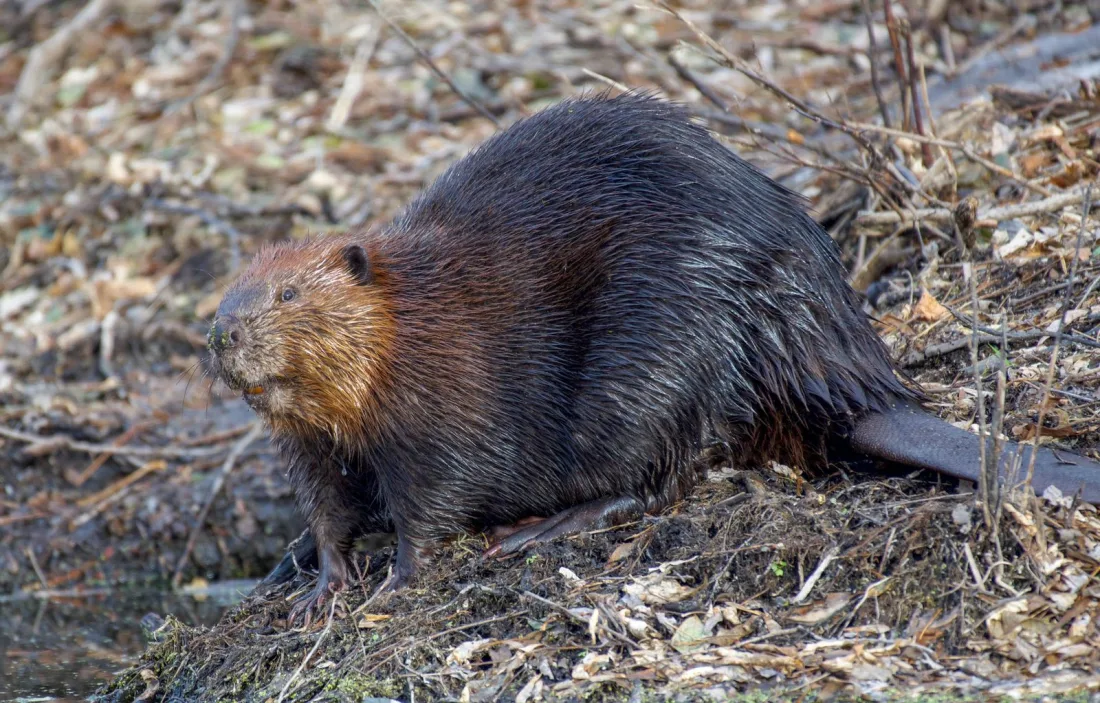
Under a microscope a hair of beaver underfur is covered in tiny barbs. The economic historian Harold Innis, in his history of the Canadian fur trade, wrote that these barbs made the fur "unusually suitable for the manufacture of felt and of felt hats". When damp, warm fur is worked, the barbs hook into each other and do not let go, which is why a beaver hat held its shape longer than any other, and why Europe spent about three centuries buying beaver pelts for its hatters.
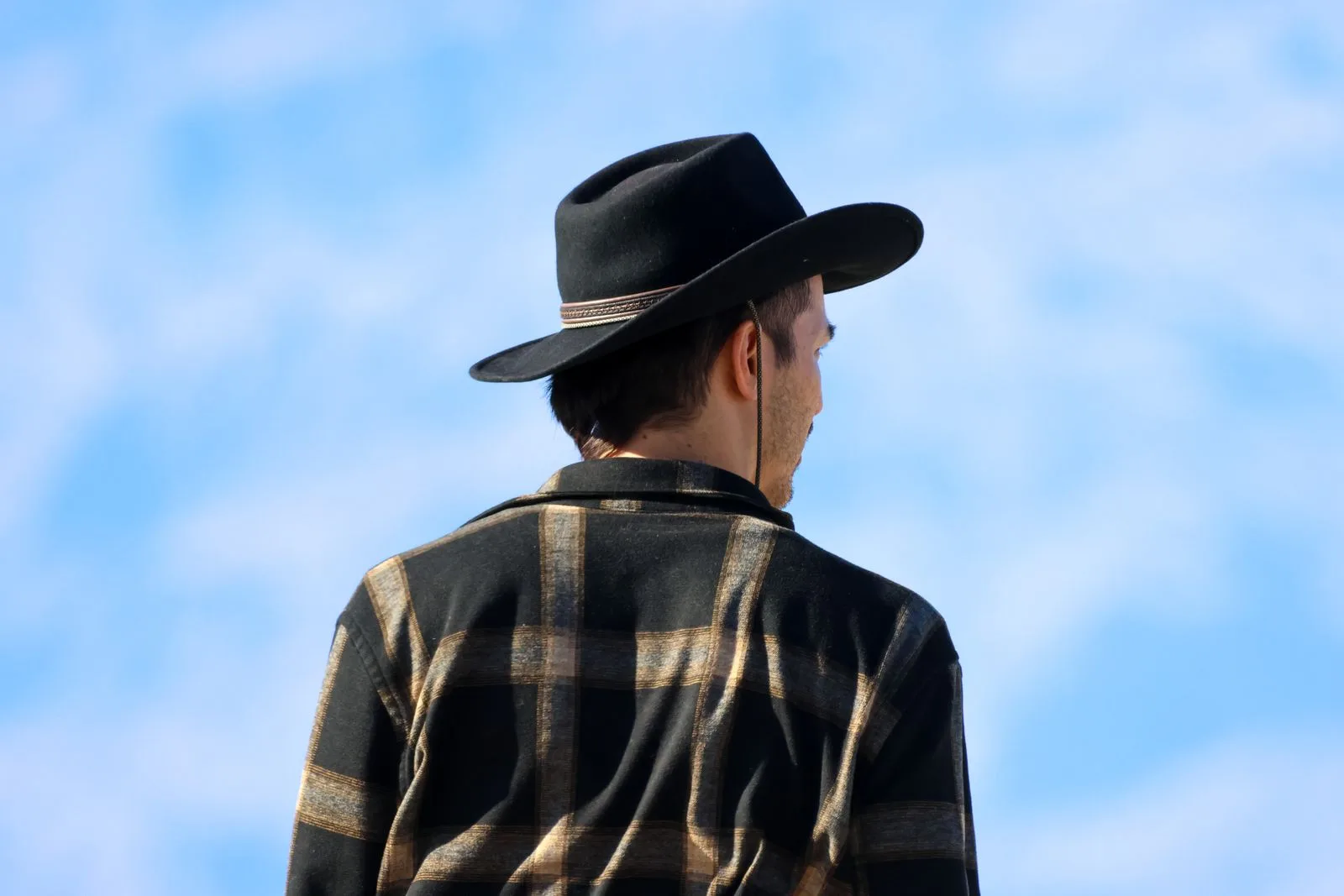
Beaver felt is still made, mostly for western hats and good fedoras, and "beaver" is still the word that sells a premium hat. It is also one of the vaguest words on a hat label, which is why the second half of this page is about reading labels and checking the felt in your hands.
What is beaver felt?
Felt made from the underfur of the beaver. A beaver pelt has two layers: long, coarse guard hairs on the outside, and under them a very dense coat of short, fine, soft hair that keeps the animal warm and dry in the water. Only the underfur is used for hats. The guard hairs are pulled or clipped away, the underfur is shaved from the skin, and the loose fur is blown onto a perforated cone, wetted and shrunk down with heat and pressure into a hat body. That body is then blocked into a fedora, a western or any other shape, exactly as a wool body is. The process from cone to finished shape is in felt hat blanks, and the general mechanics of fibers locking together are in what is felting.
Wool felts because its fibers are covered in overlapping scales. Beaver underfur felts for the same reason, but the fibers are finer and the barbs grip harder, so the felt can be made denser and thinner for the same stiffness. Rabbit and hare fur sit between the two. That is the whole technical case for beaver: more felt in less weight.
How did the beaver hat nearly wipe out the beaver?
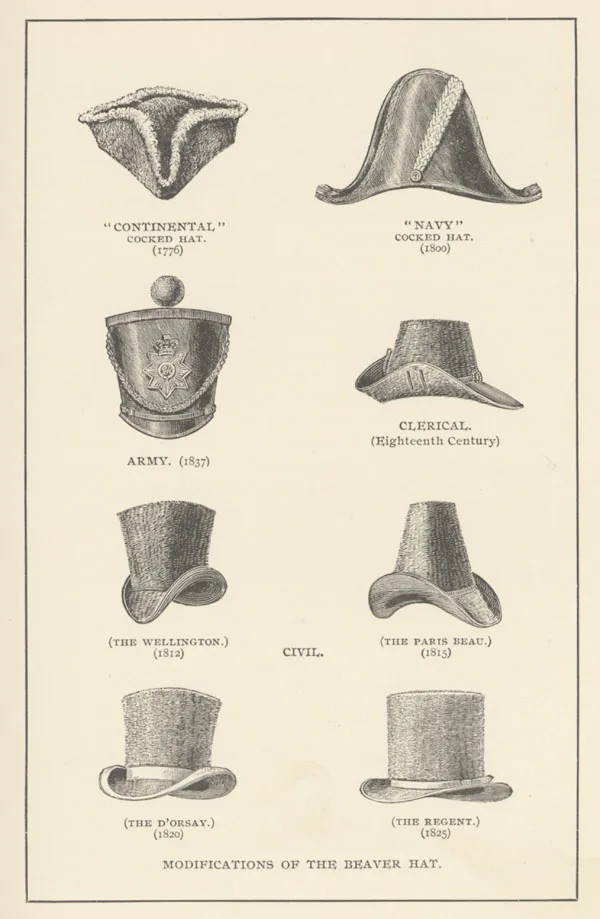
By demand that lasted from roughly the 1500s to the early 1800s. Beaver felt hats were the fashionable hat for men across much of Europe, in shapes from the broad-brimmed hats of the 17th century to the cocked hats of the 18th and the tall hats that came after. Every one needed beaver underfur, and the supply came first from European beaver.
The Eurasian beaver was hunted for its fur and for castoreum, a secretion used in medicine and perfume, until it was almost gone. By the early 20th century only about 1,200 were left, in a handful of scattered populations from France to Mongolia. Long before that, European hatters had turned to North America. From the 17th century, French and then English traders, the Hudson's Bay Company among them, bought beaver pelts from Indigenous trappers in exchange for goods, and the fur trade became one of the engines of the colonization of Canada and the northern United States. Some of the most valued pelts were coats already worn by their trappers, whose wear had loosened the guard hairs.
The North American beaver went the same way, trapped out of large parts of its range through the 18th and 19th centuries. Estimates of how many there had been vary too widely to be worth quoting, but the collapse is not in doubt: in states such as Missouri the animal was nearly extirpated. What probably saved it was fashion. In the early to mid-19th century silk plush replaced beaver felt for the tall hat, and demand fell. The top hat page follows that switch.
What does beaver felt have to do with "mad as a hatter"?
Mercury, though mostly not on beaver. Rabbit and hare fur do not felt as readily as beaver, so hatters learned to treat it with a solution of mercury nitrate, brushed onto the pelts before the fur was cut. The solution roughened the hairs so they gripped like beaver's, and it turned the fur tips orange, which is why the process was called carroting. It let cheaper fur do the job of beaver.
The vapor from carroted fur and from the steaming and shrinking that followed poisoned the workers. Chronic mercury poisoning caused tremors, known in the hatting town of Danbury, Connecticut, as the "Danbury shakes", along with irritability, shyness and confused speech. In the United States the use of mercury in hatmaking was ended by a 1941 agreement between the unions, the manufacturers and the Public Health Service. Some accounts add that wartime demand for mercury had as much to do with the timing as worker health.
Whether this is where "mad as a hatter" comes from is less certain than it is usually made to sound. The link is widely repeated and plausible, but the phrase was already in use before Lewis Carroll's Hatter appeared in 1865, and some word historians think it began as a looser expression. Treat mercury as a likely contributor rather than a settled origin.
Where does beaver fur for hats come from today?
As far as can be established, mostly from wild North American beaver taken by licensed trappers. Beaver recovered across North America in the 20th century through trapping regulation and reintroduction, and it is now common enough to be classed as of least concern for extinction. It is trapped in regulated seasons in the United States and Canada, partly for fur and partly to control flooding from dams, and the pelts are sold at fur auctions. Missouri's conservation department reported in its magazine in early 2025 that beaver pelt values had risen, driven mainly by demand from makers of beaver felt cowboy hats.
Two caveats. Hat makers rarely publish where their fur comes from; some say plainly that their beaver is wild-trapped under license, others say nothing. And claims that hat beaver comes from farmed animals turn up online without any source. If the origin of the fur matters to you, ask the maker directly, and remember that a blend may contain far more rabbit than beaver anyway.
What do X marks and "beaver blend" mean on a hat?
An X count is a maker's own grade, and it means only what that maker says it means. Within one brand, a higher X usually means a higher share of beaver in a blend with rabbit or hare, and a denser, lighter, more weather-resistant hat. Between brands the numbers are not comparable, because there is no industry standard behind them. The X system on western hats, with an example of how one maker describes it, is covered in felt cowboy hats; what matters here is how to read a beaver label:
- "100% beaver" is a fiber claim you can hold the maker to. It is the top of the market and priced like it.
- "Beaver blend" or "beaver fur felt" with no percentage means some beaver, often mostly rabbit or hare. Many makers treat the exact proportions as a trade secret.
- An X count with no fiber statement tells you where the hat sits in that brand's range, nothing more. Some wool hats carry low X marks too.
- "Fur felt" with no animal named is usually rabbit or hare.
How is beaver felt different from wool felt?
| Beaver or high-beaver blend | Rabbit or hare fur felt | Wool felt | |
|---|---|---|---|
| Surface | Very smooth and close; can be finished to a soft sheen like suede or velour | Smooth, slightly less dense | Matte, a little fuzzy; individual fibers visible |
| Weight for the same stiffness | Lightest | Light | Heaviest |
| Rain | Sheds a shower; the most water-resistant felt | Sheds light rain | Wets through in a heavy shower |
| Shape over years | Holds a crease and brim longest; can be reblocked repeatedly | Holds a crease well | Brim and pinch soften sooner |
| Thin brim edge | Holds a crisp raw edge | Usually holds a raw edge | Often needs a bound edge to stay firm |
| Cost | The most expensive felt | Several times wool | The cheapest |
The practical result is that a beaver hat can be made thinner and lighter than a wool one and still be stiffer, and that it will survive years of weather and reshaping. That is why beaver and high-beaver blends turn up mostly in working western hats, and in dress hats that ask a lot of the felt, such as the curled brim of a homburg or the wide flat brim of a gambler. A short-brimmed hat like the trilby or the pork pie gains less from it.
How can you tell beaver felt from wool?
Start with the label and the price, then use your hands. No single test is conclusive, but together they rarely leave doubt.
- Feel. Run your fingers over the crown. Beaver and good fur felt feel smooth, dense and slightly cool, almost like suede or the nap of velvet. Wool feels warmer and a little fuzzy, and you can often see individual fibers standing up from the surface against the light.
- Flex the brim. Bend the edge gently between two fingers. Fur felt springs straight back; wool of the same thickness feels softer and slower to recover.
- Weight. Pick up two hats of the same shape and size. A fur felt hat is noticeably lighter in the hand for the same stiffness.
- Water drop. A drop of water on a hidden part of the brim beads and sits on dense beaver felt for a long time. On wool it sits briefly, then soaks in slowly.
- A loose fiber under magnification. Take one stray fiber from inside the sweatband and look at it through a jeweler's loupe. Fur fibers are very fine and short, with no crimp; wool fibers are thicker and wavy.
The burn test has a limit here. Beaver, rabbit and wool are all keratin, so all three smolder, smell of burnt hair and leave crushable ash. A gentle felt hat burn test on one fiber tells you the hat is real animal fiber rather than polyester or a blend with synthetic in it, which is worth knowing on a cheap "beaver" listing, but it cannot tell beaver from wool. Never hold a flame to the hat itself.
How do you look after a beaver felt hat?
Mostly by doing less. A beaver hat copes with weather better than any other felt; what it does not forgive is heat and scrubbing. The everyday basics are in how to clean a felt hat. Where it differs from a wool hat:
- Brush with the nap. Use a soft hat brush, counterclockwise around the crown. Fine fur felt shows brush marks and scuffs more than wool, and brushing the wrong way roughens a polished finish.
- Rain is not a disaster. Shake the water off, blot with a dry towel, push the crease and brim back into shape, and let it dry on its crown. Beaver felt dries back to its shape better than any other felt, but heat from a radiator or dashboard can still shrink the sweatband and set a warp.
- Dry clean marks first. A dry cleaning sponge of the kind sold for soot lifts dust and light marks without water. Do not scrub a fur felt with anything wet; it can leave a ring and flatten the nap.
- Steam sparingly. A few seconds over steam reshapes a crease. Long steaming strips stiffener from any felt, beaver included.
- Moths. Beaver underfur is protein, and moths eat it as readily as wool. Store the hat in a box out of season with the precautions in protecting wool from moths.
- Use a hatter. A beaver hat is worth renovating. A hatter can clean it, replace the sweatband and ribbon, and reblock it to a new shape, sometimes several times over its life, which is a large part of why it costs what it does.
For crowns, brim widths and sizing on a beaver western, see felt cowboy hats; for buying a fur felt dress hat, felt hat brands covers the makers.
Frequently asked questions
What is a beaver felt hat made of?
The underfur of the beaver: the short, dense hairs under the long guard hairs of the pelt. The underfur is shaved off the skin, blown into a cone and shrunk into felt with heat, moisture and pressure. Most modern beaver hats are blends of beaver with rabbit or hare fur; only some are sold as 100% beaver.
Where does beaver fur for hats come from today?
Mostly from wild North American beaver taken by licensed trappers in regulated seasons in the United States and Canada and sold through fur auctions. The North American beaver is not endangered. Hat makers rarely publish their exact suppliers, so if sourcing matters to you, ask the maker.
What does the X mean on a beaver hat?
It is the maker's own grade. Within one brand, more X usually means more beaver in the blend and a denser, lighter, more water-resistant felt. There is no industry standard, so X counts cannot be compared between makers.
Is beaver felt waterproof?
Water resistant, not waterproof. A dense beaver felt sheds a shower and dries back to shape better than any other felt, but a soaking still wets it through. Dry it at room temperature on its crown, never near a heater.
Can a burn test tell beaver from wool?
No. Beaver, rabbit and wool are all protein fibers, so all of them smolder and smell of burnt hair. The burn test tells natural fiber from synthetic. To tell fur from wool, look at loose fibers under a magnifier: fur is finer and shorter, with no crimp.
Topics
Image credits
- A man in a plaid shirt, seen from behind, wearing a black felt cowboy hat with a pale band against a blue sky — David Brown (Pexels License)
- A North American beaver with dark brown fur and a flat tail on a bank of twigs and dry grass — Andrew Patrick Photo (Pexels License)
- An 1892 engraving of eight beaver hat styles, from cocked hats of 1776 and 1800 to tall hats of the 1810s and 1820s — Londres, E. Stanford, (PUBLIC DOMAIN)