Can You Wash Felt? What Survives, What Shrinks and What Falls Apart
4 min read Beginner
We may earn a commission from links on this page, at no extra cost to you. As an Amazon Associate I earn from qualifying purchases. Learn more.
Wool felt, craft felt and needle felted sculpture behave completely differently in water. How to wash each without destroying it.
"Can you wash felt" has three different answers, because "felt" describes three quite different materials. The wool felt sheet in a craft shop, the acrylic square in a school art cupboard, and the needle felted animal on your shelf need entirely different treatment.
The common thread is that heat plus movement is what makes wool felt in the first place — so any wash that involves either will keep the process going.
Wool felt: hand wash, cool, no rubbing
Pure and blend wool felt can be washed, and it will survive it if you remove the two things that cause felting.
- Cool water. Lukewarm at most, and the same temperature throughout — a sudden change from hot to cold is a shock that tightens the fibres.
- A wool wash or a drop of mild detergent. Not biological powder, which contains enzymes that digest protein.
- Submerge and press. Squeeze gently to move water through. No rubbing, no wringing, no swirling.
- Rinse at the same temperature until clear.
- Press out the water between towels. Never wring.
- Dry flat, pushed back into shape, away from radiators and sun.
Expect some shrinkage and some stiffening even so. If the piece must keep exact dimensions, spot clean instead.
Craft felt: depends what it is made of
- Acrylic and polyester felt. Machine washable on a cool delicate cycle in a mesh bag. It will not shrink, but it pills, softens and loses its stiffness. Air dry; a tumble dryer can melt or distort it.
- Wool-blend felt. Treat it as wool. The wool content shrinks even if the synthetic does not, which distorts the sheet.
- Stiffened or glued felt — the kind with a card-like body. Do not wash. The stiffener washes out and it never comes back.
Which is which is covered in wool felt fabric.
Needle felted sculpture: spot clean only
A felted animal is loose wool held together by tangling. Soak it and squeeze it and it will felt further — which means shrinking unevenly, hardening, and losing the shape you spent hours on. Glass eyes may loosen and glue may fail.
- Brush surface dust off with a soft brush or lift it with a lint roller.
- For a mark, damp a cloth with cool water and a trace of wool wash, and dab — do not rub.
- Blot with a dry cloth and press the shape back with your fingers.
- Dry at room temperature, out of sunlight.
For heavier dust, a vacuum on the lowest setting with a nylon stocking over the nozzle works well.
Wet felted items: the most washable of all
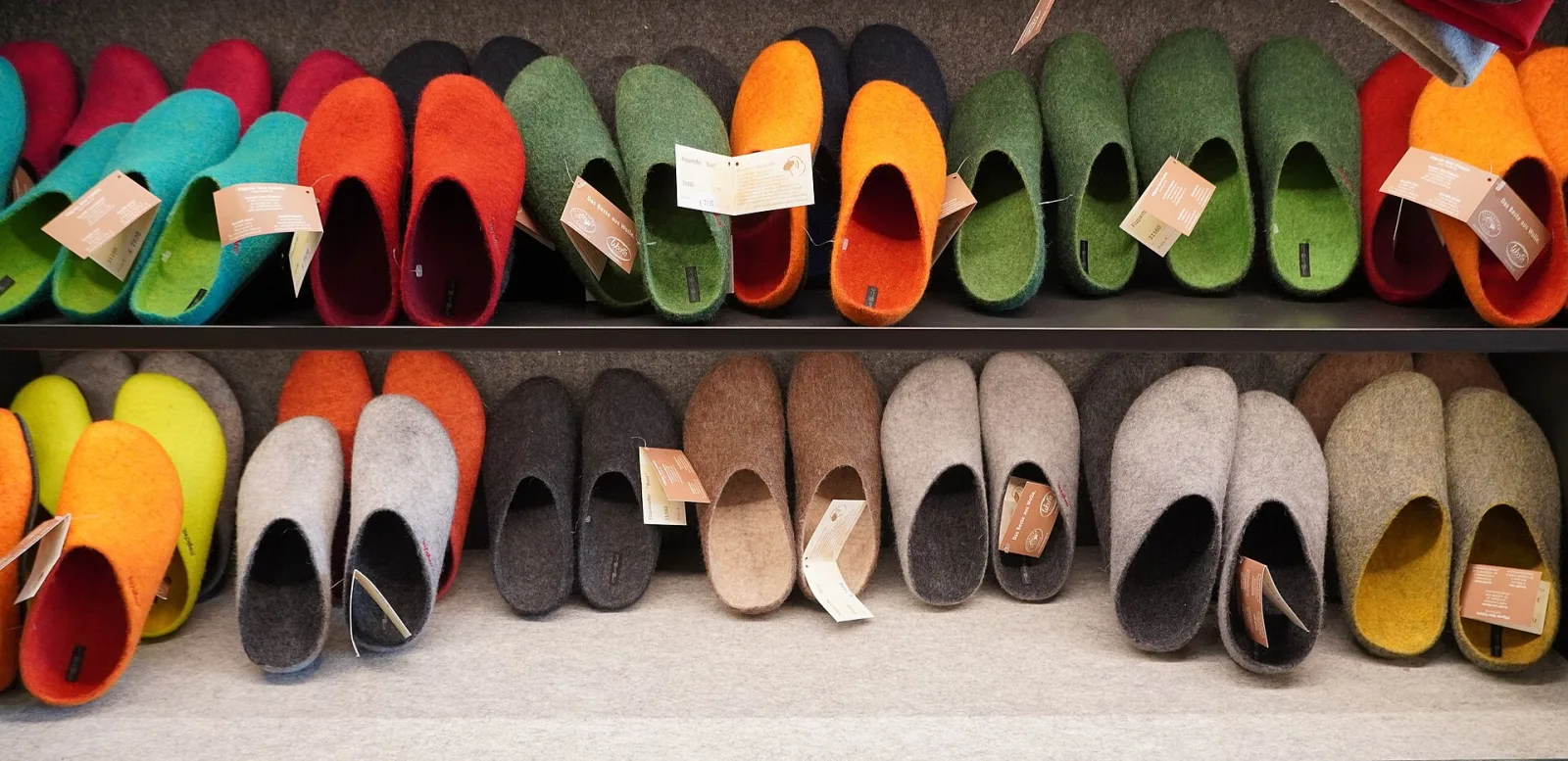
Bags, slippers, hats and scarves that were wet felted have already been through the full process — soaked, rubbed and fulled — so a careful hand wash will not change them much. Cool water, gentle pressing, no wringing, dry flat and reshape while damp.
Hats need to be dried on a form or a bowl of the right size or they lose their shape. See how to clean a felt hat for hat bodies specifically.
Felted knitwear
Anything knitted and then fulled — see felting in knitting — has the same tolerance as wet felted goods. It has been through the machine once already, which means it can go through again, but each pass shrinks it a little more. Hand wash to keep the size.
Dry cleaning
Wool felt dry cleans well and it is the right choice for structured items — hats, bags with linings, tailored felt garments. The solvents do not swell the fibres, so nothing shrinks. Tell the cleaner it is felt, and do not dry clean anything with glued components.
Specific cases
- Felt Christmas decorations. Spot clean. Store clean rather than washing annually — see protecting wool from moths.
- Felt toys. Surface clean only if wool. Acrylic felt toys can go in a mesh bag on cool.
- Felted soap. Not applicable — it washes itself, and shrinks with the soap. See felted soap.
- Wool dryer balls. They live in the wash. Occasionally re-felt them on a hot cycle if they start to fluff — see wool dryer balls.
- Felt rugs and mats. Vacuum, spot clean, and dry clean if necessary. See felted rugs.
- Felt hat bodies. Never submerge — brushing and steam is the whole method.
If you have already shrunk something
Felting is irreversible: the scales have interlocked and they will not release. A gentle stretch while damp can regain a little, and blocking a damp piece pinned to shape recovers a bit more, but a jumper that has felted to half size is not coming back. The one consolation is that the material is now excellent for other things — see felted sweater projects.
Frequently asked questions
Can you wash felt?
Yes, carefully. Wool felt should be hand washed in cool water with no rubbing and dried flat — hot water and agitation shrink it further. Acrylic craft felt survives a cool machine wash but pills and loses its body. Needle felted sculpture should be spot cleaned only.
Can you machine wash felt?
Acrylic and polyester craft felt, yes, on a cool delicate cycle in a mesh bag. Wool felt, no — a machine wash shrinks and hardens it further, sometimes by a third. That is exactly the process used deliberately to make felt in the first place.
Can you wash felt fabric before sewing with it?
You can, and with wool felt it is worth doing on anything that will be washed later — a cool hand wash and a flat dry gets the shrinkage over with before you cut. Acrylic felt does not shrink, so pre-washing it achieves nothing.
Will wool felt shrink if I wash it?
It can, and the shrinkage is permanent. Felt is already shrunk wool, but there is usually more shrinkage available if you add heat and agitation. Cool water and no rubbing keeps it stable.
How do you clean a needle felted animal?
Spot clean with a barely damp cloth and a little wool wash, then blot and reshape. Do not submerge it — water and squeezing will felt it further, and the shape will change permanently.