Felting Machine Guide: Embellishers and Needle Felting Machines
4 min read Intermediate
We may earn a commission from links on this page, at no extra cost to you. As an Amazon Associate I earn from qualifying purchases. Learn more.
A felting machine is a sewing machine with no thread and twelve barbed needles. What it does well, what it cannot do at all, and whether you need one.
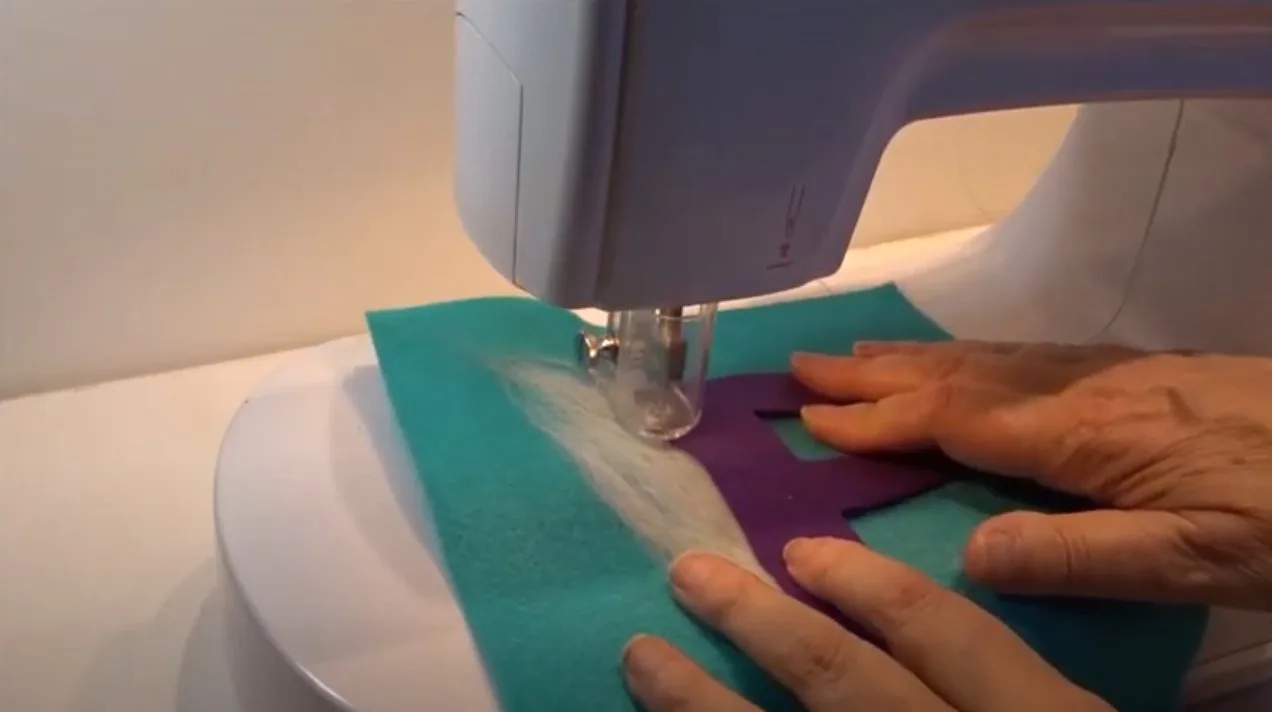
A felting machine looks like a sewing machine and works like a very fast hand. Instead of one threaded needle it carries a cluster of barbed felting needles, and instead of stitching it tangles fibres together — the same mechanism described in how felting needles work, driven by a motor.
What it is for
Surface design on flat fabric. You lay wool, yarn, scraps of silk or lace on a base cloth, run it under the needles, and it locks in place without thread, glue or stitching. What takes forty minutes by hand takes about a minute.
Practical uses:
- Attaching wool designs to felt, wool cloth, denim or canvas
- Blending colours directly on a surface, painterly rather than planned
- Joining or fusing layers of fabric without seams
- Making sheets of prefelt from loose fibre in seconds
- Fixing yarn and lace onto a background for textile art
What it cannot do
Anything with volume. The needle cluster travels straight down onto a flat bed, so a felting machine cannot make an animal, a bowl, a gnome or a ball. It also cannot produce firm sculptural density — it tacks and blends the surface rather than compacting a mass.
Fine detail is out too. Twelve needles at once are precise to about a centimetre. Faces, eyes and small features stay hand work.
The two kinds
- Dedicated embellishers. Purpose-built machines with 5 to 12 needles, a wide throat and good visibility. Babylock, Simplicity and Brother have all made well-regarded models; Bernina and Janome sell them as part of larger machine lines.
- Sewing machine attachments. A head that replaces the presser foot and needle assembly on a machine you already own, carrying 5 to 7 needles. Much cheaper, more fiddly to fit, and limited by the machine's throat space.
Second-hand embellishers turn up regularly and are usually good value — there is little to wear out but the needles, and those are replaceable.
Using one
- Layer. Base fabric down, fibre or scraps on top. Loose wool spreads under vibration, so keep pieces slightly larger than you want.
- Feed by hand. There are no feed dogs. You move the work, slowly and steadily.
- Never pull while the needles are down. This is how needles break, and how twelve break at once.
- Work both sides. Turning the piece over and running it again locks the fibre much more firmly.
- Wet felt afterwards if you want permanence. Machine felting tangles the surface; a short wet felting stage makes it a single fabric.
Safety
Twelve unguarded barbed needles moving at speed deserve respect. Keep the guard fitted, keep fingers to the sides of the work, and never reach under the head with the machine plugged in. It is the one felting tool where a moment of inattention has real consequences, more so than the hand-work risks discussed in is needle felting dangerous.
Needles and consumables
Machine needles are ordinary felting needles in a specific length and shank, generally 36 to 40 gauge. They break, and unlike hand work you often will not notice until the surface starts looking uneven. Check the cluster before each session and keep a full set of spares — running with three of twelve broken gives poor, patchy results.
The habits that reduce breakage are the same as by hand: straight in, straight out, no levering. See how to stop breaking felting needles.
Is it worth buying
Buy one if you make flat textile work in quantity — art quilts, embellished garments, panels, sheets of prefelt. It will pay for itself in hours saved.
Do not buy one if you make animals, ornaments, gnomes or anything else with a shape. It will not help with any of it. The money is far better spent on wool, and on the multi-needle hand tools that speed up flat work at a fraction of the cost.
The cheap middle ground
A hand-held multi-needle tool holding three to seven needles covers a lot of the same ground for the price of a takeaway. It is slower than a machine and vastly faster than a single needle, and it works on curved surfaces too, which no machine does. For most people that is the honest answer to the felting machine question.
Frequently asked questions
What does a felting machine do?
It drives five to twelve barbed felting needles up and down while you move fabric or fibre underneath, doing what hand needle felting does but hundreds of times faster. There is no thread and no bobbin.
Can a felting machine make 3D sculptures?
No. The needles come straight down onto a flat bed, so machines only work on flat surfaces. Every three-dimensional shape still has to be built by hand.
Is a felting attachment as good as a dedicated embellisher?
For occasional flat work, yes, and it costs far less. Attachments usually carry fewer needles, run slower and have a smaller working area, so anyone doing this regularly will outgrow one.
Do felting machine needles break often?
Yes, more often than hand needles, because the machine has no feel for resistance. Pulling the fabric while the needles are down snaps them instantly. Buy spares with the machine.
Topics
Image credits
- Layers of fabric being needle punched together on a felting machine — Naaimachinehandel De Naaimachinegarage (BY SA 3.0)