Felting Yarn: Which Yarns Felt and Which Never Will
4 min read Beginner
We may earn a commission from links on this page, at no extra cost to you. As an Amazon Associate I earn from qualifying purchases. Learn more.
Half of all felted knitting projects fail at the yarn shop. How to read a label, how to test a swatch, and which yarns felt hardest.
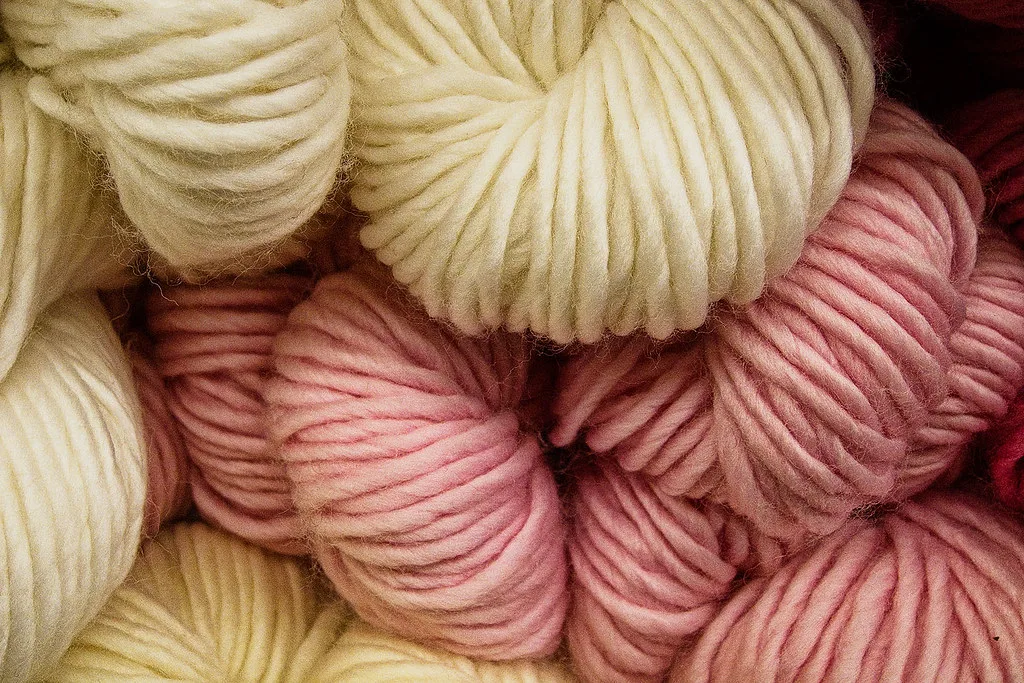
There is no product called felting yarn. There is yarn that felts and yarn that cannot, and the second kind sits next to the first on the same shelf looking identical.
Getting this right is the whole of the difficulty in felting knitted work. Everything after the yarn choice is straightforward.
The one disqualifier
Superwash. Superwash wool has had its scales chemically stripped or sealed under a polymer coating, specifically so it will survive a machine wash. Those scales are the entire mechanism felting relies on.
Superwash yarn will not felt. Not with hotter water, not with more cycles, not with more detergent. Three hot washes will produce a slightly fuzzy jumper of exactly the original size.
It is also extremely common — it is what most sock yarn, most hand-dyed yarn and most machine-washable merino is. Read the band.
Words that mean no: superwash, machine washable, easy care, tumble dry safe.
What does felt
- Icelandic and Lopi-style — coarse, minimally processed, felts hard and fast. The traditional choice for felted bags and slippers.
- Shetland — felts readily, holds colour beautifully, gives a firm even fabric.
- Herdwick, Swaledale, Romney — very coarse, felts aggressively. Right for rugs, bags and anything hard-wearing.
- Corriedale and general "pure new wool" — reliable middle ground.
- Untreated merino — felts smoothly and slowly, giving a softer, finer fabric. More expensive, and it pills more.
- Alpaca and mohair — felt well and produce a hairier, drapier result. See alpaca felting.
Spin and ply matter too
Two yarns from the same breed can felt very differently.
- Loosely spun singles felt fastest. The fibres have room to migrate.
- Tightly spun, many-plied yarns felt slowly, because the twist holds each fibre in place.
- Woollen-spun yarns — airy, fuzzy — felt faster than worsted-spun ones, which are smooth and dense.
A tightly plied worsted merino can be genuinely stubborn even though it is not superwash.
Blends
- Up to 20% nylon — felts, with slight unevenness. Common in sock yarns that are not superwash.
- 20–40% synthetic — partial, patchy felting. The synthetic keeps its shape while the wool shrinks around it.
- Over 40% — effectively will not felt.
- Wool with silk or bamboo — felts, and the non-felting fibre stays on the surface as sheen. Often a very attractive effect.
Colour, quietly
Heavily dyed dark yarns sometimes felt slightly slower than pale ones, because the dyeing process can seal the fibre surface a little. Undyed and naturally coloured yarns are usually the fastest of all.
It is a small effect, but it matters when you are knitting a striped bag and want both colours to shrink at the same rate. Test both.
The two tests
The burn test — is it wool at all?
Pull off a short length, hold it in a flame with tweezers over a sink. Wool smells of burnt hair, self-extinguishes and crushes to a soft ash. Acrylic melts, smells of plastic and leaves a hard bead. A blend does both.
This tells you the fibre, not whether it is superwash.
The swatch test — the one that actually settles it
- Knit a square of at least 20 × 20 cm on needles two or three sizes larger than the band suggests.
- Mark 15 cm horizontally and vertically with contrasting thread.
- Wash it exactly as you plan to wash the finished piece — same machine, temperature and cycle.
- Measure. If 15 cm has become 10 cm, you have 33% shrinkage and every dimension of your project can be calculated from it.
Ten minutes of knitting saves the fairly common experience of a felted slipper that fits a doll, or a bag that came out of the machine unchanged.
Buying for a project
Buy 30 to 40% more yarn than the finished size suggests, because you are knitting the piece much larger than it will end up. Buy it all in one dye lot: felting exaggerates dye lot differences rather than hiding them.
Charity shop jumpers are the cheapest felting yarn there is — not for reknitting, but for felting whole and cutting up, which is covered in what is felted fabric.
If it will not felt
Check the band again, then run two more cycles — some wools need four or five. If three hot washes have changed nothing, the yarn is treated and no amount of persistence will help. The full diagnostic is in why wool will not felt.
Frequently asked questions
What is felting yarn?
Any untreated animal-fibre yarn that will shrink and mat when washed hot. There is no special product called felting yarn — it is simply yarn that has not been treated to prevent it.
How do I know if a yarn will felt?
Check the label for superwash or machine washable, which rule it out. Then knit a small swatch and wash it hot. Ten minutes of testing prevents a whole project that will not shrink.
Which yarn felts the fastest?
Coarse, minimally processed breeds — Icelandic, Lopi-style, Shetland, Herdwick, Romney. Loosely spun single-ply yarns felt faster than tightly spun plied ones, because the fibres are freer to move.
Can you felt a wool and acrylic blend?
Partially, at best. Under about 20% synthetic it will felt with some unevenness. Above that the synthetic holds the structure and the piece shrinks patchily or not at all.