Felting Sweaters: How to Felt a Wool Sweater, and What to Make From It
7 min read Beginner
We may earn a commission from links on this page, at no extra cost to you. As an Amazon Associate I earn from qualifying purchases. Learn more.
A thrift-store sweater, shrunk on purpose, is the cheapest thick wool fabric there is. Which sweaters will felt, how to do it in a machine or by hand, and how to get a whole sweater used.
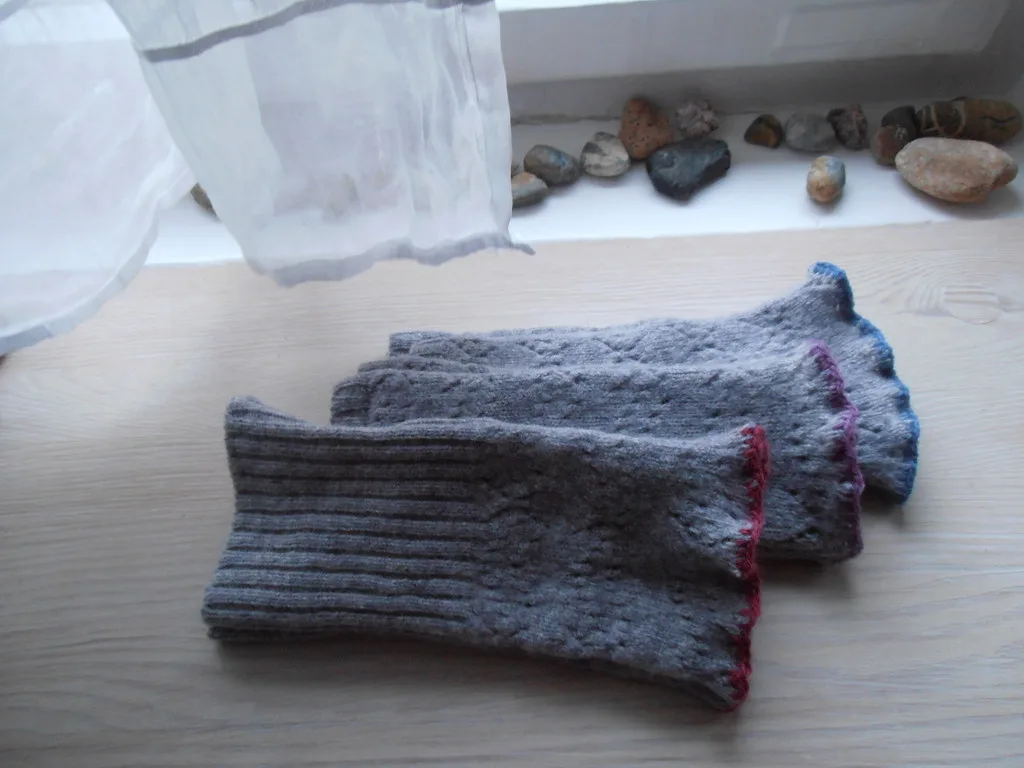
Felting a sweater on purpose is the laundry accident everyone has had, pushed further and done deliberately. The result is no longer knitwear. It is a dense, windproof wool cloth that you can cut with scissors and leave unhemmed, and it comes in whatever colour the thrift store had that week.
Whether it works depends mostly on the sweater you start with, so that comes first. After that the process is simple, and most of the craft is in using the fabric well.
Will this sweater felt? Read the label first
| Label says | Will it felt? | Why |
|---|---|---|
| 100% wool, lambswool, Shetland | Yes, well | Untreated scales lock together readily |
| Merino | Yes, soft and fine | Fine fibres felt fast into a thinner cloth |
| Cashmere, alpaca, mohair, angora | Yes, fast | Watch it closely; these overshoot |
| 80% wool with nylon or acrylic | Usually | Slower, and a little looser |
| Under about 70% animal fibre | Poorly | The synthetic content holds the knit open |
| Superwash, machine washable, "shrink resistant" | No | The scales have been removed or coated |
| Cotton, acrylic, any plant fibre | No | No scales at all |
If there is no label, snip off a bit of the hem and shake it in a jar of very hot soapy water for five minutes. If it thickens and the stitches blur, the sweater will felt. If it looks exactly the same, it will not, and why won't my wool felt explains the rest of the ways it can fail.
Two things that do not matter: size and style. You are buying fabric. A huge men's sweater with a moth hole in the front is worth more to you than a pristine small one.
How to felt a sweater in the washing machine
- Bag it. A zipped pillowcase or a laundry bag. Felting sheds a surprising amount of fluff, and it belongs in the bag rather than the pump filter.
- Add something rough. An old pair of jeans, two or three tennis balls, or wool dryer balls. Friction does as much of the work as heat.
- Use a teaspoon of detergent. It helps the fibres open. More than that only makes rinsing harder.
- Choose the hottest wash, the longest cycle and a cold rinse. The jump from hot to cold helps.
- Check after one cycle. Felting cannot be undone, so it is always better to run it again than to wish you had stopped.
- Dry it. A hot tumble dry tightens it a little more; drying flat keeps it where it is.
Top loader or front loader
| Top loader with agitator | Front loader | |
|---|---|---|
| How well it felts | Fast, often done in one cycle | Slow, usually two to four cycles |
| Best setting | Hot, heavy duty, long agitation | Hottest cotton or sanitise cycle; never "wool" |
| Friction to add | One pair of jeans | Jeans, a towel and several tennis balls |
| Checking part way | Easy: lift the lid | Often locked; plan on full cycles |
High-efficiency top loaders without a central agitator behave more like front loaders. The "wool" and "hand wash" settings on any machine are designed to prevent exactly what you are trying to do.
How to felt a sweater by hand
This takes 20 to 40 minutes of hot, wet work, but it gives you the most control. It is the better choice for a single cashmere sweater or for felting only the sleeves.
- Fill one bowl with water as hot as rubber gloves allow and a squirt of dish soap. Fill a second with cold water.
- Squeeze, knead and rub the sweater against itself in the hot water for two or three minutes.
- Move it to the cold water and keep working it.
- Go back and forth, checking every few rounds.
- Stop when you cannot pick out individual stitches. Rinse, roll it in a towel and dry it flat.
A washboard or a ridged bamboo mat speeds it up considerably. The soap you use makes less difference than people think; best soap for felting covers the details.
How much it shrinks, and when to stop
Expect 20 to 40% off the length and 10 to 30% off the width. Sleeves shrink more than the body, ribbing shrinks most of all, and synthetic sewing thread in the seams does not shrink at all, which is why seams pucker. The numbers by fibre are in how much wool shrinks when felted.
It is done when a snipped edge stays put. Cut a small notch in the hem: if the stitches hold, stop; if they start to run, give it another cycle. Going too far is possible too. An over-felted sweater turns stiff and cardboard-like, hard to sew and hard to shape, so for most projects aim for dense but still bendable.
When it goes wrong
| What you see | Cause | Fix |
|---|---|---|
| No change after two hot cycles | Superwash or synthetic blend | None; use it as a sweater, or unravel it for yarn |
| Felted in patches | Uneven agitation or a crowded drum | Felt it alone, with more friction, one more cycle |
| Stripes felted at different rates | Different yarns in each colour | Normal; cut the pieces from one colour area |
| Puckered seams | Synthetic thread does not shrink | Cut the seams out before using the panels |
| Stiff and board-like | Over-felted | Use it for bags, coasters, trivets and bowls |
| Fuzzy, pilled surface | Long, loose fibres rose in the tumble | Shave it with a fabric shaver or shear it close |
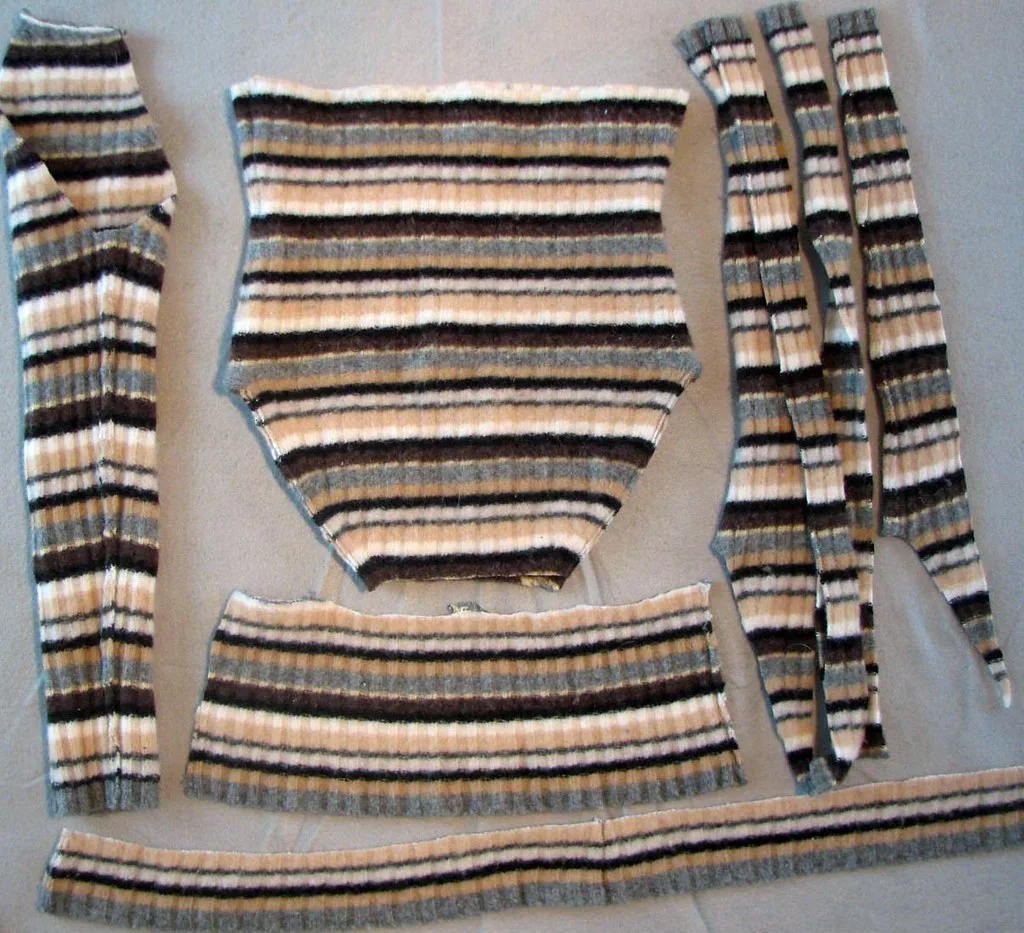
Cutting a felted sweater for the most fabric
Decide what you are making before the first cut, because placement decides how much you get.
- Cut off the sleeves just inside the shoulder seam.
- Cut up both side seams and across the shoulders to get two flat body panels.
- Open each sleeve along its underarm seam.
- Leave the cuffs and hem attached where a project can use them. They are finished edges you cannot make as neatly yourself.
- Keep the neckband. It becomes a mitten cuff, a bag handle or a headband.
An adult sweater gives two body panels of roughly 45 × 50 cm and two sleeve pieces: about half a square metre of fabric. Press any wavy panels flat with steam through a cloth before you mark them out.
What to make from felted sweaters
| Project | Fabric it takes | Worth knowing |
|---|---|---|
| Mittens | Both sleeves, or one panel | Two or three pairs per sweater; the cuffs become the wrists |
| Fingerless gloves | One sleeve | Cut to length, snip a thumb hole, done |
| Coasters and trivets | Offcuts | Use the stiffest, most over-felted pieces |
| Christmas ornaments | Offcuts | Patterned knits make instant "ugly sweater" ornaments |
| Hot water bottle cover | One sleeve or one panel | An adult sleeve is often exactly the right width |
| Cushion cover | Both body panels | Envelope back; reuse the sweater's own buttons |
| Tote bag | Both body panels plus a sleeve | The sleeve or neckband makes the strap |
| Slippers | One or two panels | Layer two thicknesses for the sole, or add a proper slipper sole |
| Patchwork blanket | Six to eight sweaters | Butt the squares edge to edge; there is no seam allowance to lose |
| Rug | Several sweaters | Strips stitched onto a heavy backing |
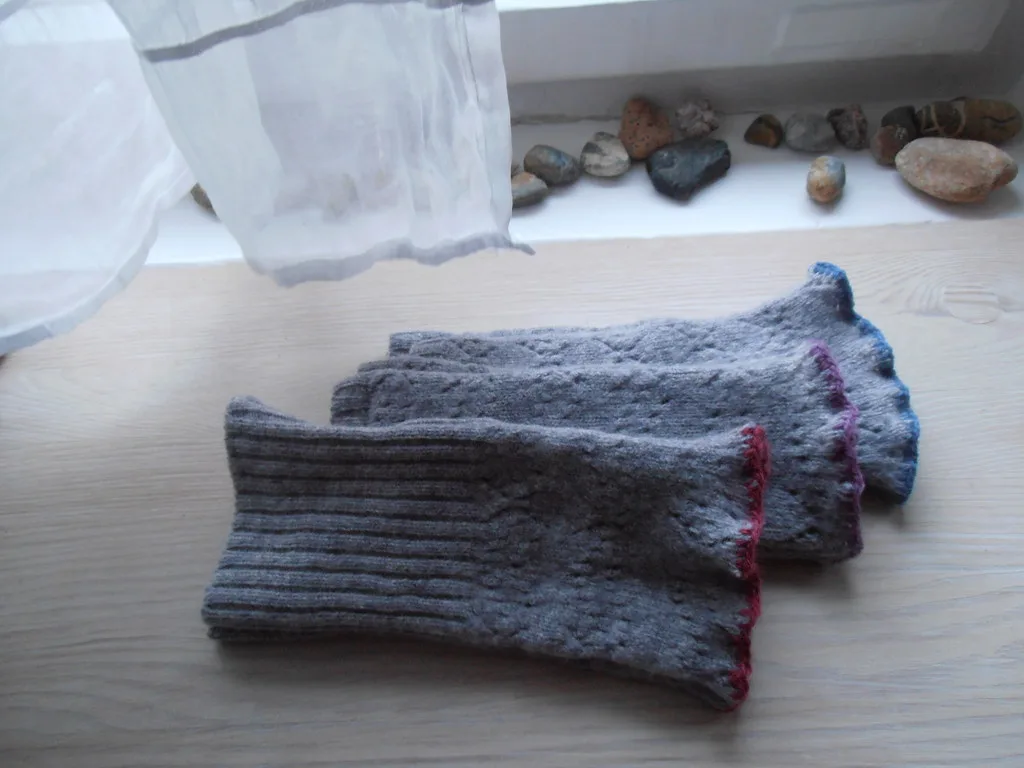
Scraps are still useful. Chopped small, they make good stuffing for cushions and toys. A flat piece is an ideal base for needle felting on fabric or a wool painting. Pulled apart, felted sweater turns into short, matted fibre that works fine as core wool inside a needle felted sculpture, where no one will see it.
Sewing felted wool
- Long cuts with sharp scissors. Short snips leave a chewed edge on thick felt. Pinking shears give a decorative edge if you want one.
- Zigzag or stretch stitch. Felted knit keeps a little stretch, and a straight stitch can snap under strain.
- A 90/14 or denim needle for two layers; a walking foot stops thick layers creeping.
- By hand, blanket stitch in wool or embroidery floss is both the seam and the decoration.
- Butt joins for patchwork. Lay the edges side by side and zigzag across them, so the seam stays flat.
Before the sweaters join your stash
Wash and freeze anything second-hand first. Thrift-store wool is the easiest way to bring clothes moths home, and a felted stash is exactly what they like: see protecting wool from moths. Store the panels flat and clean.
If you would rather felt something you knitted yourself, sized so it shrinks to fit, that is felting in knitting. If the sweater did not felt and you want a new colour for it instead, see dyeing a wool sweater.
Frequently asked questions
How do you felt a wool sweater in the washing machine?
Zip it into a pillowcase, add an old pair of jeans for friction and a teaspoon of detergent, and run the hottest, longest cycle with a cold rinse. Check it after one cycle and run it again until you can no longer see the stitches.
Why did my sweater not felt?
Almost always because it is superwash or machine-washable wool, which has been treated so the fibres cannot lock together, or because it is less than about 80% animal fibre. No amount of hot washing changes either. A front loader on a gentle cycle can also simply not agitate enough.
How much does a sweater shrink when felted?
Usually 20 to 40% in length and 10 to 30% in width: knitting closes up more along its rows than across them. Ribbed cuffs and hems shrink the most. Each extra cycle shrinks it further.
Can you felt a cashmere sweater?
Yes, and it felts quickly into a very soft, thin fabric, good for mittens and lining pieces. Check it after a short cycle, because cashmere goes from knitted to board-like faster than sheep wool.
What is the best thing to make from a felted sweater?
Mittens, because the cuffs become ready-made wrists. After that, anything that would normally need hemming: cushion covers, hot water bottle covers, bags and patchwork blankets. Felted wool does not fray, so cut edges can be left as they are.