How Much Does Wool Shrink? When Felting, in the Wash, and How to Undo It
7 min read Intermediate
We may earn a commission from links on this page, at no extra cost to you. As an Amazon Associate I earn from qualifying purchases. Learn more.
Felt shrinks by a third or more, and not evenly in both directions. Rates by fibre, how to size a felting project so it fits, why a sweater shrinks in the dryer, and how far a shrunk one can be stretched back.
Every wet felted piece comes out smaller than you laid it out. That is not a flaw — it is the process working. The problem is that "smaller" ranges from 20% to 50% depending on the wool, the water, the technique and how long you keep going, and a scarf that finishes 20 cm shorter than intended is not a scarf you wanted.
This guide covers what shrinkage really depends on and how to stop guessing.
The short answer
For most wet felting with merino tops, expect:
- 30–40% overall for a typical flat piece worked to a firm finish
- 20–25% for a lightly fulled piece such as a soft scarf
- 40–50% for a heavily fulled piece such as slippers or a structural bag
So a 200 cm layout finishing at 35% shrinkage gives a 130 cm piece. Work backwards from the size you want: divide the target by (1 − shrinkage). For a 150 cm scarf at 35%, that is 150 ÷ 0.65 ≈ 230 cm of layout.
Shrinkage by wool type
These are working ranges for wet felting to a firm finish, not laboratory figures. Your water, soap and hands move them by several points, which is why the sample below matters.
| Wool | Typical shrinkage | Notes |
|---|---|---|
| Fine merino (18–21 micron) | 35–45% | Felts fast and keeps shrinking; the top of every range |
| Corriedale, Polwarth | 30–35% | Predictable all-rounders; see Corriedale wool |
| Coarse breeds (Romney, Gotland, Icelandic, crossbred) | 25–30% | Locks quickly, contracts less, makes hard-wearing felt |
| Alpaca, or wool blended with it | 15–30% | Few scales, felts slowly; pure alpaca barely shrinks |
| Knitted wool, felted in a machine | 30–40% in length, 15–25% in width | Knitting shrinks far more top to bottom than side to side |
| Superwash wool | Close to 0% | The scales are stripped or coated; it will not felt |
The knitting row is why patterns for felted slippers and felted bags look so strangely long before they go into the machine.
Why it does not shrink evenly
Wool shrinks most along the direction the fibres are lying. If you laid your first layer lengthways and rolled mostly along the length, that direction will shrink considerably more than the width — sometimes twice as much.
Two consequences follow:
- Alternate the direction you roll. Roll from each end and each side in turn, or the piece will come out long and narrow, or short and wide.
- If you deliberately want more shrinkage in one direction — a fitted hat, a shaped bag — you can lay more layers in that direction and roll along it. This is a technique, not just an error.
What increases shrinkage
- Fine wool. Merino shrinks more than coarse breed wools.
- Heat. Hotter water, more shrinkage, faster.
- Temperature shock. Alternating hot and cold makes fibres contract sharply.
- Aggressive fulling. Throwing the piece, rubbing hard, using a washboard.
- Time. Shrinkage does not stop until you stop.
What reduces it
- Coarse wool, which locks quickly but contracts less.
- Fewer layers, which felt faster and full less.
- Fabric in the piece. In nuno felting, the fabric limits how far the wool can contract — though it also gathers and puckers, which is the point.
- Stopping earlier. The simplest control you have.
Make a shrinkage sample — properly
This is twenty minutes that saves a ruined project, and almost nobody does it.
- Lay out a square exactly 30 × 30 cm, using the same wool, the same number of layers and the same layout directions you plan to use for the real piece.
- Mark the fibre direction of your first layer with a wisp of contrasting colour along one edge.
- Felt and full it exactly as you intend to work the real project — same water temperature, same rolling, same finishing point.
- Dry it, then measure both directions.
A sample that finishes 20 × 18 cm tells you your shrinkage is 33% across and 40% along. Write both numbers on the sample in permanent marker along with the wool type and number of layers, and keep it. After a few projects you will have a small library that removes the guesswork permanently.
Shrinkage in needle felting
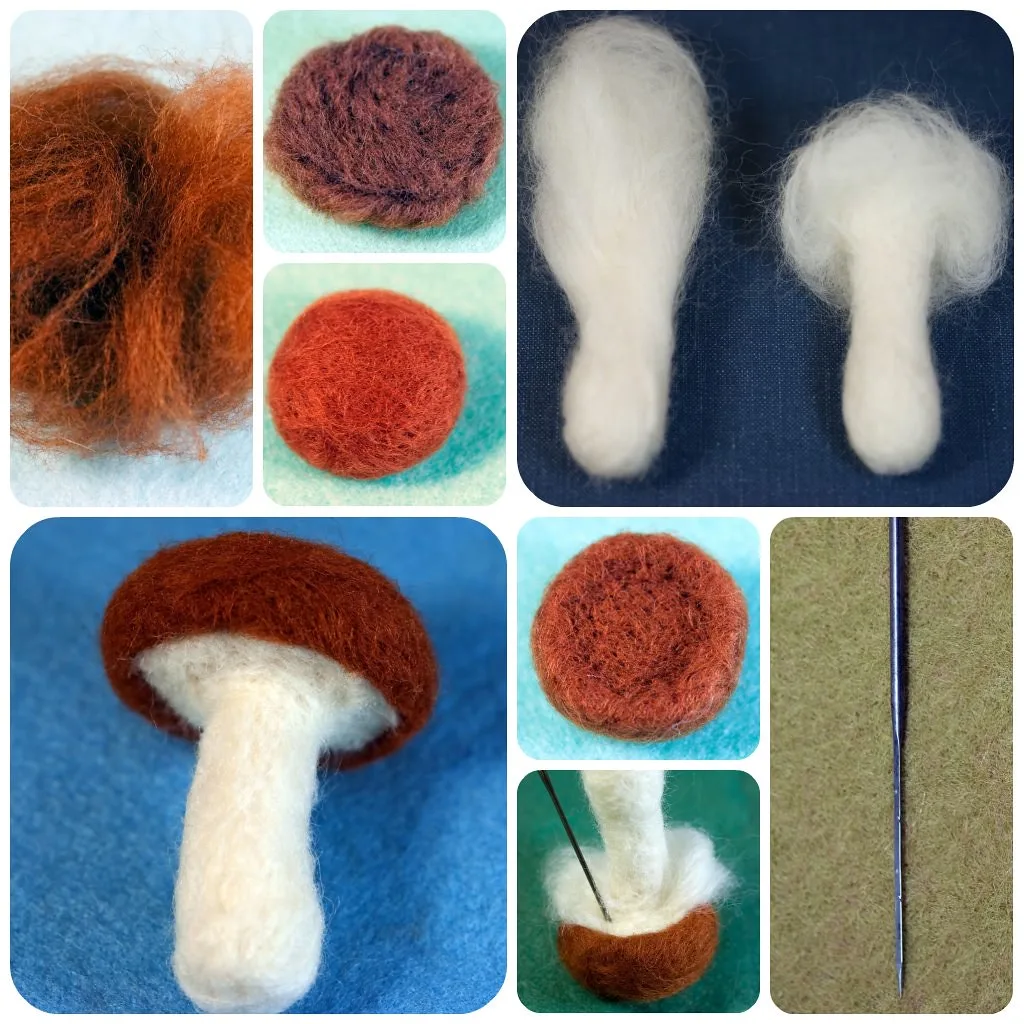
Needle felting has no water and no fulling, but wool still compacts dramatically — a loose mass reduces to roughly a third of its volume as you work it firm. That is why a needle felted ball starts about three times the diameter you want.
The difference is that needle felting compaction is under your direct control and stops the moment you stop stabbing, so it is far easier to hit a target size. You can also add wool to make a shape bigger, which wet felting does not really allow once the piece is fulled.
Does wool shrink in the wash?
Everything above is shrinkage on purpose. The same mechanism is what happens to a sweater by accident, and it needs all three of the same things at once: warmth, moisture and movement. Take any one away and wool barely shrinks.
- Hand washing in cool water, no rubbing: little or no shrinkage. This is why care labels say it.
- A warm machine wash: the agitation does the damage. A regular wool sweater can come out a size smaller and noticeably thicker.
- The dryer: the worst place for wool. Heat, damp and tumbling together are a felting machine, and one cycle can take a sweater from adult to child size.
- Relaxation shrinkage: a new knit can also lose a few percent the first time it is wet as the yarn relaxes from the tension it was knitted under. That is not felting, and it is the part a gentle stretch always recovers.
Merino and superwash
Merino shrinks readily, because its fine, heavily scaled fibres are the fastest-felting wool there is. Many merino garments, especially base layers and socks, are made from superwash merino, treated so the scales cannot lock, and those can go in a cool machine wash safely. If the label says machine washable, it is superwash; if it says hand wash only, believe it. Superwash still does not love a hot dryer: dry it flat. Other fibres behave the same way in proportion to their scales: lambswool and cashmere shrink much like merino, alpaca shrinks less, and acrylic does not felt at all.
How to unshrink a wool sweater
This works on a sweater that has shrunk and tightened but still looks like knitting. It does not work on one that has fully felted: if the stitches have disappeared into a thick, fuzzy fabric, the fibres are locked and no method will separate them. Then it is felt, and felted sweater projects has better uses for it.
- Fill a basin with lukewarm water, never hot, and stir in hair conditioner or baby shampoo, about a tablespoon per quart (1 litre).
- Submerge the sweater and leave it for 30 minutes without rubbing. The conditioner lets the fibres slide past each other.
- Lift it out and press the water out between towels. Do not rinse and do not wring.
- Lay it flat on a dry towel and ease it out gently, a little at a time, working the body lengthways and widthways and the sleeves along their length. Stretch in stages rather than one hard pull.
- Pin or weight it at the stretched size and let it dry completely, which takes a day or more.
Expect to recover around a size on a mild shrink, less on a bad one, and repeat once if it helps. The sweater will be slightly thinner where it was stretched most.
How to shrink a wool sweater on purpose
The reverse is easy and permanent, so go slowly. For a slight shrink, hand wash in hot water and squeeze and rub the areas you want smaller for a few minutes, then check the size before it dries. For a bigger change, a hot machine wash with a pair of jeans for friction, checked every ten minutes or so. The dryer is the fastest and least controllable option: check it every five minutes, because the difference between one size smaller and felted solid is a single cycle. The same method, taken all the way, is felting knitted wool deliberately.
If a felted piece comes out too small
While it is still wet, you can stretch it. Pull firmly and evenly in the direction that came up short, pinning it to shape on a board if necessary, and let it dry under tension. You can typically recover five to ten percent this way — not more, and not once it has dried.
If a felted piece comes out too big
This is the easy failure. Keep fulling: more heat, more friction, more temperature shock. Felt will continue shrinking as long as you work it, so a piece that is too large is simply not finished yet.
That asymmetry is worth remembering when planning: always err on the side of laying out too much. Too big is recoverable. Too small is a coaster.
Frequently asked questions
How much does wool shrink when felted?
Typically 30 to 40% for wet felting, depending on the wool, the number of layers and how hard you full it. Fine merino sits at the top of that range and coarser wools shrink rather less.
Does wool shrink evenly in both directions?
No. It shrinks more along the direction you roll in, so rolling one way throughout produces a piece noticeably shorter than it is wide. Change the rolling direction regularly to even it out.
How do I calculate the size to lay out?
Divide the dimension you want by one minus your shrinkage rate. At 35% shrinkage, a finished length of 150 cm needs a layout of 150 divided by 0.65, which is about 230 cm.
Does wool shrink in the dryer?
Yes, and badly. Heat, moisture and tumbling together are exactly the conditions that felt wool, so an ordinary wool sweater can lose one or two sizes in a single cycle. Superwash wool resists it far better, but even that is safer dried flat.
Can you unshrink a wool sweater?
Partly. Soaking it in lukewarm water with hair conditioner lets the fibres slide enough to stretch it back, and a mildly shrunk sweater can often be recovered by a size. A sweater that has fully felted, gone thick and lost its stitch definition cannot: the fibres have locked, and no soak unlocks them.
What if my felted piece comes out too big?
Keep fulling. More heat, more friction and more rolling will shrink it further. Too small is the problem with no remedy, which is exactly why a shrinkage sample is worth the twenty minutes.