Felt Christmas Stocking: Sewn From Sheet Felt or Felted in One Piece
6 min read Beginner
We may earn a commission from links on this page, at no extra cost to you. As an Amazon Associate I earn from qualifying purchases. Learn more.
How to make a felt Christmas stocking: a pattern that holds its shape, the felt that survives being filled, names and appliqué, sequin kits, and a seamless wet felted stocking.
A felt Christmas stocking is two stocking shapes and a cuff, and the one that lasts for thirty Christmases differs from the one that sags by the second mostly in the felt it is cut from and in how the loop is sewn in. This page covers the sewn sheet felt stocking first, then sequin kits, then a seamless stocking felted from loose wool.
Sizes
| Use | Cuff to heel | Leg width | Felt needed |
|---|---|---|---|
| Tree ornament | 4–6 in (10–15 cm) | 2–3 in | Scraps |
| Small or pet stocking | 12 in (30 cm) | 5–6 in | Two 12 × 18 in sheets |
| Standard | 16–18 in (40–45 cm) | 7 in | About ⅝ yd at 36 in wide |
| Large, for real presents | 20–22 in (50–55 cm) | 8–9 in | About ¾ yd at 36 in wide |
Felt sheets of 9 × 12 in are too small for anything but ornaments and cuffs. A standard stocking needs felt off the bolt or 12 × 18 in sheets.
Choosing the felt
This decision matters more than any other. Wool or wool-blend felt about 1.5 to 2 mm thick holds its shape with a full stocking hanging off it, takes a clean blanket stitch, and still looks good after twenty years. The thin acrylic felt sold in craft-store squares stretches, pills and tears at the loop, usually by the second Christmas. Wool felt fabric explains the grades. If you only have thin felt, fuse a light interfacing to the back of each piece before cutting, or line the stocking with cotton.
The sewn stocking
- Draw the pattern. On paper, draw the leg as a straight-sided rectangle to the size above, then add a foot that curves out to one side, with a rounded toe. Leave the foot a little wider than the leg, or it looks pinched. Add ¼ in (6 mm) all around if you will seam it on a machine; no allowance is needed for an edge blanket stitch.
- Cut two. Fold the felt double, or flip the pattern over for the second piece, so you get a front and a back that face each other. Cutting two from the same side gives two left feet.
- Decorate the front now. Names, appliqué and embroidery all go on the front piece while it is flat. See the next section.
- Cut the cuff. A rectangle as wide as both leg tops together plus a little overlap, and about 4 to 5 in deep, from a contrasting felt. Felt does not fray, so the lower edge can be cut scalloped, zigzag or with pinking shears.
- Join. Sew front and back together around the sides and foot, leaving the top open. Blanket stitch in a contrasting floss on the outside is the traditional look. A machine seam on the inside, turned right side out, gives a cleaner, rounder stocking.
- Add the cuff. Wrap it around the top, join its short ends at the back seam, and stitch it on along its top edge, sewing through the ends of the hanging loop again as you pass them.
A hanging loop that holds
A full stocking can easily weigh several pounds, and that weight all hangs from one small loop. Fold a 6 in length of cotton twill tape or grosgrain ribbon in half and sew both ends in between the layers at the top of the back seam, the heel side, while you join front and back, catching it with several rows of stitching. When the cuff goes on, stitch through the loop again so it is held by the stocking and the cuff together, never the cuff alone, which hangs on a single line of stitching. A loop of felt alone stretches and tears. Weighted stocking holders on a mantel need a loop of at least 2 in so the hook clears the cuff.
Names and appliqué
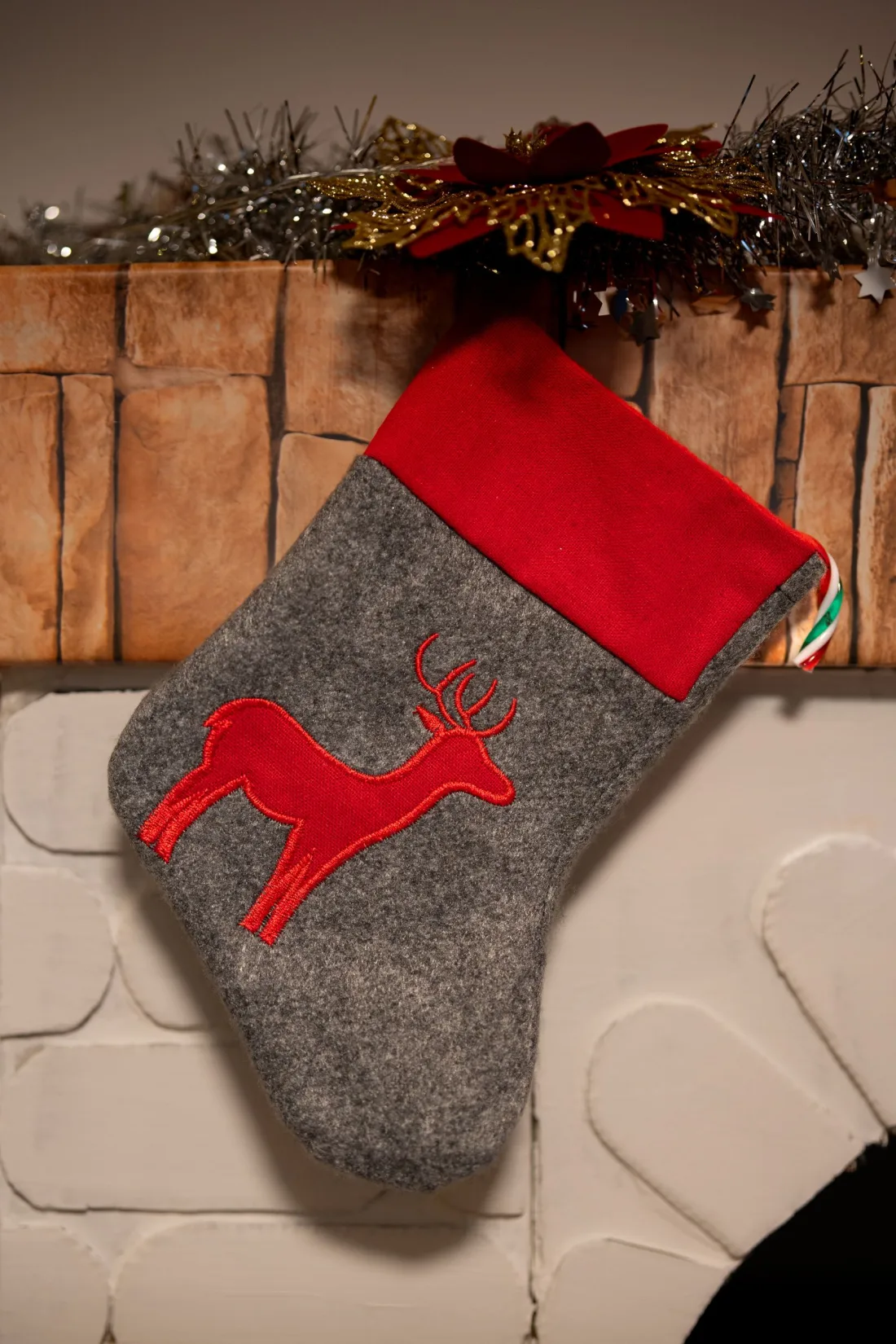
Write the name on the cuff in water-soluble marker first, centered, and step back to look at it before stitching. Letters drift downhill when you stitch freehand, and the marker line stops that. Then either cut the letters from contrasting felt and stitch each one on with small running stitches just inside its edge, or embroider the name directly in backstitch or chain stitch with three strands of floss.
For the stocking itself, one large shape reads better than lots of small ones. A reindeer, a tree, a star or a mitten cut from a single color, as in the photo above, is visible from across the room. Small layered pieces disappear unless the stocking is meant to be looked at close up. Felt appliqué covers stitching shapes on, and how to sew beads on felt covers adding beads and sequins that stay put.
Sequin kits
The elaborate stockings covered in sequins and layered felt pictures are usually made from kits. Bucilla is the best-known brand, and a lot of people search for the stockings by that name. A kit comes with the felt pieces printed with placement lines, the sequins, beads and floss, and a numbered guide. Expect a full sequin stocking to take many evenings rather than one: sequins are sewn on one at a time, usually each with a tiny bead to hold it. A kit is the right choice if you want that dense, glittering look, which is very hard to design from scratch. Most of the advice here about a strong hanging loop and spot cleaning applies to kit stockings too.
A wet felted stocking in one piece
A stocking felted from loose wool has no seams at all and is as tough as a slipper. It is made the same way, around a flat resist. The method is in resist felting, and the closest project to it is felted slippers. Scaled up to the knee, the same method makes valenki, the traditional felted boots.
- Size the resist. Draw the stocking shape on foam underlay and enlarge it to allow for shrinkage: divide each finished measurement by one minus the shrinkage rate. With a coarser wool that shrinks about 30%, a 16 in stocking needs a resist about 23 in long. Merino shrinks more and needs a larger resist.
- Lay the wool. Three or four thin layers on each side, wrapping the edges around the resist, about 100 to 120 g (4 oz) in total for a standard stocking.
- Felt and full. Wet felt both sides until the layers hold together, cut the top open, take out the resist, and keep rolling and throwing the stocking until it has shrunk to size and the felt is firm.
- Shape and dry. Stuff it with plastic bags or a towel in the stocking shape and leave it to dry.
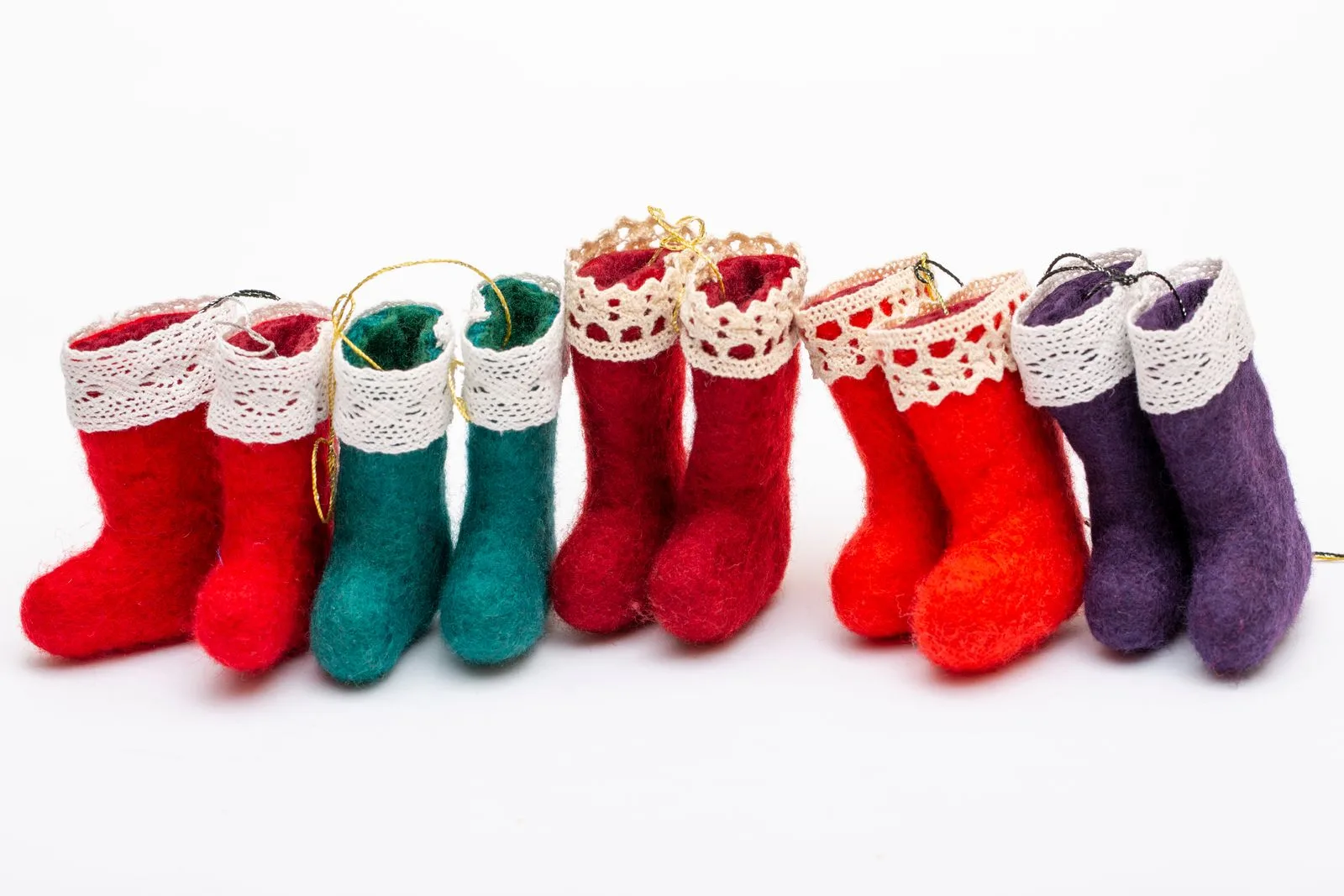
Needle felt a design onto the dried stocking, or lay colored wool in the outer layer before wetting so the pattern felts in. Small versions of 4 to 6 in, like the boot ornaments above, make good first projects with a resist: they take an hour and 10 to 15 g of wool each.
Looking after it
Spot clean only, with cool water and a little wool wash, and dry it flat. Store it flat in a box rather than folded, since folds set into felt, with a lavender or cedar sachet in with it; protecting wool from moths explains why a wool stocking in an attic needs one.
A felt stocking goes well with a felt garland along the mantel above it and a felted wreath on the door. Felt Christmas ornaments has small stocking-shaped tree decorations as well.
Frequently asked questions
What size is a standard Christmas stocking?
Most are 16 to 20 in (40 to 50 cm) from the top of the cuff to the heel, and about 7 to 8 in (18 to 20 cm) across the leg. A child's stocking that has to hold real presents is better at the long end of that. Ornament stockings for the tree are 4 to 6 in.
What kind of felt is best for a Christmas stocking?
Wool or wool-blend felt about 1.5 to 2 mm thick. It holds its shape when filled, takes stitching cleanly and lasts for decades. Thin acrylic craft felt stretches out of shape and pills within a season or two, and it tears at the hanging loop under weight.
How do you put a name on a felt stocking?
Cut letters from contrasting felt and stitch them to the cuff, or embroider the name in backstitch or chain stitch with three strands of floss. Write the name in water-soluble marker first so the spacing is right. Do it before the stocking is sewn together, while the cuff is still flat.
Can you wash a felt Christmas stocking?
Spot clean it with cool water and a little wool wash, then dry it flat. A machine wash shrinks and distorts wool felt and can felt a wool stocking further, and acrylic felt pills badly. Sequined and appliqué stockings should never go in a machine.