Felted Rug: How to Wet Felt a Wool Rug That Survives a Hallway
4 min read Advanced
We may earn a commission from links on this page, at no extra cost to you. As an Amazon Associate I earn from qualifying purchases. Learn more.
A wet felted rug is one enormous flat piece of felt. The making is simple; the thickness, the fulling and the floor it goes on are what decide whether it lasts.
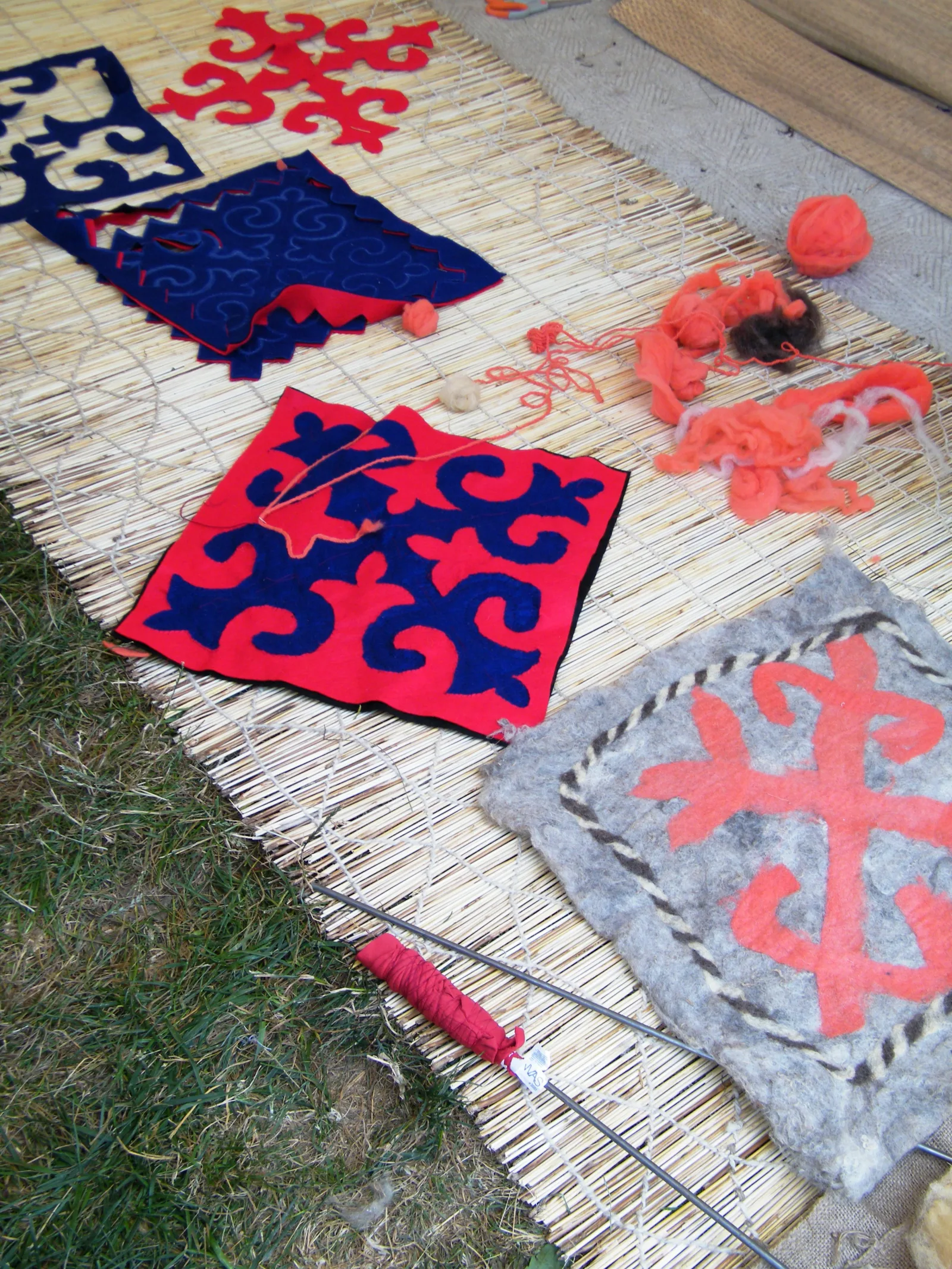
A felted rug is a single sheet of felt made deliberately thick. There is no weaving, no knotting and no backing cloth — the whole thing is wool, matted into itself until it is dense enough to walk on.
It is the most physically demanding project on this site, and the technique is no harder than a first flat felting exercise. The difficulty is entirely one of scale.
Wool: coarse, and a lot of it
Allow 1.5 to 2 kg per square metre of finished rug.
- 60 × 90 cm mat — about 1 kg
- 90 × 140 cm rug — about 2.5 kg
- 120 × 180 cm rug — 3.5 to 4 kg
Use the coarsest wool you can buy. Herdwick, Swaledale, Romney, Icelandic and plain undyed carded core wool all felt hard and wear well. Merino is the wrong fibre here: soft, slow to full at this thickness, expensive, and it pills underfoot.
Carded batts are far easier to lay out than tops at this scale — see wool batting for felting.
Space and kit
- A table or floor area larger than the layout, which will be 40% bigger than the finished rug
- Bubble wrap, or a plastic sheet, the full size of the layout
- Net curtain, again full size — join pieces if necessary
- A pool noodle or thick dowel for rolling
- Hot soapy water in quantity: a bucket and a jug
- Towels, and a floor you do not mind soaking
A bath or a tiled bathroom floor is the sensible place to work. Kitchens end up flooded.
Laying out
- Mark the layout size on the bubble wrap — 40% larger than the finished rug in both directions. A 90 × 140 cm rug starts at roughly 125 × 195 cm.
- Lay the first layer with all fibres running lengthways, overlapping each piece by about a third.
- Second layer at right angles.
- Keep going. A rug needs six to eight layers, alternating direction each time. This is the step people underestimate, and the reason thin rugs fail.
- Check thickness by eye. The dry layout should be 6 to 8 cm of loose fluff.
- Add the design to the top layer — prefelt shapes, contrasting stripes, or a scatter of colour.
Work in sections and wet as you go if the layout is too big to keep flat. A pile of dry wool this size shifts every time you lean across it.
Wetting
Cover with net, then soak thoroughly with hot soapy water — far more than feels reasonable. Press the air out with flat hands, working from the centre outwards, until the whole surface is dark and airless.
A rug layout holds several litres. Under-wetting leaves dry pockets in the middle that never felt, and you will not find them until the rug is finished.
Felting: hands, then feet
- Rub through the net with flat palms over the whole surface, twenty minutes or so, until the fibres hold together when you pinch.
- Roll in sections. Wrap one end around a pool noodle with the bubble wrap, roll 100 times, unroll, shift along, repeat. Then turn the whole rug 90 degrees and do it again.
- Walk on it. Once it holds together, put it in the bath or on a tarpaulin, add hot soapy water, and walk, stamp and shuffle. Feet apply even pressure across a large area in a way hands cannot.
- Keep the water hot throughout, and alternate with cold rinses to shock the fibres.
Fulling — go further than you think
A rug takes far more fulling than a scarf. The finished felt should be firm and dense, at least 5 mm thick, and should not stretch at all when you pull at it. Expect 35 to 40% shrinkage overall.
Test by scratching hard at the surface with a fingernail. If fibres lift and pill, it is under-fulled and will shed for the rest of its life.
Finishing
- Rinse thoroughly in cool water with a splash of vinegar. Soap left in a rug attracts dirt.
- Squeeze, never wring. Roll it in towels to take the bulk of the water out.
- Dry flat and square, pulled into shape. A big rug takes three or four days.
- Trim the edges with sharp scissors. Felt does not fray, and a cut edge is a legitimate finish.
Backing and grip
Felt slides on hard floors. Fix it before somebody does.
- Non-slip underlay cut slightly smaller than the rug — simplest, and it lifts out for cleaning.
- Latex dots or liquid latex painted onto the underside.
- Hessian stitched to the back for a rug that will take heavy traffic.
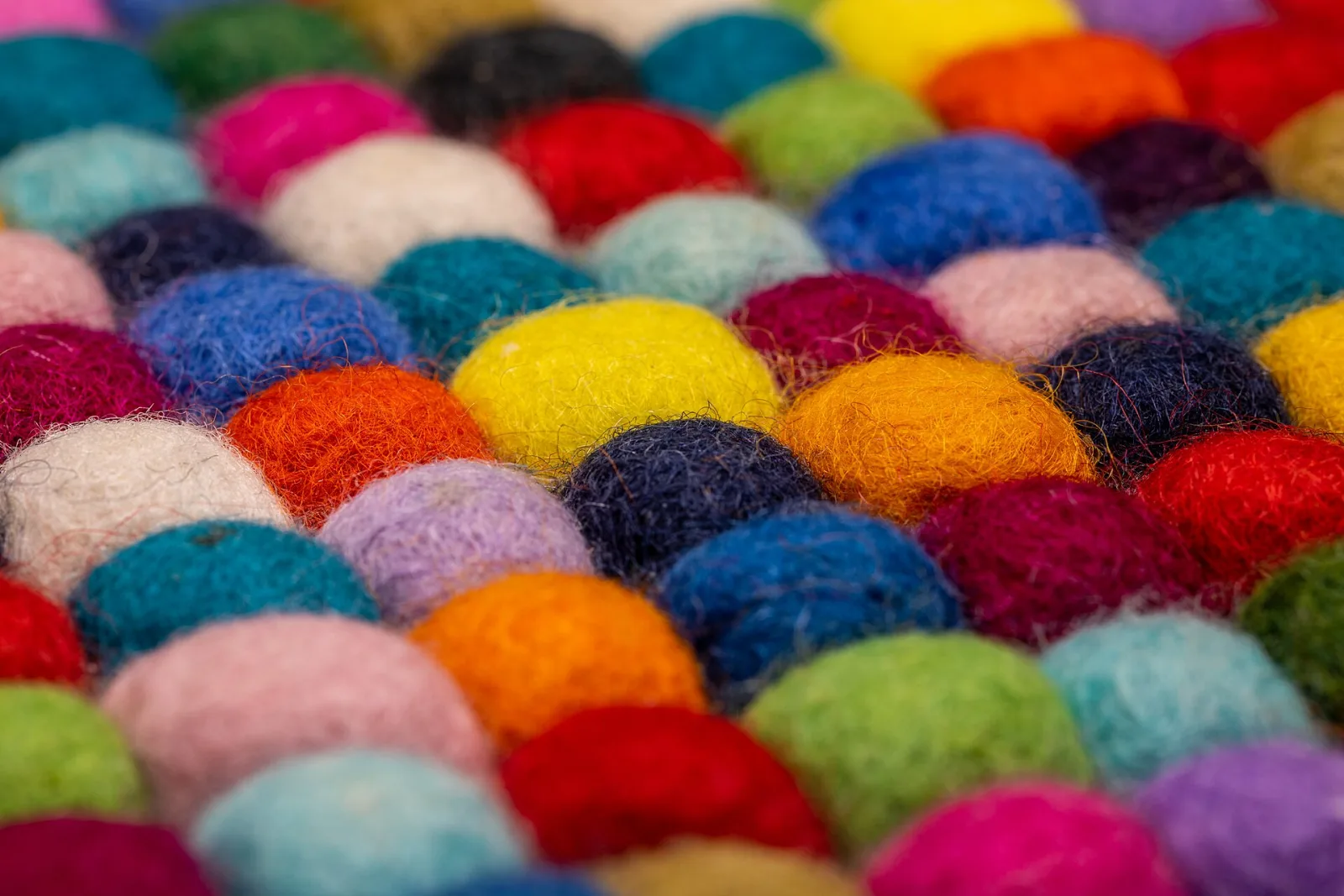
The alternative construction — hundreds of small balls stitched together — is covered in felt ball rug, and it produces a very different object.
Where to put it
Bedsides, under a desk, beside a bath. Not a hallway, not a kitchen, not a door where wet shoes land. Felt is warm and quiet and it dislikes grit and constant traffic — a rug in a busy corridor will look tired within two years.
Care
Shake and vacuum on a low setting with no beater bar. Spot clean with cool water and wool wash. Never machine wash it: a finished rug will shrink further, unevenly, and there is no recovering from that.
Frequently asked questions
How much wool do you need for a felted rug?
Roughly 1.5 to 2 kg per square metre of finished rug. A 60 x 90 cm mat takes about 1 kg; a 120 x 180 cm rug takes 3 to 4 kg. Rugs need to be thick, and thin ones wear through within a year.
Which wool is best for a felted rug?
Coarse carpet wool — Herdwick, Swaledale, Romney, Icelandic or plain undyed core wool. Fine merino is soft, expensive and wears badly underfoot. Nobody walks barefoot on a rug enough to justify the difference.
How do you felt something that big?
Roll it in sections in a bamboo mat or a pool noodle, then finish by walking on it in the bath or on a tarpaulin. Feet supply more even pressure over a large area than hands ever will.
Does a felted rug need a backing?
It needs grip rather than strength. Latex dots, a non-slip underlay or a stitched hessian backing all work. Bare felt on a hard floor slides, which is a genuine hazard on a landing.