Felt Coasters: Thick Sheet Felt, Felt Balls or Wet Felted
5 min read Beginner
We may earn a commission from links on this page, at no extra cost to you. As an Amazon Associate I earn from qualifying purchases. Learn more.
Three ways to make felt coasters that lie flat and do not lift with the mug: the right felt thickness, how many felt balls a coaster takes and how to sew them, and wet felted coasters with a design laid in.
A felt coaster that sticks to the wet bottom of a glass, rides up with it and drops into your lap is a coaster that was cut too thin. Thickness decides more than anything else whether felt works under a drink, and once it is right, any of the three methods below makes a good one.
Three kinds of felt coaster
| Kind | Made from | Time for a set of four | Character |
|---|---|---|---|
| Cut sheet felt | 3–5 mm wool felt | Fifteen minutes | Clean and modern, one solid color or stacked layers |
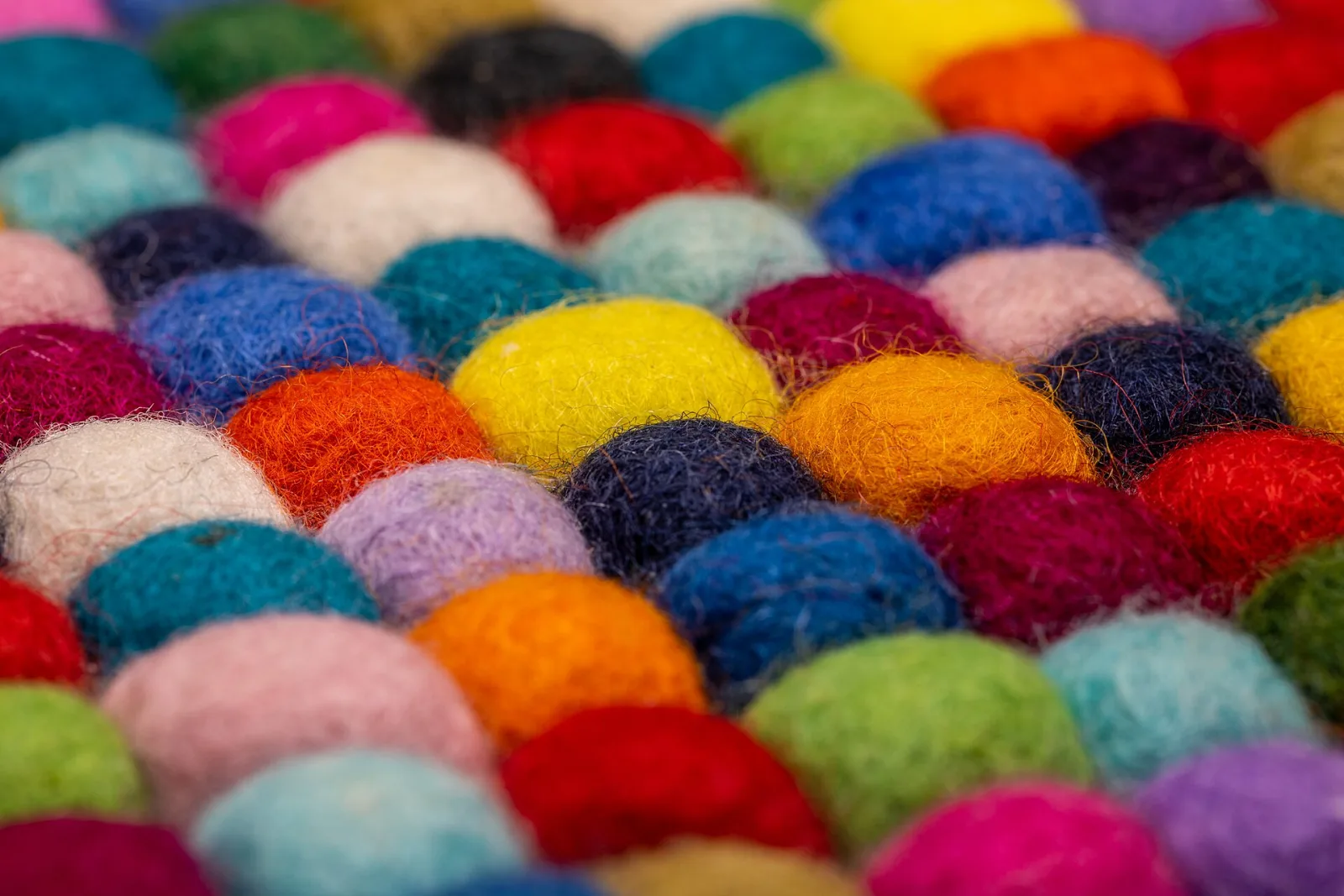
| Felt ball | 2 cm felt balls sewn together | An evening | Textured and colorful |
| Wet felted | Loose wool, felted thick and cut | An afternoon plus drying | Soft edges, designs felted into the surface |
Thickness is the whole thing
The 1 mm craft felt sold in squares makes a bad coaster. It sticks to a wet glass, curls at the edges after a wash, and lets heat and water straight through to the table. Use felt at least 3 mm thick, and 5 mm if you can get it. Thick wool felt is heavy enough to stay on the table when the glass lifts, stiff enough to stay flat, and absorbent enough to take a cold drink's condensation without feeling wet. Felt ball and wet felted coasters get their thickness from the method. Wool felt fabric explains the grades and thicknesses.
Use wool or a high-wool blend. Acrylic felt absorbs much less water and leaves drips sitting on the surface. It also pills where the glass sits, so you get a ring of fuzz within weeks.
Cut sheet felt coasters
A standard coaster is 4 in (10 cm) across, round or square. A larger mug may want 4½ in.
- Mark the shape on the back of the felt with chalk or a fine marker around a template: a jar lid, a cut piece of card, or a compass line.
- Cut with a rotary cutter against a straight edge for squares, or a circle cutter for rounds. Scissors leave a ridged edge on thick felt, which is very visible on a coaster. If scissors are all you have, cut in long smooth strokes using the whole length of the blade.
- Trim any fuzz from the edge with the rotary cutter held almost flat.
For something less plain, stack two layers of contrasting 3 mm felt with the top layer cut slightly smaller and stitched on around its edge. You can also cut a shape out of the top layer, so the color underneath shows through. A needle felted motif on the top, such as a leaf, an initial or a simple geometric shape, takes ten minutes per coaster; see needle felting on fabric. For a large batch of identical shapes, some felt cutting machines handle 3 mm felt, but most hobby cutters top out at 2 to 2.5 mm, so check before relying on one.
Felt ball coasters
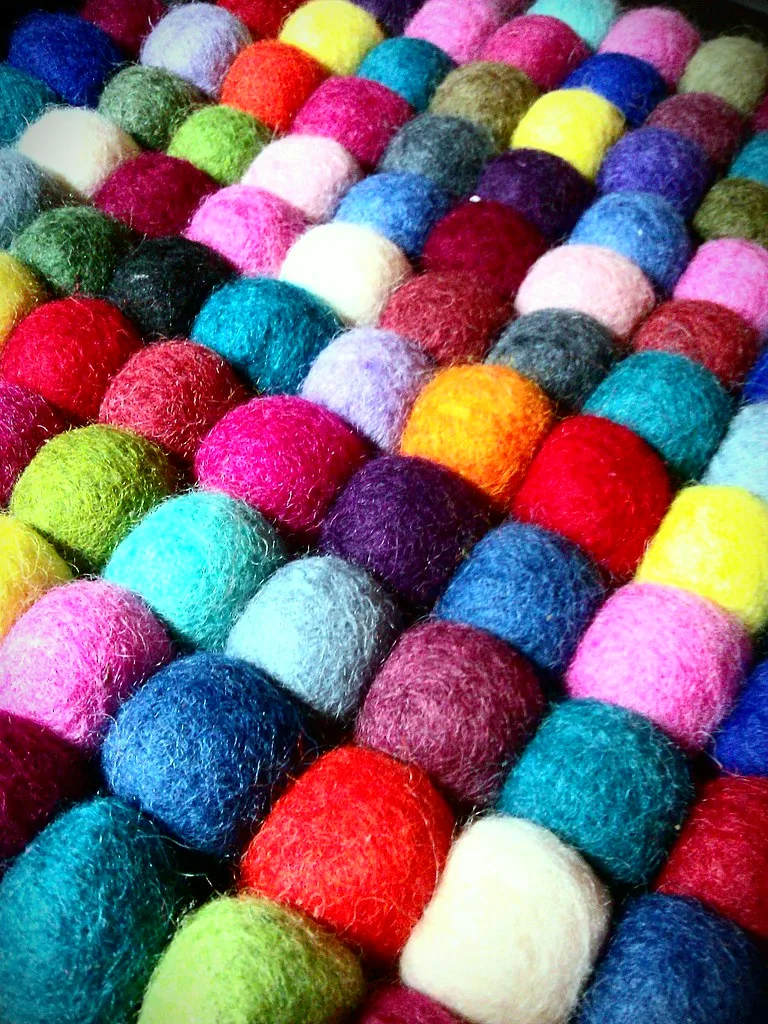
This is the textured, colorful kind, and the same method makes a trivet or a felt ball rug at larger sizes.
| Coaster | 2 cm balls | Arrangement |
|---|---|---|
| Round or hexagon, about 4 in (10 cm) | 19 | 1 center, a ring of 6, a ring of 12 |
| Square, 4 in | 25 | 5 rows of 5 |
| Trivet, 8 in (20 cm) round | about 73 | Rings outward from the center |
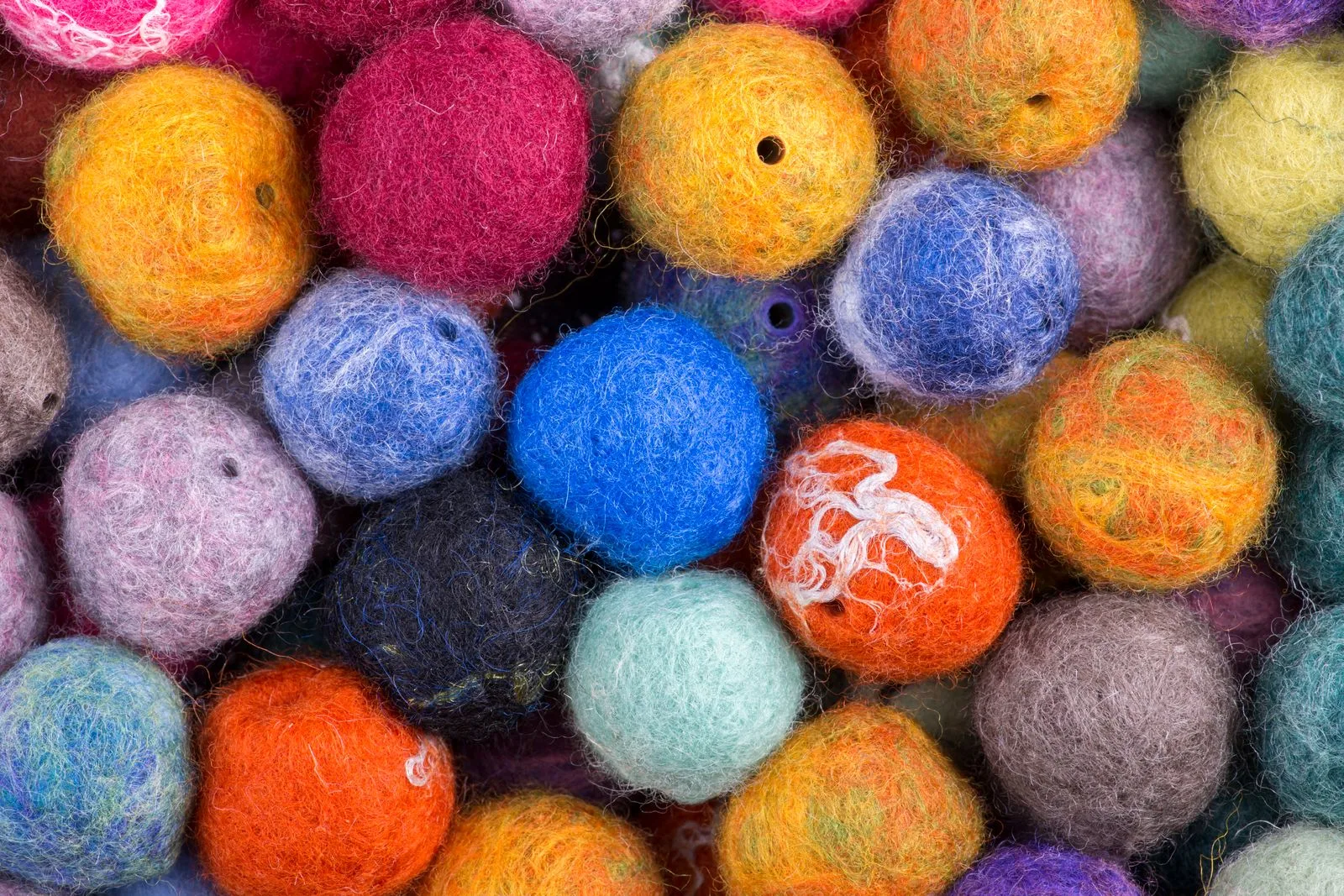
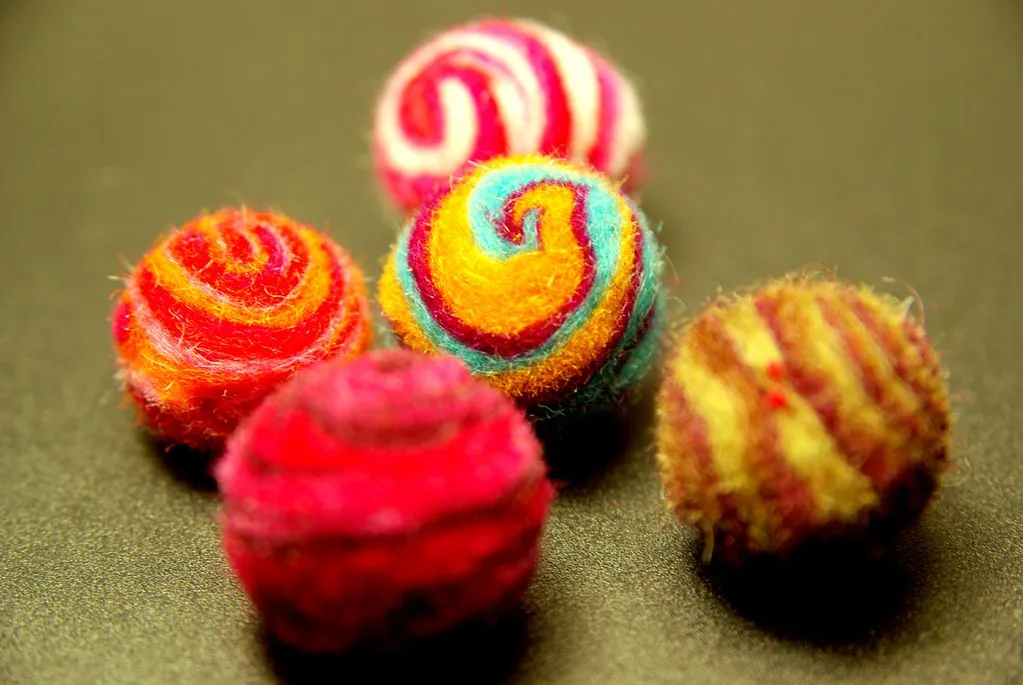
The hexagon is the easiest because the balls nest naturally: each ring sits in the dips of the one inside it. Buy the balls, or wet felt them hard using how to make felt balls. They need to be truly hard, because soft balls flatten into an uneven surface that rocks under a mug.
- Lay the balls out in the pattern on a towel to decide the colors.
- Thread a long or curved needle with strong upholstery thread or doubled waxed thread.
- Sew through the balls along one line, pull them tight together, and knot. Repeat along every line of the pattern, then sew across those lines in the other two directions, so each ball is held on several sides.
- Pass the needle through the middle of each ball, at half its height. Thread near the top or bottom shows and catches on mugs.
- Press the finished coaster flat under a heavy book overnight, ideally after a quick dampening, so it settles flat.
Glue is the shortcut people try first, and it is a poor one. Hot glue goes soft under a hot mug, and any glue makes a stiff, shiny patch where the balls meet. A thin felt backing glued on underneath can tidy a coaster that has gaps, but stitching has to hold it together.
Wet felted coasters
Wet felting gives a thick, dense coaster with a soft edge. Any design laid into the surface becomes part of the felt rather than something stitched on.
- Lay out a rectangle of wool large enough for four coasters plus shrinkage. Four 4 in coasters need a finished square of about 9 in (23 cm), including trim. Merino shrinks 35 to 45%, so divide by about 0.6 and lay out 15 × 15 in (38 × 38 cm).
- Lay six to eight thin layers, each at right angles to the one below. A coaster needs to finish about 4 to 5 mm thick, which takes far more wool than a scarf. Expect 50 to 60 g for that piece.
- Lay the design last, on top: wisps of colored wool, a few strands of yarn, or bits of silk.
- Wet felt it, then full it hard by rolling and throwing until it has shrunk to size and the felt no longer pinches up when you pull at the surface.
- Rinse, dry it completely flat under a board, then cut the coasters with a rotary cutter. Cut edges on wet felt are clean, but the sides show the layers, which is part of the look.
If your felt comes out soft and thin, it needed more layers or more fulling, not more soap. Wet felting for beginners covers the basics and wool shrinkage when felting explains how to calculate the layout size. Crochet in pure wool, felted afterward, is another route to a thick coaster; see felting crochet.
Washing and care
Rinse coasters in cool water with a little wool wash or dish soap, blot them in a towel, and dry them flat under a book so they stay flat. A coffee ring usually lifts with cool water and a drop of dish soap if you deal with it the same day. Never put wool coasters in a hot wash or a dryer: they shrink, go hard and lose their shape. Felt ball coasters can be rolled lightly between the palms while damp to lift flattened balls back up.
A set of four in a ribbon makes a good small gift, and goes with a felt garland or wreath if you are giving a set of Christmas pieces.
Frequently asked questions
What thickness of felt is best for coasters?
At least 3 mm, and 5 mm is better. Thinner felt sticks to the wet bottom of a glass and lifts with it, curls at the edges after a few washes, and lets heat and water through to the table.
Do felt coasters absorb water?
Wool felt absorbs condensation well and does not feel wet until it is quite damp, which is why it suits cold drinks. It does not stop a spill: a full spill soaks through even thick felt. Acrylic felt absorbs much less and leaves drips on the surface.
How many felt balls make a coaster?
Nineteen 2 cm balls make a coaster about 4 in (10 cm) across: one in the middle, six around it and twelve around those. The next ring would take it past 5 in, so a 4 in round coaster is the same nineteen. A 4 in square in straight rows takes 25.
How do you wash felt coasters?
Rinse them in cool water with a little wool wash or dish soap, press the water out with a towel, and dry them flat under something heavy so they stay flat. The agitation of a washing machine and the heat and tumbling of a dryer shrink and distort wool felt.