Dyeing a Wool Sweater, Coat or Jacket at Home Without Shrinking It
7 min read Intermediate
We may earn a commission from links on this page, at no extra cost to you. As an Amazon Associate I earn from qualifying purchases. Learn more.
Dyeing a finished wool garment is the same chemistry as dyeing fibre, with one extra hazard — everything that makes the dye bond also makes wool felt.
A faded jumper, a coat in a colour you have gone off, a blanket that no longer matches the room — all of them can be dyed, and all of them can be ruined by the same process. The chemistry is easy; the handling is where it goes wrong.
First, check what it is made of
- 100% wool, alpaca, cashmere, mohair — dyes beautifully with acid dye.
- Superwash wool — dyes exceptionally evenly, and cannot felt, which removes the main risk entirely.
- Wool with nylon — the nylon takes acid dye too, usually a slightly different shade. Often fine.
- Wool with acrylic or polyester — the synthetic stays its original colour. A 50/50 blend comes out heathered and pale.
- Cotton, linen, viscose — needs a completely different dye class. Not covered here.
If the label has gone and you cannot tell, a snipped fibre and a flame settle it — the test is described in the felt burn test. Wool smells of burnt hair and crumbles; synthetics melt into a hard bead.
Check the seam thread and the trim as well as the fabric. Polyester sewing thread will stay exactly as it is, and on a dark-over-light change every seam will show as a pale line.
What colour is achievable
Dye adds; it never removes. Whatever you start with is still underneath.
- Pale grey → any mid or dark colour
- Faded navy → black, charcoal, deep indigo
- Beige → olive, rust, brown, deep green
- Red → burgundy, brown, black
- Anything → a darker version of itself
The same logic governs dyeing loose fibre before you felt with it, where you do control the starting colour — see dyeing wool roving.
Going lighter means stripping colour first, which uses harsh reducing agents and leaves wool weak and rough. It is rarely worth it on a garment you care about.
What you need
- Acid dye — enough for the dry weight of the garment. Weigh it first; a wool coat can be 800 g
- White vinegar or citric acid
- A pan large enough for the garment to move freely without being packed in
- Gloves, and a dust mask when measuring powder
- Tongs or a long spoon — for lifting, not stirring
An all-purpose supermarket dye will work on wool with heat and vinegar, but half the packet is formulated for cotton and does nothing, so colours come out duller.
The method
- Wash the garment first — gently, cool, no agitation. Any invisible stain or finish will resist dye and show as a patch.
- Soak it in cool water for an hour so it takes dye evenly.
- Fill the pan with enough water for the garment to float freely, dissolve the dye separately in a jug, and add 60 ml vinegar per litre.
- Lower the garment in and spread it out gently with tongs so nothing is folded against itself.
- Heat very slowly to about 85 °C over 30 minutes. Never boil.
- Hold for 30 to 45 minutes. Move it as little as possible — lift and reposition with tongs a couple of times rather than stirring.
- Cool in the pan. This is not optional. Moving hot wool into cold water shocks the fibres into contracting.
- Rinse at the same temperature until clear, then reduce the temperature gradually.
- Squeeze, never wring. Roll in a towel, then dry flat, pulled into shape.
Test before you commit
Every garment has somewhere hidden: a seam allowance, the inside of a hem, the turn of a cuff. Snip a piece the size of a fingernail, drop it into the dye bath with everything else, and fish it out after ten minutes.
It tells you two things no chart can. First, whether the fibre takes the colour at all — an undeclared synthetic content shows up immediately. Second, what the shade actually does over the colour that is already there, which is never quite what the dye packet shows.
Coats and jackets are a different job
A jumper is one fabric. A tailored coat is a construction, and most of what it is built from will not dye.
- The lining. Almost always polyester or viscose. It will come out of an acid dye bath exactly the colour it went in. On a strong change the contrast is glaring every time the coat is open.
- Interfacing and canvas. Fusible interfacing at the front edges, collar and cuffs is glued on, and sustained heat can soften that glue. Bubbling along a lapel does not come back.
- Shoulder pads and sleeve heads. Usually synthetic wadding. They hold water, dry slowly, and can distort.
- Buttons and trim. Take them off first. Horn and shell survive; plastic can craze, and leather trim will not recover.
- Weight. A wet wool coat is enormously heavy, and weight is what stretches a garment out of shape. It never goes on a hanger wet.
The practical conclusion: an unlined or half-lined coat, a duffle, a wool overshirt or a chunky knitted jacket are all good candidates. A structured tailored coat with a full lining is a job for a dyer with a proper vat, not a stockpot — or a job that begins with unpicking the lining.
"Dry clean only" does not mean "cannot be dyed"
On a wool garment that label is usually there because the maker does not trust you with hot water and agitation, which is a fair concern rather than a chemical one. The fibre itself is fine in a dye bath.
What the label does not tell you is whether the garment was finished with a water-repellent or stain-resistant treatment. Those do resist dye, and they show up as pale patches. The test snippet is how you find out.
Why the washing machine is a bad idea
Machine dyeing is the standard method for cotton and it is popular advice for everything else. For untreated wool it combines heat, detergent and sustained agitation — which is precisely the recipe for deliberate fulling described in felting in knitting.
How much smaller is not a mystery either — the shrinkage is measurable and predictable, and wool shrinkage when felting gives the figures by breed.
A wool coat dyed in a machine may come out beautifully coloured and two sizes smaller, with a dense, hard, felted surface. If the garment is superwash, this risk disappears and the machine is genuinely convenient.
Drying something heavy without losing its shape
This is where coats are ruined after a dye bath that went perfectly. Wet wool has no structural opinion of its own — it holds whatever shape it is left in, and a soaked coat weighs several times what it does dry.
- Press the water out between towels. Do not wring, and do not lift the garment by its shoulders while it is streaming.
- Lay it flat on dry towels, and pat it back to its measurements — cuffs square, front edges parallel, collar sitting as it should.
- Change the towels underneath once they are saturated. A heavy coat needs this twice.
- Leave it flat until it is barely damp, and only then hang it on a broad hanger to finish.
Drying takes days rather than hours for a heavy garment, and rushing it over a radiator makes wool brittle and harsh.
Blankets and large items
The limiting factor is pot size. A garment crammed into a pan dyes in blotches, because the areas pressed against each other never see the dye. If it does not float freely, dye it in a large stockpot on two rings, or accept a deliberately mottled result.
A bath is not a solution — you cannot maintain 85 °C, and without sustained heat the dye will not bond and will wash out.
Overdyeing to rescue something
The most reliable use of this technique is not making something a new colour but making a stained or patchy garment uniform. A weak grey, brown or navy over everything hides a multitude of marks and produces a coherent result, because dye is transparent and evens out variation rather than exposing it.
If you would rather not use synthetic dye
Plant dyes work on a garment exactly as they work on fleece, with the same heat and the same handling rules — the difference is that most need a mordant first, which is one more hot bath and one more chance to felt the thing.
Colours are softer and the range is narrower, and on an already-coloured garment that matters: a pale natural shade over an existing colour will barely register. They earn their place on undyed or very pale wool. Natural dyes for wool covers the plants and mordants, and dyeing wool with onion skins is the one worth trying first because it needs no mordant at all.
When it should be felted instead
If the garment is beyond saving as clothing, felting it deliberately turns it into excellent material — dense, unfraying wool cloth for bags, slippers and appliqué. That route, and what to make from the cloth afterwards, is in felting sweaters. For a sweater you intend to keep as clothing, the dye class matters more than the method — acid dyes for wool are the only ones that hold their colour through repeated washing. That is covered in what is felted fabric, and it is a better fate than a dye job on something you will not wear.
Frequently asked questions
Can you dye a wool sweater at home?
Yes, with an acid dye, heat and vinegar. The difficulty is not the colour but avoiding felting: heat plus agitation plus temperature change is exactly how wool is deliberately shrunk.
Can you dye wool in a washing machine?
It is the standard advice for cotton and a poor idea for untreated wool, because the agitation felts it. Superwash wool survives it; anything else should be dyed by hand in a pot.
Can you dye a wool coat a lighter colour?
No. Dye is transparent and only adds. A navy coat can become black or deep charcoal, never grey or beige — lightening would need stripping the existing colour, which damages wool badly.
Can you dye a wool coat with the lining still in it?
You can, but the lining almost never takes the colour — most are polyester or viscose and will stay exactly as they are. On a big colour change that looks wrong every time the coat is open, so either unpick and replace the lining afterwards, or choose a shade close enough that the contrast reads as deliberate.
How much dye does a wool coat need?
Dye is measured against the dry weight of the garment, not the volume of water. Roughly 2% of that weight gives a mid shade and 4% a deep one, so an 800 g coat wants somewhere between 16 and 32 g. Weigh the coat before you start; guessing is the most common reason a result comes out patchy and pale.
Will the seams and labels dye too?
Usually not. Most garment thread is polyester and will stay its original colour, as will care labels, zip tapes and any synthetic trim. On a strong colour change this is very visible.
Topics
Image credits
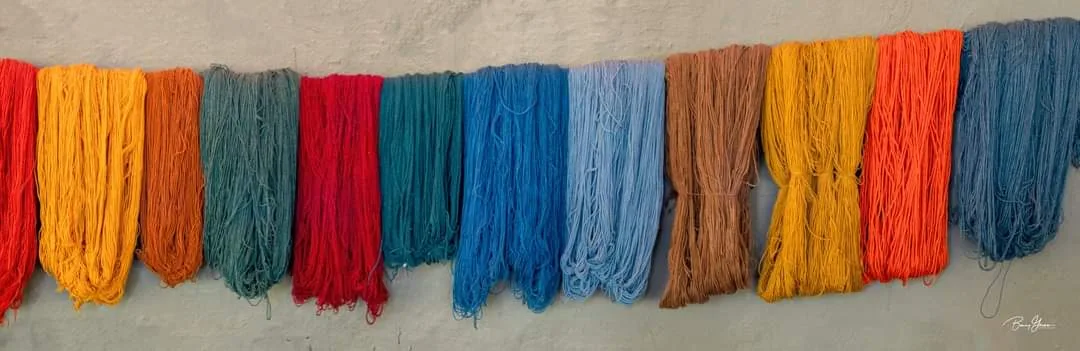
- Hanks of hand dyed wool hung in a row of colours — BENNY GROSS.1 (BY SA 4.0)
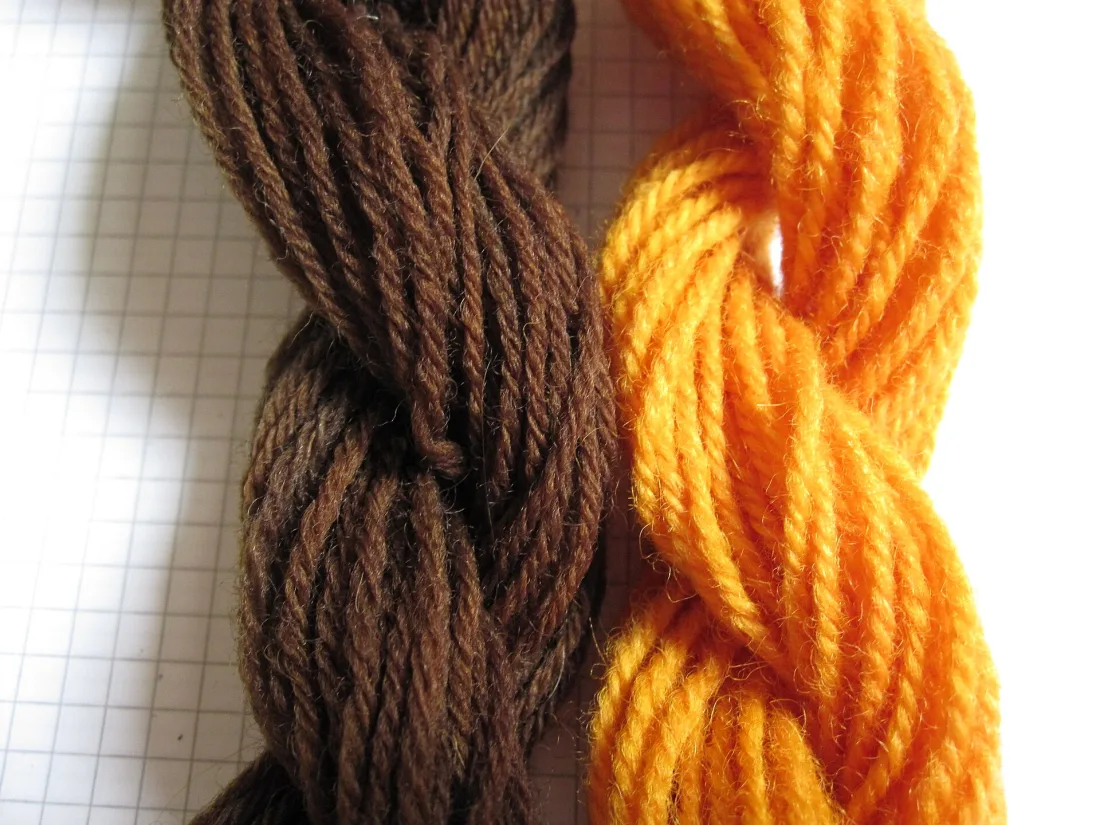
- Two skeins of wool dyed brown and orange — Roued (BY SA 2.0)
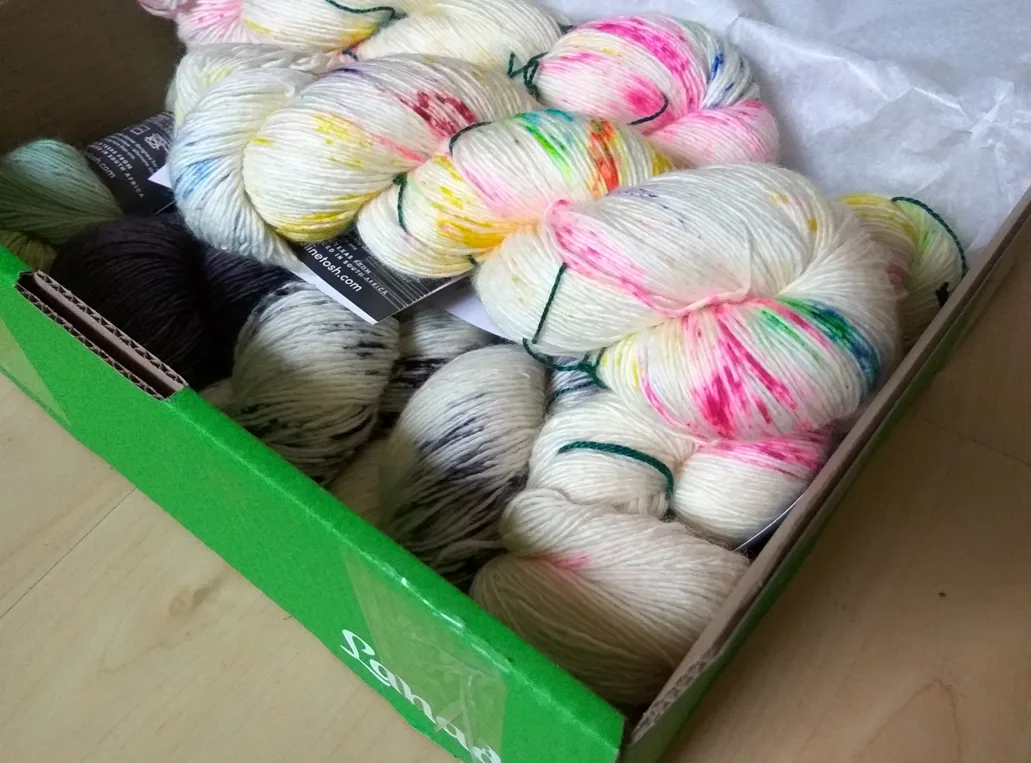
- Hand dyed wool in several colours — TenderTiger (BY SA 4.0)