Needle Felting on Fabric: Base Fabrics That Actually Work
3 min read Intermediate
We may earn a commission from links on this page, at no extra cost to you. As an Amazon Associate I earn from qualifying purchases. Learn more.
Wool onto wool works beautifully. Wool onto cotton needs a trick, and wool onto a fleece jumper barely works at all. Which fabrics take needled fibre and why.
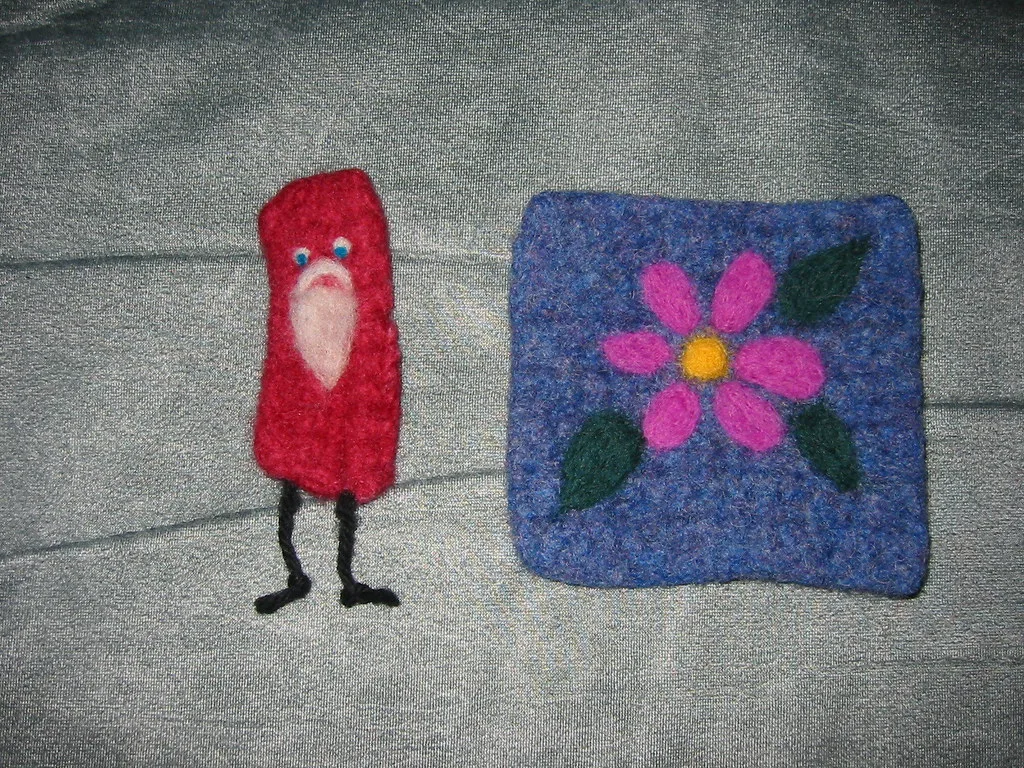
Needle felting onto fabric is the fastest route to decorated clothes, patched jeans, appliqué pictures and covering a hole in a jumper. Whether it works depends almost entirely on what is underneath.
How it holds
Two mechanisms. On a wool base, the needled fibres tangle with the base's own fibres and the scales lock — a genuine bond, effectively permanent. On a non-wool base, the fibres are pushed through the weave and hook around the threads, held mechanically only.
That difference explains everything else on this page.
Base fabrics, best to worst
Excellent
- Wool felt. The ideal background — dense, no grain, no fraying, holds fibre completely. See wool felt fabric.
- Prefelt. Same, thinner and softer. Good for pieces that need to drape.
- Boiled wool and felted knitwear. Takes needled wool as if it were designed for it.
- Loosely knitted wool. Jumpers, blankets, scarves. The open structure lets fibre through easily.
Workable
- Wool suiting and tweed. Woven and dense, so use a fine needle and be patient.
- Denim. Surprisingly good — thick, loose enough to take fibre, and forgiving. The standard choice for visible mending.
- Calico, linen, canvas. Open weaves that hold fibre mechanically. Work from both sides.
- Silk and chiffon. Only in nuno felting, where wet felting does the actual work. Needling alone will shred them.
Poor or hopeless
- Tightly woven synthetics — the needle cannot get fibre through.
- Polar fleece — the pile hides the wool and nothing anchors.
- Jersey and stretch knits — they distort as you work and the design puckers permanently.
- Leather, oilcloth, coated fabric — the needle either will not pass or leaves permanent holes.
- Acrylic craft felt — the most common disappointment. It looks right and holds nothing.
Method
- Support the fabric on a brush mat or dense foam. A brush mat is better here — it holds the cloth flat without compressing it. Other options in felting mat alternatives.
- Pin the fabric taut but not stretched. Fabric felted while stretched puckers when released.
- Lay the design. Loose wisps for soft shapes, cut prefelt for crisp edges.
- Tack first. A few stabs at the centre of each element to stop it moving.
- Work with a 40 gauge needle, shallow and frequent rather than deep. You are hooking fibre through the weave, not compacting a mass.
- Turn it over. A few passes from the back pull fibre through and roughly double how well it holds.
- Check the front for holes. On woven fabric, coarse needles leave a line of dots that will not close.
Making it survive washing
On wool, needled designs are durable enough for normal careful wear. On cotton and denim they need help:
- A short wet felting stage. Warm soapy water and gentle rubbing over the design tightens the wool into itself and grips the base far more firmly.
- Stitching. A running stitch or a few tacking stitches around each shape. Visible mending traditions do this openly and it looks right.
- Fusible interfacing on the back for anything that will not be washed much.
Hand wash cool, and never tumble dry. Agitation is exactly what pulls needled fibre back out.
Mending with it
A hole in a wool jumper is the ideal case. Put a scrap of wool felt behind the hole, lay wool over the front, needle through both from each side, and it becomes a patch that is part of the garment. Contrasting colour reads as deliberate; matching colour rarely quite matches and reads as a repair.
On finished garments
Work with something between the layers — a piece of foam or a rolled towel inside a sleeve — or you will felt the front of a jumper to its back. It happens to everybody once.
Frequently asked questions
Can you needle felt onto any fabric?
No. The needle has to be able to pass through and leave wool fibres tangled in the structure. Wool felt, wool cloth and loose knits work best; tightly woven synthetics, leather and coated fabrics do not work at all.
Can you needle felt on cotton fabric?
Yes, but cotton has no scales so nothing bonds chemically — the wool is held only by mechanical tangling in the weave. Use a loose weave such as calico or denim, work from both sides, and expect it to be less durable than wool on wool.
Will needle felted designs come off in the wash?
On wool bases, rarely. On cotton and synthetics, often. Secure the design with a short wet felting stage or a few stitches around the edge, and hand wash anything embellished this way.
What needle should I use for felting on fabric?
A fine needle — 40 gauge, or a 42 for delicate fabric. Coarse needles leave visible holes in woven cloth that never close, and on fine fabric they can cut threads.