Why Won't My Wool Felt? The Seven Real Causes
4 min read
We may earn a commission from links on this page, at no extra cost to you. As an Amazon Associate I earn from qualifying purchases. Learn more.
Wool that stays fluffy after an hour of work is almost never a technique problem. Work through these seven causes in order and you will find it.
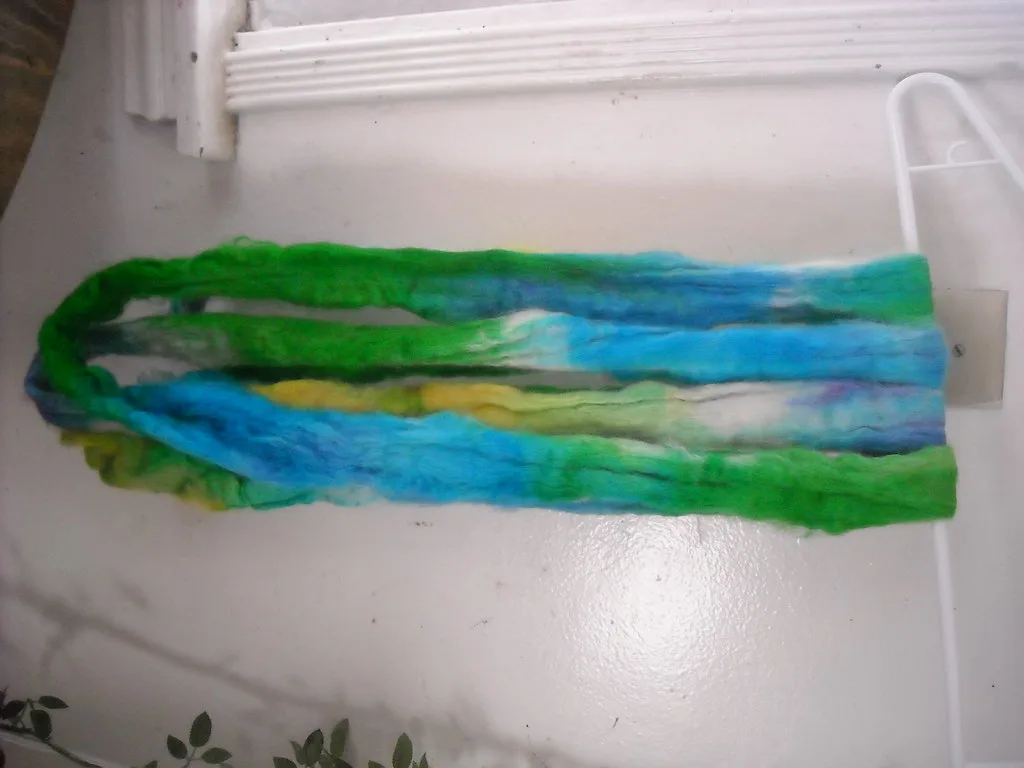
You have been rubbing for forty minutes and the wool is exactly as loose as when you started. This is a specific, diagnosable failure, and in most cases it is the fibre rather than anything you are doing.
Work through these in order.
1. The wool is superwash
The most common cause by a distance. Superwash wool has been treated — either with a chlorine process that strips the surface scales, or with a polymer coating that covers them — so it will not shrink in a washing machine.
Felting works because wool shrinks and tangles. Superwash wool has had that ability deliberately removed. No amount of heat, soap or effort will bring it back.
How to tell: the label says superwash, machine washable, or is sold for sock knitting. If there is no label, test a pinch — two minutes of stabbing or rubbing will tell you.
2. It is not wool at all
Acrylic, nylon, polyester and blends do not felt. Nor do cotton, bamboo, linen or viscose. Silk does not felt on its own either, though it bonds beautifully when trapped in wool.
Craft-shop "felting wool" is occasionally a blend with a high synthetic content. If a fibre is unusually shiny, unusually cheap or squeaks between your fingers, be suspicious.
The burn test, done carefully with a single strand: real wool self-extinguishes, smells of burnt hair and leaves a crushable ash. Synthetics melt into a hard bead and smell of plastic.
3. The water is not hot enough (wet felting)
Heat is what makes the fibre scales lift and open. Lukewarm water will eventually produce felt, but slowly enough that most people give up first.
The fix: use water as hot as your hands can comfortably tolerate. Alternating hot and cold accelerates matters further — the temperature shock makes the fibres contract sharply.
4. The wrong soap, or not enough of it
Felting needs an alkaline soap to make the fibres swell and slide. Olive oil soap is the traditional choice. Modern detergents, moisturising body washes and pH-neutral cleansers are formulated to be gentle on wool, which is precisely the opposite of what you want.
The fix: plain olive oil soap or a basic bar soap. The water should feel slippery, not merely soapy.
5. Too much water
Counter-intuitive but common. If the fibres are floating in water they slide past each other instead of gripping. Wet felting needs the wool thoroughly wetted but not swimming.
The fix: blot the excess with a towel until the surface is damp rather than pooling.
6. Not enough friction, or too much too soon
Both fail, in opposite ways. Too little friction never tangles the fibres. Too much at the very start pushes the layout apart before anything holds together.
The fix: very gentle circular rubbing through net for the first five to ten minutes, then progressively firmer once the surface holds together as a sheet. Full detail in the wet felting guide.
7. Your needles are blunt (needle felting)
Felting needles lose their barbs long before they break. A blunt needle passes through wool without moving much fibre, so the work feels slow and stays fuzzy.
How to tell: a sharp needle grips slightly as it withdraws. A blunt one slides freely. Compare a suspect needle with a new one and the difference is obvious.
The fix: replace them, and keep retired needles in a separate pot — you cannot tell a worn 38 from a fresh one by looking. See the needle guide.
Fibres that felt badly rather than not at all
Some wools do felt, just reluctantly:
- Very fine merino (under 17 micron) can be slow under a needle because the fibres are so soft.
- Combed tops felt slower than carded batts, because parallel fibres have less to catch on.
- Alpaca, mohair and angora have fewer or smaller scales. They will felt when blended with wool but are frustrating alone.
- Heavily processed commercial roving occasionally carries residual spinning oils. Washing it first can help.
The two-minute test that saves an afternoon
Before starting any real project with unfamiliar fibre, take a pinch, wet it with hot soapy water and rub it between your palms for two minutes. Feltable wool will form a recognisable little lump. Anything that stays loose will stay loose for the next three hours as well.
Do this every time you buy from a new supplier. It costs a gram of wool.
For choosing fibre that behaves in the first place, see the best wool for felting.
Frequently asked questions
Why will my wool not felt?
The usual answer is superwash wool, which has had its scales treated away and cannot felt at all. After that: water that is not hot enough, too little soap, too much water, or a fibre that was never wool in the first place.
Can superwash wool be felted?
No. The treatment that makes it machine washable removes or coats the scales that the entire process depends on. Nothing you do afterwards will make it felt.
How can I test whether a fibre will felt?
Take a small pinch, wet it with hot soapy water and rub it between your palms for two minutes. If it starts to hold together, it will felt; if it stays loose, it never will. Two minutes here saves an afternoon.
Does the water really have to be hot?
Yes. Lukewarm water is one of the most common reasons a piece refuses to felt. Use water as hot as your hands can stand, and alternate it with cold to speed things along.