What Is Felting? The Craft, the Chemistry and the Four Methods
6 min read Beginner
We may earn a commission from links on this page, at no extra cost to you. As an Amazon Associate I earn from qualifying purchases. Learn more.
Wool is the only common fibre that permanently tangles itself into cloth. What actually happens to the fibre, and the four different crafts that all get called felting.
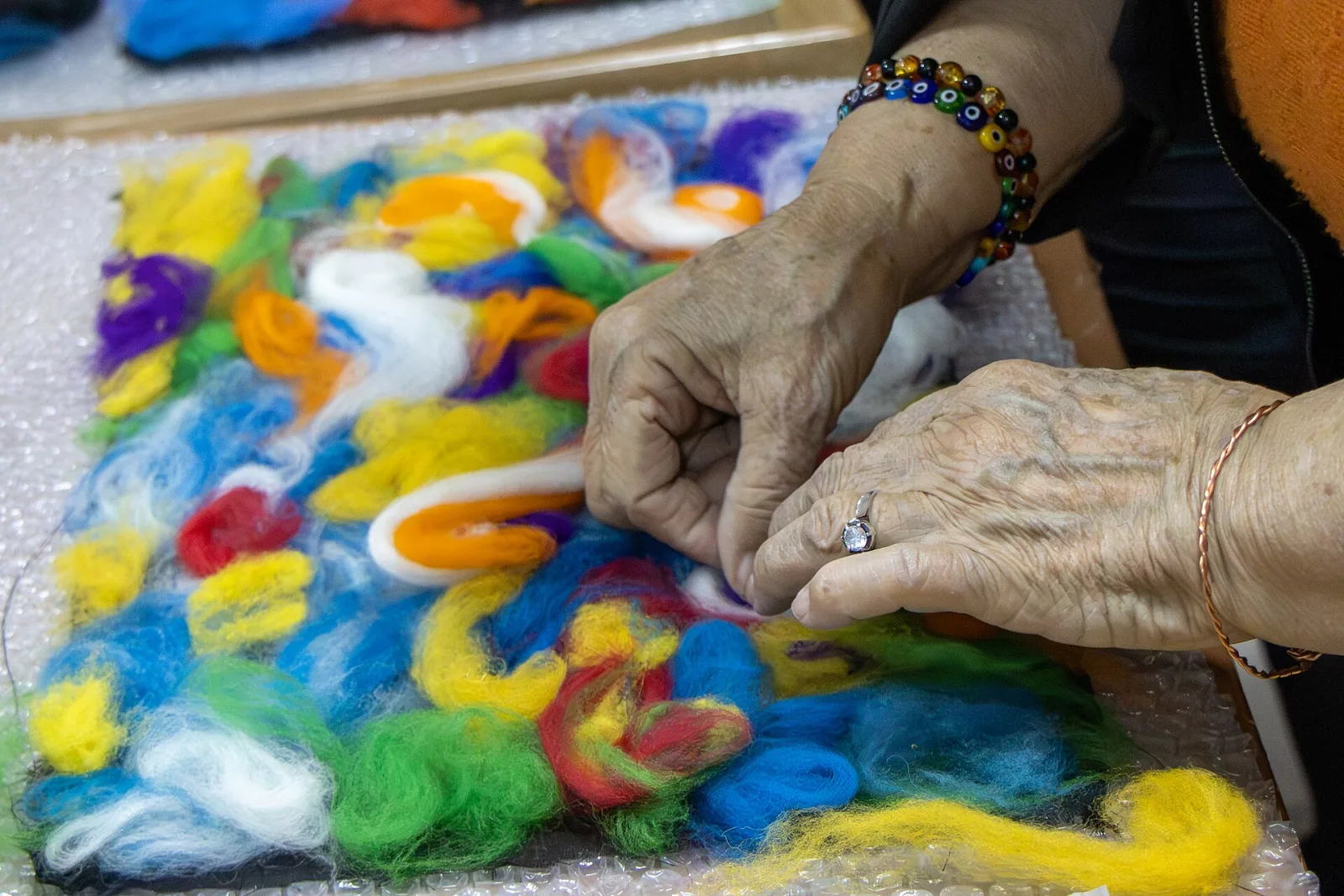
Felting is the process of turning loose wool fibre into a solid piece of fabric by tangling the fibres together permanently. No spinning, no weaving, no stitches. It is almost certainly the oldest textile process humans have — felt predates woven cloth in the archaeological record, because it requires no equipment at all.
Everything else in the craft follows from one fact about wool.
What is actually happening to the fibre
Look at a wool fibre under enough magnification and the surface is not smooth. It is covered in overlapping scales, called the cuticle, all pointing towards the tip of the fibre like tiles on a roof.
Those scales have two consequences:
- Movement is one-way. A fibre can slide forward in the direction its scales point, but the scales catch when it tries to go back. This is called the directional friction effect, and it is the whole mechanism.
- Moisture opens them. Warm water and an alkaline soap make the scales lift away from the shaft, so they catch more aggressively.
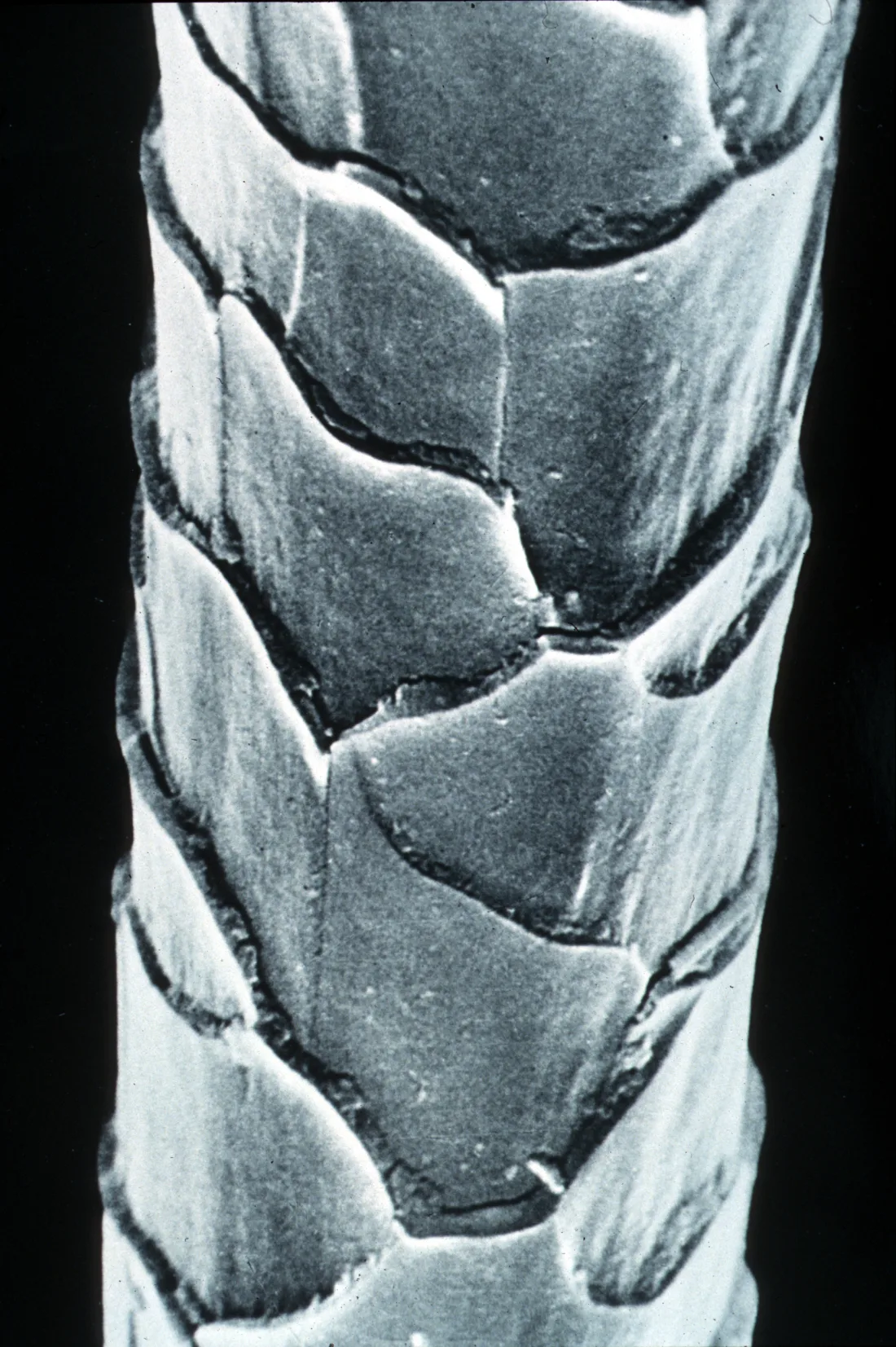
Agitate a mass of wet, soapy wool and every fibre in it starts ratcheting one way through its neighbours. Within a few minutes they are knotted into each other at thousands of points, and no amount of pulling will separate them. The wool has shrunk, thickened and become a single object. That is felt.
It is irreversible, which is why felting is unforgiving and also why a felted item lasts decades.
The four things people call felting
Wet felting
Loose wool is laid out in thin crossing layers, wetted with hot soapy water and rubbed until the layers bind. Then it is rolled and thrown — the fulling stage — until it shrinks by a third and becomes dense. This is how flat fabric, scarves, bags, hats and slippers are made. Start with wet felting for beginners.
Needle felting
A steel needle with backwards-facing barbs is stabbed repeatedly into dry wool. Each stroke drags surface fibres down into the mass, tangling them mechanically. No water, no soap, and complete control over shape — which is why sculpture, animals and detail work are all done this way. Start with needle felting for beginners.
Nuno felting
Wool is felted through an open-weave fabric such as silk gauze. The fibres migrate through the gaps in the weave and lock on the far side, so the two materials become one cloth — far lighter and more drapey than felt alone. See nuno felting for beginners.
Fulling
Knitted or woven wool that already exists is shrunk deliberately, usually in a hot washing machine, until the stitch pattern blurs and the fabric becomes dense and windproof. This is what happens when someone ruins a jumper by accident, and it is also a technique in its own right — see how to felt a wool sweater and felting in knitting.
What will and will not felt
Only animal fibres with a scaled cuticle will felt. In practice that means:
- Felts readily: merino, corriedale, shetland, most breed wools, and the finer end of alpaca when blended.
- Felts slowly: alpaca, mohair and camel alone — the scales are shallower. Blend them with wool.
- Never felts: cotton, linen, bamboo, viscose, polyester, nylon, acrylic. All smooth-surfaced.
- Deliberately blocked: superwash wool. The scales have been stripped or coated in resin so the yarn survives a washing machine. Excellent for socks, useless for felting.
If your wool refuses to cooperate, superwash is the usual culprit — the diagnosis is in why won't my wool felt.
Why fineness matters
Fibre diameter is measured in microns. Fine wool has more scales per centimetre and less stiffness resisting the tangle, so it felts faster and finishes smoother.
- 18–22 microns (merino) — fast, soft, ideal for wearables and surfaces.
- 25–31 microns (corriedale, shetland) — slower, sturdier, holds sculptural detail better.
- 32 microns and up (romney, herdwick, most carpet wools) — coarse, hard-wearing, right for rugs and cores.
Which to buy for what is covered in best wool for felting.
A brief history, because it explains the craft
Felt turns up in Siberian burial mounds from around 700 BC, in Anatolian sites older still, and across the whole Central Asian steppe as the wall material of the yurt. Nomadic herders had wool, animals to agitate it, and no fixed looms — felt is the textile that fits that life.
Industrially it never went away: piano hammers, snooker table baize, gaskets, polishing wheels, hat bodies and roofing underlay are all felt. The craft revival of the last thirty years is a small corner of a very large material.
Felt, felted wool and boiled wool: what is the difference
Three words get used as if they meant the same thing, and they do not. The difference decides whether a piece frays, stretches, keeps its shape or survives being cut.
Felt was never cloth. Loose fibre is layered, wetted, heated and worked until it becomes one solid sheet with no yarn, no weave and no grain. Everything made by wet felting or needle felting is felt in this sense.
Felted wool starts life as a knitted or woven fabric, a jumper or a blanket, and is shrunk afterwards. Hot water and agitation make the fibres in every yarn migrate into their neighbours and lock, so the cloth thickens and stops fraying, but a faint trace of the original stitches or weave survives underneath the fuzz. Craftspeople call this fulling; felting in knitting covers how to do it on purpose.
Boiled wool is the trade name for knitted fabric fulled by machine under controlled heat. It stops short of full felting, so the knit keeps some stretch and drape, which is why boiled wool coats exist and felt ones mostly do not.
Telling them apart
Stretch it: felt does not give, felted knitwear gives a little, boiled wool springs back. Look at a cut edge under strong light: felt is uniform fibre all the way through, while felted and boiled wool show rows or a weave beneath the surface. Felt also has no wrong side, because both faces are identical.
Whichever you are after, the same rule applies: only untreated animal fibre will do any of this. Superwash wool will not felt, however hot the wash. For buying felt by the sheet or the yard rather than making it, see wool felt fabric.
Where to start
The two methods want different temperaments. Wet felting is physical, wet and quick — an hour gets you a piece of real fabric. Needle felting is slow, dry, portable and precise, and you can put it down mid-project.
Both cost very little to try. A basic felting supply list runs to wool, soap, a towel and either a piece of net curtain or a single 38 gauge needle and a foam block.
Frequently asked questions
What is the difference between felt and felted wool?
Felt is made directly from loose fibre. Felted wool starts life as a knitted or woven fabric and is shrunk afterwards, so it keeps a faint trace of its original structure.
Is boiled wool the same as felt?
No. Boiled wool is a knitted fabric that has been fulled by machine. It is dense and warm like felt but drapes better and shows a knit structure under strong light.
What is felting in simple terms?
Felting is making cloth by tangling loose wool fibres together until they hold as one piece, rather than by spinning and weaving them. It is the oldest textile process there is, and it needs no loom, needles or thread.
Why does wool felt and cotton does not?
Wool fibres are covered in microscopic scales that point one way, like roof tiles. Under moisture and movement the fibres can only travel in the scale direction, so they ratchet past each other and cannot slide back. Cotton, silk and synthetics have smooth surfaces and simply slip apart again.
What is needle felting?
Felting done dry, with a barbed steel needle stabbed repeatedly into loose wool. Each stroke drags surface fibres down into the mass and tangles them mechanically. No water and no soap, which is why it gives the control that sculpture needs.
What is felting in wool, and can any other fibre do it?
Felting in wool is the fibres ratcheting past each other on their scales until they cannot separate. Other scaled animal fibres — alpaca, mohair, camel — do the same thing more slowly. Cotton, linen and every synthetic have smooth surfaces and never felt at all.
What is the difference between felting and fulling?
Felting starts with loose fibre and makes fabric from nothing. Fulling starts with fabric that already exists — knitted or woven wool — and shrinks it until the stitches disappear. In everyday use people call both felting.
Do you need special equipment to start felting?
No. Wet felting needs wool, warm water, soap and your hands. Needle felting needs wool, one barbed needle and something to stab into. Both starter kits cost less than a skein of good yarn.