Wool Beret: Felt or Knit, How It Should Fit, and How to Felt Your Own
8 min read Intermediate
A felt beret and a knitted one behave nothing alike. What blocked wool felt does that knitting cannot, how to judge a good one, and how to get the shape back when it goes soft.
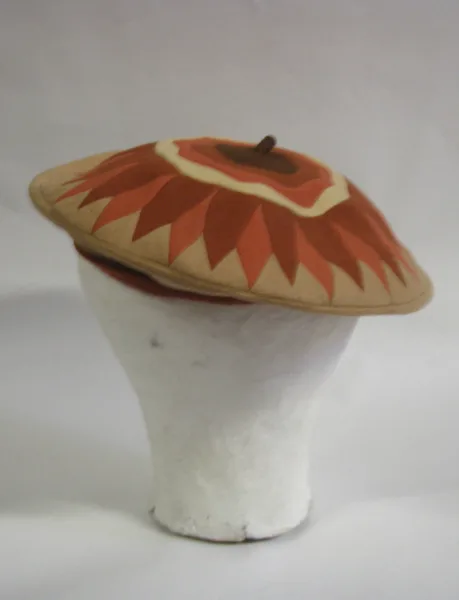
A felt beret hat is not a knitted beret in a different fabric. Most people meet the beret as a knitted object — a circle of ribbing and stocking stitch that flops pleasantly and stretches over anything. The wool felt version is a different garment that happens to share a silhouette. It is one continuous matted sheet with no stitches in it anywhere, and almost everything odd about how it wears follows from that.
What makes felt hold a shape
Wool fibres are covered in microscopic scales. Agitate them wet, warm and slippery with soap, and the scales ratchet past each other and lock. Nothing unlocks them. The result is a fabric with no loops, no grain and no ability to stretch back — which sounds like a disadvantage until you want something to stay domed on top of a head all day.
That is why a felt beret holds its crown flat and its band circular while a knitted one sags by the afternoon. It is also why a felt beret that has been stretched stays stretched. The same mechanism is what you are exploiting when you shrink a jumper on purpose in how to felt a wool sweater, and the numbers behind it are in wool shrinkage when felting.
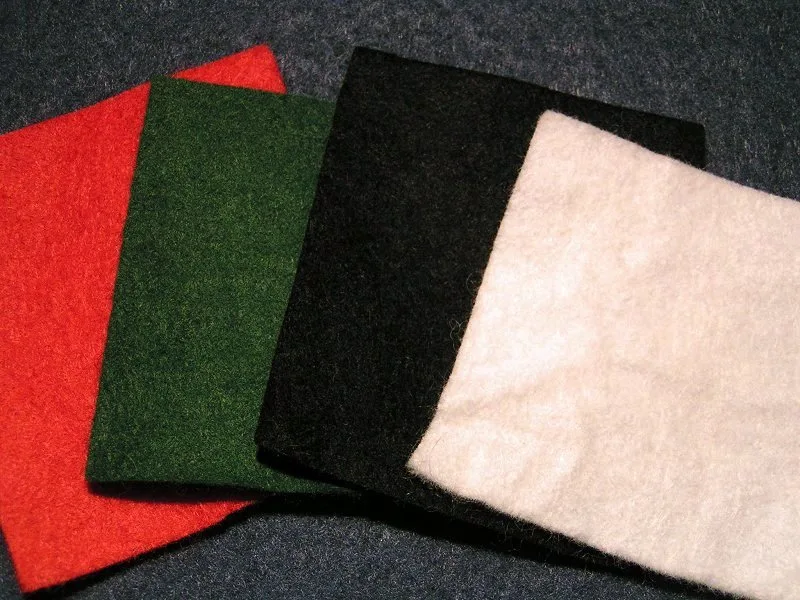
How one is actually made
There are two routes, and they produce noticeably different hats.
Blocked from a hood
Industrially, wool is felted into a cone — a hood, or capeline if it is brim-sized — which is then steamed and pulled down over a wooden block until it takes the shape. The crown is stretched over a disc, the band is drawn in, and the whole thing is stiffened and dried hard.
This is how most berets you can buy are made, and it is why they are so uniform. The blanks themselves are a purchasable thing if you want to shape your own — see felt hat blanks.
Wet felted seamlessly over a resist
By hand, you lay wool tops in crossed layers around a flat circular resist, felt through the wool by hand, cut an opening for the head and full the piece until it is dense, shaping as it shrinks. There are no seams because there was never more than one piece. The method is the same one used for bowls and hats generally — wet felting a hat walks through it, and resist felting explains the resist itself.
Hand-felted berets are usually softer and slightly irregular, and they drape rather than sit. Which of the two you prefer is genuinely a matter of taste.
Judging a good one
- Density, not thickness. Pinch the crown. Good felt is firm and springs back; poor felt compresses like a sponge and stays compressed. A thick, soft beret will pill and go shapeless within a season.
- An even edge at the band. The headband is where blocking strain concentrates. Waves or thin patches there mean it was pulled onto the block hard to hide an undersized hood.
- Surface with no visible fibre ends. Loose fibre standing proud means the felt was never fully fulled, and it will fuzz.
- Actual wool. Much "felt" sold cheaply is acrylic or a blend, which cannot be reblocked because it never felted in the first place — it was needle-punched. A snipped fibre from a seam allowance settles it; the felt hat burn test describes how.
The styles
- Classic French or Basque. Fine, thin felt, a flat crown and no brim, usually with a sweatband and often a little stalk (the cabarrou) at the centre of the crown. The original, and the one worth buying in pure wool.
- Slouch or fashion beret. A larger crown that drapes to one side or the back. Often knitted or a soft wool blend; in felt it needs a light, fine fabric or it just looks heavy.
- Military beret. Stiffer felt blocked with a shaped side, the fullness pulled over one ear, and a ribbon at the back to tighten the band. A different cut, not just a different way of wearing the same hat.
- Knitted and boiled wool berets. A knitted beret stretches and softens; a boiled wool one is knitted and then fulled, which lands between knitting and true felt.
Men's and women's berets are usually the same hat in different sizes and colours. What changes is how it is worn: pulled level and slightly to the side is the classic men's look, tilted further back or to one side is the usual women's styling.
Fibre, and whether it will itch
Beret felt runs from coarse to very fine. Coarse wool gives a hard, weatherproof, slightly scratchy hat that lasts decades. Merino gives something soft enough to wear against the forehead that is correspondingly less hard-wearing. Most good berets sit between the two, and the crown is often finer than the band.
If you have reacted to wool hats before, the culprit is usually fibre diameter rather than wool as such — is merino wool itchy covers why, and merino wool for felting covers how it behaves when you felt it yourself.
Sizing, which is less forgiving than knitting
Measure around your head just above the ears and buy to that number. Felt will give perhaps a centimetre over a season and no more, so the usual instinct — size down and let it stretch — produces a hat that grips.
| Head circumference | Usual size |
|---|---|
| 21¼–21⅝ in (54–55 cm) | Small |
| 22–22⅜ in (56–57 cm) | Medium |
| 22¾–23⅛ in (58–59 cm) | Large |
| 23½–23⅞ in (60–61 cm) | X-Large |
Traditional makers also quote the crown diameter, usually 10½ to 12 in (27 to 30 cm). That number decides the look, not the fit: a smaller crown sits neat and flat, a larger one slouches.
Where felt is unusually good is that a slightly large one can be shrunk deliberately: damp the band, work it between your hands in warm soapy water, and it will tighten a size. You cannot go the other way, so err large.
Wearing it so the crown behaves
The band should sit level, low on the forehead, with the fullness pushed to one side rather than allowed to sit centred and puffy. A felt beret is heavier than a knitted one, so if the band is loose, the crown's own weight drags it backwards over the course of an hour. That single fact accounts for most berets that "will not stay on".
Colour is worth a thought too, because dense felt reads darker than the same dye on a knitted fabric — felt hat colours goes into it, and the styles it sits alongside are in types of felt hats and felt hats for men.
Reblocking a beret that has gone soft
This is the one real advantage felt has over knitting: the shape is recoverable, because you can re-wet the fibres and dry them into a new position.
- Damp the hat evenly with cool water — a spray bottle, not a soak.
- Find something the size of the finished crown. A dinner plate or a round cake tin is the traditional improvisation.
- Stretch the crown flat over it, easing the band into a circle by hand.
- Let it dry completely before you move it. Hours, not minutes, and away from direct heat, which makes felt brittle.
Work the band in warm water first if it has stretched, and only then block the crown. For marks and general upkeep between blockings, how to clean a felt hat covers the brushing and spot cleaning, and protecting wool from moths covers the risk that does the real damage in summer storage.
Storing one so it survives the summer
Felt has two enemies in a cupboard, and neither is dust. The first is compression: left under anything, felt takes a crease and the crease stays, because there is no elastic structure to pull it back. Store a beret crown-up on a shelf, or loosely stuffed with acid-free tissue, never folded into a drawer.
The second is moths, which are far more interested in a clean wool hat than most people expect and will take the crown from underneath where nothing shows until autumn. A sealed box or bag is the whole answer — see protecting wool from moths.
Making your own
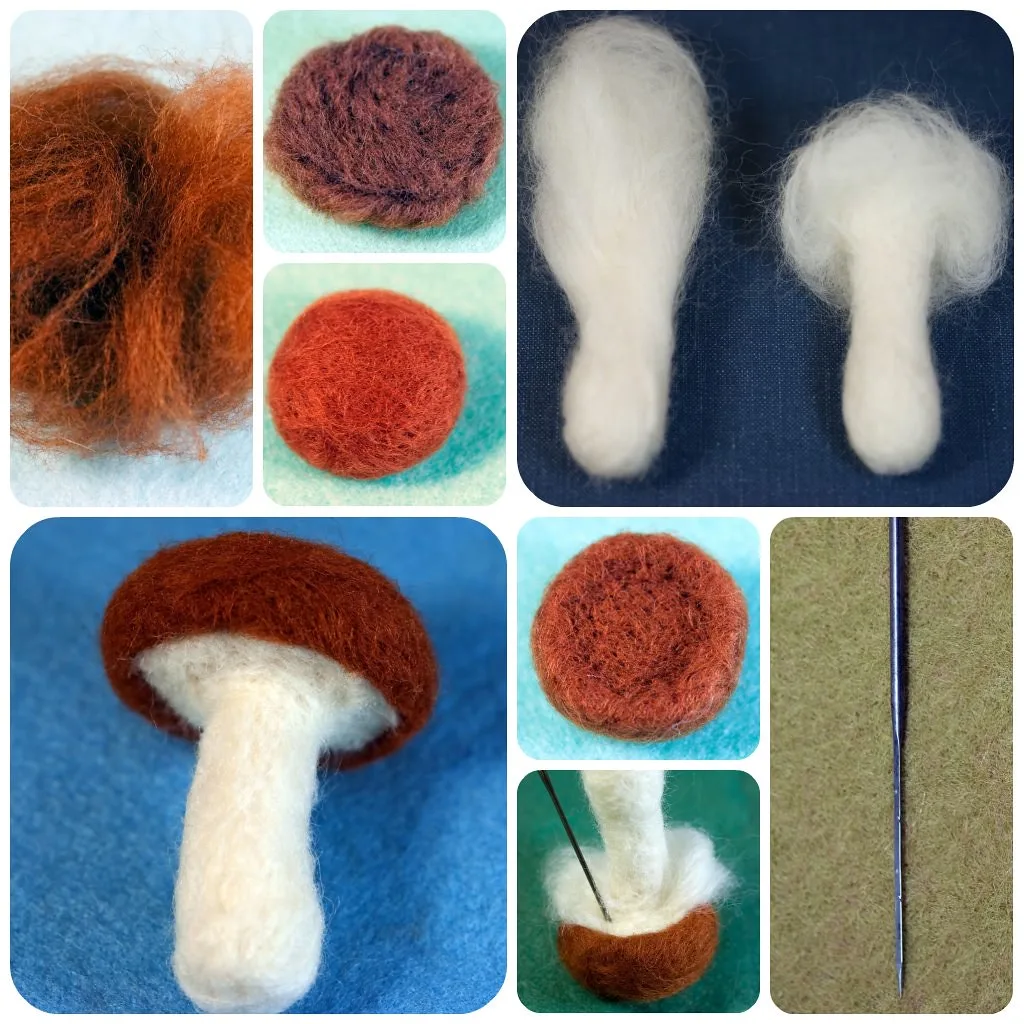
A beret is genuinely one of the better first wet felted garments: it is small, it is round, there is no fitting to speak of, and if it comes out tight it fits someone else. Start from wet felting for beginners for the fibre handling, then follow the resist method.
The template
A beret is a flat disc with a hole in one face. For an 11 in (28 cm) crown and a 22 in (56 cm) head, and allowing for fine merino shrinking by about a third:
- Resist: a circle 17 in (43 cm) across, cut from floor underlay foam or thick bubble wrap.
- Wool: 2 to 2½ oz (55 to 70 g) of fine merino tops, for a light felt around 2 mm thick. Heavier than that and it stops draping.
- Head opening: cut a circle about 9 in (23 cm) across in one face once the fibre holds together. A 22 in band is 7 in across when finished; the opening is cut a little smaller than the full shrinkage allowance because a cut edge stretches, and you pull it to size over your head while fulling.
Your wool may shrink differently, so felt a 4 in sample first; the method is in how much wool shrinks when felted.
Steps
- Lay three or four thin layers on each face of the resist, alternating direction, folding the edges round so the two faces join with no seam.
- Wet with warm soapy water and rub gently through netting until the surface holds.
- Cut the head opening, take out the resist, and rub the cut edge smooth so it does not ridge.
- Full: roll, throw and rub until it has shrunk to size and the felt no longer lifts when pinched. Keep checking the band against your head; stop fulling the band when it fits and keep working the crown.
- Rinse, then block it wet over a dinner plate for a flat crown, stretching the band round by hand. Dry fully in place.
A little stalk at the centre is a pinch of wool rolled into a tight cord on the mat and felted into the crown at the laying-out stage. A grosgrain ribbon stitched inside the band makes it sit and keeps it from stretching.
The fabric you are making is the same material described in wool felt fabric — the only difference is that you are making it in the shape of the finished object rather than cutting it from a sheet.
Frequently asked questions
What is the difference between a wool felt beret and a knitted one?
A knitted beret is loops of yarn and keeps its shape only while the yarn holds tension. A felt beret is a single matted sheet with no loops at all, so it holds whatever shape it was blocked into and has no grain to stretch along.
How should a wool felt beret fit?
Snug on the head band with the crown sitting flat, not domed. If it grips your forehead it is too small — felt gives very little, unlike knitting — and if the band slips down over your ears it will never sit right, because the weight of the crown pulls it further.
What is the difference between a French beret and a Basque beret?
In practice very little: the classic French beret descends from the Basque one, and both are a single piece of fine felted wool with a flat crown and no brim. Traditional Basque berets are often slightly larger and fuller, with a leather sweatband and a small stalk at the crown. Military berets are cut differently, with a stiffened side and a shaped crown pulled to one side.
Can you wash a wool felt beret?
Not in a machine, and not in hot water — both will shrink it further and thicken the felt. Spot clean with cold water, brush the surface when dry, and if it has lost its shape, damp it and reblock it over a bowl.
Are wool felt berets warm?
Warmer than a knitted beret of the same weight, because felt has no holes. That density is also why they are less breathable, which is why traditional berets are thin and why a thick one is uncomfortable indoors.
Topics
Image credits
- A wool felt beret with a flat crown and a close-fitting band — Peloponnesian Folklore Foundation (BY SA 4.0)