Needle Felted Dog: Building a Breed You Can Recognise
5 min read Intermediate
We may earn a commission from links on this page, at no extra cost to you. As an Amazon Associate I earn from qualifying purchases. Learn more.
One armature and one method covers every breed. What actually changes between a dachshund and a labrador, and the four measurements that make a dog recognisable.
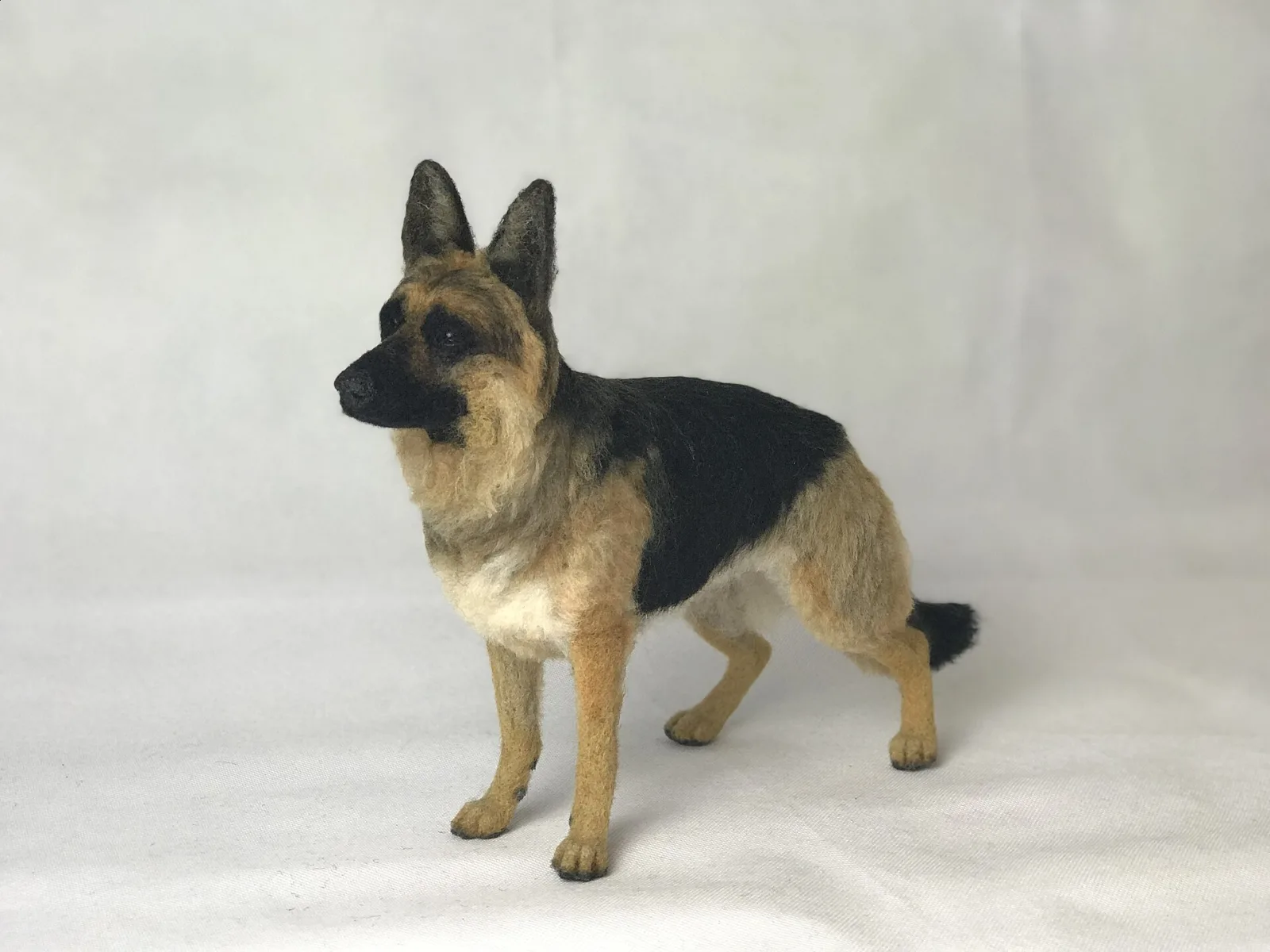
There are hundreds of dog breeds and one needle felting method. Everything that distinguishes a shih tzu from a german shepherd is a matter of four proportions and a coat, applied to the same armature, the same core and the same sequence of steps.
Learn the method once and the breed becomes a decision rather than a problem.
What you need
- Pipe cleaners or 1 mm florist's wire for the armature
- Core wool — 30–60 g for a 15 cm dog
- Coat colours in corriedale, plus merino or alpaca for the top layer
- 36, 38 and 40 gauge needles
- Glass eyes, or black wool for felted ones
- Foam pad, and a finger guard for the armature stage
The four measurements
Before you start, look at a photograph of the breed from the side and answer these.
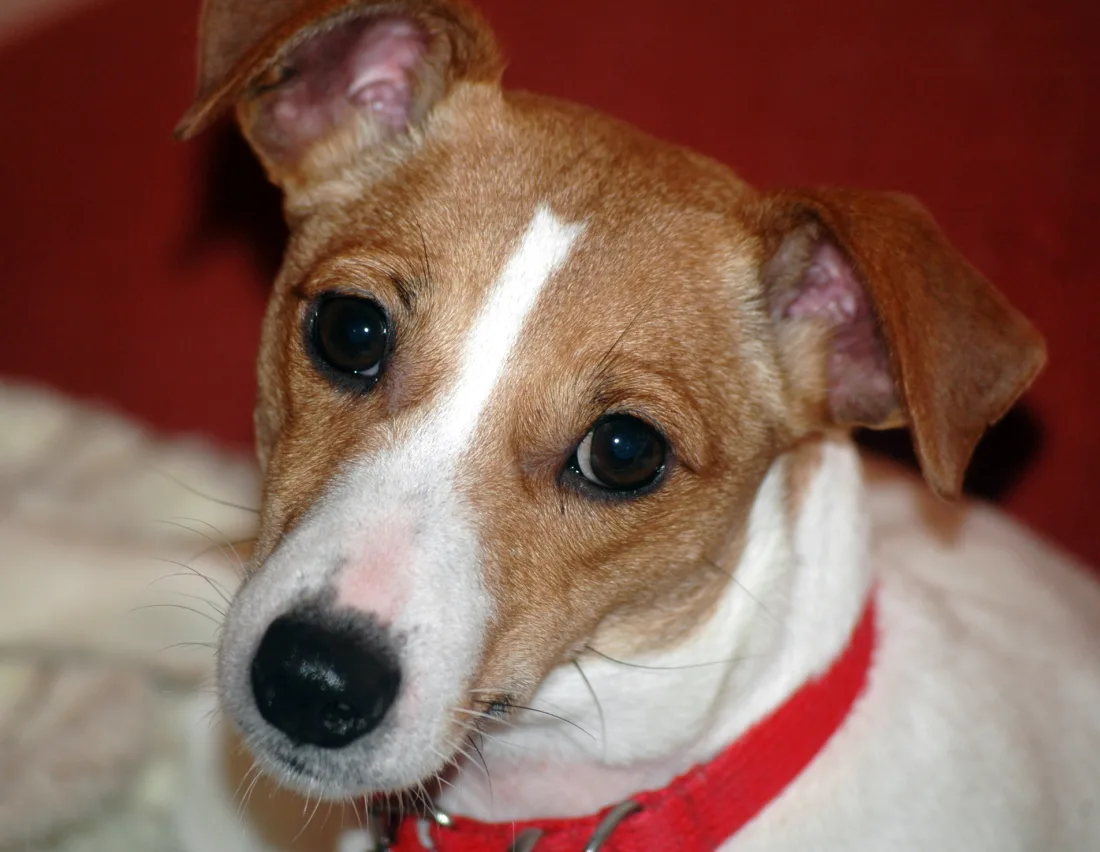
- Muzzle to skull ratio. Roughly equal in a labrador. Muzzle much longer in a collie or greyhound. Almost absent in a pug, bulldog or shih tzu.
- Ear shape and set. Erect and high (german shepherd, corgi), folded forward (labrador, beagle), long and hanging (spaniel, dachshund), small and rose-shaped (whippet).
- Leg length against body depth. Legs longer than the body is deep (greyhound, poodle). Legs much shorter (dachshund, corgi, basset).
- Tail carriage. Curled over the back (pug, husky), straight out (pointer), tucked low (whippet), plumed (golden retriever).
Get those four right and the breed is legible even before the colour goes on.
Building it
1. The armature
Twist a wire spine and bend a pair of legs at each end, leaving the feet as small loops so they cannot poke through. The spine should run to the base of the tail; add a separate short wire for the neck if the breed carries its head high.
Keep the whole armature about 2 cm smaller in every direction than the finished dog. Full details in wire armature for needle felting.
2. Wrapping the core
Wind core wool tightly around each limb like a bandage, then around the body, and needle as you go. Build the chest deeper than the hindquarters — dogs are front-heavy. Firm everything hard before moving on; soft cores make legs that sag under the weight of the coat.
3. The head
Made separately, in the hand, then attached. Start from a firm ball, flatten the face plane, sink two eye sockets, then build the muzzle out from the front as a separate piece of wool needled on. The stop — the step between muzzle and forehead — is what most breed recognition hangs on: deep in a boxer, almost flat in a collie.
Attach with loose fibres from the neck pushed up into the head, then cover the join. Detailed feature work is in needle felting a face.
4. Ears
Flat ears — spaniels, labradors, beagles — are made as flat pieces on the mat and attached by one edge only, so they hang. Erect ears need to be firmer: needle the flat piece harder, fold the base slightly to cup it, and attach with the fold inwards.
5. Eyes and nose
Dogs' eyes are set at the front, closer together than a cat's, and are usually dark. A tiny white highlight, either a speck of white wool or a glass eye with a gloss, is the difference between alive and taxidermy. The nose is a rounded black shape with two nostril dents needled in — larger than feels right, in every breed.
6. The coat
Thin veils, applied in the direction of hair growth, needled at a shallow angle. Build up in layers so the colour has depth. For long or shaggy coats use reverse-barb needles to pull fibre back out of the surface, or attach wool locks in rows. Both are covered in needle felting fur.
What changes by breed
- Dachshund, corgi, basset. Short legs, long body. Make the armature legs stubby and lengthen the spine; the body should nearly touch the ground.
- Greyhound, whippet, lurcher. Deep narrow chest, extreme waist, long thin legs, arched back. Needle the waist in hard — the tuck-up is the signature.
- Pug, french bulldog, shih tzu. No muzzle to speak of; the face is a flat plane with a nose on it and large round eyes set wide. Wrinkles are needled channels, not added wool.
- Poodle, bichon, cockapoo. The shape is entirely coat. Build a plain body and add the volume in tightly curled wool or short locks.
- German shepherd, collie, husky. Long muzzle, erect or semi-erect ears, sloping back, heavy ruff around the neck.
- Terriers — jack russell, westie, schnauzer. Square, compact bodies and coarse coats. The beard and eyebrows are what make a schnauzer.
- Labrador, golden retriever. Broad skull, thick otter tail, heavy body. Easy proportions and a good first breed.
Common problems in dog felting
- It will not stand. The core is too soft, or the feet are too small. Widen the feet and firm the legs.
- The head looks too small. It usually is. Dogs' heads are large relative to the body, and the coat shrinks them further.
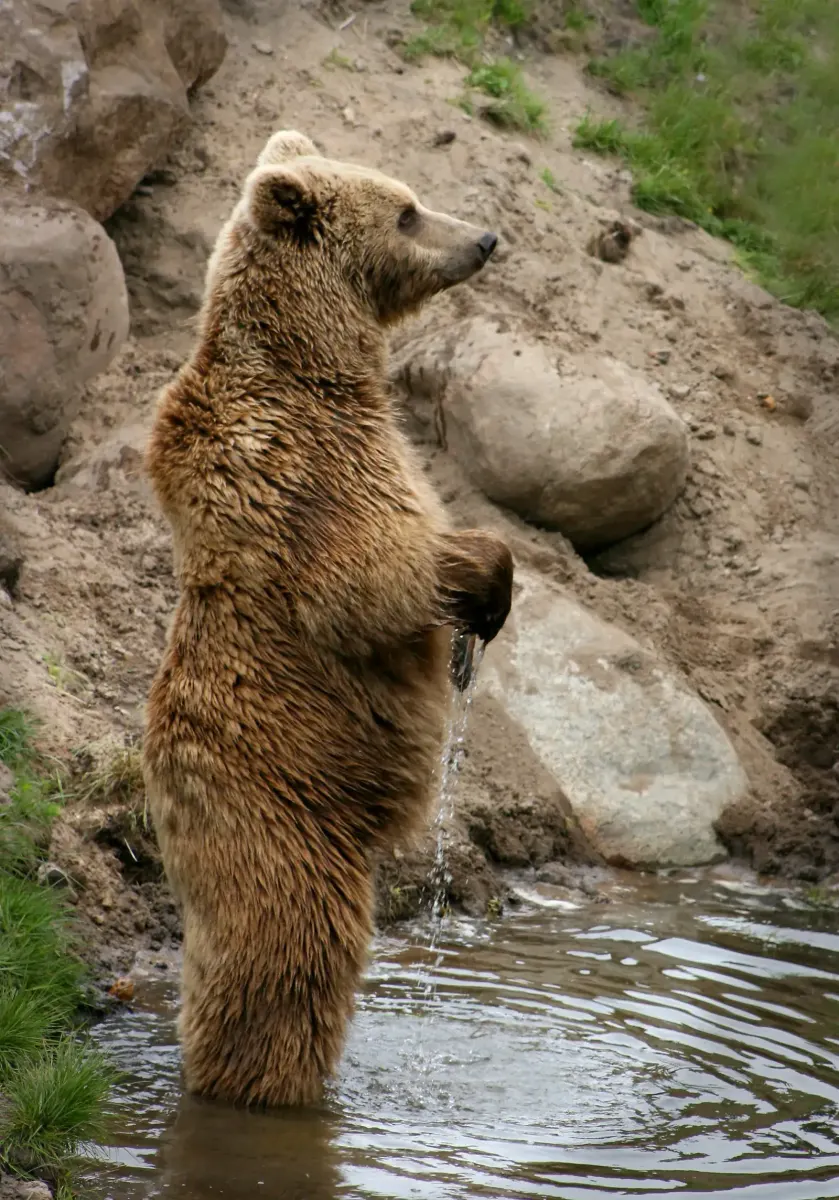
- It looks like a bear. The muzzle is too short and the ears too round.
- The coat is patchy. Too few, too thick veils. Use more layers of less wool.
Working from a photograph
Making a specific dog rather than a breed is a different discipline — it hangs on the head alone, and on getting the exact set of the eyes and the shape of the markings. That method is in needle felted pet portraits, and using the dog's own coat in felting with dog hair.
If this is your first sculpture, do a simpler animal first — a sitting dog with no armature teaches the same head technique in half the time.
Two larger animals build straight on the dog. A needle felted bear uses the same muzzle and coat work but moves the highest point of the body to the shoulder and stands flat on the whole foot; a needle felted horse keeps the four-legged armature and replaces the head with a long straight wedge.
Frequently asked questions
How do you needle felt a dog?
Build a wire armature for the spine and legs, wrap it in core wool and needle it firm, shape the head separately and attach it, then cover everything in thin veils of coat colour. The armature is what lets a four-legged animal stand.
How do you make a needle felted dog look like a specific breed?
Four measurements do most of the work: muzzle length relative to skull, ear shape and set, leg length relative to body depth, and tail carriage. Coat colour matters far less than people assume — a correctly proportioned grey dog still reads as a whippet.
How long does a needle felted dog take?
Four to eight hours for a 15 cm dog, most of it in the coat. A simple sitting dog without an armature can be done in two or three.
Can you needle felt a dog using its own fur?
Yes, though brushed undercoat rarely felts well on its own — it is short and slippery. Blend it roughly half and half with wool for the surface layer and use ordinary core wool inside.
Topics
Image credits
- A needle felted german shepherd dog — Smonks (BY SA 4.0)
- A jack russell terrier, showing muzzle length and ear set — Radosław Drożdżewski (Zwiadowca21) (BY SA 3.0)