Needle Felted Squirrel: A Wired Tail, a Sitting Pose and an Acorn
9 min read Intermediate
We may earn a commission from links on this page, at no extra cost to you. As an Amazon Associate I earn from qualifying purchases. Learn more.
Sitting up on its big hind feet, a squirrel is mostly tail: nearly as long as the rest of it, curving up the back. How to wire and furnish that tail, shape the sitting pose, fit the paws round an acorn, and colour a grey or a red squirrel.
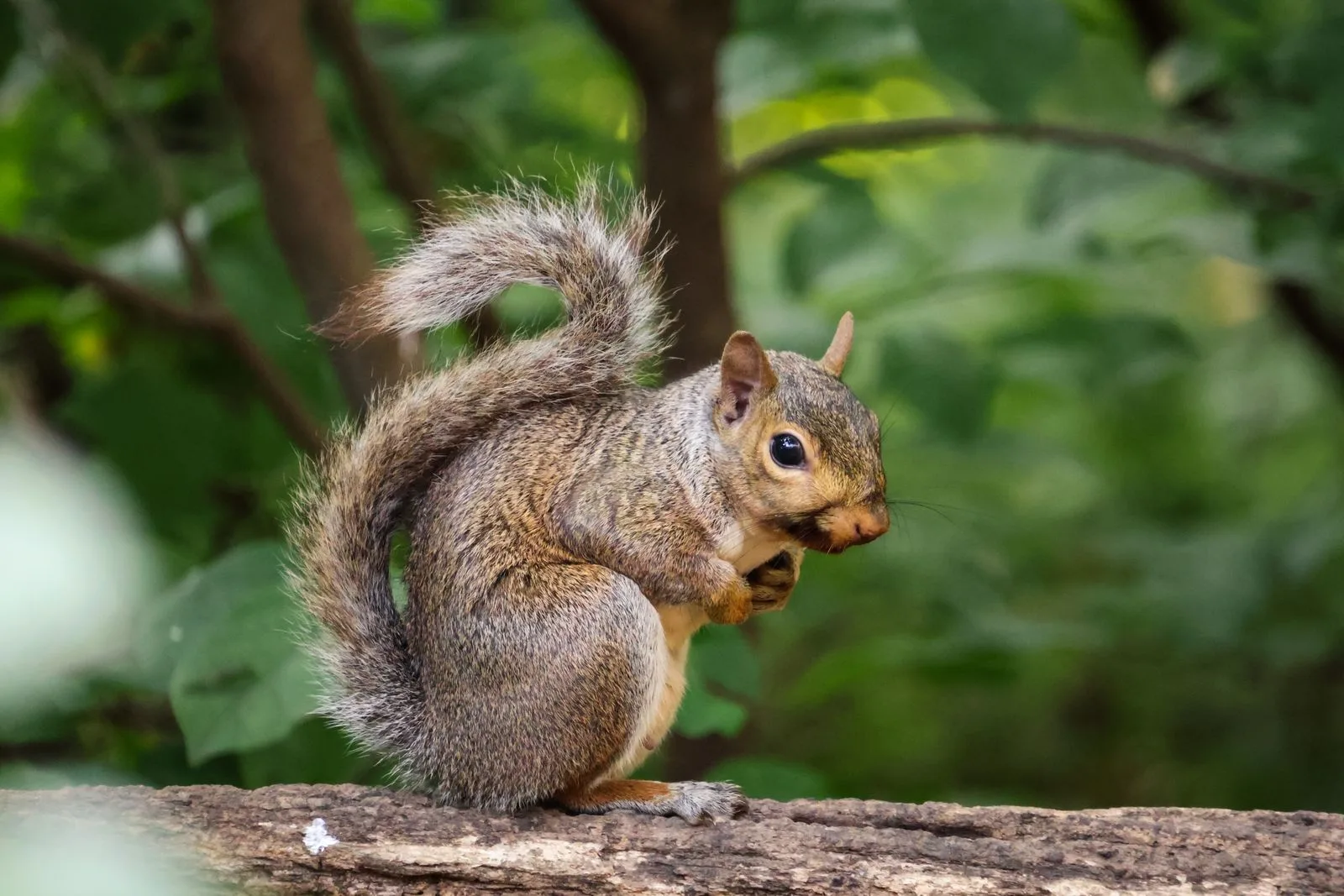
What makes a felted figure read as a squirrel is the tail: almost as long as the body, curving up the back and flicking out at the tip, and full enough to look weightless. Wool on its own will not hold that curve, so the tail gets a wire that is planned before the body and covered after it. Beneath it sits a compact, pear-shaped body upright on its haunches. The worked example here is a 4 in (10 cm) squirrel sitting up with an acorn.
How big is a real squirrel, and what size should a felted one be?
An eastern grey squirrel, the common squirrel across the eastern US, measures 9 to 12 in (23 to 30 cm) from nose to rump, with a tail of 7½ to 10 in (19 to 25 cm) on top. The Eurasian red squirrel is smaller, about 7½ to 9 in (19 to 23 cm) with a 6 to 8 in (15 to 20 cm) tail. Either way the tail is roughly four fifths of the head-and-body length, and that ratio matters more than the size. Halve it and the squirrel looks stubby.
For a felted one, measure the tail along its curve and make it about as long as the squirrel is tall sitting up. The table gives wool for three sizes, sitting height measured to the top of the head.
| Sitting height | All wool | Of which tail | Tail wire | Eyes |
|---|---|---|---|---|
| 2½ in (6 cm) | 5–6 g (about ⅕ oz) | About 2 g | 1 mm | 3–4 mm |
| 4 in (10 cm) | 20–25 g (¾–⅞ oz) | 6–8 g | 1.5 mm | 5–6 mm |
| 6 in (15 cm) | 65–85 g (2¼–3 oz) | 20–28 g | 2 mm | 8 mm |
The middle size is the one to start with. It is large enough to fit an acorn between the paws and small enough to finish in two or three evenings. Up to about two thirds of the body wool can be core wool, with the coloured coat laid over it.
Grey squirrel or red squirrel: what changes?
The build is the same; colour, ears and the tail edge change. The eastern grey is the familiar US squirrel, while the tufted red squirrel of Britain and Europe is the one in most picture books.
| Eastern grey squirrel | Eurasian red squirrel | American red squirrel | |
|---|---|---|---|
| Size | Largest of the three; 9–12 in (23–30 cm) body | 7½–9 in (19–23 cm) body | Smallest; 11–14 in (28–35 cm) including the tail |
| Back and sides | Grey, with a brown wash along the back, face and legs | Red-brown; varies from ginger to almost black | Rusty red-brown |
| Belly | White | White to cream | White |
| Ears | Small, rounded, no tufts | Long tufts in the winter coat, short or none in summer | Small tufts in winter |
| Eye | Pale ring round the eye | Dark, often with a faint pale ring | Bold white ring |
| Tail | Grey-brown with a silvery white fringe | Same red as the body, sometimes darker | Red-brown, darker towards the edge |
| Felting note | Blend grey with a little brown; never use flat grey | Tufts are a few combed fibres, needled in only at the base | Make the body slimmer and the tail shorter than a grey's |
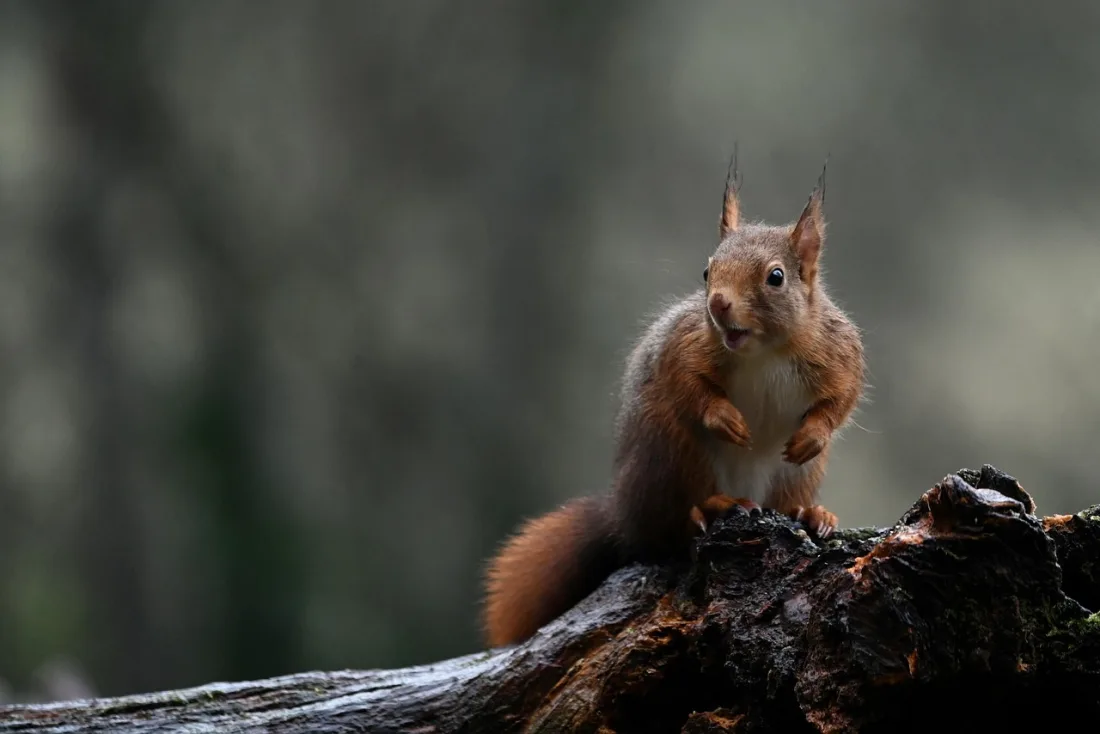
Two more options: the fox squirrel, bigger than the grey, with a brownish-orange belly, and the all-black form of the grey squirrel that dominates some populations.
Why does a squirrel's tail need wire?
Because it stands up and curves twice. A tail like the one in the photo at the top of this page rises from the base of the spine, presses up along the back to about shoulder height, then its top third bends back away from the body. Felted firm enough to hold that without wire, it turns hard and loses the fluff; felted soft enough to look right, it slumps within days.
Prepare the wire first:
- Cut and fold. For a 4 in (10 cm) squirrel, cut 11 in (28 cm) of 1.5 mm aluminium armature wire and fold it in half. Twist the halves together for 4 in (10 cm) from the fold. The fold becomes the tail tip, so no cut end can work through the wool there.
- Make the anchor. Spread the two untwisted ends, about 1½ in (4 cm) each, into a Y that goes up into the body core, one end each side of the spine, so the tail cannot spin. Turn small loops in the cut ends with round-nose pliers.
- Wrap it. Wind a pipe cleaner or a strand of core wool tightly along the twisted part so wool grips and needles are cushioned; see wire armatures for needle felting.
- Leave it straight. Bend the S-curve once the body is built round the anchor.
A squirrel curled up asleep with its tail wrapped round it needs no wire, and is the easier first squirrel if wire puts you off.
Which tail should you make: felted core, locks or fluffy wool?
All three start the same way: a slim core of wool felted firmly round the wire, about a third of the finished tail's width. They differ in what goes on top.
| Tail finish | Look | Handling | Best for |
|---|---|---|---|
| Felted surface, then fluffed | Plush and tidy, like velvet with a soft halo | Stands up to handling and dusting | Gifts, ornaments, anything picked up often |
| Wisps of carded wool, needled on the centre line only | Wide, airy and soft-edged; the closest to a real tail at a glance | Edges flatten if squeezed; brush to restore | Shelf pieces and an autumn display |
| Wool locks, combed | Long, flowing, separate hairs | Sheds and tangles if handled | Larger squirrels and realistic display work |
Felted and fluffed. Build the tail to full width in coloured wool, felt it medium firm, then raise the surface with a reverse felting needle or a small slicker brush, working the edges more than the middle.
Wisps on the centre line. A real squirrel's tail hairs fan out to both sides, so the tail looks broad from behind and narrower from the side. Lay short wisps across the core so they stick out on both sides, needle only along the middle, top and bottom, and leave the edges loose. Work from the tip towards the body, each row covering the roots of the last, then brush outwards.
Locks. Use straighter, finer locks such as mohair, combed out; tight curly locks read as a poodle, not a squirrel. Needle each lock in by its cut end only, tip first, free ends pointing out and back; the method is in needle felting fur.
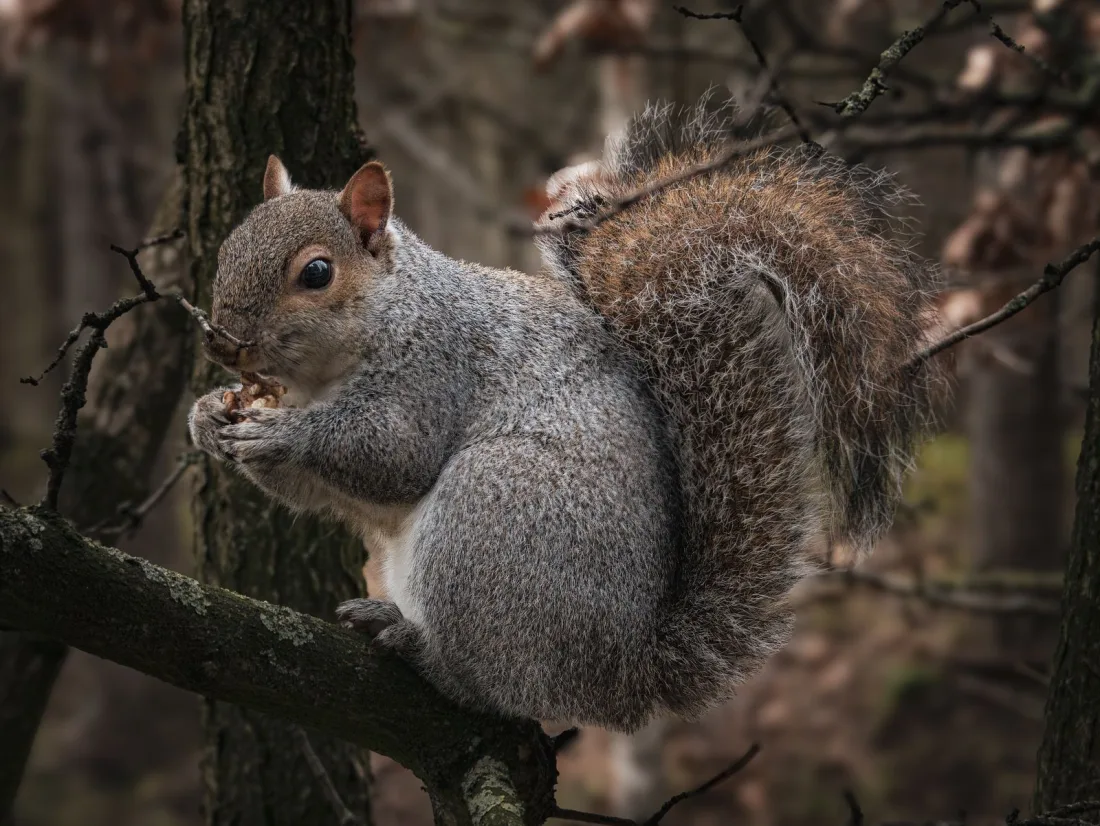
For a grey squirrel, add the white fringe last: a few wisps of white along the outer edges of the tail only. That pale edge, clear in the photo above, is what makes it a grey squirrel's tail.
How do you shape a squirrel that sits up?
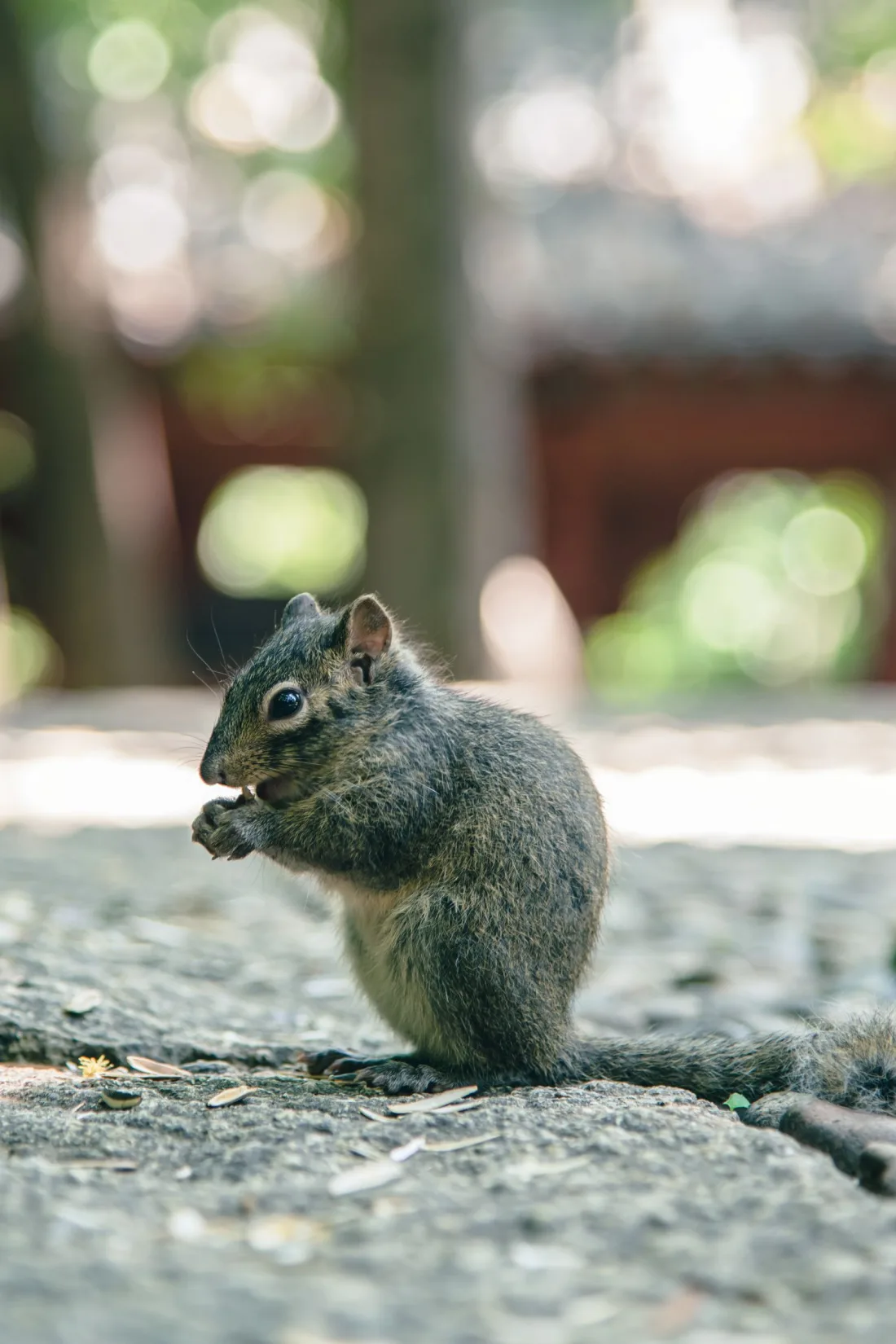
Sitting up, a squirrel rests its weight on its rump and long hind feet, and the tail touches down behind it as a third support. Shape it in this order.
- Body. A pear of core wool, wide and heavy at the bottom, narrow at the shoulders, with the back gently curved and the belly fairly straight. At 4 in (10 cm) tall it is about 2½ in (6.5 cm) from base to shoulders. Push the wire anchor up into it while it is still soft, then felt over it.
- Haunches. Two flattened ovals needled onto the lower sides, like thick thighs folded under.
- Hind feet. Long and flat, pointing forward from under the haunches, each about a third of the body height long. They are bigger than you expect, and they stop the figure tipping backwards.
- Base. Needle the underside flat and firm, and check the squirrel stands on its own before the tail goes on.
Where do the head, ears and eyes go?
The head is a short, rounded wedge set forward of the shoulders, not on top of them, with almost no neck. At the 4 in (10 cm) size it is about 1¼ in (3 cm) from back of skull to nose, with a blunt muzzle and full cheeks.
- Ears. High and well back on the skull, upright and slightly apart. A grey squirrel's are small rounded shells, felted flat on a foam pad and given a slight cup. For a red squirrel, add the tufts last: a few combed fibres needled in only at the ear tip, left loose above it.
- Eyes. Large, round, black and set on the sides of the head, about halfway between the nose and the ear base. If both show full-on from the front, they are too far forward. Sink a socket for each before fitting it; needle felting eyes covers sockets and fixing.
- Eye ring. A thin ring of pale wool round each eye: cream on a grey squirrel, brighter white on an American red. Twist a few fibres into a thread and needle it on with a 40 gauge needle.
How do you make the paws hold an acorn?
Make the acorn first and build the front legs round it. For the 4 in (10 cm) squirrel, felt a firm egg of light brown wool ⅜ to ½ in (10 to 12 mm) long and a darker cap, stippled with the needle tip for texture. Real acorn caps from small oaks, glued on, suit the 6 in (15 cm) size.
- Hold the acorn against the chest, just under the chin, so the squirrel looks as if it is about to bite it.
- Felt each front leg as a short, thin sausage, about as long as a hind foot. Needle the top of each to the shoulder, with the elbow tucked into the side of the body.
- Bring the paws round the acorn so they meet on its front, and needle them into the acorn, not just against it.
- Add two small stitches of matching thread through the acorn into the chest, or it will work loose in time.
In what order should a squirrel be finished?
Coat, face, then tail, so the fluffiest part is handled least. For a grey coat, blend mid grey with about a fifth as much light brown and a little white so it reads as hair, not paint (see how to blend wool colours), and add a brown wash along the spine, head and outer legs. Feather the white belly into the sides rather than leaving a hard line. Then the eyes, eye rings and ears. Last, bend the tail into its S-curve, check the squirrel still balances, and build the tail surface.
How do you display a felted squirrel in autumn?
Set it on a slice of log or a bed of moss with a few loose felted acorns at its feet, one without its cap, and a small pumpkin or two from felted pumpkins or toadstools from felted mushrooms. Keep the scale consistent: next to a 4 in (10 cm) squirrel, acorns should stay under ½ in (12 mm), or the squirrel shrinks by comparison.
Keep it out of direct sun and dust the tail by brushing outwards with a slicker brush. For simpler first shapes, see needle felted animals for beginners; for another big tail, a needle felted fox.
Frequently asked questions
How do you make a needle felted squirrel tail fluffy?
Felt a slim, firm core over a wire, then add a loose outer layer that you do not needle hard: either wisps of carded wool needled only along the centre line and brushed out at the edges, or combed wool locks needled in by their cut ends. A reverse felting needle or a small slicker brush lifts the surface afterwards.
Does a felted squirrel tail need wire?
For an upright tail, yes. A tail almost as long as the body, curving up the back and flicking out at the tip, droops or leans within days if it is wool alone. A doubled length of aluminium armature wire, about 1.5 mm for a 4 in (10 cm) squirrel, anchored inside the body, holds the curve. A squirrel curled up asleep with its tail wrapped round it needs no wire.
How much wool do you need for a needle felted squirrel?
About 20 to 25 g (¾ to ⅞ oz) for a squirrel 4 in (10 cm) tall sitting up, of which roughly a third goes into the tail. Most of the body can be cheap core wool covered with a thin coloured layer. A 2½ in (6 cm) one takes 5 to 6 g, and a 6 in (15 cm) one 65 to 85 g.
What is the difference between a felted red squirrel and a grey squirrel?
Colour, size and ears. A red squirrel is red-brown with a cream belly and, in winter, long tufts on the tips of its ears. An eastern grey squirrel is larger, grey with a brownish wash, has a white belly, a pale ring round the eye, rounded ears without tufts, and a tail edged with a silvery white fringe.
How do you make a felted squirrel hold an acorn?
Felt the acorn first, firm and small, about ⅜ to ½ in (10 to 12 mm) long for a 4 in (10 cm) squirrel. Hold it against the chest under the chin and build the front legs over it, so the paws close round its sides. Needle the paws onto the acorn and add two small stitches of matching thread through it into the chest so it cannot be pulled out.
Topics
Image credits
- Eastern grey squirrel sitting upright on a log with its front paws at its chest and its bushy tail curving up its back, the tip flicked backwards — Ramakanth Chilekampalli (Pexels License)
- Red squirrel sitting up on a dark log, with long tufts on the tips of its ears and a cream belly — brigitteJ (Pixabay Content License)
- Eastern grey squirrel on a branch holding a nut in its front paws, with a pale ring round its eye and a silvery fringe along the edge of its brown-grey tail — Jimmyk photos (Pexels License)
- Small brown-grey squirrel sitting up on its haunches on paving, holding food to its mouth with its front paws, its long hind feet flat on the ground — Suki Lee (Pexels License)