Needle Felting a Face: Sockets, Planes and Expression
4 min read Advanced
We may earn a commission from links on this page, at no extra cost to you. As an Amazon Associate I earn from qualifying purchases. Learn more.
Faces are made by taking wool away, not adding it. The order of operations that gets a head from a ball to a character, for animals and dolls alike.
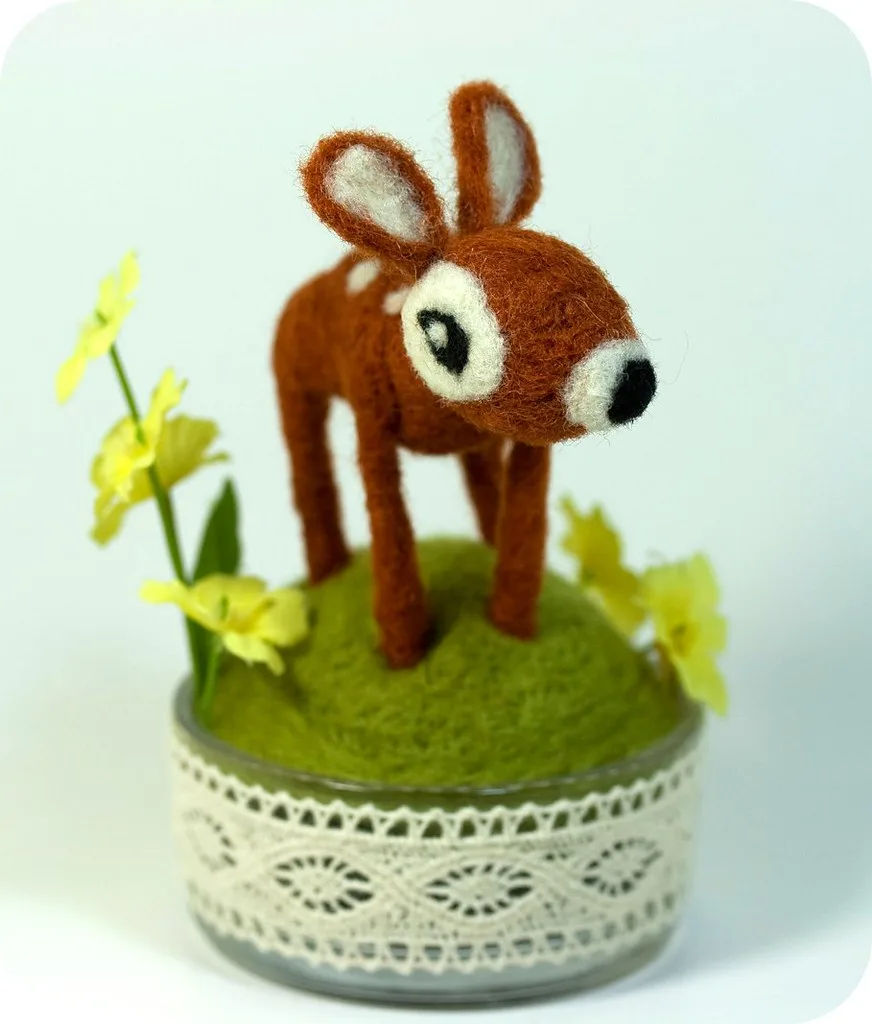
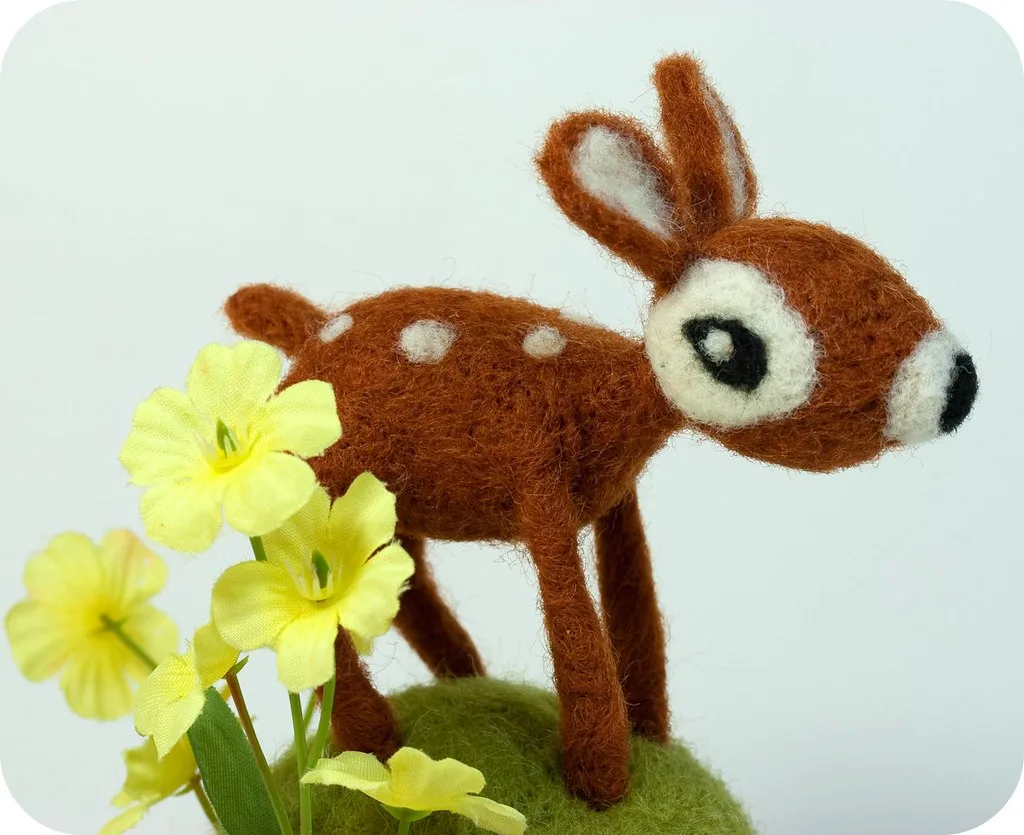
Beginners build faces by adding: a ball for a nose, two dots for eyes, a line for a mouth. The result is a snowman — a round head with features stuck to the front.
Real faces work the other way round. They are a set of hollows and ridges, and the features sit inside that structure. Which means the first half of the work is subtraction: pushing wool in before anything goes on.
Before you start
Firm the head properly. It should barely dent under thumb pressure. Wool that still gives will move when you needle beside it, and every feature you add will pull the previous one out of place. More felted faces fail at this step than at any other.
Work on the head separately, in your hand, before attaching it to a body. You need to be able to turn it and view it from every angle.
The order of operations
- Flatten the face plane. Needle straight into the front of the head until a flat or slightly concave surface forms. A face is not part of a sphere. This step alone transforms the head.
- Sink the eye sockets. Two hollows, placed and measured before you commit. Stab repeatedly into one small area with a 38 gauge needle, alternating between the two so they match. As the wool compacts, the brow and cheek rise on their own.
- Mark the centre line. A light vertical crease from between the eyes down. Everything else references it, and it keeps the face symmetrical.
- Build the muzzle or nose as added wool, sitting on the plane. Small pinches of fibre needled on and shaped, not a ball stuck to the front.
- Define the crease where the muzzle meets the cheek — a shallow curved groove either side. This is what stops the muzzle looking glued on.
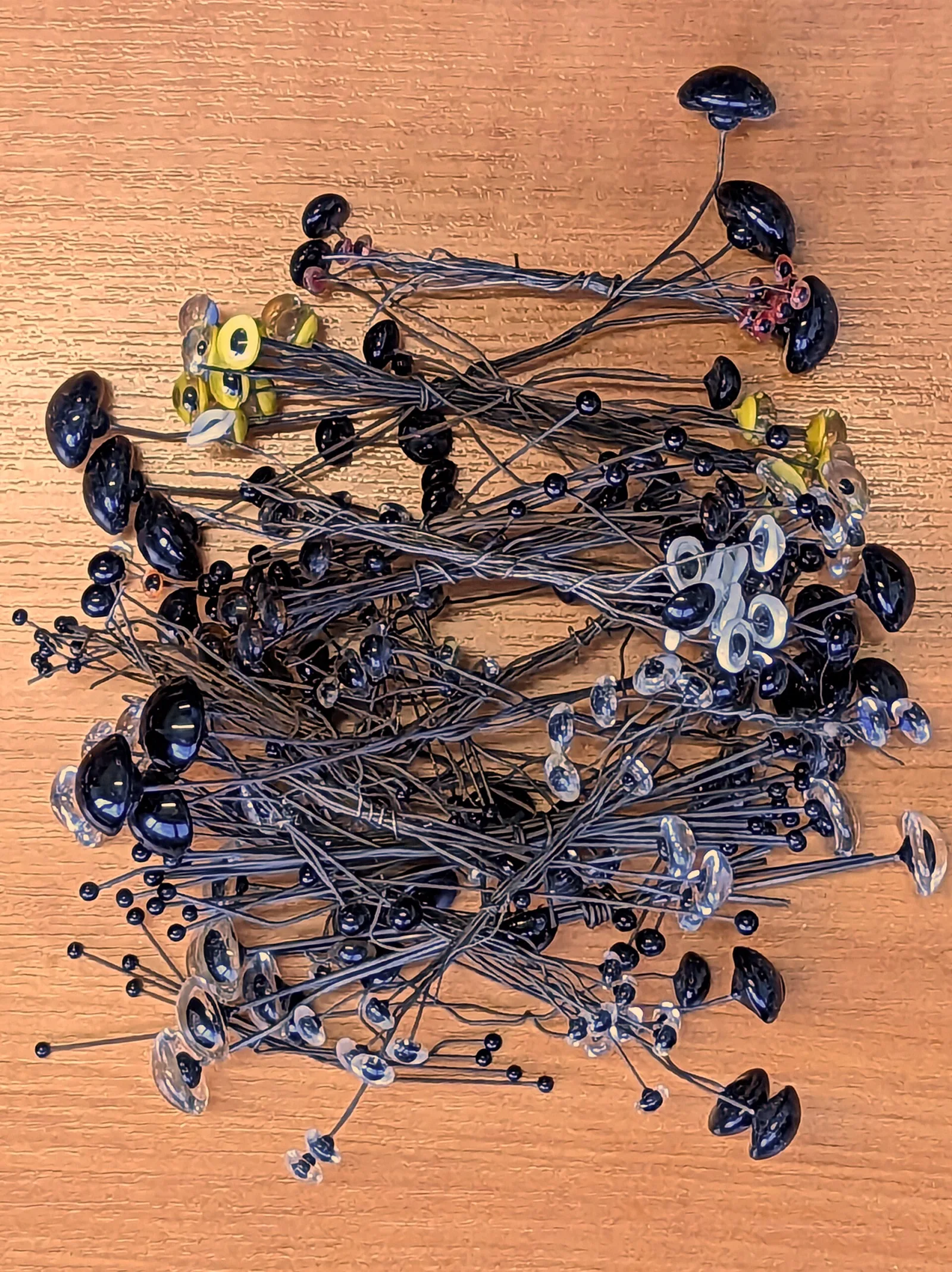
- Set the eyes. See needle felting eyes. Late, because everything shifts before this point.
- Add brows and lids — tiny wisps that decide the expression.
- Mouth last, as a shallow needled line, or embroidered thread if it needs to be crisp.
Animal faces
Each species is a different arrangement of the same operations.
- Cats. Broad flat face, small low muzzle, eyes two-thirds up, wide-set. Cheeks built out with added wisps. See needle felted cat.
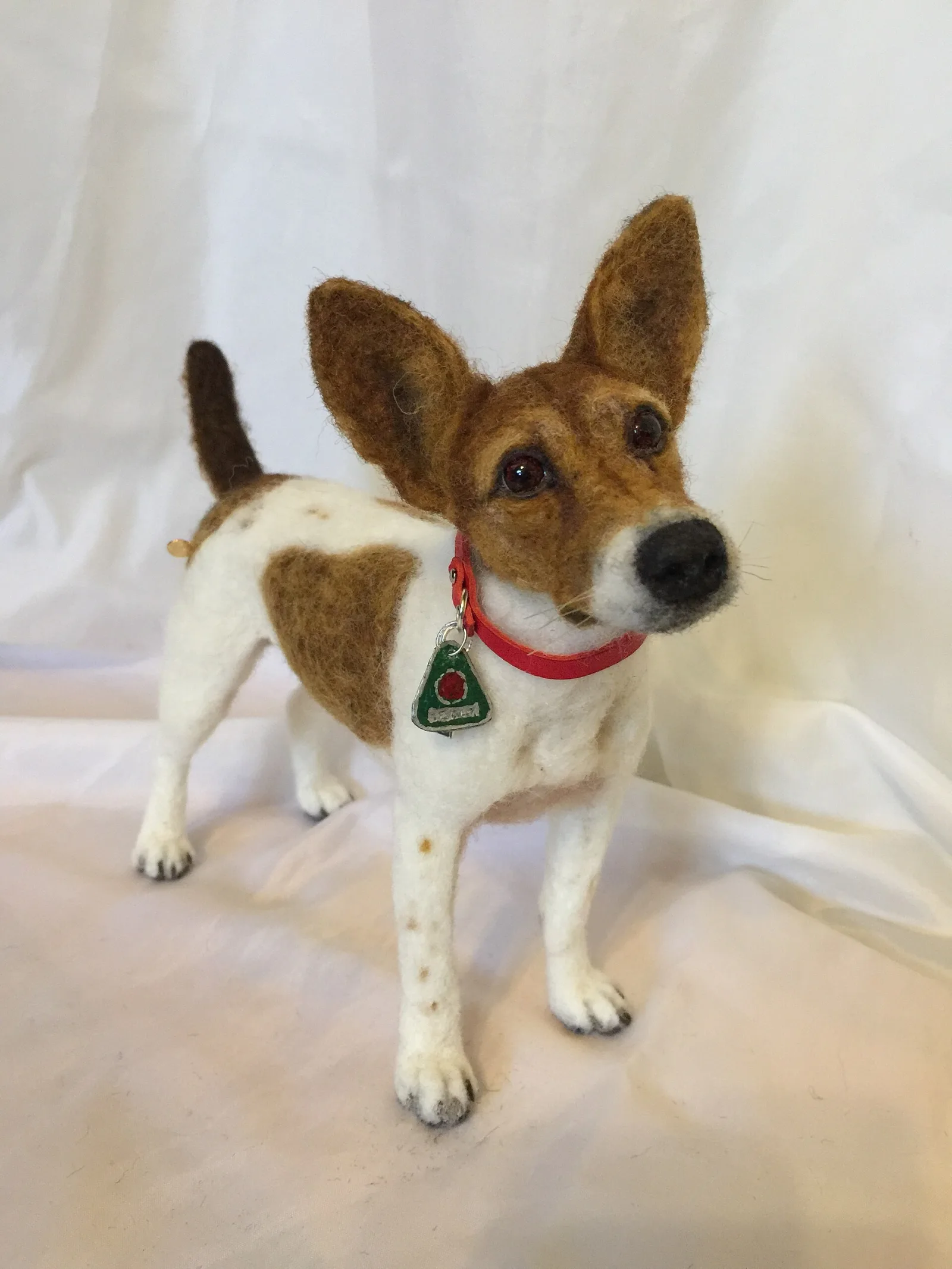
- Dogs. The stop — the step between forehead and muzzle — carries the breed. Deep in a boxer, absent in a collie. See needle felted dog.
- Foxes. No stop at all: one continuous taper from skull to nose.
- Rabbits and sheep. Eyes at the sides, so there is little frontal socket work; the profile does the job instead.
- Owls. The whole face is a dish, and the beak sits low between the eyes.
Doll and human faces
Human faces are much harder, because everyone is an expert on them. Some structure to hold on to:
- Eyes are halfway down the head, not two-thirds up. This is the mistake in nearly every first attempt.
- One eye-width between the eyes.
- The nose base sits about halfway between the eyes and the chin; the mouth about a third of the way from nose to chin.
- Ears run from the eye line to the base of the nose.
- The face is not flat. Cheekbones out, temples in, a hollow under the cheekbone, a ridge along the brow.
Waldorf-style dolls deliberately understate the face — two dots and a dash — precisely because a half-realistic human face is unsettling. That is a legitimate choice, not a cop-out. See how to make felt dolls.
Expression
Expression is a very small amount of material in exactly the right place.
- Brows. Angled down towards the nose: cross. Angled up at the inner end: worried or sad. Level: calm. Raised high: surprised.
- Upper lids. A wisp laid across the top of each eye, lowered slightly, gives a relaxed or sleepy look. Fully open eyes read as alarm.
- Mouth corners. A millimetre up or down is the entire difference between content and miserable.
- Head angle. Attaching the head tilted a few degrees does more for character than any feature. A tilted head reads as curious.
Fixing what has gone wrong
- Asymmetric. Check from directly in front, from above, and in a photograph or a mirror. A camera shows what your eye has stopped seeing.
- Too small. Add a veil of wool over the whole face and re-sink the sockets. Adding is always easier than removing.
- Too big or too deep. Fill the hollow with a wisp of wool, needle it flush, and start again.
- Fuzzy and unclear. Switch to a 40 gauge needle and work at a shallow angle over the whole face.
- Muddy colour. Core wool is coming up through the surface. Add another thin veil and needle it shallowly.
Practising
Make five heads and nothing else. No bodies, no colour, no eyes — just a ball, a flattened plane, two sockets and a muzzle, half an hour each. It is the fastest way to improve in this craft, because the head is where nearly all the difficulty lives and you are otherwise only making one every few weeks. The general fault-finding list is in common needle felting mistakes.
Frequently asked questions
How do you needle felt a face?
Firm the head hard first, flatten the face into a plane, sink two eye sockets by repeated stabbing, build the muzzle or nose out from that plane as added wool, then set the eyes and shape the brows last. Depressions come before additions.
Why does my needle felted face look flat and lifeless?
The features are drawn on rather than sculpted in. A face is a landscape of hollows and ridges — eye sockets, cheekbones, a brow, the crease beside the nose. Sink those and the features have somewhere to sit.
How firm should the head be before adding features?
Hard enough that firm thumb pressure barely dents it. Soft wool moves when you needle next to it, so every feature you add distorts the last one. This is the most common reason faces go wrong.
How do you change the expression of a felted face?
Almost entirely with the brows and the corners of the mouth. Brow wisps angled down towards the nose read as angry, angled up as sad or anxious, level as calm. A mouth line curved up or down by a millimetre changes everything.