Needle Felted Bear: The Shoulder Hump, Not the Teddy
7 min read Intermediate
We may earn a commission from links on this page, at no extra cost to you. As an Amazon Associate I earn from qualifying purchases. Learn more.
The highest point of a brown bear is its shoulder, not its head. Build the muscle hump over the shoulder blades, dish the face and pull the snout out long, and it stops being a teddy.
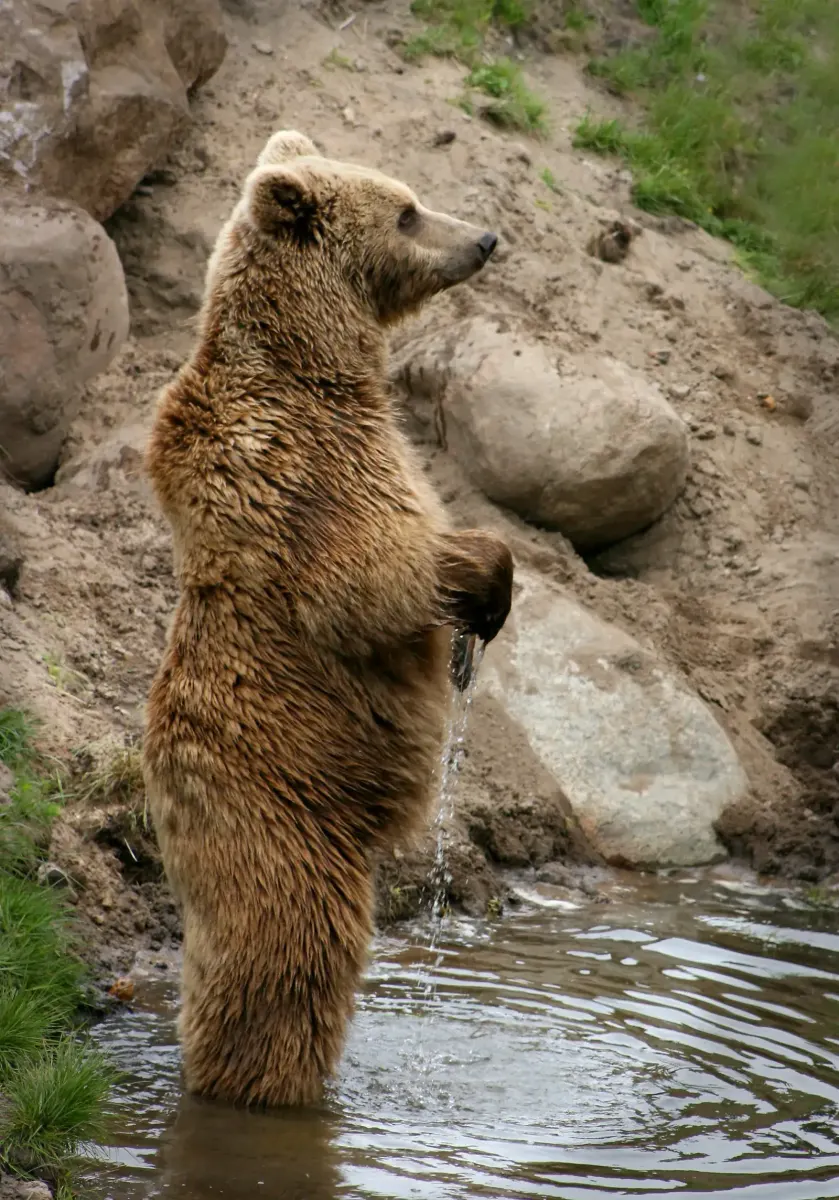
Watch a brown bear walk and the highest point of the animal is its shoulder. Not the head, not the middle of the back — the shoulder, where a mass of digging muscle sits over the shoulder blades and the spine falls away behind it to a low rump. Nothing else on four legs is built that way round, and the silhouette is readable at a hundred metres, before any of the detail is.
Build that hump, dish the face inwards between the brow and the nose, and pull the snout out long and straight, and you have a bear from across the room. Leave the three of them out and your hands will fall back on the shapes they already know: round skull, stub muzzle, two big ears on top of it. Those are teddy shapes, and they are what you get by default whatever colour the wool is.
What you need
- Core wool — 40–55 g for a bear about 12 cm at the shoulder
- Mid brown top coat — 20 g of corriedale, which reads coarser than merino
- Dark chocolate brown for the legs, ear edges and shading — 8 g
- Pale honey or blonde for the shoulder hump and back highlights — 5 g
- Cream or bone for the claws, and black for nose and eyes
- 38 gauge for bulk, 40 gauge for finishing, a reverse-barb needle if you have one
- Optional: 3 mm dark brown glass eyes, deliberately smaller than you would use on any other animal this size, and pipe cleaners for a standing pose
Building the bear
- Make the barrel. Compress core wool into a dense barrel about 12 cm long with rounded ends. A bear body is a barrel, not an egg — the sides are near parallel and the belly hangs level with the chest.
- Build the forequarters heavy. Add a second layer of core wool over the front third only, so the chest and shoulders are visibly deeper and wider than the hips. A bear tapers backwards, and most makers build it the other way round.
- Add the hump. Needle a tight walnut-sized roll of core wool onto the back directly above the front legs, working its front and rear edges firmly so it stands proud of the neck line. This is the step people skip.
- Head as a brick, not a ball. Felt a boxy shape, wider at the cheeks than the crown, with a flat top. Attach it low on the chest so the neck is short and thick and the head is carried below the hump.
- Pull the snout out long. Needle added wool at the front of the head into a straight, blunt-ended tube about a third of the head length. Do not turn it up or round the end.
- Dish the face. Needle a shallow concave dip in the profile where the snout meets the brow, then firm the brow ridge above it. Seen from the side, the line should go up, in, and out again.
- Ears small, round and set back. Two thick discs, a quarter the height of the head, on the upper rear corners of the skull — above the eye line, but a long way behind it. Push them apart until the gap feels excessive.
- Legs and feet. Four short thick legs, the front pair heavier. Finish each with a flat oval sole so the whole foot rests on the ground.
- Coat and detail. Cover in mid brown, darken the legs, lighten the hump, then add nose, eyes and claws.
The three corrections
The hump is muscle
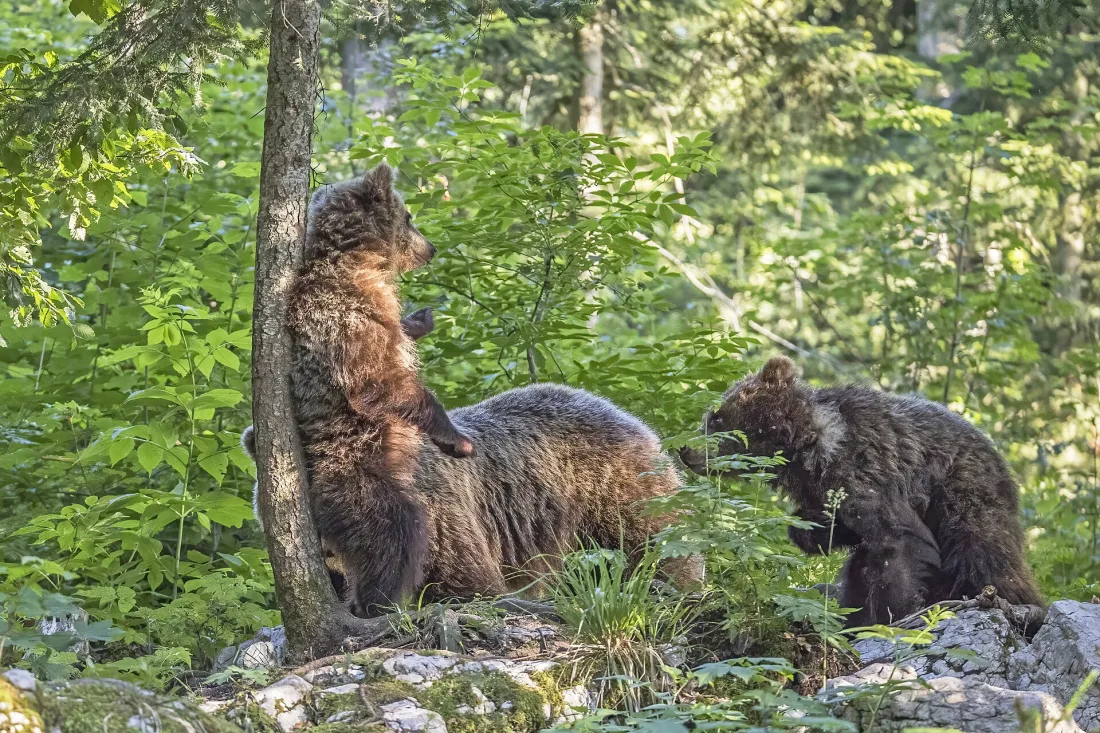
The hump is the muscle that powers the forelimbs for digging, sitting over the shoulder blades. Because it is muscle and not fat, felt it firm and give it edges. A soft rounded lump reads as a fat toy; a dense mass with a defined front slope and a clear drop behind the shoulder reads as an animal that digs.
Position it above the front legs, not the middle of the back, so the highest point of the bear is the shoulder and the spine falls away to the rump. A pale honey highlight over the top exaggerates it in photographs — see how to blend wool colours for laying it in without a hard edge.
The dished face and the long snout
A teddy face is convex, bulging outward from a round skull. A brown bear face is concave in profile: the brow sits high and heavy, the line dips inwards below it, and a long straight snout comes forward from the dip. Needle that dip in with a 40 gauge needle until there is a real hollow, then rebuild the brow above it with a small pad of wool.
Keep the snout parallel-sided and cut off square, with a wide black nose covering most of the tip. Eyes go small, dark and close together, set high and just behind the start of the snout. Small eyes are the difference between a bear and a cuddly toy — see needle felting eyes.
Ears small, round and set back
Teddy ears are large, thin and perched on the top corners of the crown, well forward. Bear ears are small, thick and rounded, and sit on the upper rear of the skull — above the eye line, like most mammals, but set much further back and much further apart. The correction from the teddy is smaller, rounder, further back and wider, not lower: drop them to eye level on the side of the head and the animal reads as a seal. Felt them as firm discs rather than flat cut-outs, and attach them lying back slightly. Whatever gap you first think is right, widen it.
Stance, feet and claws
Bears are plantigrade: they walk on the whole foot, heel included, as people do. Instead of the zigzag hock of a dog, the hind leg comes almost straight down from the hip onto a long flat sole. Felt the back feet as elongated ovals, slightly longer than the front ones, and needle the undersides flat so the bear stands without wobbling.
Claws are long, pale and blunt — bone or cream, not black — and on the front paws they are as long as the toes. Roll five tiny tapered cream slivers per front foot and needle them in at the front edge of the sole so they project forward. A standing-upright pose needs a wire armature, or the heavy forequarters pitch the bear onto its face.
Common problems
- It looks like a teddy. Round skull, short snout, big ears forward on the crown, no hump. Fix the ears first — making them smaller and pushing them back and apart takes two minutes.
- The hump looks like a bag. Needled too softly and placed too far back. Rework it firm and move it forward over the front legs.
- The face is flat. No dip between brow and snout. Needle the bridge inwards hard, then add fresh wool for the brow.
- It tips forward. The heavy chest is correct; the feet are too small. Widen the soles and flatten them against the mat.
- The brown looks dead. One flat colour over the whole animal. Bears are grizzled — lighter on the hump, darker on the legs and belly, with raised guard hairs on top. See needle felting fur.
Variations
- Realistic brown bear. Everything above, on all fours, hump as the highest point, coat in three browns.
- Deliberate teddy. If a teddy is what you want, commit to it: round head, stub snout, large ears high on top, seated with the legs straight out. A good design, just not a bear.
- Polar bear. Longer neck, smaller narrower head, no hump, and a long straight profile with no dish. Cream shaded with the faintest grey-blue, never pure white.
- Panda. Round head, short snout, big black ears set high — closer to the teddy shape than to a brown bear — with black eye patches, shoulders and legs on a white body.
- Black bear. No hump at all, a straighter profile and noticeably taller ears on a smaller head. The hump is the single feature that separates the two species at a distance, so leaving it out has to be a decision rather than an omission.
If the head shaping is the hard part, build practice heads with the method in how to needle felt a ball and cut them open to see how deep the firmness goes. After the bear, a fox teaches the opposite skull — one continuous wedge with no dip at all — and a hedgehog teaches the raised coat that makes a bear look grizzled rather than smooth.
Frequently asked questions
What makes a felted bear look like a real bear and not a teddy?
The shoulder hump, the dished face and the long straight snout. A teddy has a round skull, a stub muzzle and large thin ears perched on the top corners of the crown; a brown bear has a muscle mass above the shoulder blades, a dip between brow and snout, and small thick rounded ears set well back on the upper rear of the skull and far apart.
Is the bear hump fat or muscle?
It is muscle — the digging mass that drives the forelimbs, sitting over the shoulder blades. That matters when you felt it, because muscle is firm and defined, so the hump should be needled hard with a clear front and rear edge rather than softly rounded like a fat roll.
How should a felted bear stand?
Flat-footed, with the whole sole on the ground from heel to toe. Bears are plantigrade like people, so the back legs make an L rather than the zigzag of a dog or a cat, and the heel touches down.
Is a needle felted bear good for a beginner?
Not the first one. The body is forgiving — no thin tail, no long ears, no delicate legs, just one large firm mass — but the whole animal is carried by the head, and the dished profile and the long straight snout take some practice. Make a <a href="/needle-felted-chick">chick</a> or a <a href="/needle-felted-hedgehog">hedgehog</a> first, then build the bear sitting or on all fours rather than standing upright.
Topics
Image credits
- A brown bear standing, showing the shoulder hump and dished face — Malene Thyssen (BY SA 3.0)
- A young brown bear — Charles J. Sharp (BY SA 4.0)