Felt Horse: A Needle Felted Horse, and a Rocking Horse Ornament From Sheet Felt
7 min read Intermediate
We may earn a commission from links on this page, at no extra cost to you. As an Amazon Associate I earn from qualifying purchases. Learn more.
A needle felted horse is decided on paper before any wool: legs as long as the body is deep. How to set that in wire, build the head and mane, and make a flat felt rocking horse or Dala horse ornament.
For most animals you start by rolling a ball of wool. A horse starts with a pencil. Its legs are far too thin to hold up the body in wool alone, so the build begins with a bent wire frame. The frame sets the proportions before any wool goes on, and if it is wrong the horse stays wrong, however well you shape the surface.
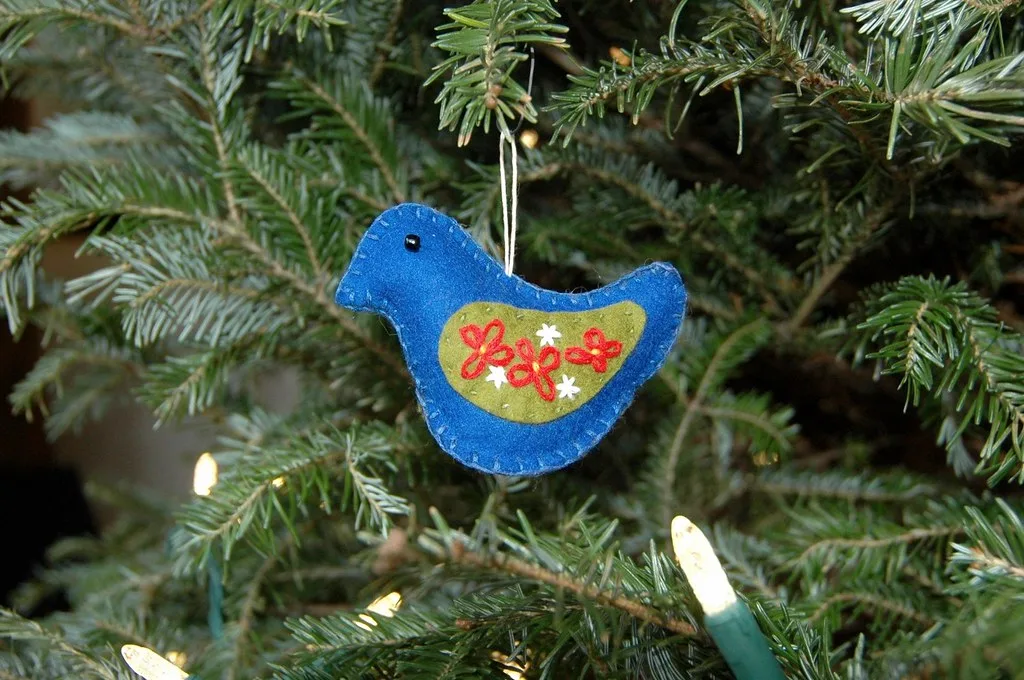
There are two horses on this page: a standing needle felted horse, and a flat horse cut and sewn from sheet felt. That is the rocking horse ornament in the photo above, and the Scandinavian Dala horse is a variation on it.
Measure before you felt
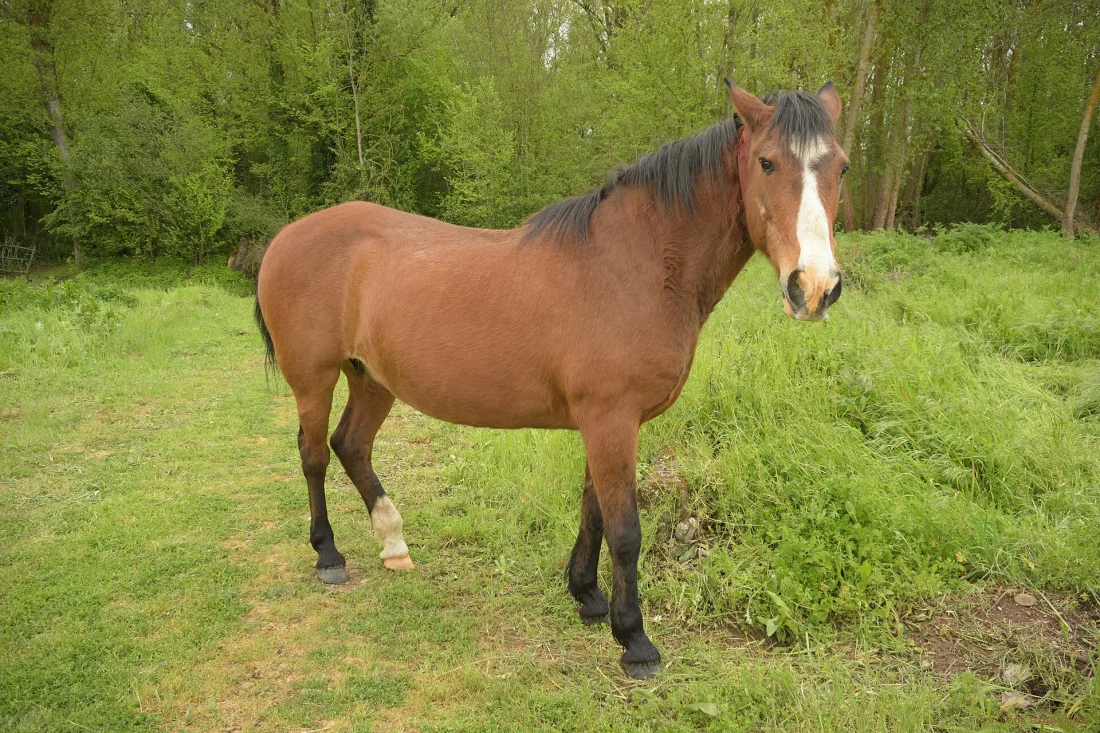
Draw the horse from the side on paper at the size you want and check three measurements against it. Horses, ponies and foals share the same parts. What separates them is these ratios:
| Horse | Pony | Foal | |
|---|---|---|---|
| Leg length (belly to ground) compared with body depth (shoulder top to belly) | About equal | Leg clearly shorter | Leg clearly longer |
| Body length, chest to rump | About 2½ head lengths | About 2½, but deeper and rounder | About 2 head lengths |
| Neck | About 1 head length | Shorter and thicker | Short and thin |
| Lower legs | Thin, close to the wire | Thicker, often with long hair at the feet | Thin, with knobbly knees |
Cut a strip of card the length of the head you plan to make and step it along your drawing. If you are unsure, err long in the legs and neck: a slightly leggy horse still looks like a horse, a slightly short one looks like a toy.
Needle felting the horse
Materials for 18 cm to the shoulder
- Core wool: 55–70 g. Weigh it out first. Wool needed grows with volume, not height, so this is roughly three times what a 12 cm fawn takes.
- Bay, chestnut, grey or black corriedale: 15 g for the coat
- Black and white: 5 g for lower legs, blaze and socks
- Wool locks or long combed top for the mane and tail
- 1.5 mm aluminium wire, about 80 cm, and four pipe cleaners
- 38, 40 and 42 gauge needles
Steps
- Bend the frame to your drawing. Fold one long wire in half for the spine, with the fold at the tail. Twist the two strands together along the back, leaving a loop at each end for a pair of legs and a short piece rising at the front for the neck. Bend each leg down, then forward at the bottom into a small flat foot.
- Pad the wire. Wind pipe cleaners tightly along the legs and spine so no bare wire shows. A needle that hits bare wire snaps, and wool has nothing to grip on it; see how to stop breaking felting needles.
- Test the stance. Stand the bare frame up. Front legs upright, back legs bent at the hock with the joint pointing backwards, and back feet slightly behind the rump. If it will not stand now, it will not stand later.
- Body. Wrap core wool round the spine in long strips, needling as you go, until the ribcage is deep and slightly narrower than it is tall. The belly rises towards the back legs: a horse is deeper at the girth than at the flank.
- Legs. Two or three tight wraps of core wool per leg, needled hard. Thicken only the upper leg. Below the knee and hock the leg stays close to the wire. Thick lower legs turn a horse into a pony.
- Neck and head. Build the neck as a wedge, deep at the shoulder and narrow behind the ears. Build the head as a long, tapering box and add the muzzle as a separate small mass, then blend the join.
- Coat. Lay thin veils of colour over the whole horse in the direction the hair lies, then firm it with the 40 gauge. Add black lower legs for a bay, and any white socks or blaze last.
- Mane and tail from locks, as described below.
The head
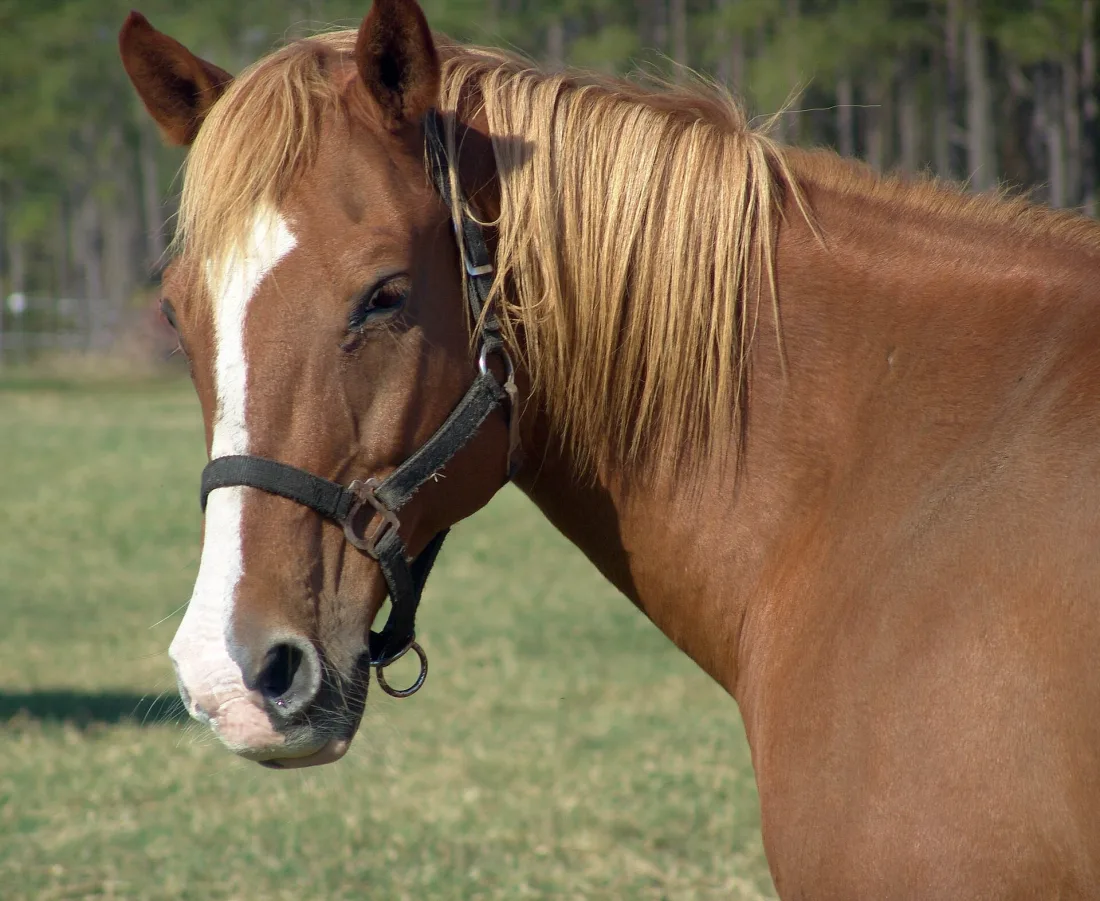
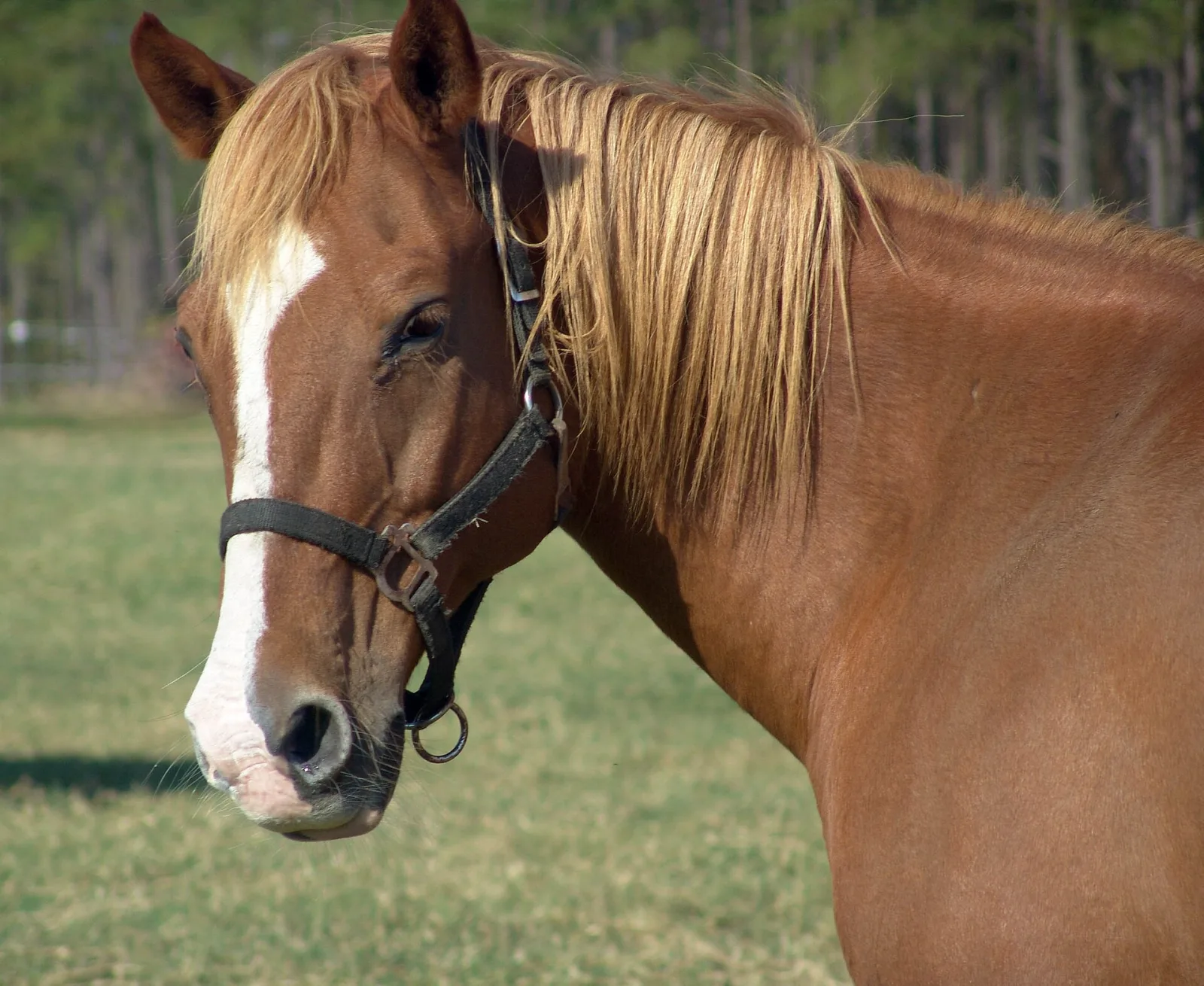
A horse's muzzle is long: from the eye to the nostril is more than half the length of the head. That length alone stops the head looking like a big dog's. The line of the face below the eye depends on the breed: straight in a thoroughbred and most riding horses, dipped inwards in an Arabian and many ponies, curved outwards in heavy horses. Pick one and keep it the same all the way down, and finish the end with a soft rounded pad for the nostrils.
The eye sits high and on the side, about two-thirds of the way from the muzzle to the top of the head. Sink a small hollow first so the brow stands out above it, then set the eye (needle felting eyes). The ears are small, narrow and close together on top of the head, pointing up and slightly in. Make them as firm flat pieces, pinch the base so the front forms a shallow cup, and attach them upright.
Mane and tail
Use fibre that already hangs. Lay small bunches of locks across the top of the neck with the ends falling down one side, and needle only a narrow line along the middle so the rest hangs free. Work from the ears back in overlapping rows, and add a small bunch between the ears for the forelock. For the tail, fold a thicker bunch in half and needle the fold hard into the top of the rump. Trim everything to length at the end, not before. Wavy locks suit a pony; comb them straighter for a riding horse.
A felt horse ornament from sheet felt
A flat felt horse takes an evening and no wire, which is why "felt horse ornament" is one of the most searched felt Christmas makes. The proportions from the table still matter, but on a flat outline they are far easier to get right, because you can correct the paper pattern before you cut.
Rocking horse pattern
- Horse, cut 2: draw a horse from the side about 10 cm long, with the four legs ending on a curved rocker instead of hooves. Include the rocker in the outline so the whole thing is one piece.
- Saddle cloth, cut 1: a rectangle about 3 × 2.5 cm in a contrasting colour, with a star or heart cut from a third colour.
- Mane and tail: 20–30 lengths of wool yarn, each about 8 cm.
- Stitch the saddle cloth and its decoration onto one horse piece. Add an eye as a French knot or a small bead.
- Fold the yarn for the mane in half and lay it along the top of the neck between the two pieces, fold inwards. Do the same with the tail at the rump.
- Blanket stitch round the whole outline, catching the yarn as you pass it. Push in a little stuffing before closing the last few centimetres.
- Stitch a hanging loop at the top of the back, just behind the saddle, so the horse hangs level. Felt animal ornaments covers finding the balance point.
- Trim the mane short and the tail long.
Dala horse
The Dala horse from Dalarna in Sweden is the easiest horse outline there is. It has a blocky body, straight legs set close together as two solid blocks, and a short upright neck with no separate mane or tail. Cut it in red felt, then decorate one side with white, yellow and green: a curved saddle line, a bridle, and small flowers on the shoulder and rump, stitched or cut from felt. It is a good first project for anyone new to felt appliqué.
Common problems
- It looks like a pony. Short legs, thick lower legs, or both. Compare belly-to-ground with belly-to-shoulder and take wool off below the knees.
- It sags after a few days. The wire is too thin or the spine strands are loosely twisted. Use 1.5 mm and twist tightly.
- The head looks like a dog's. The muzzle is too short. Lengthen it until eye to nostril is more than half the head.
- It falls over. The back feet are too far forward. Set them behind the rump and flatten all four feet.
- The mane looks stuck on. It was needled flat. Pull it off and redo it with loose locks.
- The ornament hangs nose-down. The loop is too far forward. Move it back until the horse hangs level.
Variations
- Foal. Long legs, short body, big head, blunt muzzle. The one horse where a big head is correct.
- Shetland or native pony. Short legs and a deep body on purpose, a heavy mane and long hair at the feet. Much more forgiving than a riding horse.
- Grazing horse. The neck lowered and the nose on the ground. Easier to balance, because the head sits over the front feet.
- Head only. A head and neck on a small base. No wire and no proportions to hold, and the best way to practise the muzzle.
- Unicorn. A white horse with a horn of two twisted strands of felted wool and a mane in three colours.
If you have never built a wire frame, read wire armature for needle felting first, and try a standing dog as practice: the same frame with shorter legs and less to get wrong. A felted deer uses the same frame at a smaller size.
Frequently asked questions
Why does my needle felted horse look like a pony?
The legs are too short for the body. On a horse, the depth of the body from the top of the shoulders to the belly is about the same as the length of leg below it. If the belly is closer to the ground than that, you have made a pony. Lengthen the leg wire before adding any wool.
Do you need wire to needle felt a horse?
Yes. Horse legs are far too thin to carry the body in wool alone, and a horse lying down hides everything that makes it a horse. Use 1.5 mm aluminium wire for a figure up to about 20 cm tall.
What wool is best for a horse mane and tail?
Wool locks or long combed top, fixed at one end and left to hang. Wensleydale and Teeswater locks hang with the right weight. A mane needled flat onto the neck always looks stuck on.
How do you make a felt horse ornament?
Cut two horse shapes from 1 mm sheet felt, or a rocking horse with the rocker as part of the outline. Stitch on a saddle cloth and eye, sandwich a bundle of yarn along the neck for the mane and at the rump for the tail, then blanket stitch round the edge with a little stuffing and a hanging loop.
What is a Dala horse?
A traditional carved and painted wooden horse from Dalarna in Sweden, usually red with a simple flat outline and decorated with white, yellow and green flowers on the saddle and harness. Its outline is so simple that it makes one of the easiest felt horse ornaments to cut.
Topics
Image credits
- A felt rocking horse ornament with a stitched star and a yarn mane — Raymond Petrik (Pexels License)
- A horse head in profile showing the long muzzle and the set of the ears — Sandy Horvath-Dori from Grand Junction, CO, USA (BY 2.0)