Felting Needle Kit: What Is Really in a Needle Felting Kit, and What It Leaves Out
7 min read Beginner
Most needle kits sell you forty needles and one useful idea. What the gauges in the pack actually do, which pieces matter, and the three things almost every kit forgets.
A needle felting kit — a felting needle kit, if you met the phrase the other way round — is the first thing almost everyone buys, and the first thing almost everyone gets wrong — not because the kits are bad, but because they are sold by the piece. Forty needles reads as better value than twelve. It usually is not, and understanding why is most of what you need to know before you buy one.
Here is what is actually inside the packet, what each part is for, and the three things you will find yourself ordering separately within a fortnight.
What comes in the box
Strip away the packaging and a needle kit is four things, in descending order of how much they matter.
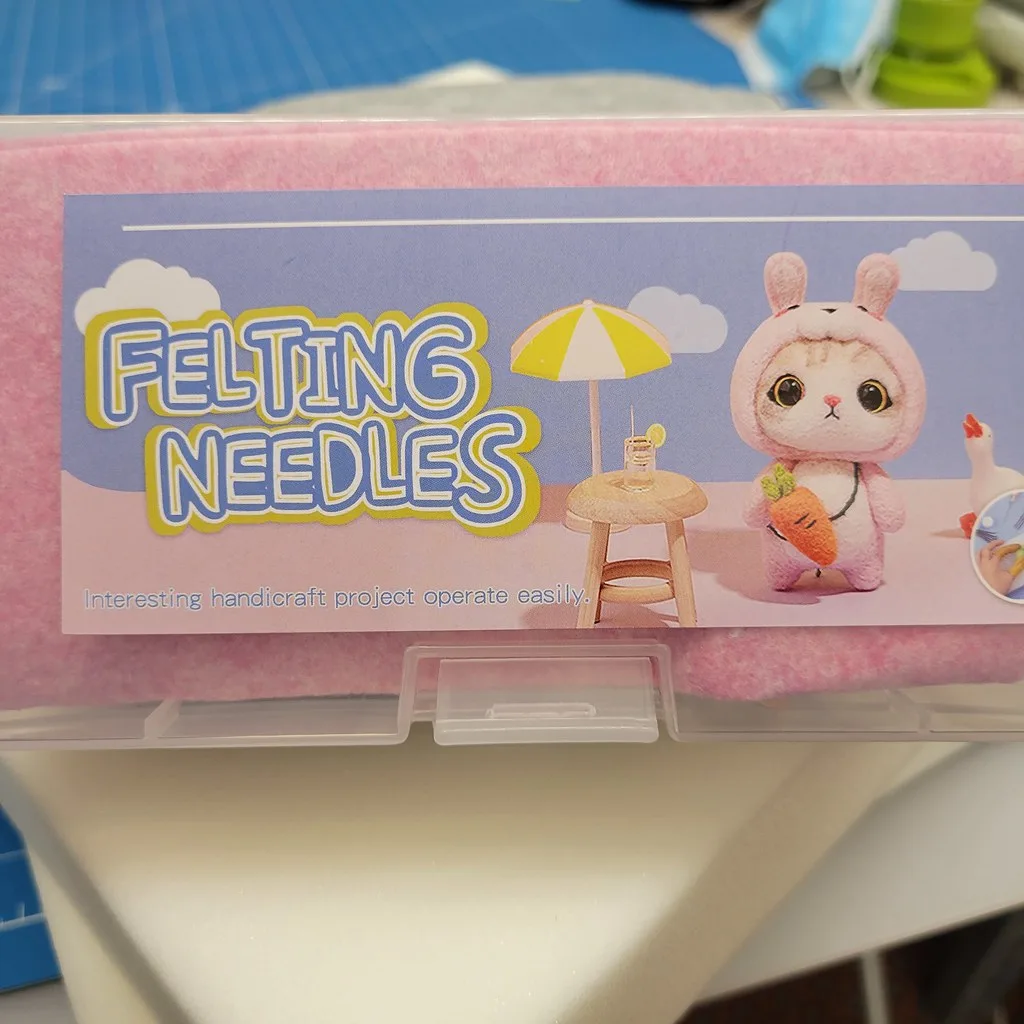
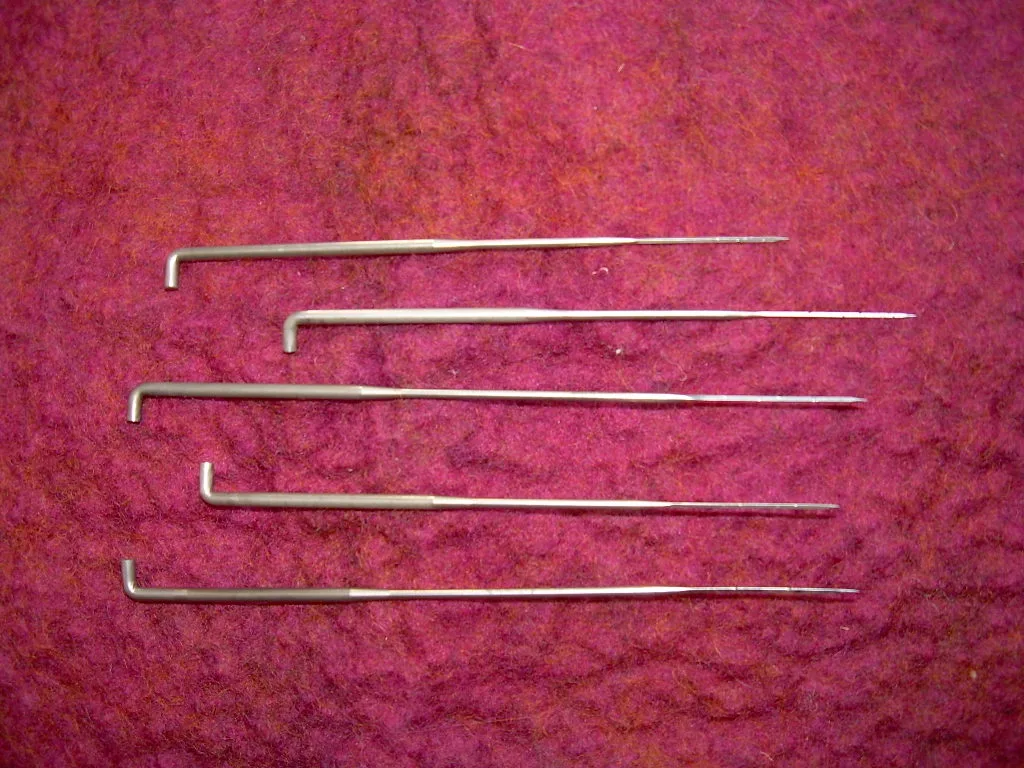
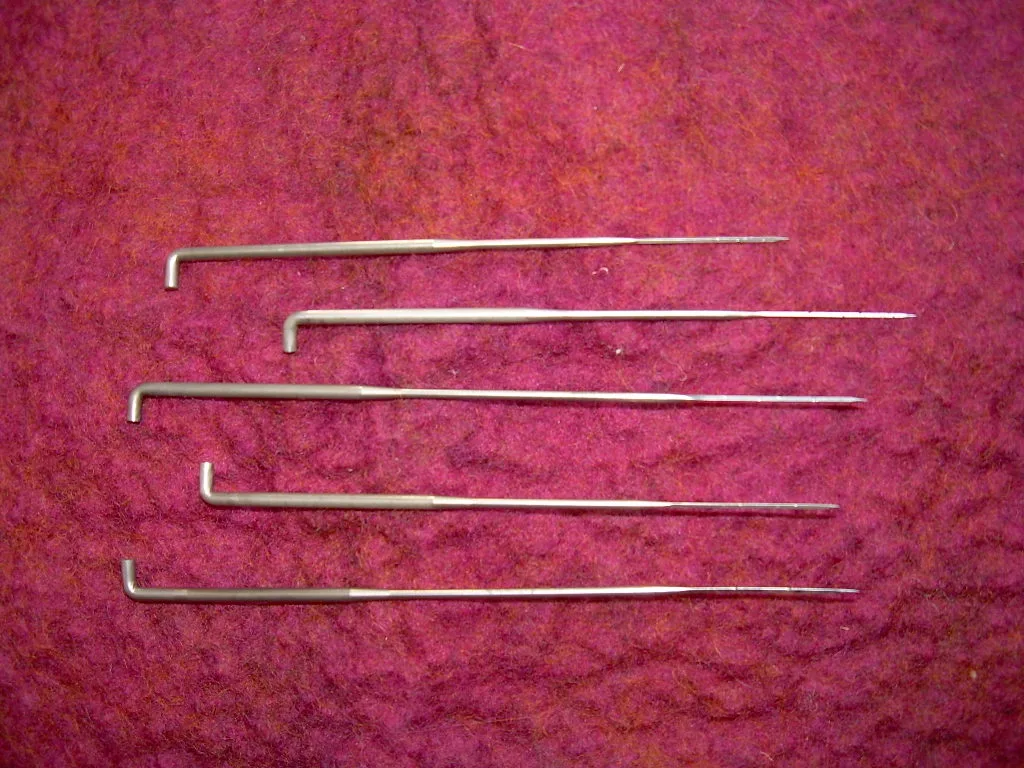
- Needles. Steel, barbed along the working end, usually 3 in to 3 ½ in long with a cranked top that sits against your finger.
- A mat. The surface you stab into. Foam, or a dense wool pad, or a bristle brush block.
- A holder — a pen-style body or a wooden handle that grips one to five needles.
- Finger protection. Leather or rubber thimbles, two or three of them.
Some kits then add a bag of wool, a pair of scissors and a project sheet. Those are the parts that get photographed, and they are the parts that matter least.
Gauges: the number that runs backwards
Every needle carries a gauge number, and the scale is inverted — bigger number, thinner needle. That single fact explains most of the confusion in kit listings.
- 36 gauge. Thick, fast, brutal. It compacts loose wool into a core in a fraction of the strokes a fine needle needs, and it leaves visible holes behind it. Core work only.
- 38 gauge. The everyday needle. Fast enough to build shape, fine enough that the marks close up. If a kit contains only one gauge, you want it to be this one.
- 40 gauge. Fine. For the surface, for firming something that is already dense, and for anything anyone will look at closely.
- 42 gauge and finer. Specialist. Lovely for fur direction and features, and they snap if you look at them wrong.
A kit holding forty needles of one gauge gives you one speed of work. A kit holding twelve across three gauges gives you the whole range. The longer explanation of how the barbs and gauges interact is in felting needles explained.
Blade shape, which the listing usually omits
Cut a felting needle across and it is triangular, star-shaped (four sides), or twisted. Kits almost never say which, and it changes the feel more than a gauge step does.
- Triangle. Three rows of barbs. The default, and the right default.
- Star. Four rows, so it moves more fibre per stroke and blunts faster. Good for speed, less good for control.
- Spiral or twisted. The barbs sit on a helix, which leaves a smoother surface. Worth having one for finishing.
- Reverse. The barbs face the other way, so instead of pulling fibre in, it pulls fibre out — how you raise fur and blend a colour edge. See needle felting fur.
The mat is where the money should go
The mat is the part of a kit that most affects both your needles and your hands, and it is the part manufacturers cut first. A thin sheet of open-cell packing foam crumbles into your work, sheds into the wool, and lets the needle punch through to the table — which is how needles bend and then snap.
What you want is either dense upholstery foam at least two inches thick, or a wool pad, or a bristle block. If your kit came with a thin grey sponge, replace it before you replace anything else; the options are compared in felting mat alternatives.
Three things almost no kit includes
These are the orders everyone places two weeks after the kit arrives.
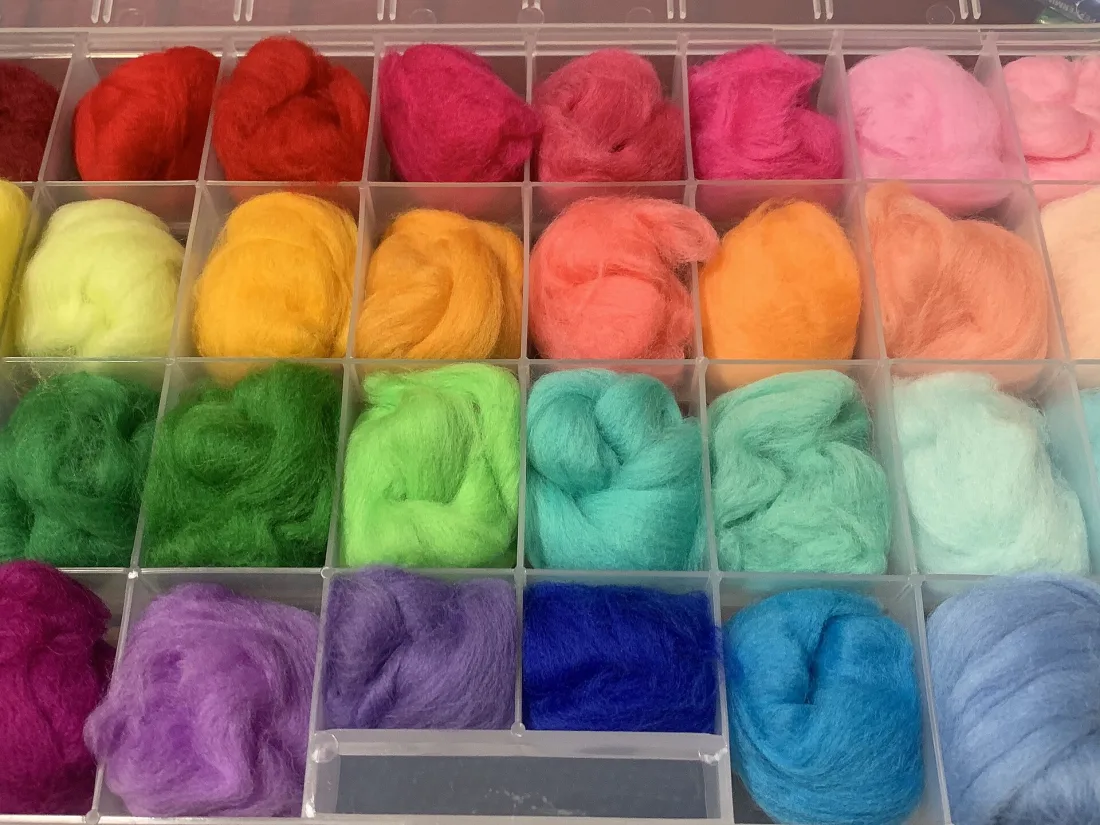
- Core wool. Kits ship a handful of bright colours, because colours photograph. They rarely ship the cheap, coarse, undyed wool you should be using for the inside of everything — which is both faster to felt and far less wasteful. Start with core wool and save the merino for the surface.
- Enough wool of one colour. A kit's fibre pack is a sampler. The first time you make something hand-sized you will run out halfway, and dye lots do not match. Buy the main colour by weight — wool roving for felting covers the forms it comes in.
- Armature wire. Anything with legs needs a skeleton, and no beginner kit contains one. See wire armature for needle felting.
Kit or separate pieces?
A kit is the right purchase exactly once: at the very start, when you do not yet know whether you like the craft enough to make decisions about it. It gets you a working setup in one order and saves you reading four buying guides before you have felted anything.
After that, buy separately. Needles wear out at wildly different rates depending on what you make — someone building sculpture burns through 38s, someone doing flat work blunts 40s — and a fresh kit every time means accumulating four more mats and three more thimbles you do not need.
Better project kits colour-code their needles so you cannot reach for the wrong gauge, which is a genuinely good idea for a first piece — see Felted Sky kits for what that looks like in practice.
The one exception is a project kit, where the wool quantities and colours are matched to a specific finished thing. That is a different purchase with a different point, covered in felting kits.
Reading a listing before you buy
Four questions answer almost everything:
- Does it name the gauges? If the listing says only "40 felting needles", that is a quantity, not a specification. A kit that names 36/38/40 was put together by someone who felts.
- How thick is the mat, in inches or centimetres? If the number is missing, assume it is thin.
- Is there a holder? Bare needles are perfectly usable, but a holder turns a fiddly grip into a comfortable one, and it is the cheapest comfort you can buy. A multi-needle version speeds up bulk work — see needle felting pens.
- Is the wool named? "Wool" could be anything. Merino behaves quite differently from a coarse carding blend; best wool for felting explains which you want for what.
If the kit is for a child
This is the most common reason a needle kit gets bought, and the one the packaging is least honest about. A felting needle is a surgical-grade spike with barbs that catch on the way out as well as the way in, and the injuries are not dramatic — they are small, frequent and discouraging.
Ten and up, with someone at the table, is a realistic floor. Below that, the same wool works wet: warm water, soap and hands, no sharp anything. For a younger child, buy a wet felting kit and keep the needles for later — the reasoning is set out in is needle felting dangerous, and there are needle-free ways into the craft in how to felt without a felting needle.
Making the needles last
Needles do not wear out so much as get broken, and almost always the same way: the needle is buried in the wool and the hand moves sideways. Push straight down, lift straight up, and stop the moment the wool stops yielding. Dense felt does not need more force, it needs a finer needle.
Keep a bent needle out of the work — it will snap, and it will do it at speed. The full list of habits that save needles is in how to stop breaking felting needles, and the safety side, which is mostly about fingers rather than needles, is in is needle felting dangerous.
What to buy, if you want one line
A dozen needles across 36, 38 and 40 gauge; a mat you can push a needle into up to the crank without touching wood; a single-needle holder; two leather thimbles; and undyed core wool by the bag, bought separately. That setup will make anything in needle felting ideas for beginners, and nothing in it is wasted once you know what you like.
If you have not felted at all yet, start with needle felting for beginners and then read needle felting mistakes — between them they cover the failures that get blamed on equipment and are usually technique.
Frequently asked questions
What should be in a felting needle kit?
At minimum: needles in two or three gauges rather than forty of one, a dense foam or wool mat thick enough that the needle never reaches the table, and a holder or finger guards. Wool is a bonus, not the point — a needle kit is a tool kit.
How many felting needles do I need to start?
Three or four working needles, in 36, 38 and 40 gauge. You will break some, so a pack of a dozen is sensible, but a pack of forty identical needles is forty of the same answer to one question.
Are cheap felting needle kits any good?
The needles usually are — they are a commodity, stamped and barbed the same way everywhere. What cheap kits skimp on is the mat, which is where the money should go, and the labelling, which is often missing or wrong.
What does the gauge number on a felting needle mean?
It is thickness, and it runs backwards: the higher the number, the finer the needle. A 36 is coarse and fast, a 40 is fine and leaves almost no mark. It says nothing about the blade shape, which matters just as much.
Topics
Image credits
- Felting needles, the part of a kit everything else is built around — Danielle Keller (Danielle_dk) (PUBLIC DOMAIN)
- Barbed felting needles laid side by side — quinn.anya (BY SA)
- Undyed wool roving of the kind used for the core of a sculpture — Sophiaxue123 (BY SA 4.0)