How to Felt Wool by Hand, Without a Felting Needle
5 min read Beginner
We may earn a commission from links on this page, at no extra cost to you. As an Amazon Associate I earn from qualifying purchases. Learn more.
Needles are one route to felt, and the newer one. Water, soap and friction do the whole job with nothing sharp involved: five methods with quantities, water temperatures and timings, and what to use if you only need a needle substitute.
Felting needles are a nineteenth-century industrial invention. Felt itself is thousands of years older, and everything about it — hats, rugs, boots, tents — was made without a needle anywhere.
So if you have no needles, have broken all of them, or are working with children, there is nothing to work around. There is simply the other method.
The mechanism, either way
Wool fibres are covered in overlapping scales. Anything that makes them slide against each other in one direction and catch in the other will felt them.
- A barbed needle does it by dragging fibres past each other mechanically.
- Hot water, soap and friction do it by opening the scales with heat, letting them slide with soap, and rubbing them past each other with your hands.
Same result, different route. The details are in how felting needles work and wet felting for beginners.
Method 1: Hands, water and soap
The main technique, and the one to learn. You need wool tops or roving that is not superwash, a bowl of hot water, soap, and something to work on: a sheet of bubble wrap, a bamboo blind, or an old towel on a tray.
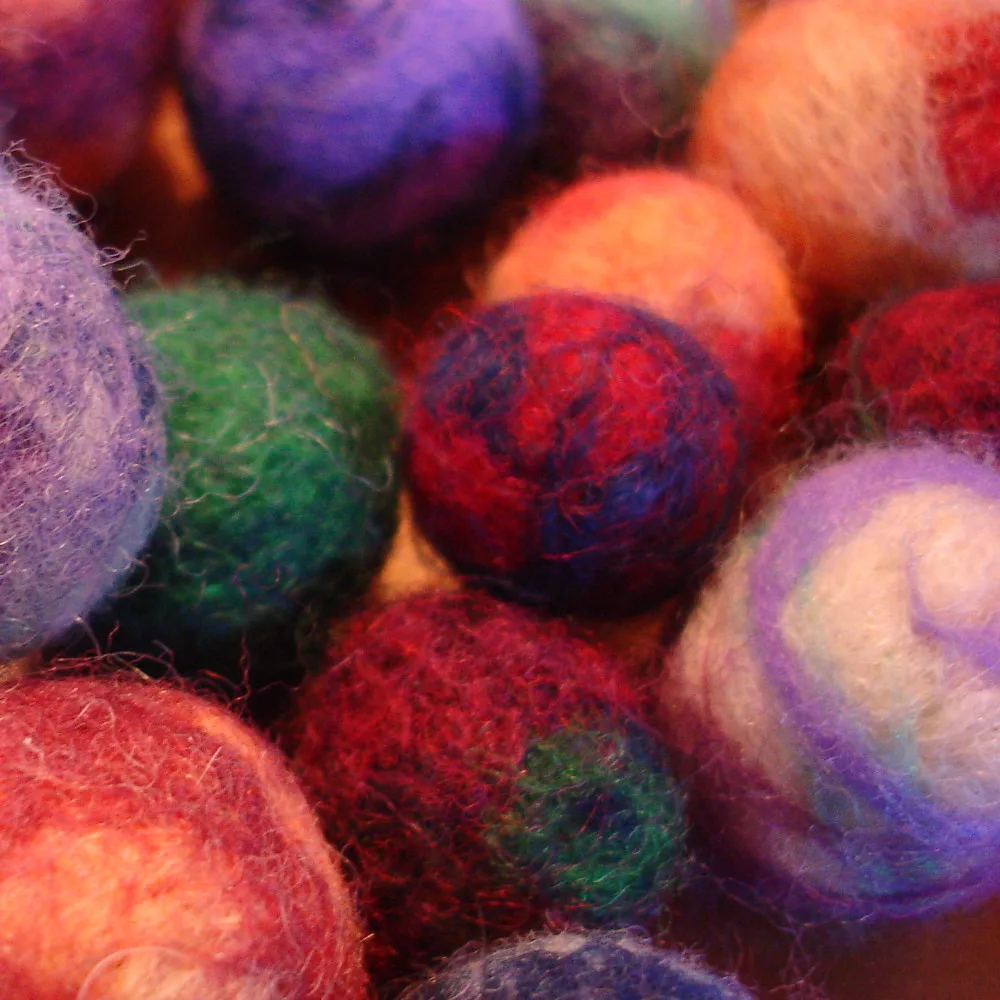
- Lay the wool out in two or three thin layers, each at right angles to the last. For a first 8 in (20 cm) square, that is about ⅓ oz (10 g). For a ball, wind the wool tightly round itself instead.
- Wet it through with water as hot as your hands can bear, around 110 to 120 °F. Press it down flat with your palms so no dry wool is left in the middle.
- Add soap: rub a bar of olive oil soap over the surface, or add a teaspoon of dish soap to a quart of the water. The soap lets the fibres slide into each other.
- Rub gently at first, just stroking the surface with flat hands for five minutes. Press too hard at this stage and the wool shifts and thins.
- Do the pinch test. Pinch a few fibres and lift. If the whole surface lifts with them, it has felted; if single fibres pull away, keep rubbing.
- Full it. Now work hard: roll it up in the bubble wrap or towel and roll it back and forth fifty times, unroll, turn it a quarter, repeat. Throw it onto the table a few dozen times. This is what shrinks and firms it, and it is where most first pieces stop too early.
- Rinse in hot then cold water, which tightens it further, squeeze out and dry flat.
Budget twenty to thirty minutes for a flat square and ten minutes for a ball. The piece will be about a third smaller than you laid it out; the numbers are in how much wool shrinks when felted.
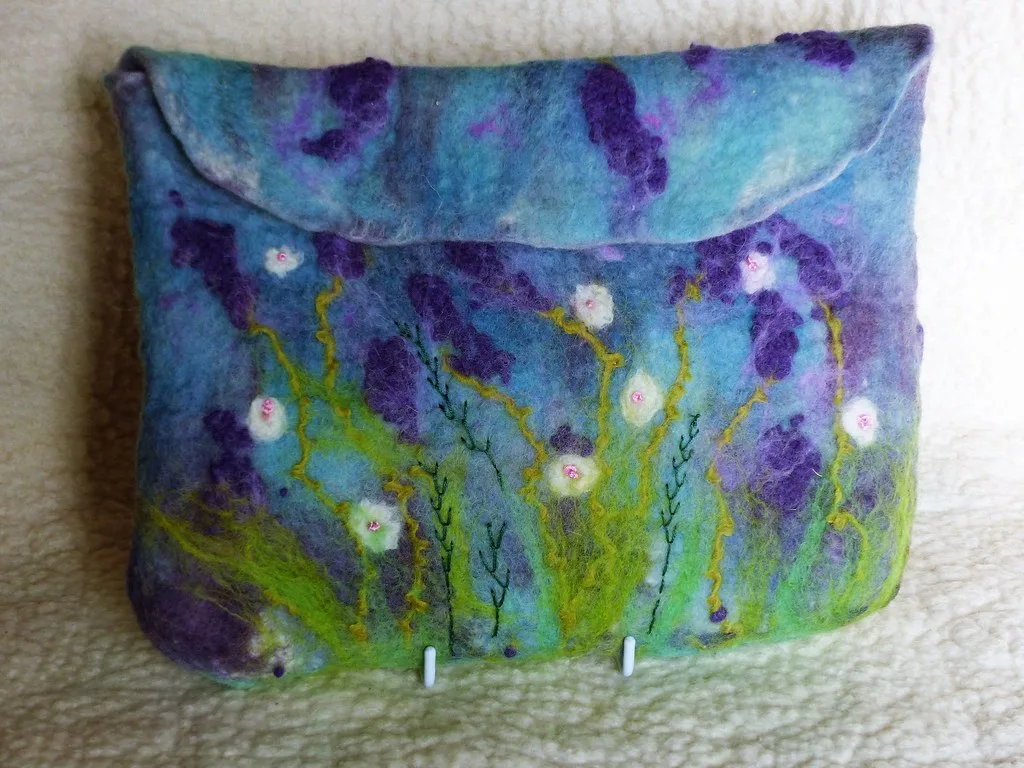
This makes flat sheets, balls, felted soap, scarves, and — with a resist — bags, bowls and hats. See resist felting.
Method 2: The washing machine
For knitted or woven wool, and for batches of balls.
Knitted pieces go in a laundry bag with a pair of jeans, a teaspoon of detergent, and a 60 °C wash. Balls go into the toe of a pair of tights, one per section with a knot between them, and run the same cycle.
Less control, no effort. Full method in felting in knitting.
Method 3: The jar
Wind about ¼ oz (7 g) of wool into a tight ball, drop it into a pint jar with a cup of hot water and a few drops of dish soap, screw the lid on and shake hard for three to five minutes. The ball hitting the glass supplies the friction. Check it, give it another few minutes if it still feels soft, then rinse cold. A few wraps of yarn round the ball before it goes in keeps it from unwinding.
It is the classic children's method: no needles, no hot hands, and every child can do it at once. Results are slightly irregular, which nobody minds.
Method 4: Tumble drying
Damp wool in a tumble dryer felts through heat and tumbling alone. It is how wool dryer balls harden themselves in use, and it works as a finishing stage for a piece that is nearly there but not firm enough. Wet it, tie it into the leg of an old pair of pantyhose so it keeps its shape and does not shed into the lint filter, and run a hot cycle with a load of towels, checking every ten minutes.
Unpredictable, so use it as a supplement rather than a plan.
Method 5: Improvised dry felting
If you specifically need dry sculptural work and have no needles: a stiff wire pet brush pressed repeatedly into wool will tangle it slowly, and a sharp darning needle will do something similar. Both are much slower than a proper felting needle, which has barbs and is the reason the tool exists.
This is a genuine last resort rather than a technique. If you like the dry method, buy needles — they cost very little, and the alternatives in felting mat alternatives mean the rest of the kit can be improvised.
Which method, how long
| Method | Best for | Time | Control |
|---|---|---|---|
| Hands, water, soap | Flat pieces, balls, soap, anything seamless | 10–30 min | High |
| Washing machine | Knitted pieces, batches of balls | One wash cycle | Low |
| Jar | Small balls, children | 5 min | Medium |
| Dryer | Firming a nearly finished piece | 20–60 min | Low |
| Pet brush or darning needle | Emergencies only | Very slow | Poor |
Choosing between the routes
- Flat, hollow, worn, or large — wet felt. Scarves, bags, hats, bowls, rugs, slippers.
- Small, solid, detailed — needles. Animals, gnomes, mushrooms, faces.
- Both — extremely common. Wet felt the form, then needle the detail once it is dry.
What will not work regardless
Superwash wool, machine-washable merino, cotton, acrylic and any synthetic. No method felts a fibre that has no scales, and no amount of heat, soap or stabbing will change that. The symptoms are listed in why wool will not felt.
Frequently asked questions
Can you felt wool without a felting needle?
Yes — wet felting needs only hot water, soap and friction, and it predates needle felting by thousands of years. Needles are simply a dry alternative that gives more sculptural control.
What can I use instead of a felting needle?
Your hands and hot soapy water for most things, a washing machine for knitted pieces and batches of balls, and a jar of hot water with the lid on for small balls. A fork or a stiff pet brush can substitute badly in a pinch.
Is wet felting easier than needle felting?
For flat pieces, hollow shapes and anything worn, yes. For small sculptural detail, no — you cannot carve a face with soapy water. The methods suit different objects rather than different skill levels.
How long does it take to felt wool by hand?
A small ball takes about ten minutes of rolling. A flat 8 inch square takes twenty to thirty minutes to felt and another ten to full firm. The jar method makes a small ball in five or so minutes of shaking.
What does hand felted mean?
On a label it almost always means wet felted by hand: wool laid out and worked with water, soap and friction, rather than needle punched by machine. It says nothing about needles either way, so a hand felted piece may have needle-felted detail added.
Can children felt without needles?
Yes, and it is the right way for under-eights. Felted soap and felt balls need nothing sharper than warm water, and the results appear quickly enough to keep their interest.