Needle Felting Ideas for Beginners: 18 Projects Worth Starting
3 min read Beginner
We may earn a commission from links on this page, at no extra cost to you. As an Amazon Associate I earn from qualifying purchases. Learn more.
Projects chosen by what they teach, not by how they look in a photograph — each one adds a skill you will use in everything you make afterwards.
Most beginner project lists are sorted by how photogenic the result is. This one is sorted by what each project teaches, because the skills stack — every one of them turns up again in whatever you make next.
Start here — the fundamentals
1. A ball
Teaches density, even rotation and what "firm enough" feels like. It is the base of nearly every sculpture. 10 g, twenty minutes. Method in how to needle felt a ball.
2. A heart
A flattened ball with a notch needled into the top and a point at the bottom. Teaches shaping by directed stabbing. 8 g, twenty minutes.
3. A carrot or a pear
Cone and teardrop shapes with a contrasting top. Teaches tapering and joining a small part to a large one. 10 g, half an hour.
4. A flat coaster
Wool needled into a disc on a brush mat. Teaches even thickness and working flat, which is completely different from sculpting. 15 g, half an hour.
Recognisable objects
5. A mushroom
Cap and stem joined properly, with gills underneath. Teaches the join that holds — the single most useful technique in the list. See felted mushrooms.
6. A pumpkin
A squat ball cinched into segments with thread. Teaches shaping with tension rather than needles. See felted pumpkins.
7. A gnome
Cone, beard, nose, hat. No face required. Teaches assembly and proportion. See felted gnome.
8. An acorn
A small felted nut pushed into a real acorn cup with a dab of glue. Teaches working small, and it takes ten minutes.
9. A bee or a ladybird
An oval body with stripes or spots and tiny wings cut from prefelt. Teaches surface pattern and crisp edges.
Living things
10. A chick or a small bird
Egg body, tiny beak, no legs required. Teaches building a silhouette that reads correctly from every angle.
11. A hedgehog
A body with a needled snout and a coat of dark wool raised with a reverse needle. Teaches texture — the reverse needle is a genuine revelation the first time.
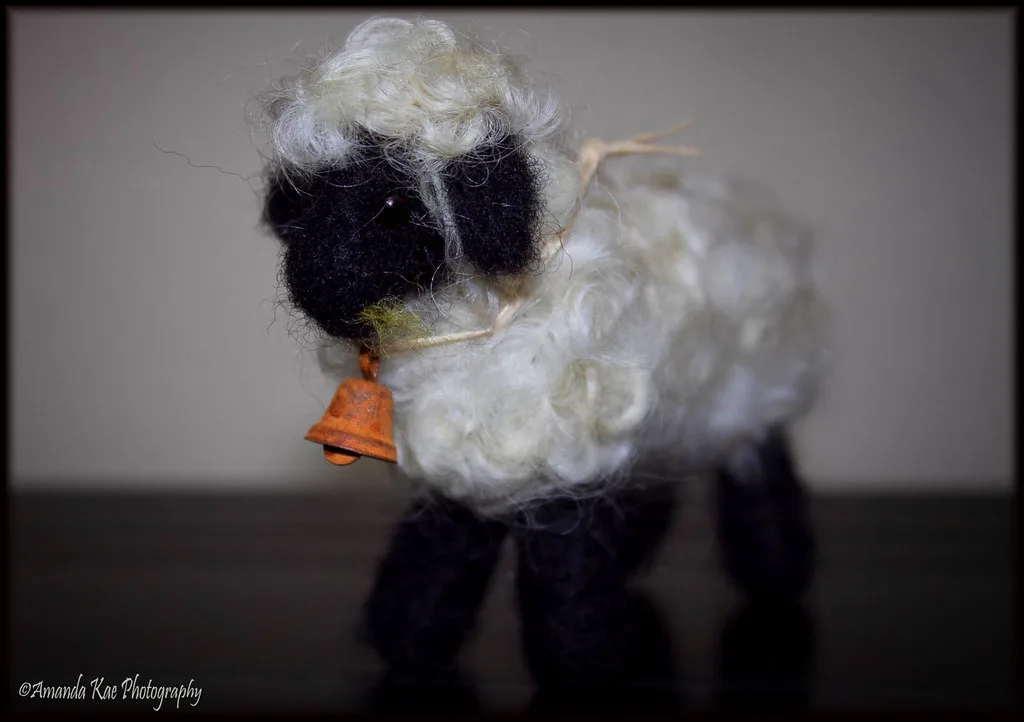
12. A sheep
A firm body in dark wool with curly locks needled on. Teaches attaching fibre for texture and forgives almost any error in proportion.
13. A simple cat or rabbit, sitting
Sitting means no leg engineering. Teaches head-to-body proportion, which is where most animal projects go wrong. Full method in needle felted animals for beginners.
Flat work
14. A brooch
A small flat shape with a pin stitched to the back. Teaches finishing an edge neatly, which is harder than it sounds.
15. A picture on felt
Wool needled onto a wool felt background — a landscape, a tree, a moon. Teaches composition and colour layering. See needle felting on fabric.
16. A mended patch
Wool needled over a hole in a jumper. Teaches working on fabric and produces something genuinely useful.
Two things that take an evening
17. A set of Christmas ornaments
Six small shapes with hanging loops. Teaches batch working — bringing several pieces along together rather than finishing one at a time. See felted Christmas ornaments.
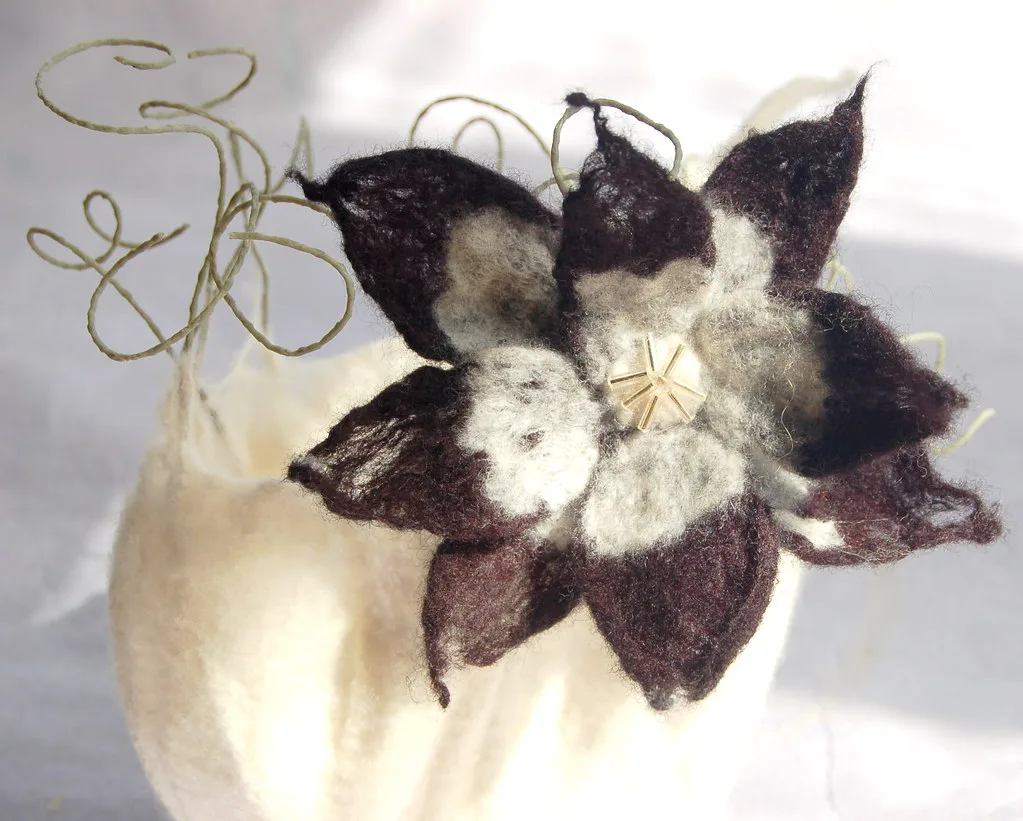
18. Flowers
Petals shaped individually and joined at a centre. Teaches making multiple matching parts, which is the skill behind everything more ambitious. See needle felted flowers.
How to choose
Pick something whose silhouette you can describe in one sentence. "A ball with a flat bottom and a stem" works. "A fox looking over its shoulder" does not, yet.
If you want a first project with a use at the end of it rather than an ornament for its own sake, flat felt animal ornaments are cut, not sculpted, and finish in an evening.
Make the same thing three times rather than three different things. The third one is always dramatically better, and the improvement is what teaches you, not the variety.
What you need for all of it
Core wool, a handful of coloured tops, 38 and 40 gauge needles, and a foam pad. That is the whole list — the full version is in felting supplies for beginners, and the errors to expect are in needle felting mistakes.
Frequently asked questions
What is the easiest thing to needle felt first?
A ball. It teaches density, rotation and how firm wool needs to be, and every other shape is built from it. Nobody enjoys hearing this, and it is still true.
How much wool does a beginner project use?
Very little — 10 to 20 g for most small sculptures. A 100 g bag of core wool plus a few colours will get you through a dozen projects.
How long does a beginner needle felting project take?
Half an hour to two hours for the projects on this list. Anything advertised as a fifteen-minute project is either very small or will not be firm enough to last.
What should a beginner not start with?
Realistic animals with faces, human figures and anything with thin poseable limbs. All three depend on skills that take practice, and failing at them early puts people off entirely.