Is Needle Felting Dangerous? Needles, Wool Dust and Children
4 min read Beginner
We may earn a commission from links on this page, at no extra cost to you. As an Amazon Associate I earn from qualifying purchases. Learn more.
The honest answer: you will stab yourself, it will hurt, and that is the whole of the risk for most people. Here is what to do about it and the two rarer concerns.
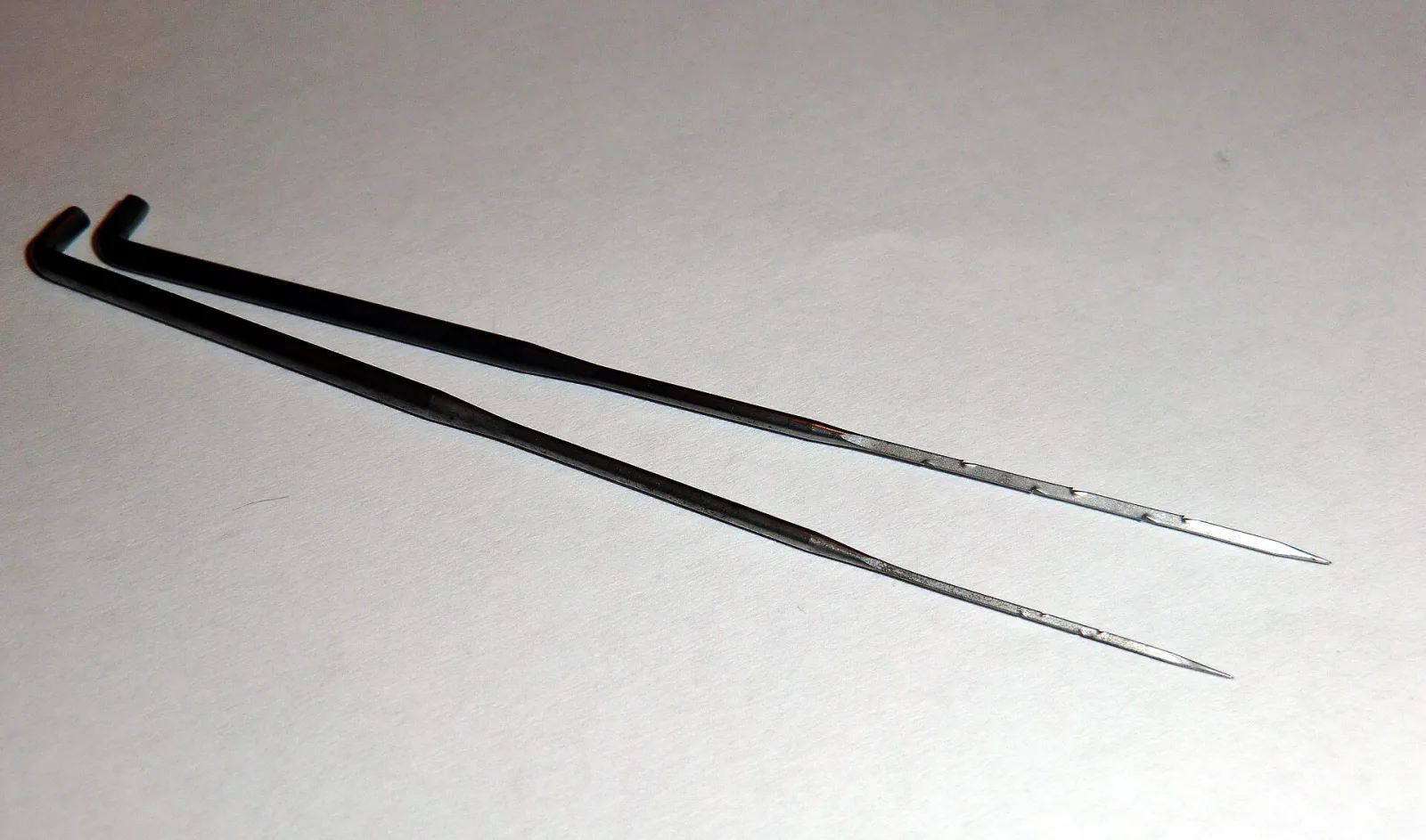
Needle felting involves repeatedly driving a barbed steel spike towards your own fingers, which sounds worse than it is. Adults have very little to worry about. The risks that do exist are worth knowing precisely, so you can stop worrying about the rest.
The stabs
You will stab yourself. Everyone does — usually in the first hour, and periodically thereafter. A felting needle is thinner than a sewing needle and considerably sharper, and it goes in easily.
The barbs are what make it different from a pin prick. They face backwards along the shaft, so the needle enters cleanly and drags on the way out. Pull it straight back out along the line it went in and it will come free with a nip. Twist or lever it and the barbs tear sideways, which is how a small puncture becomes a proper cut.
What to do
- Remove the needle straight back out, no rotation.
- Let it bleed for a few seconds — a puncture that bleeds cleans itself.
- Wash with soap and running water.
- Cover it, mainly so you do not immediately do it again in the same spot.
- Watch for redness, heat or swelling over the next day or two.
Puncture wounds close over quickly on the surface and can trap bacteria underneath, so a felting stab is marginally more likely to become infected than a shallow scratch. If your tetanus cover is not current and the needle was old or dirty, that is worth a phone call rather than a shrug.
Avoiding most of them
- Keep the supporting hand beside the needle, never underneath it.
- Leather thimbles on thumb and forefinger of the hand holding the work.
- Watch the needle tip, not the shape you are making.
- Stop when tired. Almost every stab happens in the last twenty minutes of a session.
- Hold small pieces down with a spare needle or a skewer rather than a fingertip.
Broken needles
Needles snap, and they snap under sideways force — levering, or pulling out at a different angle from the one you went in at. A broken tip can end up buried in your work, which is a nuisance, or fly off, which is why working at eye level with a bare needle is not a great idea.
Straight in, straight out, and the problem largely disappears. The full set of habits is in how to stop breaking felting needles.
Wool dust
Felting releases fine fibre fragments, particularly with dusty carded batts, raw fleece and heavily dyed wool. For most people this amounts to sneezing occasionally.
For a minority — existing asthma, or hours of daily work — it can be a genuine irritant. Sensible precautions: ventilate the room, keep fibre stored in bags rather than open piles, shake fleece out somewhere else, and vacuum rather than sweep. A dust mask is reasonable when carding raw fleece, which is far dustier than felting.
True wool allergy is uncommon; most "allergy" is either prickle from coarse fibre or a reaction to dye residue. That distinction is covered in is merino wool itchy.
Children
The rough guide most teachers use:
- Under 8 — wet felting only. Felted soap and felt balls need nothing sharper than warm water and are genuinely satisfying.
- 8 to 10 — needle felting with an adult sitting alongside, one needle, a large piece, and a foam pad big enough that fingers stay away from the edge.
- 10 to 12 and up — independently, with the same rules an adult follows.
Needles are not toys and should be counted in and out of the box. A dropped felting needle in a carpet is found later by a bare foot.
The genuinely small risks
- Repetitive strain. Hours of the same wrist motion causes what hours of any repeated motion causes. Break every twenty minutes and change hands occasionally.
- Eye injury. Very rare, and entirely preventable by not holding work at face height.
- Pets. Cats eat wool. Wool in a digestive tract is a serious veterinary problem. Put fibre away.
Compared with what
Needle felting is roughly as dangerous as hand sewing and considerably less dangerous than a kitchen. The needles hurt more than they harm, and the people who avoid injuries are not the careful ones so much as the ones who stop when they get tired.
Frequently asked questions
Is needle felting dangerous?
Not seriously, for adults. The needles are sharp and barbed and everyone catches a finger eventually, but injuries are small puncture wounds rather than anything worse. The realistic risks are minor infection and, rarely, wool dust irritation.
What do you do if you stab yourself with a felting needle?
Pull the needle straight back out along the same line it went in, let it bleed for a moment, wash with soap and water and cover it. Do not twist or lever it out — the barbs face backwards and twisting tears the wound.
At what age can children start needle felting?
Around eight with close supervision, and ten to twelve independently. Younger children can do wet felting, which involves nothing sharper than warm water.
Is wool dust from felting harmful?
For most people it is a mild nuisance at worst. Heavy repeated work with dyed or dusty fibre can irritate airways, so keep the room ventilated and shake fleece out somewhere other than where you sit.
Topics
Image credits
- Two barbed felting needles close up — Ubahnverleih (BY 3.0)