Sauna Hat: Why Wool Felt, Which Style, and How to Felt Your Own
8 min read Intermediate
We may earn a commission from links on this page, at no extra cost to you. As an Amazon Associate I earn from qualifying purchases. Learn more.
A felt hat in a hot room sounds backwards until you understand what it is doing. Why wool is the only sensible fibre for it, the Russian banya and Finnish styles, how to choose one, and how to felt your own with real template sizes.
Wearing a thick wool hat into a hot room is the sort of thing that sounds like a joke until someone hands you one. Then you sit through a session that would previously have driven you out after eight minutes, and the logic becomes obvious.
Sauna hats are a fixture of Finnish and Russian bathing culture and almost unknown elsewhere, which is why most people meet them for the first time as a puzzle.
What it is actually doing
A sauna is violently stratified. The air at the ceiling can be 70 to 90 °F (40 to 50 °C) hotter than the air at your ankles, and your head is at the top of that gradient. Throw water on the stones and a wave of steam rolls down from the ceiling and reaches your head first. What drives people out of a hot room is almost never discomfort in the body — it is the scalp, the ears and the sinuses.
Felt is mostly trapped air held in place by matted fibre, and trapped air is the thing that insulates. A hat made of it slows the heat reaching your scalp enough that the rest of you can stay put. The effect on how long a session feels tolerable is not subtle.
The second job is hair. Repeated dry heat at that temperature makes hair brittle, and ears — thin, exposed, poorly supplied with blood — burn before anything else does. That is the whole of the "benefit": comfort and protection for the scalp, ears and hair. A hat does not detox, burn fat or change what the sauna does to the rest of you.
One caution, because a hat works: it lets you stay longer. Your head was your early warning, so listen to the rest of you instead. Dizziness, a pounding heart or nausea mean out, hat or no hat.
Traditional sauna or infrared
Everything above is about a traditional sauna or banya, heated to roughly 170 to 200 °F by a stove. An infrared cabin usually runs at 120 to 140 °F and heats the body directly rather than the air, so the hot layer at head height is small. A hat does no harm there, and it is not doing much.
The styles
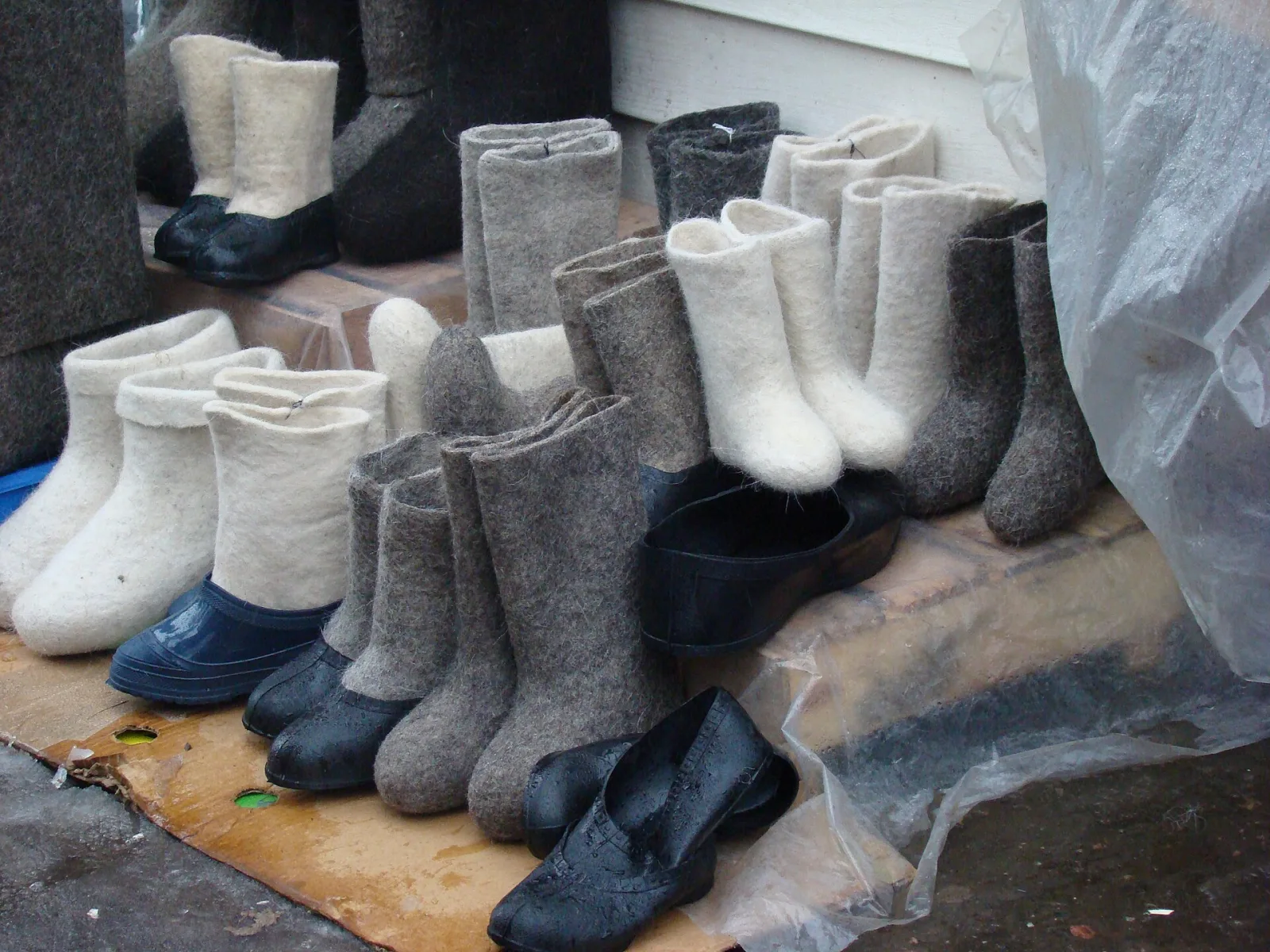
- Russian banya hat. A thick bell or dome with a turned-down or rolled brim that shades the ears and the back of the neck. Usually natural grey or cream, often with a slogan embroidered or appliqued on the front, and the most common style sold abroad.
- Finnish sauna hat (saunahattu). Simpler and closer-fitting, often a rounded cap or a soft point with no brim, sometimes with a hanging loop at the crown. Worn in a hotter, drier room where there is less steam to shade against.
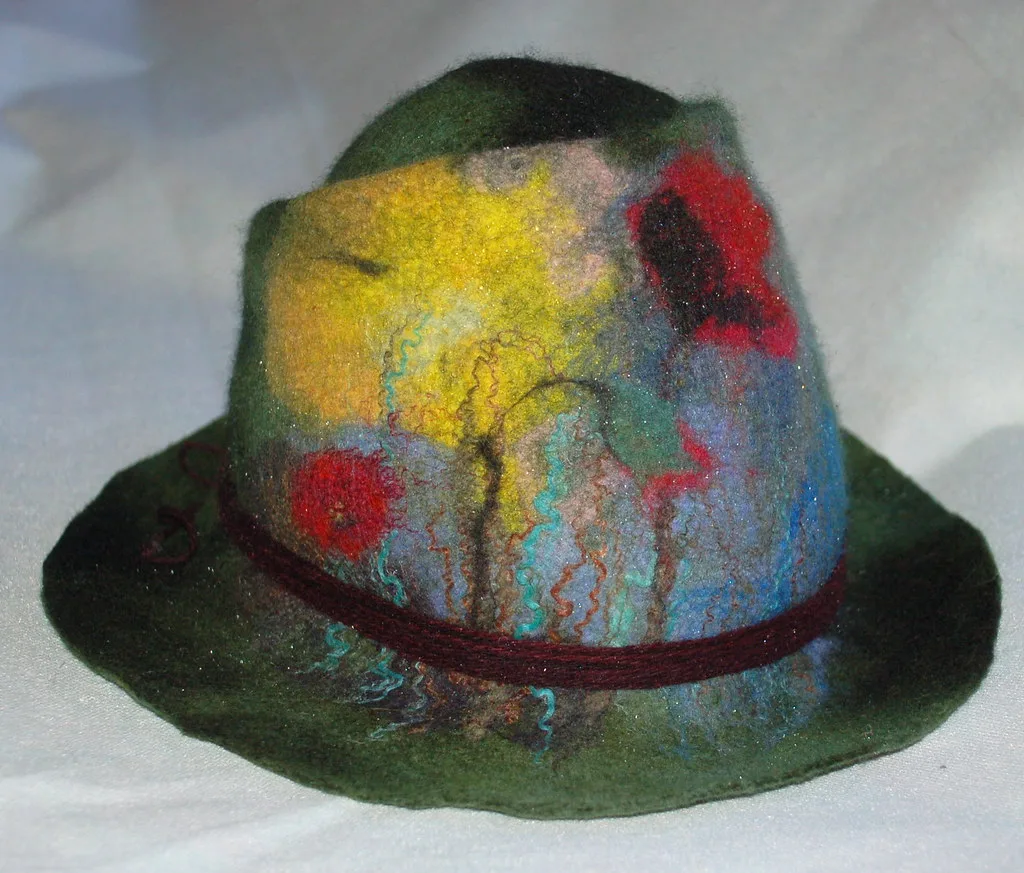
- Brimmed or "bucket" shapes. Modern takes on the banya hat, wider-brimmed and more hat-like. They work, provided the felt is thick enough.
- Novelty shapes (Viking horns, pointed gnome caps). Fine if they are real wool felt of a proper thickness; many are thin craft felt that does very little.
Terry-cloth caps and the rolled towel hats of Korean bathhouses do a different job: they catch sweat and keep hair tidy, but they wet through and insulate poorly in real heat.
Why wool and not something else
- It holds air. Felted wool is loft held in a fixed shape. That is the entire insulating mechanism.
- It manages moisture. Wool absorbs a substantial share of its own weight in water before it feels damp, so the hat keeps working as you sweat. Cotton wets out, collapses, and then conducts heat rather than blocking it.
- It does not melt. Synthetics near a hot stove are a bad idea, and wool is naturally difficult to ignite.
- It holds its shape. Felt has no seams or weave to distort, which is why a well-made one still fits after years of soaking and drying — the same property described in wool felt berets.
Choosing one
Whatever the style, the variables that decide whether it works are thickness, fibre and fit, and thickness matters most.
- Thickness. Around 4 to 5 mm of dense felt is the usual range. Thin ones look neater and do noticeably less.
- Density, not bulk. Squeeze the crown. It should be firm and springy. Soft, compressible felt was under-fulled and will pack down.
- Undyed, if you can. Dye is fine, but a sauna hat lives its life soaking wet and hot, which is exactly the condition under which colour bleeds. Natural cream, grey and brown are traditional for a practical reason.
- Fit. Loose rather than snug. It should sit clear of the scalp with air between, and cover the ears entirely. A tight hat conducts.
- 100% wool, stated. "Felt" alone often means polyester, which softens near a stove and insulates badly once wet. The burn test settles it.
Making your own
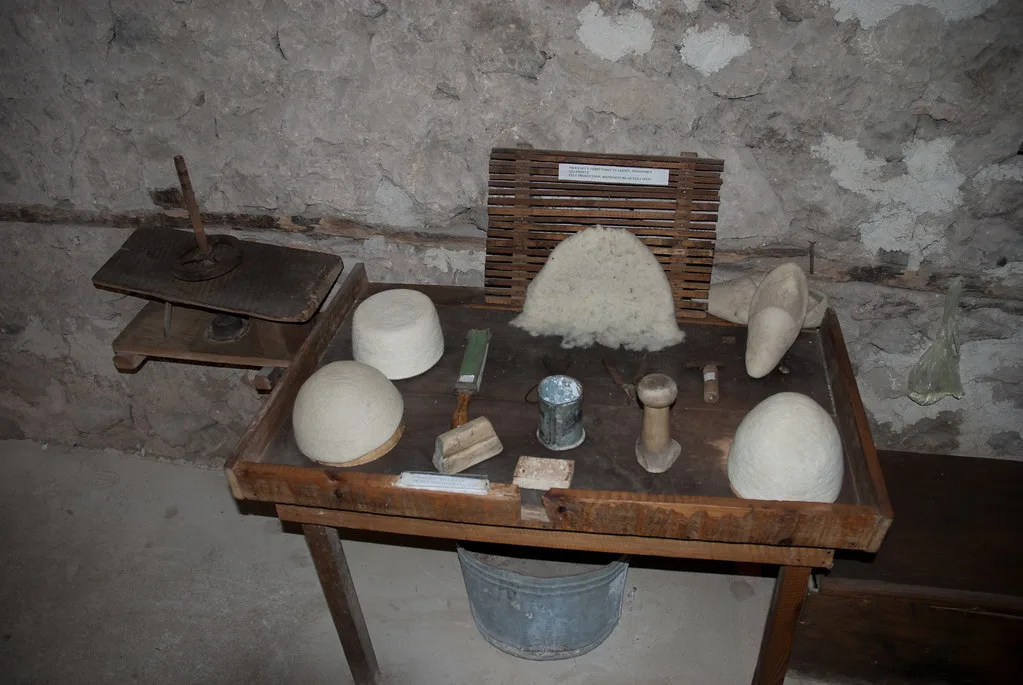
A sauna hat is one of the better wet felting projects to attempt early: it is a simple shape, the fit is forgiving, nobody inspects the stitching because there is none, and the failure mode — slightly too small — produces a hat for someone with a smaller head rather than a ruined afternoon.
The method is resist felting, the same one used for bowls and bags. You lay wool in crossed layers around a flat template, felt through the fibre by hand, cut the opening, remove the template and full the piece until it is dense.
Sizes to work from
A hat laid flat is half its head circumference wide. For an average adult head of 22 to 23 in (56 to 58 cm), plus room for air, a banya hat wants to finish about 12 in (30 cm) across at the opening and 9 to 10 in (23 to 25 cm) tall with the brim turned down. Medium and coarse wool fulled hard shrinks by about 30% in each direction, so the resist is the finished size divided by roughly 0.7:
| Finished | Resist | |
|---|---|---|
| Width at the opening | 12 in / 30 cm | 17 in / 43 cm |
| Height, crown to brim edge | 10 in / 25 cm | 14½ in / 36 cm |
| Wool | 4½ to 5½ oz (130 to 160 g) of coarse wool for 4–5 mm felt | |
Draw the resist as a bell: straight sides, a rounded top, the bottom edge straight. For a Finnish-style cap make it shorter, about 12 in (30 cm) resist height. Your own wool may shrink more or less, so felt a small sample first; the method is in how much wool shrinks when felted.
Step by step
- Cut the resist from floor underlay foam or thick bubble wrap to the sizes above.
- Lay the wool in four to six thin layers, alternating direction each time, wrapping the edges around the resist so the two faces join seamlessly.
- Wet and soap it, then work the surface gently through netting until the fibres hold together.
- Cut the brim edge and pull the resist out.
- Full it — rolling, throwing, rubbing — until it has shrunk to size and the felt is hard. This stage takes far longer than people expect and is what separates a hat from a floppy bag.
- Shape it wet over a bowl or a head-sized form and let it dry completely.
The full technique is in wet felting a hat and resist felting, and the fibre handling behind it in wet felting for beginners.
Which wool
Coarser than you would use for a scarf. A sauna hat wants thickness and durability rather than softness against the skin, so a medium or coarse breed felts faster, fulls harder and lasts longer. Merino will work and will take longer to reach the density you need — the trade-offs are in best wool for felting and corriedale wool.
Budget generously on size: a hat that comes out small cannot be made bigger, while one that comes out large can be fulled down another inch in hot water.
Using it
Put it on dry. A dry hat holds the most air and therefore insulates best, and it will pick up plenty of moisture from your own head without help.
Damping it slightly is a matter of taste: the evaporation cools, but a saturated hat is heavy and has lost the loft that made it work in the first place. If you do wet it, wring it out properly first.
Looking after it
- Dry it flat after every session, away from the stove. Hanging a heavy wet felt hat stretches the band.
- Rinse in cool water when it needs it, and squeeze rather than wring.
- Never machine wash. Heat and agitation shrink felt further, and there is no way back — that is the mechanism described in how to felt a wool sweater, applied by accident.
- Store it dry and sealed out of season. A wool hat that spends summer in a cupboard is a moth's idea of a good year; see protecting wool from moths.
Persistent smell usually means it never dried fully between sessions rather than that it needs washing. Felt takes longer to dry than it looks, and a hat put away damp will let you know.
Worth making or worth buying?
If you have felted anything before, make one — the shape is forgiving, the materials cost little, and a hand-felted hat in coarse undyed wool is closer to the traditional article than most of what is sold. Plan on an afternoon, most of it fulling. If you have not, this is a reasonable first project as long as you accept that the fulling stage is long and dull, and that is exactly where it is tempting to stop too early. Why won't my wool felt covers the other reason a piece stays soft.
Frequently asked questions
What is a wool sauna hat for?
It insulates your head in a room where the air at ceiling height is far hotter than at bench height. Keeping your scalp and ears cooler lets you sit through a full session comfortably, and it keeps hair from drying out and scorching.
Why are sauna hats made of felt rather than cotton?
Felt is full of trapped air, which is what actually insulates, and wool holds a great deal of moisture without feeling wet or losing loft. A cotton hat soaks through, flattens, and then conducts heat straight to your head.
Do you wet a sauna hat before using it?
Traditionally no, or barely. A dry hat insulates best. Some people damp it lightly for the evaporative cooling, but a soaked hat is a heavy hat that has lost most of the air that made it work.
What is a banya hat?
The Russian version of the sauna hat: a thick wool felt cap, usually bell-shaped with a turned-down or rolled brim, worn in the banya to protect the head from the steam that follows water thrown on the stones. It is often decorated with an embroidered or appliqued slogan.
Do you need a sauna hat in an infrared sauna?
Much less. An infrared cabin runs far cooler, usually around 120 to 140 °F against 170 to 200 °F in a traditional sauna, and it heats the body directly rather than through the air, so the hot layer at head height that a hat exists to block is small. It does no harm, but it is not doing the same job.
How do you wash a wool sauna hat?
Rinse in cool water by hand, squeeze gently without wringing, and dry flat away from direct heat. Never machine wash it — agitation and heat will shrink it further, and it is already felt, so the shrinking has nowhere good to go.