Felted Stones: How to Wet Felt Wool Around a Rock or Pebble
9 min read Beginner
We may earn a commission from links on this page, at no extra cost to you. As an Amazon Associate I earn from qualifying purchases. Learn more.
A smooth pebble wrapped in a few grams of wool and rubbed in soapy water until the felt shrinks tight onto it. How much wool each size of stone takes, the stocking trick, cut-open geode stones, and what felted stones are good for.
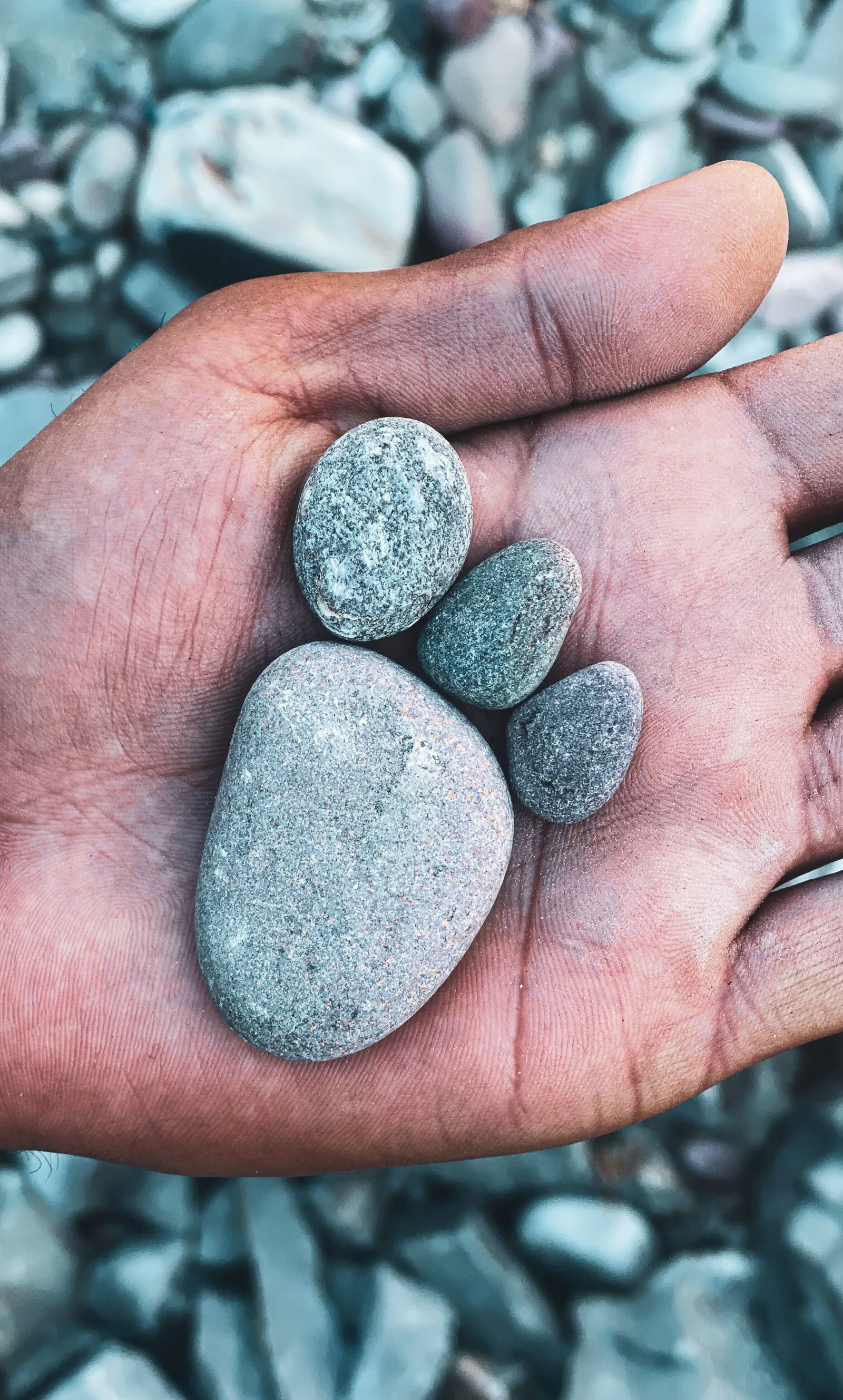
Felted stones are smooth pebbles or rocks wrapped in a few grams of wool and wet felted until the wool shrinks into a tight, seamless skin around them. The stone gives weight and a shape no amount of felting could make; the wool gives colour, warmth to the touch and a surface that will not scratch a table. A palm-sized stone takes about a quarter of an ounce of wool and twenty minutes.
What makes felting a stone different from felting anything else is that the inside cannot shrink. A felt ball shrinks all the way through. On a stone, the wool contracts until it meets rock and then can only get denser, never smaller, and every step below follows from that.
Which stones are best for felting?
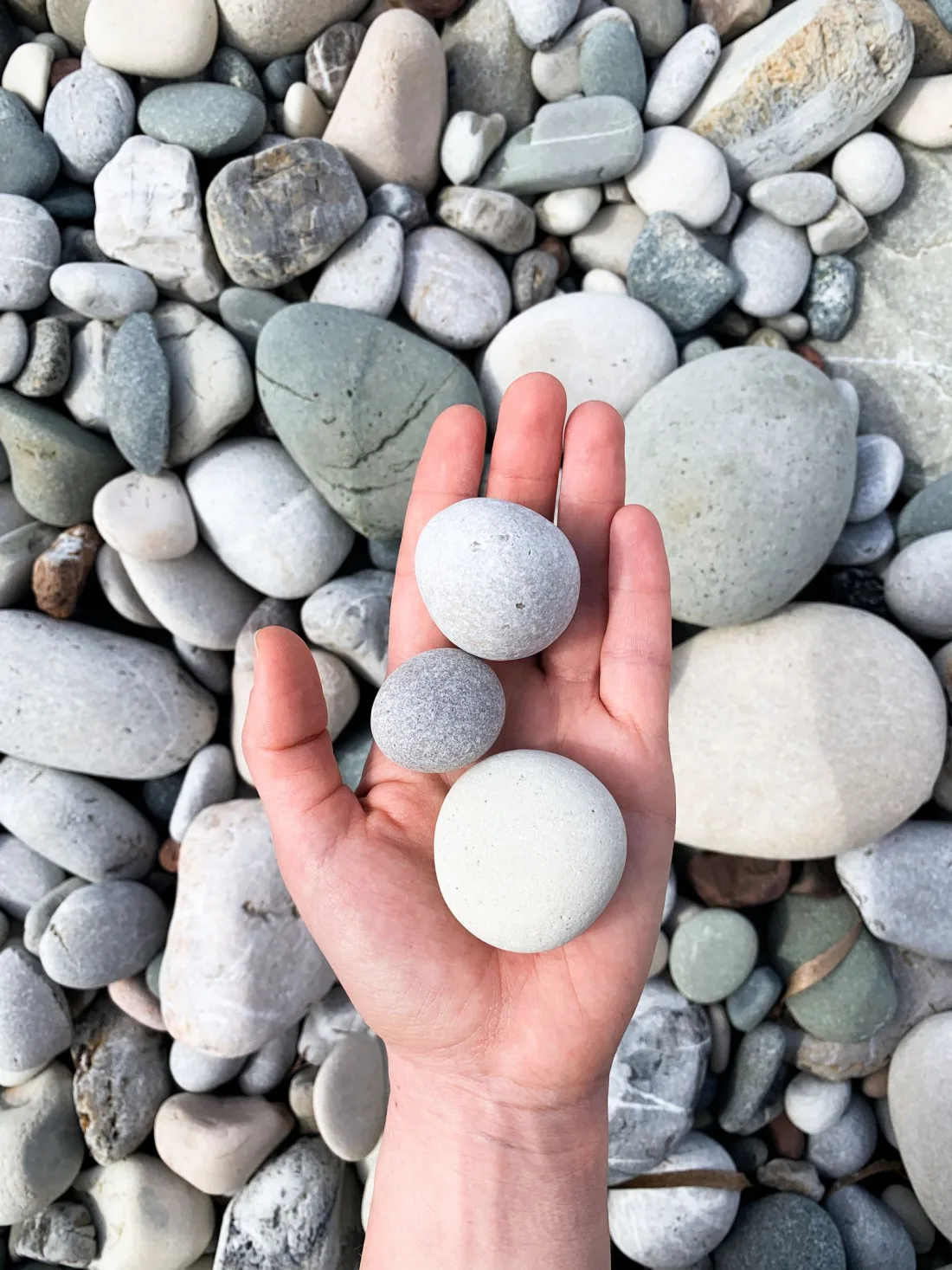
Smooth, rounded stones 1½ to 4 in (4 to 10 cm) long, shaped like an egg or a flattened egg. River and beach pebbles are ideal, because water has already worn off every corner.
- No sharp edges or corners. Felt stretched over an edge is thinner there and wears through first.
- No deep hollows. Shrinking wool pulls straight across a dip instead of following it down, leaving a soft bridge of felt over a gap.
- Not too flat. A thin, flat stone leaves the wool thin along its rim. Choose stones at least half as thick as they are wide.
- Solid, not crumbly. Sandstone and shale that flake when rubbed shed grit into the felt.
Scrub the stones and let them dry before you start. If you are collecting them yourself, check the rules first: removing stones is prohibited in US national parks and on many protected beaches.
How much wool do you need to felt a stone?
About 3 to 4 g (⅛ oz) for a 2 in (5 cm) pebble, rising to about ¾ oz (16 to 25 g) for a 5 in (13 cm) stone. That is enough for a finished skin about ⅛ in (3 mm) thick, which covers the stone completely and wears well.
| Stone length | Wool | Per layer (four layers) |
|---|---|---|
| 1½ in (4 cm) | 2 to 3 g (about ⅒ oz) | A small wisp |
| 2 in (5 cm) | 3 to 4 g (⅛ oz) | About 1 g |
| 2½ in (6.5 cm) | 4 to 6 g (⅛ to ¼ oz) | 1 to 1½ g |
| 3 in (7.5 cm) | 6 to 9 g (¼ to ⅓ oz) | 1½ to 2 g |
| 4 in (10 cm) | 10 to 15 g (⅓ to ½ oz) | 2½ to 4 g |
| 5 in (13 cm) | 16 to 25 g (about ¾ oz) | 4 to 6 g |
The figures are for an ordinary pebble shape, about half as thick as it is long. A round, ball-shaped stone of the same length has nearly twice the surface and needs nearly twice the wool. An ounce of wool covers about four palm-sized stones, which is why a few small bags of colour go a long way.
Because the stone cannot shrink, the wool has nowhere to go once it is tight. Too little leaves thin patches where the stone shows through, and those never close up. Too much is the subtler problem: a thick wrap felts on the outside first and can leave loose, unfelted wool trapped underneath, so the skin feels spongy and shifts on the stone. Aim for an even layer you can only just not see through, not a fat cocoon.
How to felt rocks, step by step
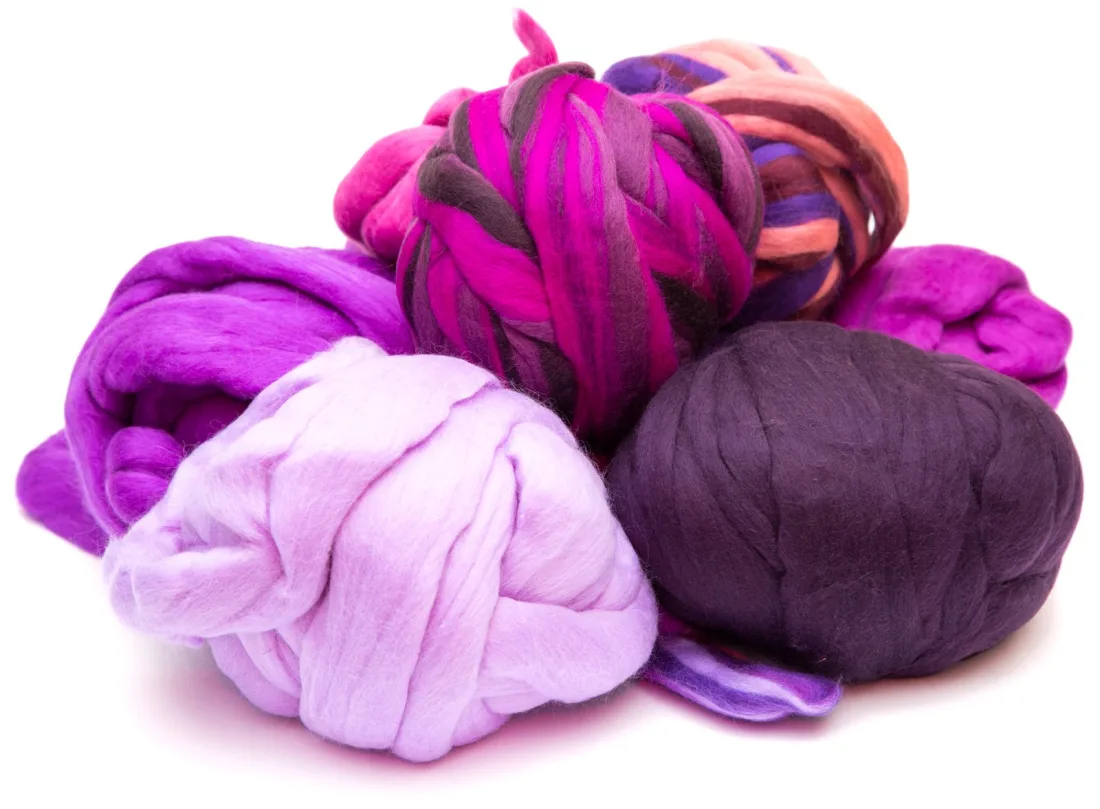
Merino tops are the easiest wool to use: they are fine, so they shrink tight and smooth over the curves. Any wool that felts will work, though; see merino wool for felting for the alternatives. If you have never wet felted before, wet felting for beginners explains what the soap and friction are doing.
- Pull thin wisps of wool about as long as your hand. Thin is the key word: you should almost see your fingers through each one.
- Wrap the first layer round the stone in one direction, like a bandage, covering both ends.
- Wrap the second layer at right angles to the first. The crossing is what lets the fibres lock together.
- Repeat for a third and fourth layer, turning the direction each time. Any pattern or colour goes on the last layer: a stripe of yarn, a few wisps of a second colour, a scrap of prefelt cut to a shape.
- Slide the stone into a knee-high nylon stocking and knot the stocking tight against it, so the wool is held snug.
- Wet it in hot water with a little olive oil soap until it is soaked through, then squeeze out the air.
- Rub gently all over through the stocking with soapy hands for 5 to 10 minutes, until the wool starts to hold together.
- Peel off the stocking. Do this carefully: some fibres will have worked into the mesh, and you want them to stay with the stone.
- Rub harder and roll the stone between your palms, on bubble wrap or on a ridged mat, adding hot soapy water as it cools. Dip it in cold water now and then; the change in temperature speeds the shrinking.
- Stop when the felt is tight: you cannot pinch up any slack, the felt does not slide when you push it with your thumb, and no fibres lift when you scratch it with a fingernail.
- Rinse out the soap in cool water, squeeze it in a towel, and leave it on a drying rack for a day or two, turning it so the side against the rack dries too.
Why the nylon stocking helps
Loose wool on a smooth stone slips. The first time it is wetted, the wraps want to slide off the ends and bunch up, and rubbing at that stage pushes the layers out of place. The stocking holds everything still for the fragile first minutes while the fibres begin to catch on each other. It is the same trick used for felting soap, and for the same reason: a hard, slippery core.
For a group or a classroom, put several wrapped stones in one long stocking with a knot between each, wet the whole string and let everyone rub their own section. Do not leave the stocking on much past 10 minutes; the longer it stays, the more fibre grows through the mesh and the harder it is to remove without pulling the surface up.
How long does it take?
About 15 to 20 minutes of rubbing and rolling for a 2 to 3 in (5 to 7.5 cm) stone, and nearer half an hour for a large one. Merino gets there faster than coarser wool. If the felt still slides after that, it needs more work, not more wool; the skin tightens as it keeps shrinking, and wool shrinkage when felting explains why fulling continues to pull it in.
How do you make a felted geode stone?
Wrap the stone in several colours, one per layer, felt it until tight, then cut a window through the outer layers so the colours show as rings, like the inside of a split geode. It takes a little more wool than a plain stone, because each colour band has to be thick enough to read.
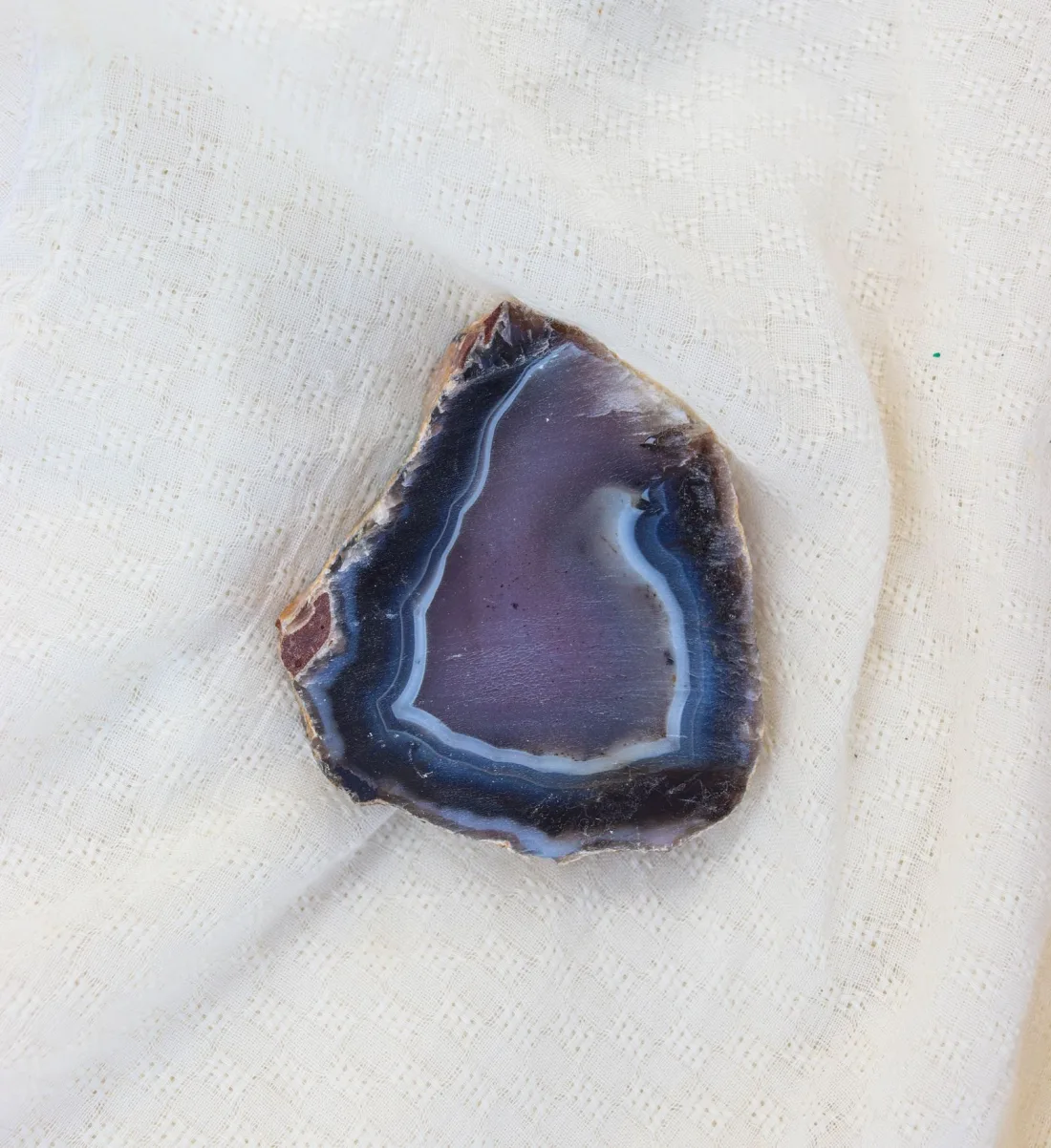
- Plan the layers from the inside out. The layer touching the stone is the "crystal" in the middle of the window, so make it the brightest colour: white, purple, turquoise. Work outwards through three or four bands and finish with a rough stone colour, grey, brown or oatmeal, as the outer skin.
- Make each colour two thin layers, crossed, rather than one. A single wisp gives a band too faint to see.
- Add sparkle near the centre if you like: a few strands of Angelina fibre between the first two layers glint at the bottom of the window.
- Felt it until completely tight. A loose skin smears the bands when it is cut.
- Cut the window while it is still damp. Pinch up the felt and slice off a shallow cap with small, sharp curved scissors, cutting at a slant so the bands are exposed as wide rings. Cut smaller than you want: the felt is under tension, and the edges pull back a little once they are free.
- Rub the cut edges for a minute with soapy fingertips, so the cut fibres settle, then rinse and dry as before.
Cut deep enough and the stone itself shows at the bottom, which suits a pretty pebble. If you would rather the window ended in wool, use a thicker inner colour, or make the geode with no stone at all around a hard felt ball, as in how to make felt balls.
Can you needle felt on a felted stone?
Yes, but only on the surface and at a slant. The felt skin is just ⅛ in (3 mm) thick, so a needle pushed straight down hits stone after a few millimetres and snaps.
- Use a fine 38 or 40 gauge needle, which needs less force; felting needles explained covers the gauges.
- Hold it almost flat, at about 30 degrees to the surface, and work only the tip into the felt.
- Keep the additions small and thin: dots, stripes, a leaf, a ladybug, a tiny mushroom. A thick piece has nothing to be anchored into.
- Needle on the dry, finished stone, and stop as soon as a wisp holds.
Why needles break in general, and how to stop it, is in how to stop breaking felting needles. Embroidery is the other way to decorate: a sharp needle can run sideways through the felt skin without touching the stone, so French knots and running stitch work well.
What can you use felted stones for?
- Doorstops. Pick a heavy stone with one flatter side so it does not roll. The felt grips hard floors and will not chip the paint on the door. Use the 5 in (13 cm) row of the table or more.
- Paperweights. A smooth 3 to 4 in (7.5 to 10 cm) stone in a plain colour, sitting flat on a desk.
- Worry stones and sensory stones. A small, flattish stone that fits the palm, with felt for the thumb to rub. They are popular in calm-down corners for older children and adults.
- Games and decoration. Sets of colours for counting and sorting, a bowl of mixed geodes on a shelf, place-card holders with a name tag tucked under each.
- Garden. Felted stones look lovely in plant pots and along a path, but outdoors wool stays wet, fades in sun and grows algae, so expect a season rather than years. Under a porch or in an indoor pot they last much longer.
Indoors, treat them like any wool item: dust them now and then, and if they are stored for long, keep them with the rest of your wool away from moths, as described in protecting wool from moths.
Are felted stones safe for children?
Making them is a good activity from about age five, with warm rather than hot water and an adult nearby. Giving them to very young children is another matter.
- Under 3: no felted stones. A small stone is a choking hazard. The US small-parts rule treats anything that fits inside a cylinder 1¼ in (3.2 cm) wide and 2¼ in (5.7 cm) deep as unsafe for children under 3, and many palm stones fit.
- Heavy is heavy. A larger stone is too big to swallow but can still hurt a sibling when thrown, or a foot when dropped. Wool makes it look soft; it is not.
- Felt can be picked off. A child who chews will eventually expose the stone underneath.
For a toddler, a solid wool ball the same size gives the same feel with none of the weight. The felt ball rug page shows how to make them in quantity.
Frequently asked questions
How much wool do you need to felt a stone?
About 3 to 4 g (⅛ oz) for a 2 in (5 cm) pebble and 6 to 9 g (¼ to ⅓ oz) for a 3 in (7.5 cm) one, laid in four thin crossed layers. The stone does not shrink, so you only need enough wool for an even skin about ⅛ in (3 mm) thick once felted.
Do you need a stocking to felt a stone?
Not strictly, but it makes the first few minutes much easier. A knee-high nylon stocking knotted tight against the wrapped stone holds the loose wool in place while you wet and rub it. Peel it off after 5 to 10 minutes, once the wool holds together, and finish by hand.
Why is the felt loose on my stone?
It has not been fulled long enough. Wool keeps shrinking until it grips the stone, so a baggy skin means it still has shrinking to do. Keep rubbing and rolling in hot soapy water, with a dip in cold now and then, until you cannot pinch up any slack.
Can you wash felted stones?
Rinse them by hand in cool water with a little wool wash and dry them on a rack, turning them so the underside dries too. Do not machine wash them: a heavy stone thrown about the drum can damage the machine and the felt.
Are felted stones safe for toddlers?
No. Small stones are a choking hazard, and in the US anything that fits inside a cylinder 1¼ in (3.2 cm) wide and 2¼ in (5.7 cm) deep counts as a small part for children under 3. Larger felted stones are still heavy enough to hurt when thrown or dropped, so keep them out of reach of babies and toddlers.
Topics
Image credits
- An open palm holding four smooth grey pebbles, one large oval stone and three small ones, above a pebble beach — Himanshu Sharma (Pexels License)
- A hand holding three round, pale, smooth pebbles above a beach of rounded stones — Anna Tukhfatullina Food Photographer/Stylist (Pexels License)
- Bundles of merino wool tops in purple, lilac, magenta and dark plum, with one striped multicoloured bundle — Valentin Ivantsov (Pexels License)
- A polished slice of agate with bands of blue, purple and grey, lying on white cloth — Mr. Pugo (Pexels License)