Felted Hearts: Needle Felted, Wet Felted and Stuffed
4 min read Beginner
We may earn a commission from links on this page, at no extra cost to you. As an Amazon Associate I earn from qualifying purchases. Learn more.
The shape everyone gets slightly wrong. Three ways to make a heart in wool, and the one adjustment that stops it looking like a leaf.
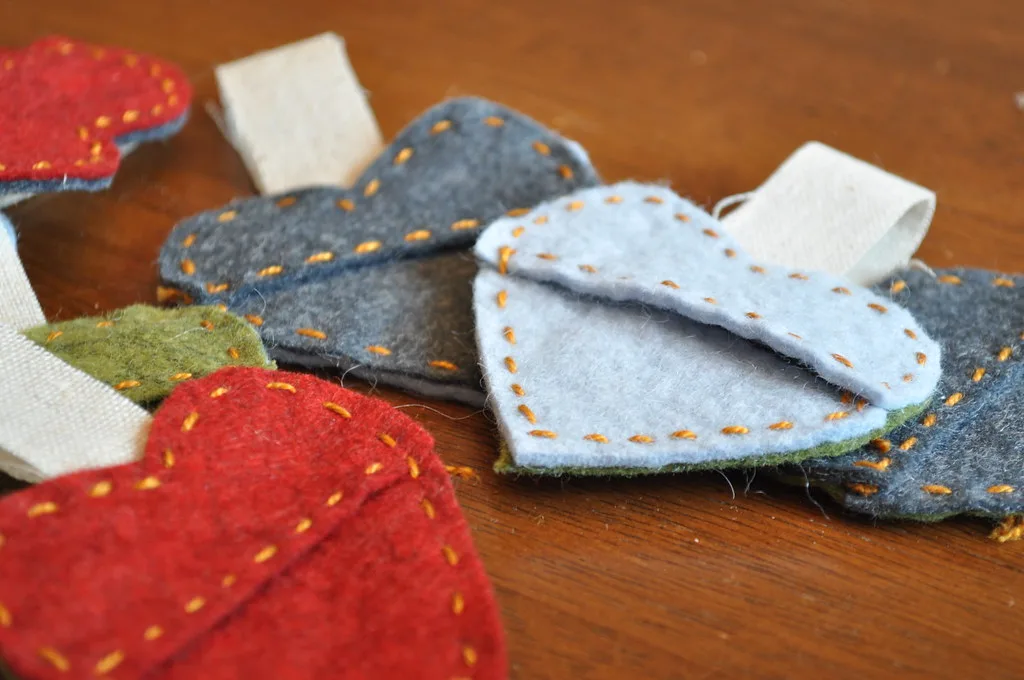
A heart is the smallest complete project in felting. There is no anatomy, no armature and no join, and one takes fifteen minutes. It is also the shape people most often get subtly wrong, and because the shape is the entire object, there is nothing else to look at.
Getting the shape right
Three rules, and they fix nearly everything:
- Wide lobes. The two humps at the top should be full circles, wider than feels correct, and the widest point of the heart is up near them — not halfway down.
- A deep V between them. A shallow dip reads as a lumpy circle. Needle that notch in hard and keep going back to it.
- A short point. The bottom tapers quickly. A long drawn-out point turns the heart into a leaf or a spade.
Cut a paper template the first few times. Being able to lay the wool over an outline saves more time than it costs.
Method one: flat needle felted hearts
The quickest, and the one to make in batches.
- Lay the wool. Pull a loose pile of fibre onto the foam pad, roughly heart-shaped and about twice the size and three times the thickness of the finished piece.
- Needle the outline first. Work around the edge with a 38 gauge needle, tucking stray fibre inwards with the needle tip as you go. Fixing the outline early is what keeps the shape.
- Fill in. Needle the interior evenly, then turn the piece over and do the same on the other side. Turning is essential — a heart needled on one side only curls.
- Firm the edges. Hold the heart on its side and needle into the edge itself. This is what gives a clean, hard outline rather than a fuzzy one.
- Finish with a 40 gauge needle over both faces for a smooth surface.
Method two: wet felted hearts
Softer, smoother and faster per heart once set up, and better for a large batch.
- Lay thin wool in crossing layers over a paper template, roughly 30% larger than the finished size to allow for shrinkage.
- Cover with netting, wet with hot soapy water and press.
- Rub gently through the net until the fibres hold, then remove the net and work the edges between your fingers.
- Full it — roll, throw, squeeze — until firm, shaping the notch and point with your fingers as it shrinks.
- Rinse, press flat and dry.
The general technique is in wet felting for beginners, and the shrinkage arithmetic in how much wool shrinks.
Method three: three-dimensional hearts
- Joined pair. Make two flat hearts, hold them face to face and needle around the edge to bond them, leaving a 2 cm gap. Stuff with loose wool through the gap and close it.
- Solid sculpted. Start from a firm ball, needle a deep groove across the top to divide the lobes, then work the bottom into a point. Denser and heavier — good for hanging.
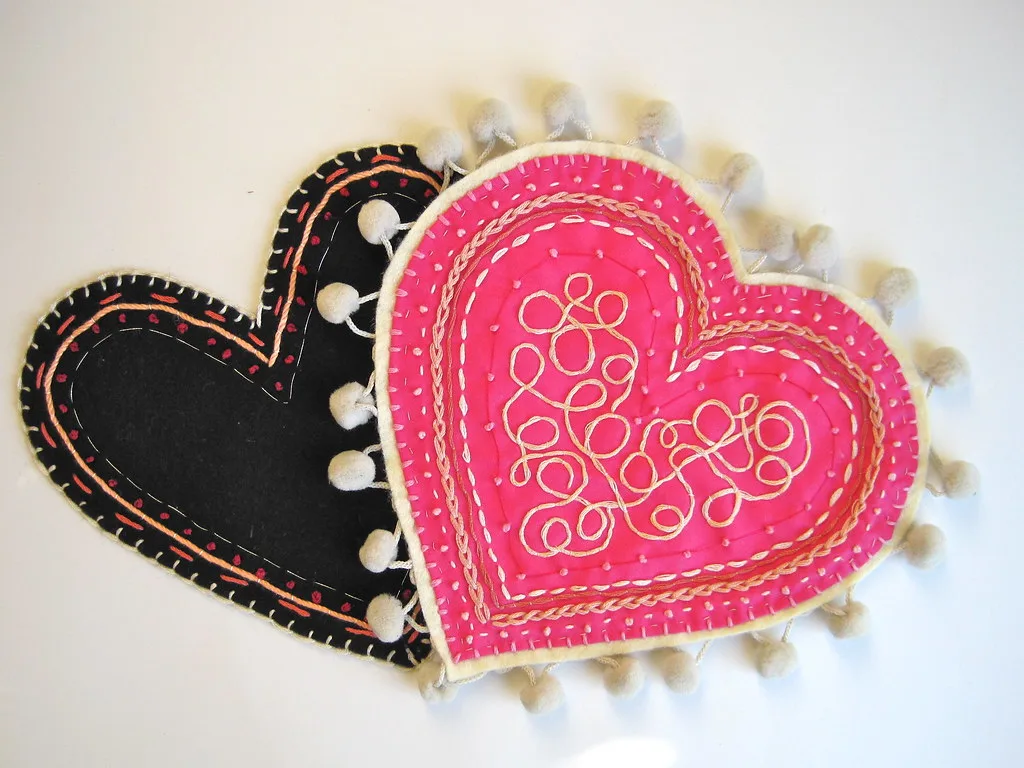
- Sewn felt. Two hearts cut from wool felt sheets, blanket-stitched around the edge and stuffed. Not felting exactly, but the fastest route to a batch — see wool felt fabric.
Decoration
- Embroidery. Running stitch around the edge in a contrasting thread, or a few French knots. Felt takes a needle beautifully.
- Beads and sequins. See how to sew beads on felt.
- A second colour. A small white heart needled onto a red one, or an outline in a contrasting wool.
- Wool lettering. Very thin strands laid as script and tacked down with a 40 gauge needle.
- Applique. Flowers, initials or a smaller heart stitched on — see felt applique.
What to make with them
- Hanging hearts. A ribbon or twine loop needled into the notch between the lobes, not into the top of a lobe — it hangs straight that way.
- Garlands. Seven to eleven hearts in graded sizes and a limited palette, threaded on twine with beads between.
- Keyrings and bag charms. Small firm hearts with a jump ring — see felt bag charms.
- Lavender hearts. Stuff a joined pair with dried lavender rather than wool. They also help with keeping moths off wool.
- Christmas hearts. White and red, Scandinavian style — see felted Christmas ornaments.
- Valentine's projects. Cards, pins and garlands, covered in felt Valentine crafts.
Making a batch
A heart with a face sewn on stops being a decoration and becomes a toy, which is a different set of rules — seam allowance, stuffing density, and nothing small enough to come off. Those are in felt plushies.
Hearts are the classic craft fair filler and worth making in production runs. Cut one template, lay out ten at once, needle all the outlines, then all the interiors. Working in stages is roughly twice as fast as finishing them one at a time, and the batch comes out consistent — which matters far more on a shape this simple than any individual heart does.
Frequently asked questions
How do you needle felt a heart?
Lay wool in a rough heart on a foam pad, needle the outline first to fix the shape, then work inwards. Turn it over often and needle the edges from the side to keep them clean. A flat heart takes about fifteen minutes.
Why does my felted heart look wrong?
Almost always the top. The two lobes need to be wide, round and clearly separated by a deep V, and the point below should be short. Shallow lobes and a long point give you a leaf.
How do you make a 3D stuffed felted heart?
Make two flat heart shapes, hold them together and needle around the edge to join them, leaving a gap. Stuff with loose wool, then close the gap. Or felt a solid heart directly by shaping a ball into two lobes.
What wool is best for felted hearts?
Merino gives the smoothest surface and the brightest reds, which matters on a shape this simple. Corriedale holds a crisper edge. For a batch, use whichever you have most of — hearts are a good way to use up scraps.