Felt Needle Book and Wool Pincushion: Sizes, Sewing and Felting Them
8 min read Beginner
We may earn a commission from links on this page, at no extra cost to you. As an Amazon Associate I earn from qualifying purchases. Learn more.
A wool felt needle book with pinked pages, sized for three uses, sewn in an evening or made with a wet felted cover. Plus a felted wool pincushion: how much wool for each size, how firm to felt it, and tomato, strawberry, jar-lid and wrist versions.
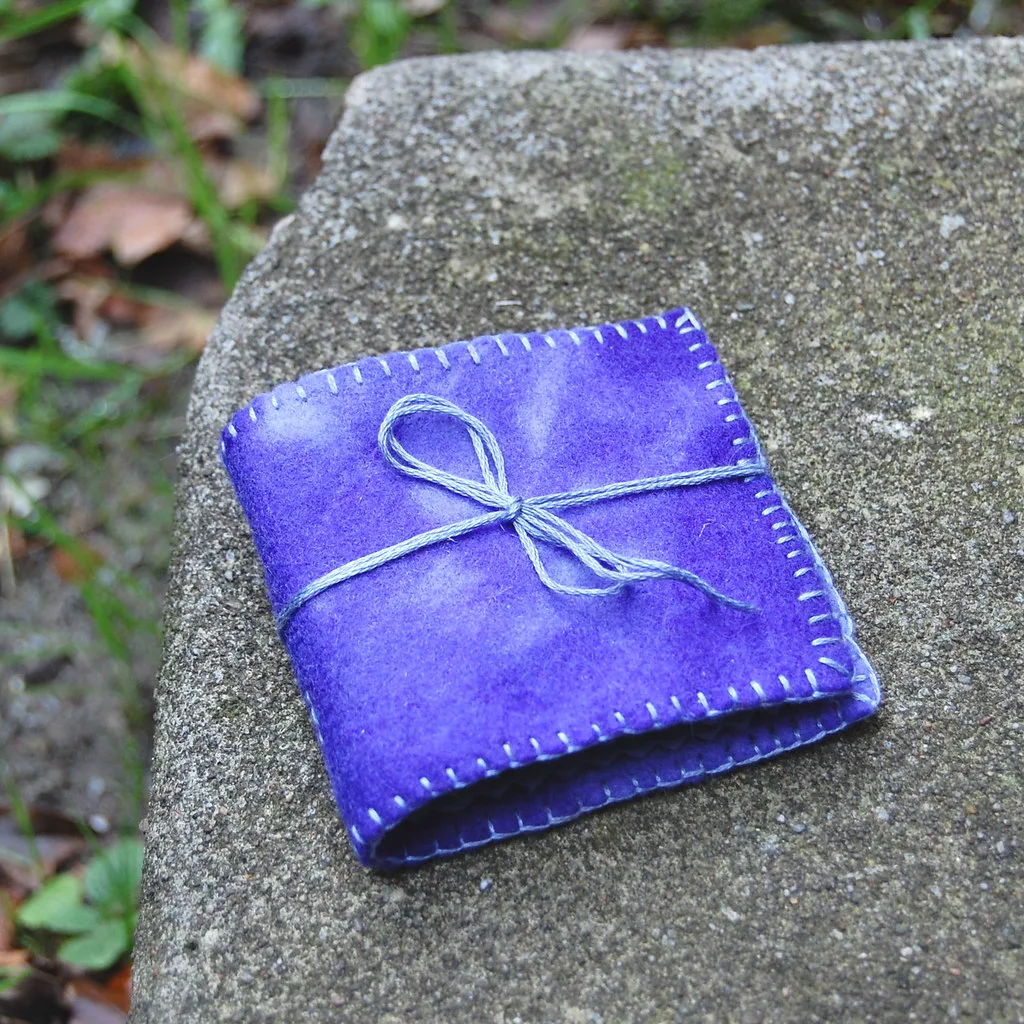
A felt needle book is a small folded cover of wool felt with two to four felt pages stitched inside it, where sewing needles are parked flat and sorted by size. A wool pincushion is its partner on the sewing table: a firm ball or dome of wool for pins. Both are evening projects, both use scraps, and both are traditional gifts for anyone who sews.
The two use wool in different forms: the needle book is sewn from sheet felt (or a flat piece you wet felt yourself), and the pincushion is loose wool felted into a solid shape.
Why make a needle book from wool felt rather than acrylic?
Because wool felt grips a needle and acrylic craft felt mostly does not. Wool and wool-blend felt are dense and springy, so a needle woven into a page stays put. Thin acrylic felt stretches and pills, and needles work loose from it.
There is also an old belief among stitchers that wool keeps needles from rusting, usually credited to its lanolin. Sheet felt is scoured during manufacture and has little lanolin left, so do not rely on it: a damp needle book will rust needles whatever it is made of. Store it somewhere dry.
A blend with 20 to 35% wool sews almost as well as pure wool felt for much less; see wool felt fabric. Use 1 mm felt for pages and about 2 mm for a cover that stands up.
What size should a felt needle book be?
A 4 in (10 cm) square, closed, suits most people: big enough for a full packet of hand-sewing needles and embroidery needles side by side, small enough for a sewing box. Cut the cover as one long rectangle that folds in half, and the pages as smaller rectangles that fold inside it.
| Size | Cover (flat) | Pages (flat) | Page sheets | Good for |
|---|---|---|---|---|
| Mini | 3 × 6 in (7.5 × 15 cm) | 2½ × 5 in (6.5 × 13 cm) | 2 | A travel kit, a gift tag, a child's first book |
| Standard | 4 × 8 in (10 × 20 cm) | 3½ × 7 in (9 × 18 cm) | 2 or 3 | Everyday sewing and embroidery needles |
| Large | 5 × 10 in (12.5 × 25 cm) | 4½ × 9 in (11.5 × 23 cm) | 3 or 4 | Long tapestry, doll and darning needles |
Three sheets fold into six leaves, enough to keep sharps, crewels, tapestry and beading needles apart. The pages are ½ in (12 mm) smaller than the cover in each direction, which leaves a ¼ in (6 mm) border of cover showing all round. Four sheets of 1 mm felt make a spine about ⅓ in (8 mm) thick, so for a book with four sheets add ¼ to ⅜ in (6 to 10 mm) to the cover's width or it will not close flat.
How do you sew a felt needle book?
Cut the pieces, decorate the cover while it is flat, then stitch the pages in down the fold: an hour or two by hand.
- Cut the cover with ordinary sharp scissors, or round its corners using a coin as a template.
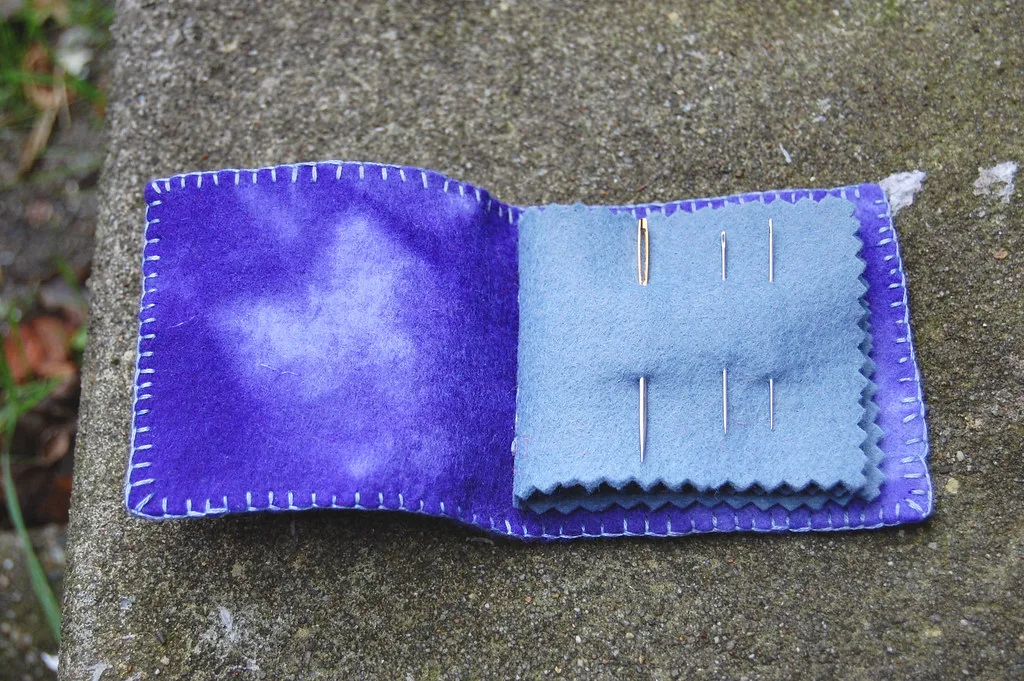
- Cut the pages with pinking shears. The zigzag edge looks finished, stops thin felt curling, and makes the leaves easy to separate with a fingertip. Alternate two colours so each page reads at a glance.
- Decorate the front now, while it is flat and you can reach the back of it. The front is the right-hand half of the outside of the cover.
- Edge the cover with blanket stitch in two strands of embroidery floss, stitches about ⅛ in (3 mm) deep and ¼ in (6 mm) apart. Attach the closure as you go if it is a ribbon or loop, so its ends are caught under the stitching.
- Stack the pages, fold the stack and the cover in half to mark the centres, then open them out and centre the pages on the inside of the cover.
- Stitch down the fold with backstitch through every layer, or a long machine stitch, keeping the knots on the outside of the spine.
In the large size there is room for a pocket: a strip of felt stitched on three sides across the inside back cover, for a needle threader or a card of thread.
What closure works best on a needle book?
- Button and loop. The classic. Sew the button on the front, near the open edge, and make the loop from elastic cord or a doubled length of floss caught in the back edge. Use a flat button, not a shank one, so the book still lies flat in a box.
- Elastic band. A loop of elastic cord stitched to the back cover and stretched round the front. It holds a fat book shut better than a button does, and it suits a large book with four page sheets.
- Ribbon ties. Two 8 in (20 cm) lengths of narrow ribbon or cord, one stitched to each edge, tied in a bow. Pretty, and the easiest for children to sew.
How do you decorate the cover of a needle book?
With anything that keeps it thin enough to close:
- Embroidery. Lazy daisies, French knots, an initial. Wool felt needs no hoop or stabiliser. A row of seed beads works too; see how to sew beads on felt.
- Appliqué. Shapes cut from contrasting felt and stitched on: a thimble, a spool of thread, a pair of scissors, a strawberry. The edge stitches are covered in felt appliqué.
- A needle felted motif. Wisps of roving needled into the wool cover on a foam pad, kept flat and thin; see needle felting on fabric for the method.
Can you wet felt a needle book cover?
Yes, and it gives a cover with colour that blends and shades in a way sheet felt cannot. Lay out four thin crossed layers of merino in a rectangle about 50% larger than the finished cover, so for the standard size about 6 × 12 in (15 × 30 cm). Wet felting shrinks wool by roughly 30 to 40%, and the extra size allows for that.
Put any design on the top layer: wisps of colour, yarn, or prefelt shapes. Full it until it is firm and no longer stretches, dry it flat under a light weight and cut it to exact size; well-fulled felt does not fray, so blanket stitch is optional. Use bought sheet felt for the pages, which need to be thin and even. The first-time method is in wet felting for beginners.
Why are pincushions traditionally stuffed with wool?
Wool is springy and dense, so it closes up round a pin hole and holds pins upright. The same lanolin-and-rust belief attaches to pincushions as to needle books, and it carries the same caveat: keep pins dry and it matters little what the cushion is made of.
A felted pincushion goes one step further: the whole cushion is wool felted into one solid shape, with no seam to split and no stuffing to shift.
How do you make a felted wool pincushion?
Felt a ball until it holds its shape but still takes a pin with a light push. Much harder and it fights every pin; softer, and pins lean.
| Finished size | Wool | Use |
|---|---|---|
| 1½ in (4 cm) | 6 to 8 g (¼ oz) | Ring or wrist cushion, strawberry |
| 2 in (5 cm) | 12 to 16 g (½ oz) | Desk pincushion |
| 2½ in (6.5 cm) | 25 to 35 g (about 1 oz) | Tomato, large dome, jar-lid cushion |
Wool weight climbs fast with size because a ball twice as wide holds eight times as much. For the larger sizes, a core of core wool with a skin of fine merino over it saves the good wool for where it shows.
- Wet felted. Wind a loose ball about twice the finished diameter and roll it in hot soapy water, gently then harder, as in how to make felt balls. Stop when it is firm and round but before it is rock hard.
- Needle felted. Roll the wool tightly and needle it all over, as in how to needle felt a ball. You can stop at exactly the firmness you want, and domes are easy.
Flatten one side with extra needling, or by pressing it on the table while it is still damp, so the pincushion does not roll away.
Tomato, strawberry and mushroom shapes
The tomato is the classic. Felt a 2½ in (6.5 cm) red ball, flatten it slightly, then thread a long doll needle with doubled strong cotton. Pass it up through the centre, take the thread down round the outside and up through the centre again, and repeat until there are six wraps evenly spaced, pulling each one tight to sink a groove between the lobes. Finish with a green felt star cut from sheet felt and stitched on top. On traditional tomatoes the little strawberry holds emery to sharpen pins; a felted one is just for show.
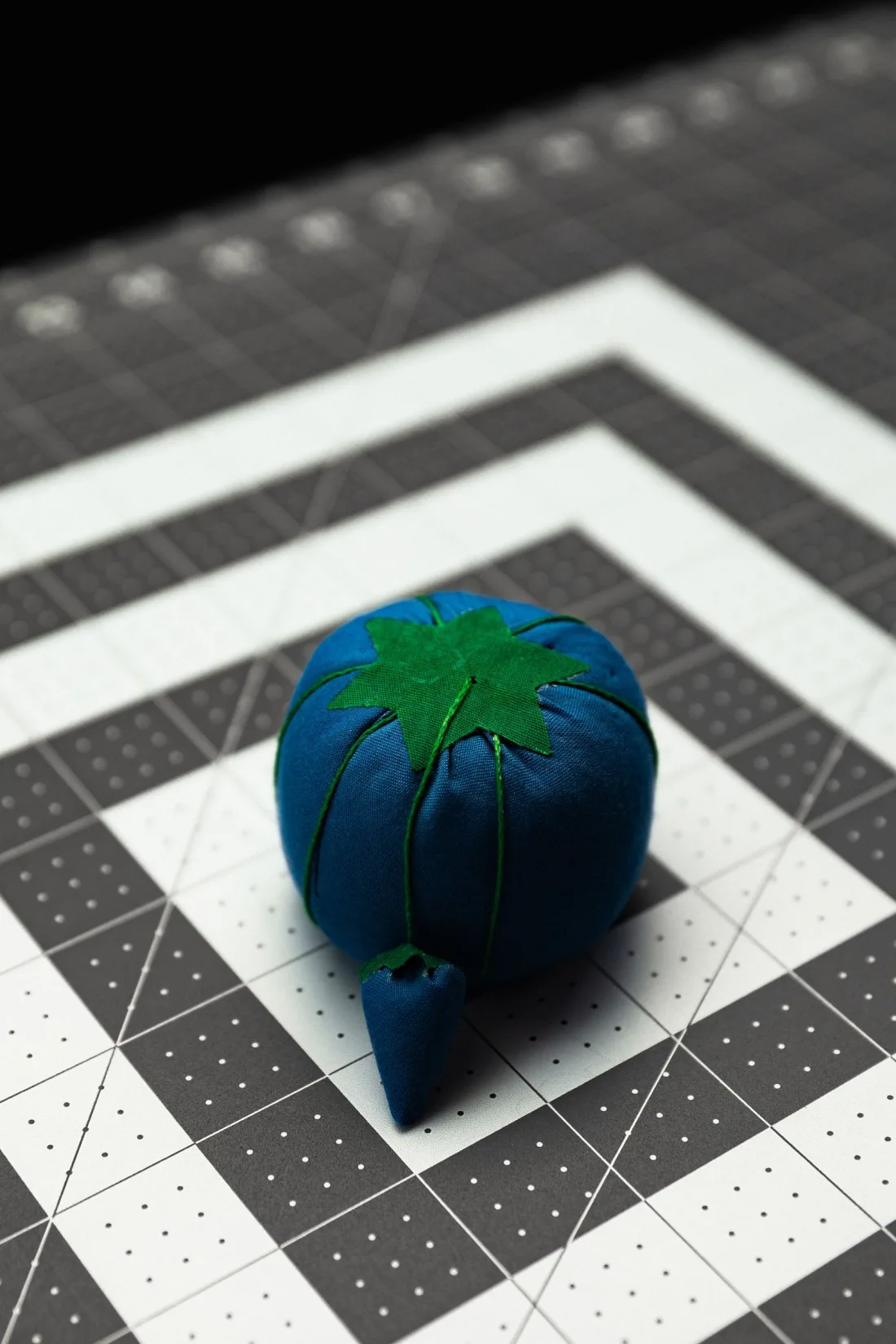
A strawberry is a 1½ in (4 cm) ball needled into a rounded cone, with yellow French knots or seed beads for seeds and a green felt calyx. A mushroom makes a good pincushion because the cap is the cushion and the stem is a handle: felt a firm, broad cap and a short, thick stem, and join them as in felted mushrooms. Give it a flat base so it stands.
Jar-lid and wrist pincushions
A jar-lid pincushion uses a regular-mouth canning jar lid and band, about 2¾ in (7 cm) across. Felt a ball a little larger than the opening in the band, about 2½ in (6.5 cm), push it up through the band from underneath so a dome shows on top, then glue the flat lid in behind it. The jar below holds buttons or spare thread.
A wrist pincushion keeps pins at hand while fitting a garment. Stitch a 1½ in (4 cm) flat-based dome to a band of thick felt or elastic. Glue a small disc of stiff card or plastic under the dome first, so a pin pushed right through cannot reach the wrist.
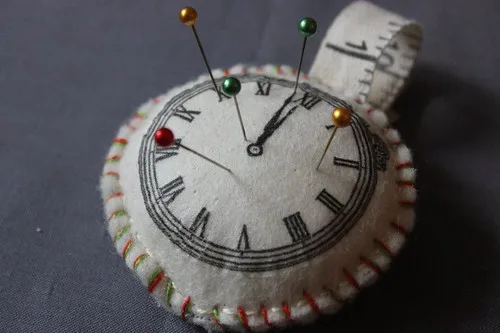
Where should you keep felting needles?
Not in the pincushion or the needle book. Felting needles are brittle and barbed: they pull wool from a cushion every time they come out, and one standing upright snaps easily if knocked sideways. Keep them in the tube they came in, a cork block or a case with foam slots, one gauge per slot, as described in felting needles explained.
The neat division: sewing needles in the felt needle book, pins in the wool pincushion, felting needles in their own case.
Frequently asked questions
What size should a felt needle book be?
A cover of 4 × 8 in (10 × 20 cm), folded to a 4 in (10 cm) square, suits most people. Cut the pages from 3½ × 7 in (9 × 18 cm) pieces so they sit about ¼ in (6 mm) inside the cover on every side. Go down to 3 in (7.5 cm) square for a travel kit, or up to 5 in (12.5 cm) square for long tapestry and doll needles.
Why are needle books made of wool felt?
Wool felt is dense enough to grip a needle without letting it slide through, holds a clean cut edge and keeps its shape for years. Many stitchers also hold that wool keeps needles from rusting, a traditional belief credited to the lanolin in the fibre. Commercial wool felt is scoured, so treat that as an old rule of thumb rather than a guarantee, and keep needle books dry either way.
How much wool do you need to felt a pincushion?
About 12 to 16 g (½ oz) for a 2 in (5 cm) ball, 6 to 8 g (¼ oz) for a 1½ in (4 cm) one and 25 to 35 g (about 1 oz) for 2½ in (6.5 cm). Those weights give felt that holds its shape but still takes a pin with a light push. For the larger sizes, fill the middle with core wool and keep the fine coloured wool for the outer layer.
Can you store felting needles in a pincushion?
It is better not to. Felting needles are brittle and barbed: pushing them into a cushion and pulling them out drags fibre from it, and a needle knocked sideways while it stands in a cushion can snap. Keep them in a tube, a tin with a foam insert or a cork block, sorted by gauge, and keep sewing needles in the needle book.
Why do needles disappear into a pincushion?
A fine sewing needle has no head, so in a soft, loosely stuffed cushion it can be pushed all the way in and lost. A firmly felted pincushion resists that better than a loose one, but sewing needles are still safest in the pages of a needle book, where they lie flat and stay in sight.
Topics
Image credits
- A small purple hand-dyed felt needle book with pale blue blanket-stitched edges, tied shut with a thin blue cord, lying on a stone step — Studio Paars (BY)
- An open purple felt needle book with blanket-stitched edges and a stack of light blue felt pages cut with pinked zigzag edges, three sewing needles woven into the top page — Studio Paars (BY)
- A blue fabric tomato-style pincushion with a green star-shaped top, green thread wraps dividing it into lobes and a small attached strawberry, on a grey cutting mat — Mayim Luna (Pexels License)
- A round felt pincushion printed with a clock face, with coloured glass-head pins standing in it and a coiled tape measure behind — Sarah @ pingsandneedles (BY SA)