Felted Cat Toys: Wool Balls, Catnip Mice, Kickers and Wand Toys
8 min read Beginner
We may earn a commission from links on this page, at no extra cost to you. As an Amazon Associate I earn from qualifying purchases. Learn more.
Which wool toys cats really play with, how hard to felt them so they survive claws and teeth, catnip versus silvervine, what to leave off, and a short note on dogs.
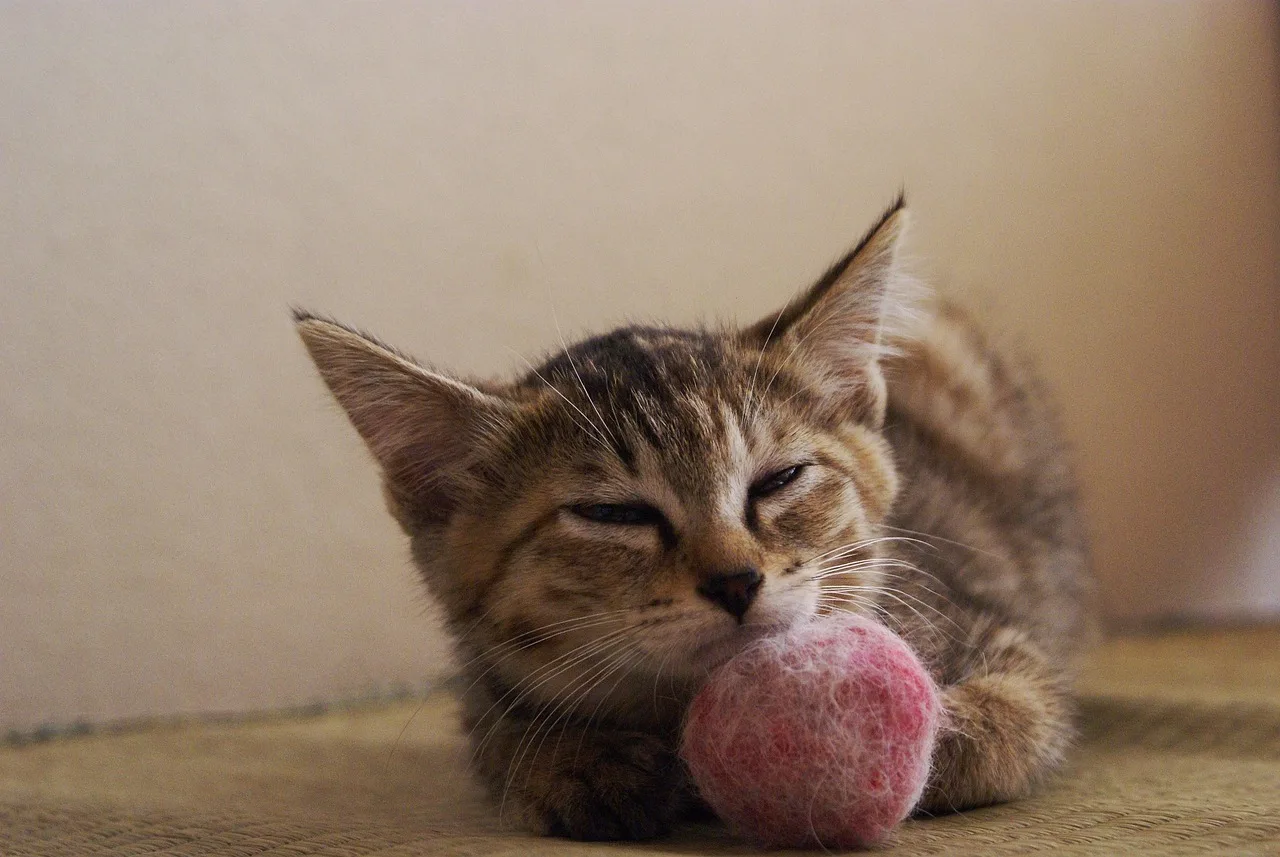
At three in the morning, the toy a cat bats down the hallway is usually a light one that skids across the floor and can be carried off in the mouth. Felted wool is very good at that. It weighs almost nothing, it is quiet on wood, and it holds the smell of catnip for weeks.
A toy for a cat is felted far harder than a shelf ornament, because it gets bitten, raked with the back claws and carried around wet. A soft surface comes away in tufts within a week, so the density tests below, and the short list of things to leave off, are the parts of this page to read first.
Four toys worth making
| Toy | How it is made | Finished size | Suits |
|---|---|---|---|
| Felt ball | Wet felted | 1¼–1½ in (3–4 cm) | Every cat; the one to make first |
| Catnip mouse | Needle felted, or sewn from wool felt | 2½–3 in (6–8 cm) body | Cats that carry toys around |
| Kicker | Sewn from felted sweater or thick felt, stuffed | 10–12 in (25–30 cm) long | Big cats and cats that wrestle |
| Wand toy | A felted shape on a short cord and a stick | Shape 1½–2½ in (4–6 cm) | Play with you, never left out |
Wet felted balls
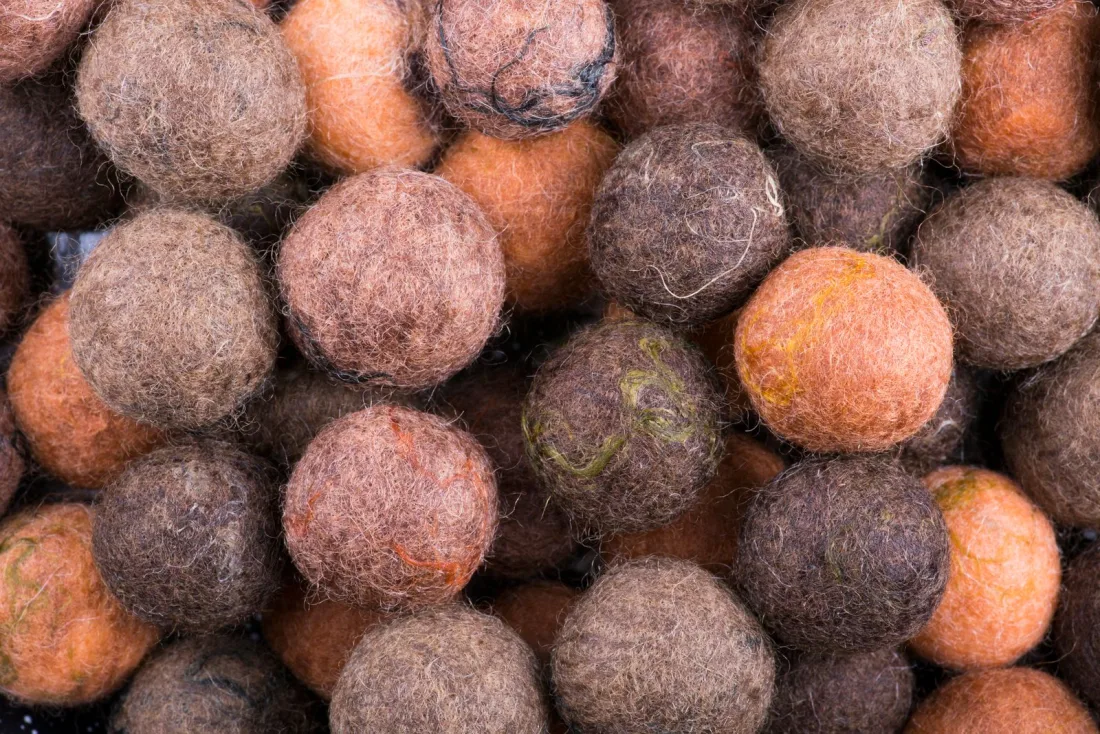
The plain felt ball is the toy most cats choose, and wet felting is the right way to make it. Rolling in hot soapy water felts the outside hardest. That is the part claws and teeth meet, and a dozen balls take about an hour.
- Wind about ¼ oz (7 g) of wool into a loose ball roughly 2¾ in (7 cm) across, changing direction every few turns so the fibres cross. Wet felting takes off about half the diameter, so this finishes at around 1⅜ in (3.5 cm).
- Wet it in hot soapy water and roll it between your palms with almost no pressure for the first few minutes, then more firmly as the surface tightens.
- Keep going well past the point where it looks done. For a cat, roll for another five minutes after the ball holds its shape, then throw it hard into the sink twenty or thirty times. That shock is what makes the surface really tight.
- Rinse out every trace of soap. Cats wash their toys with their tongues, and soap is the one thing that should not be left in.
The method, with the washing machine shortcut for thirty at once, is in how to make felt balls. Use undyed wool, or wool you know was dyed with a proper fibre dye and rinsed until the water ran clear; a ball that stains a damp hand will stain a cat's mouth.
How hard is hard enough
- The squeeze test. Pinch the ball between finger and thumb as hard as you can. It should dent by no more than a millimetre or two and spring straight back.
- The fingernail test. Drag a fingernail across the surface. If you can lift a fibre loop, a claw will lift a tuft. Felt it longer.
- The drop test. Dropped on a hard floor, it should bounce a little rather than land with a soft thud.
Catnip mice
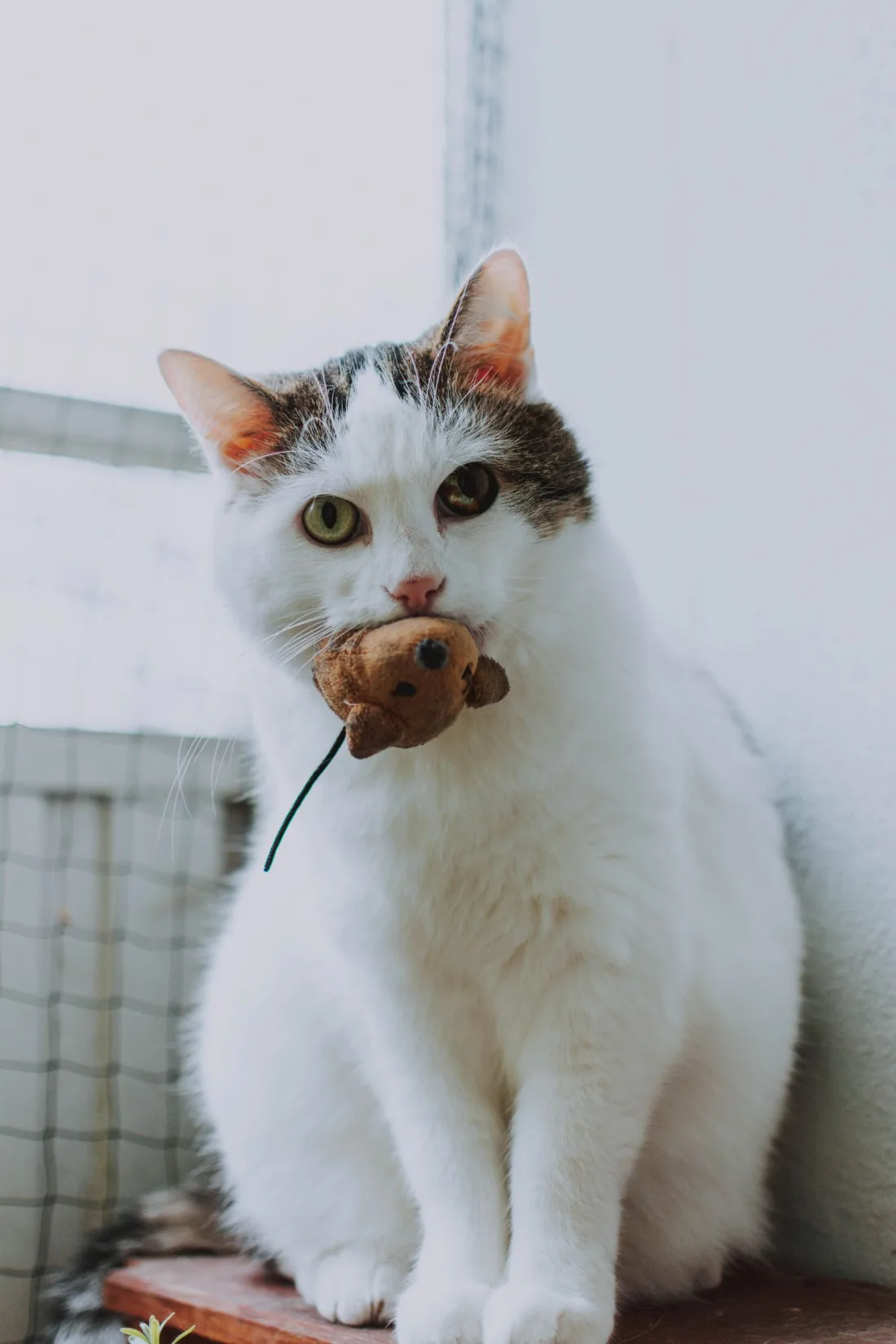
The mouse is the one cats carry about and leave in shoes. Two ways to make it:
- Needle felted. A teardrop of wool built around a teaspoon of dried catnip, with small ears and an embroidered face. Felt it to the same hardness as a ball and finish the surface with a 40 gauge needle until no loose fibre will come up. The shaping is in how to make felt mice.
- Sewn from wool felt. Two side pieces and a base cut from 100% wool felt, backstitched with doubled thread and stuffed with wool and catnip. Faster, and easier to make in a batch. A template is in felt cat patterns.
Either way, keep the tail short: a stub of felt or a 1¼ to 1½ in (3 to 4 cm) length of thick wool yarn, stitched in. A long string tail is the most chewed part of any mouse, and string is the most dangerous thing a cat can swallow.
Check for broken needle tips
Felting needles snap, and the tip of a needle that breaks inside a toy stays there. Count your needles before and after a session, and look at the tip of each one; if one is shorter than it was, the missing piece is in the wool. Felting needles are steel, so run a strong magnet slowly over the finished toy as a second check. Never give a cat a needle felted toy whose needle count you are unsure of.
Kickers
A kicker is a long, firm pillow a cat can hug with its front legs while it rakes with the back ones. It is the toy for big cats and for young ones with energy to burn, and a felted sweater is the ideal material, because it is thick, slightly stretchy and does not fray.
- Cut two rectangles about 12 × 3½ in (30 × 9 cm) from felted sweater or ⅛ in (3 mm) wool felt, and round off the corners.
- Backstitch round three sides with doubled thread, ¼ in (6 mm) in from the edge.
- Stuff it firmly with wool, adding a tablespoon of dried catnip in the middle. Firm matters: a floppy kicker gets ignored.
- Close the last side with a ladder stitch, then go round the whole seam a second time.
Choosing and felting the sweater is covered in felted sweater projects. An adult sleeve, felted, is often already the right width, so it only needs closing at both ends.
Wand toys
A felted ball, mouse or bird shape tied to a cord on a short stick turns play into something you do together. For many indoor cats it is most of the exercise they get. The rule is simple and not negotiable: a wand toy is put away out of reach when play ends. The cord is exactly the kind of string that causes the worst swallowing injuries, and a cat left alone with one will eventually chew it.
Attach the shape so it cannot pull off: for a needle felted piece, lay the end of the cord across the core and felt the outer layers over it so the wool locks round it; for a sewn one, knot the cord inside before closing the seam.
Catnip, silvervine and valerian
Scent is what turns a ball into a toy a cat goes looking for, but not every cat responds to the same plant.
- Catnip. Roughly two cats in three react to it; the response is inherited, and kittens younger than about six to eight months rarely show it. Use dried leaf and flower rather than chopped stem, which has little scent.
- Silvervine. A climbing plant from East Asia, sold as powder or dried sticks. In a 2017 study of 100 cats, nearly 80% responded to it, including most of the cats that ignored catnip. If a cat is indifferent to your catnip mice, scent the next one with silvervine before concluding the cat does not like toys.
- Valerian root. Works on some cats that ignore both, but it smells strongly of old socks to people. Keep valerian toys in a sealed jar between sessions.
Catnip fades over a few weeks in the open air. Store toys in a lidded jar with a spoonful of dried catnip between play sessions and they come out smelling new; this is also the best way to scent a wet felted ball, since catnip sealed inside during felting loses most of its scent to the soap and hot water.
What to leave off
- Glue. It fails when wet, and cat toys are wet within minutes.
- Beads, bells, buttons and plastic eyes. Anything that can come off will be swallowed. Embroider features, or felt them in.
- Long tails, ribbons and yarn. Keep anything thread-like under an inch or so and stitched in at both ends if possible.
- Acrylic felt and acrylic yarn. They shred into long plastic strands. Use wool for anything that will be chewed.
- Toys for a fabric eater. Some cats, more often Siamese, Burmese and other Oriental breeds, suck and swallow wool. That cat should not have wool toys of any kind, and the behaviour is worth raising with a vet.
Retire a toy as soon as a seam splits or the surface starts to come away in tufts. A worn toy is a supply of loose fibre.
A note on dogs
Felted wool suits a gentle dog that carries and fetches, not one that shreds. Make the ball big enough that it cannot disappear down the throat: at least 2½ in (6 to 7 cm) for a medium dog, more for a large one, which is roughly the size of a wool dryer ball. Felt it rock hard, play with it together, and put it away afterwards. A determined chewer will tear felted wool apart and swallow it, and that dog is better off with a rubber toy.
Keeping them clean
Rinse dirty toys in cool water with a drop of wool wash, squeeze them in a towel and dry them somewhere warm and airy. Do not put them in a hot wash: the balls will felt a little harder, which does no harm, but sewn toys can pucker and catnip turns to mush. Re-scent them in the jar once they are dry.
If your cat cannot be persuaded by any of these, it may prefer a place to sleep over something to chase: see the felted cat cave. And if you have a long-haired cat, the brushings can go into the next batch of balls; felting with cat hair explains how to blend them with wool so they hold together.
Frequently asked questions
Are felted wool toys safe for cats?
Yes, if they are felted very hard, have nothing glued or sewn on that could come off, and have no string or ribbon longer than an inch or so. Retire a toy once its surface starts to pull away in tufts. The exception is a cat that chews and swallows fabric: wool toys are not for that cat at all.
How do you put catnip in a felted cat toy?
In a sewn or needle felted toy, put a teaspoon of dried catnip in the middle as you build it. Catnip sealed inside a wet felted ball loses most of its scent to the soap and hot water, so scent it afterwards: keep the finished balls in a closed jar with dried catnip for a few days.
What size should a felted ball for a cat be?
About 1¼ to 1½ in (3 to 4 cm) across when finished. Smaller balls disappear under furniture and come close to swallowable; larger ones are too heavy to bat across a floor. For a 1⅜ in (3.5 cm) ball, start with a loose ball of wool about 2¾ in (7 cm) across, because wet felting roughly halves the diameter.
Why does my cat ignore catnip toys?
Around a third of cats do not react to catnip at all, and kittens younger than about six to eight months rarely do. Many cats that ignore catnip react strongly to silvervine, so a toy scented with silvervine powder is worth trying before deciding the cat does not like toys.
Can dogs have felted wool toys?
Gentle dogs can, under supervision, if the toy is too big to swallow and felted rock hard. Dogs that shred toys will tear felted wool apart and swallow it, which is a risk of intestinal blockage, so for a strong chewer it is the wrong material.
Topics
Image credits
- A tabby kitten dozing with its chin resting on a pink felted wool ball — Romewo (Pixabay Content License)
- A heap of felt balls in undyed browns, grays and soft orange — Valentin Ivantsov (Pexels License)
- A white and tabby cat sitting by a window holding a small brown toy mouse in its mouth — lil artsy (Pexels License)